Broken down to the gum line
When little tooth shows above the gum, the dentist looks at how much sound structure sits just below it, along with the root and bone support. A post only makes sense if those findings still favour a lasting restoration.


Before choosing a post or a crown, there is a bigger question: can this tooth be restored with a reasonable outlook? For people coming from Mississauga, we start there and build the plan around an honest answer.
Most people want to keep their own teeth, and that instinct is a good one. Still, a tooth that has broken down to the gum line raises a real decision. Before talking about posts, the dentist needs to know whether enough sound root and tooth remain to support a repair that will last a reasonable time.
If the answer is yes, a post and core may form part of the rebuild. The core restores lost bulk so a crown has something to fit over, and in some root-treated teeth a post anchors that core inside the canal. A post is a retention tool, nothing more. It cannot rescue a root that is split or too thin.
We will show you what the x-rays and exam reveal and talk through the realistic paths, including the option of not restoring the tooth. Bring earlier root canal notes or a crown that has come loose. You can then decide with the full picture rather than a single suggestion.
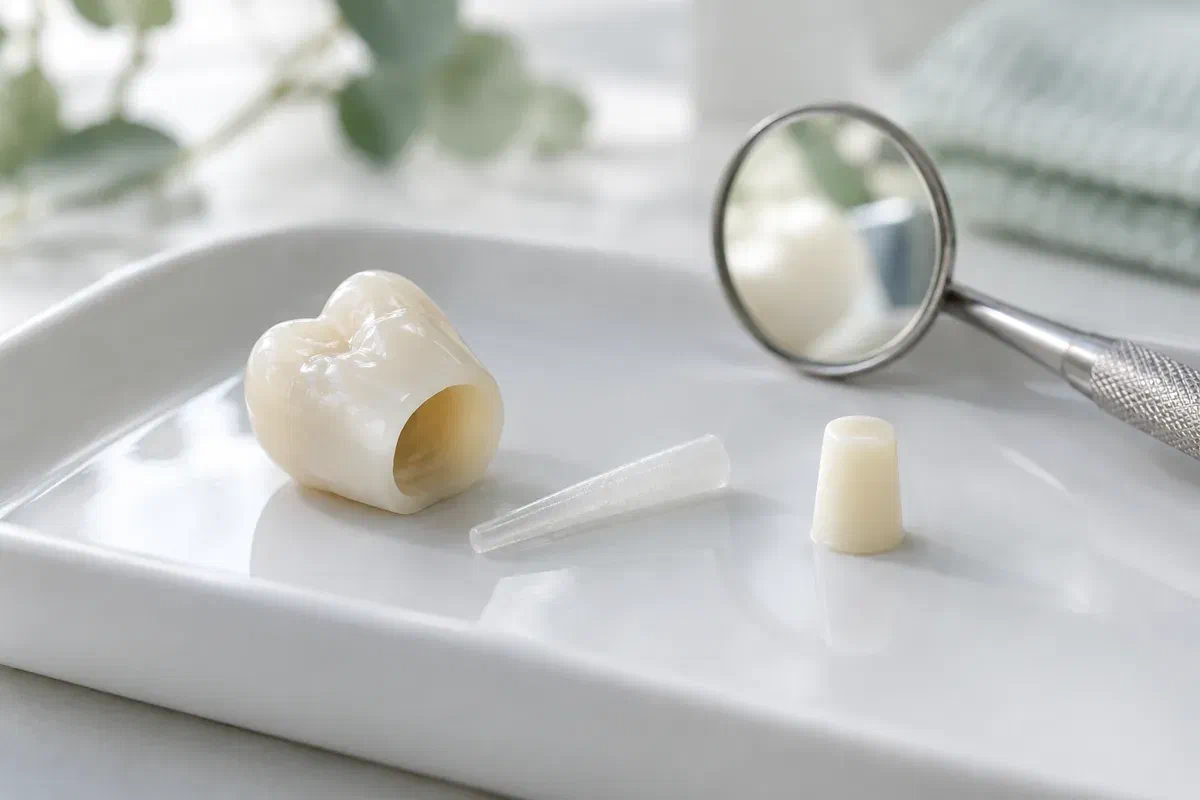
Any proposal for a post should explain what it will hold and why. Ask which findings support rebuilding at all.
When little tooth shows above the gum, the dentist looks at how much sound structure sits just below it, along with the root and bone support. A post only makes sense if those findings still favour a lasting restoration.
A crown that comes off more than once, especially with material attached, is a signal to look closely. Bring the pieces. The exam helps show whether the foundation failed, the tooth fractured, or the design needs rethinking.
Sometimes a tooth has had root canal treatment but still shows signs that worry the dentist on x-ray. Ask whether the root needs further review before any foundation is placed, and how that affects the order of care.
A post is not a test of whether a tooth is savable. It is one possible part of a rebuild once restorability has been judged, and it uses up some root structure.
When the tooth qualifies, a secure core gives the crown the form it needs to fit and to share chewing load. Keeping your own tooth can have real value, as long as the plan respects the structure that remains and has a reasonable chance of serving you well.
Talk about expectations, not just materials. No post overcomes a significant crack, and very little remaining tooth limits what any crown can do. Root condition, gum and bone support, and bite forces should all shape your choice.
Patient information: AAE — assessing whether a tooth can be restored
Knowing the post, core and crown as separate pieces helps you understand the estimate and the visits. Ask for a model or diagram if the terms blur together.
The amount of sound structure matters more than the number of components. Ask how the preparation protects what is left and why each step is justified.
Rebuilding is one path. Ask how it compares with extraction and replacement options in time, visits and expected outlook, so the decision rests on more than habit.
How many appointments you need depends on the tooth and the crown chosen. For anyone travelling in from western Mississauga or further east, it helps to ask early what each visit achieves, which steps can share an appointment, and when the tooth will be fully covered.
Dr. Anjum examines the remaining tooth, the existing root filling, the gum and bone around it, and your bite. X-rays and old records help. Share any history of fractures, pain or loose crowns.
You should understand why a post is or is not advised, the proposed material and its limits. Ask for a complete estimate covering the core, temporary and final crown, and whether a specialist opinion would help.
If a post is part of the plan, a channel is made in the treated canal, keeping a protective portion of root filling at the tip. The post and core are fitted to the chosen design, sometimes over more than one appointment.
The crown is fitted and adjusted for contacts and bite. Confirm care instructions and the follow-up. If a temporary remains for a while, know when you are due back and how to keep it safe.
Instructions vary with a temporary and a final crown. Tell us if any of them are hard to fit into daily life and we will help you adjust.
Keep hard and sticky foods off a temporarily restored tooth, and chew on the opposite side where you can. A core that feels firm still needs its crown soon, because temporaries are not built for long service. Call if you cannot make the completion visit.
Brush and floss around the crowned tooth daily, including between it and its neighbours. Ask for tips if the angle is awkward. The natural tooth beneath can still decay or develop gum problems.
Phone if the crown feels loose, your bite shifts, or a piece breaks off. Avoid testing it by pushing or pulling. Save anything that comes away.
These decisions feel weighty, and the terms overlap. Looking at your own x-ray together is often the clearest starting point.
Arrange an assessment at our Bronte Street practice for a broken or root-treated tooth you are unsure about. Bring any x-rays, records or loose pieces, and we will go through the options, including whether rebuilding makes sense.
If a tooth or crown has broken and you are in significant pain, please call rather than booking online. Online requests are for non-urgent matters.
