

Illustrative consultation about a premolar tooth concern
Restorative Dentistry

Premolar Root Canals in Caledon

Before saying yes to premolar treatment, it helps to see the whole commitment. For households in Caledon, we set out the diagnosis, every stage, your health considerations and the final restoration in one clear plan.

The whole plan, up front

One tooth. Several decisions.

Agreeing to root canal care on a premolar is rarely a single choice. It brings questions about the number of visits, the restoration afterward, cost, time away from work, and how your general health fits in. Seeing all of that together makes the decision far more manageable.

Premolars sit just behind the canines and in front of the molars. They do a good share of chewing and may show when you smile. If the pulp at their centre is infected or irreversibly inflamed, treating the canals may let the tooth remain. That only makes sense if the premolar can then be rebuilt to handle daily use.

From Bolton or one of the smaller Caledon villages, a trip to our Bronte Street practice is easier to plan when you know the full picture. We explain the findings, list the stages, discuss your medical history where it matters, and describe the restoration before you commit.

See a complete treatment plan
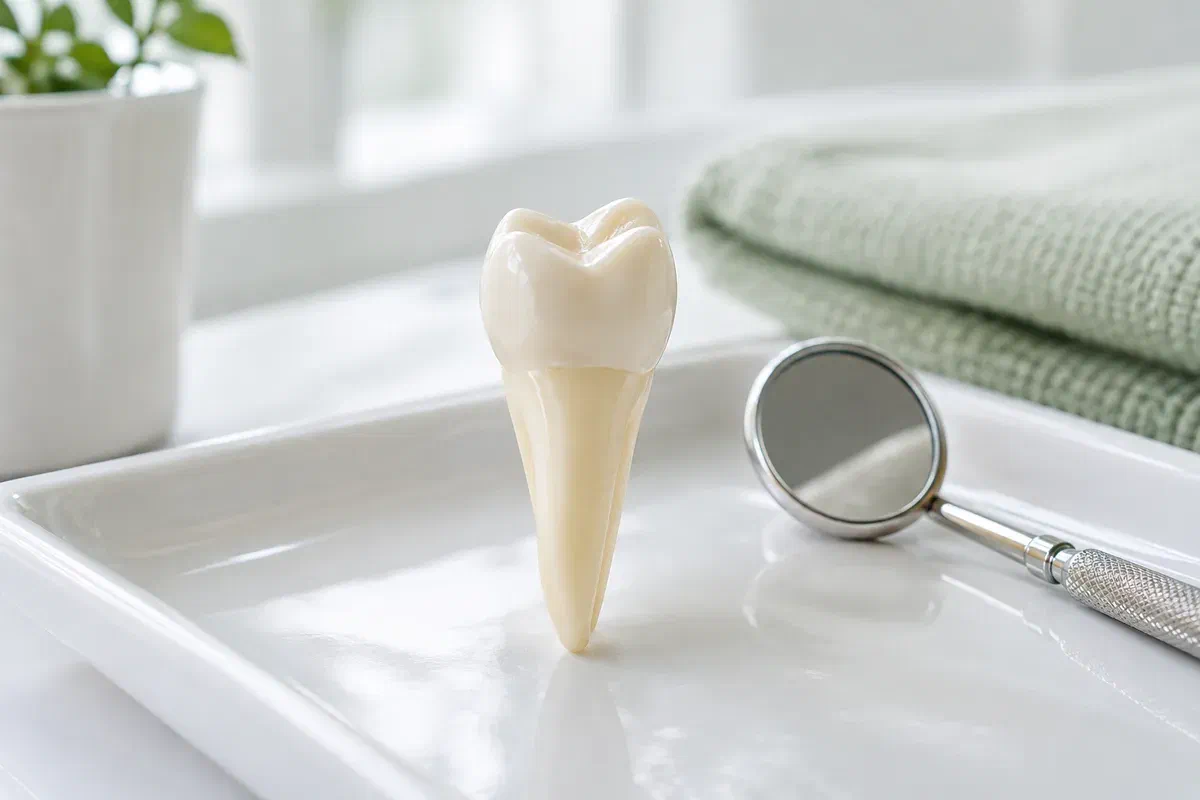
An intact premolar teaching model with a narrow root beside a dental mirror
What you have noticed

Changes worth putting into words

Your description guides the first visit. Note what triggers the feeling, how long it lasts, and any treatment that tooth has had before.

A reaction that outlasts the trigger

Cold that stings for a moment is common. Cold that keeps aching, sensitivity growing stronger, or pain that starts on its own is a different pattern. Share which one fits, and the dentist will check the pulp with targeted tests and imaging.

A cusp or old repair giving way

Premolars can lose part of a cusp near a large filling. A visible break does not reveal how far the damage extends. Keep any fragment and mention whether discomfort came on afterward.

Discomfort spread across the side

Sometimes the whole side of the mouth seems to ache. Point to the region rather than picking a tooth. Testing teeth individually helps the dentist confirm which one, if any, needs canal treatment.

Swelling, persistent pain, or a recurring bump on the gum warrants an examination even if the tooth is sometimes quiet. Phone the clinic for guidance on how soon to come in.

Weighing it up

Is keeping this premolar worth the commitment?

For a suitable premolar, root canal care followed by an appropriate restoration may allow the tooth to keep functioning. Whether it is suitable depends on the diagnosis, how much sound tooth is left, the gum and bone support, your general health, and your other dental needs.

The final restoration influences both chewing and appearance, particularly for a tooth that shows when you smile. Settling on it at the start means the cost, timing and look of the finished tooth are part of your decision rather than a surprise later.

Patient information: CDA — root canal treatment and restoring the tooth

Findings you can weigh

Ask which signs point to the pulp and whether any doubt remains. You should understand why replacing an existing filling alone would or would not be sufficient.

A single overview of every stage

Treatment may include canal work, temporary protection, a core and a final restoration, each possibly on a separate day. Having one written overview helps you compare options and budget your time.

Health and life details included

Tell us about medications, medical conditions, pregnancy, or anxiety around dental care, along with work commitments. These details help us plan safely and explain arrangements, while the tooth’s needs still guide treatment.

The sequence of care

Each stage, and why it is there

Ask what each appointment will do and who will provide it. When a premolar’s anatomy or history makes treatment more involved, referral to an endodontist may be advised.

  1. Review history and examine

    We go over your medical and dental history, examine the premolar, and use tests and imaging to judge the health of the pulp and how restorable the tooth is. Mention earlier root canals, orthodontics, trauma or repeated filling problems.

  2. Comfort and isolation

    If treatment is recommended and you choose it, local anaesthetic is given. A rubber dam then surrounds the tooth to keep it dry and protected. The clinician opens a path to the canals. Agree on a signal you can use to ask for a pause.

  3. Treatment of the canals

    Following your plan, the canals are cleaned, shaped and disinfected, then filled. The amount of work depends on the tooth’s anatomy and condition. A temporary filling may seal the tooth until the next stage, with instructions for home.

  4. Restoring the premolar

    After the canal treatment, the tooth receives a core and the planned protective restoration as needed. Confirm the timing, cost and review schedule in writing, and know whether your current filling is temporary or final.

Between and after visits

Protect your investment in the tooth.

Aftercare instructions are specific to your treatment, so follow yours closely. Get in touch if symptoms worsen or begin to interfere with daily routines.

Until the numbness lifts

Avoid eating while numb to prevent biting your cheek or tongue, and take care with hot drinks. Afterward, keep heavy chewing away from the treated premolar as directed. Appropriate foods depend on the restoration currently in place.

Watching the overall trend

Contact us if discomfort increases, swelling develops, or the tooth seems to meet first when you close. Say whether it is better, the same or worse over a few days. That is more helpful than testing it on firm food.

Following through to the end

Keep the final restoration appointment even if the tooth feels comfortable. Clean around it as instructed and report a temporary that loosens. If commitments shift, call early so the remaining stage can be moved rather than missed.

Comparing the paths

Each option carries a different commitment.

For every choice, you should learn what it can realistically do, the visits and costs it involves, and what is likely if the problem is left untreated.

Pulp affected, tooth restorable

Keep the tooth with canal treatment

Root canal care may be advised when the pulp needs it and the premolar can support a lasting repair. Look at the expected outlook and the cost and timing of the final restoration together, judging the tooth as a whole.

Diagnosis supports a lighter approach

A more modest treatment

Not every sensitive or chipped premolar requires a root canal. A filling or another limited treatment may suit the findings. Ask what supports that choice and what follow-up would confirm the tooth is coping.

Retaining the tooth is not reasonable

Extraction and replacement

If the premolar cannot be kept appropriately, removal and replacement options can be compared. Discuss how the space would affect your bite and smile, which replacements suit you, and the visits, healing and costs each involves.

Planning questions

Before you agree to treatment

Technical language is optional. Ask for the plan in writing, and for any part of it to be explained again if it is unclear.

(905) 876-4488
Should I tell you about my medications before premolar treatment?
Yes. Some medications, such as blood thinners, and certain medical conditions can affect dental care. The dentist may adjust the plan or, where needed, coordinate with your physician. Bring an up-to-date list to your first visit.
Does pregnancy affect root canal treatment?
Let the dentist know if you are pregnant or may be. Dental care can often still be provided, though the timing, imaging and medications may be considered more carefully. Your dentist will discuss what is appropriate.
Can I get a written estimate before deciding?
Ask for one. A written plan can list each stage and its expected fee. Keep in mind that findings during treatment can occasionally change what is needed, and the dentist should explain if that happens.
What if more than one premolar needs attention?
The dentist will explain which tooth is most urgent and whether treatment can be staged. Planning them together may help with scheduling. Ask how the order of treatment was decided.
Could the plan change once treatment starts?
Occasionally. Anatomy or damage that was not visible beforehand can affect the number of visits, the need for a specialist or the final restoration. You should be told about any change and why it matters.
How can a household in Caledon keep the number of trips down?
Ask how many visits are expected and book them early, including the final restoration. Where possible, family checkups might be arranged around the same days. Call before driving in if a symptom changes suddenly.
Caledon households welcome

See the full plan, then decide.

Arrange an assessment at our Bronte Street practice, or bring advice from another dentist to review. We examine the premolar first, then set out every stage of treatment and restoration so you can choose with confidence.

If pain is severe or swelling appears, call us. Online requests are for routine appointments.

Visit Milton Dental Clinic
Unit 1, 342 Bronte St. S, Milton, ON L9T 5B7
Get directions Clinic hours
Monday–Thursday
11am–7pm
Friday–Sunday
By appointment only

Areas we serve

  • Milton
  • Oakville
  • Mississauga
  • Georgetown
  • Halton Hills
  • Acton
  • Campbellville
  • Brampton
  • Burlington
  • Puslinch
  • Rockwood
  • Erin
  • Caledon
  • Etobicoke
  • Old Milton
  • Bronte Meadows
  • Timberlea
  • Dorset Park
  • Dempsey
  • Clarke
  • Beaty
  • Coates
  • Harrison
  • Scott
  • Willmott
  • Ford
  • Bowes
  • Cobden
  • Walker
  • Mountain View
  • Milton Heights
  • Hawthorne Village
  • Valley View
  • Fallingbrook
  • Nassagaweya
  • Trafalgar
  • Esquesing
  • Nelson
  • Brookville
  • Moffat
  • Glen Williams
  • Norval
  • Limehouse
  • Stewarttown
  • Ashgrove
  • Hornby
  • Silver Creek
  • Speyside
  • Scotch Block
  • North Oakville
  • River Oaks
  • Glen Abbey
  • West Oak Trails
  • Palermo
  • Bronte Creek
  • College Park
  • Joshua Creek
  • Uptown Core
  • Preserve
  • Iroquois Ridge
  • Lisgar
  • Meadowvale
  • Meadowvale Village
  • Churchill Meadows
  • Erin Mills
  • Central Erin Mills
  • Streetsville
  • East Credit
  • Creditview
  • Heartland
  • Sheridan
  • Mount Pleasant
  • Credit Valley
  • Huttonville
  • Churchville
  • Springbrook
  • Northwest Brampton
  • Bram West
  • Fletcher's Meadow
  • Fletcher's Creek South
  • Alton Village
  • Orchard
  • Millcroft
  • Headon Forest
  • Tansley
  • Brant Hills
  • Tyandaga
  • Kilbride
  • Lowville
  • Aberfoyle
  • Morriston
  • Arkell
  • Hillsburgh
  • Freelton
  • Carlisle
  • Waterdown
  • Flamborough
  • Mountsberg

How can we help?

Milton Dental Clinic

Have a question about your smile? Choose the option that works best for you.

For urgent dental concerns, please call.
Messages are reviewed during clinic hours.