

Illustrative consultation about a premolar tooth concern
Restorative Dentistry

Premolar Root Canals in Georgetown

One bite and a piece of your premolar is gone. From Georgetown, you can have the broken tooth examined to learn how deep the damage reaches, whether the pulp is involved, and how the tooth could be rebuilt.

After a break

A crunch, then a gap where tooth used to be

It often happens over an ordinary dinner. Something hard meets a premolar that has been quietly weakened by an old filling or a hidden crack, and a corner comes away. Sometimes there is no pain at all. Sometimes the tooth turns sensitive within hours.

Premolars are the narrower back teeth between the canines and the molars, and their pointed cusps take a lot of chewing force. When a fracture reaches the pulp, or the nerve tissue later becomes inflamed beyond recovery or infected, cleaning and sealing the canals may be part of saving the tooth. Many breaks, though, can be repaired without it.

Whatever happened, bring the details to our Bronte Street practice. If you are coming from Georgetown, a call first lets us gauge how soon you should be seen. We will examine the break, test the pulp, explain the findings, and describe the restoration that could rebuild the tooth.

Have a broken premolar checked
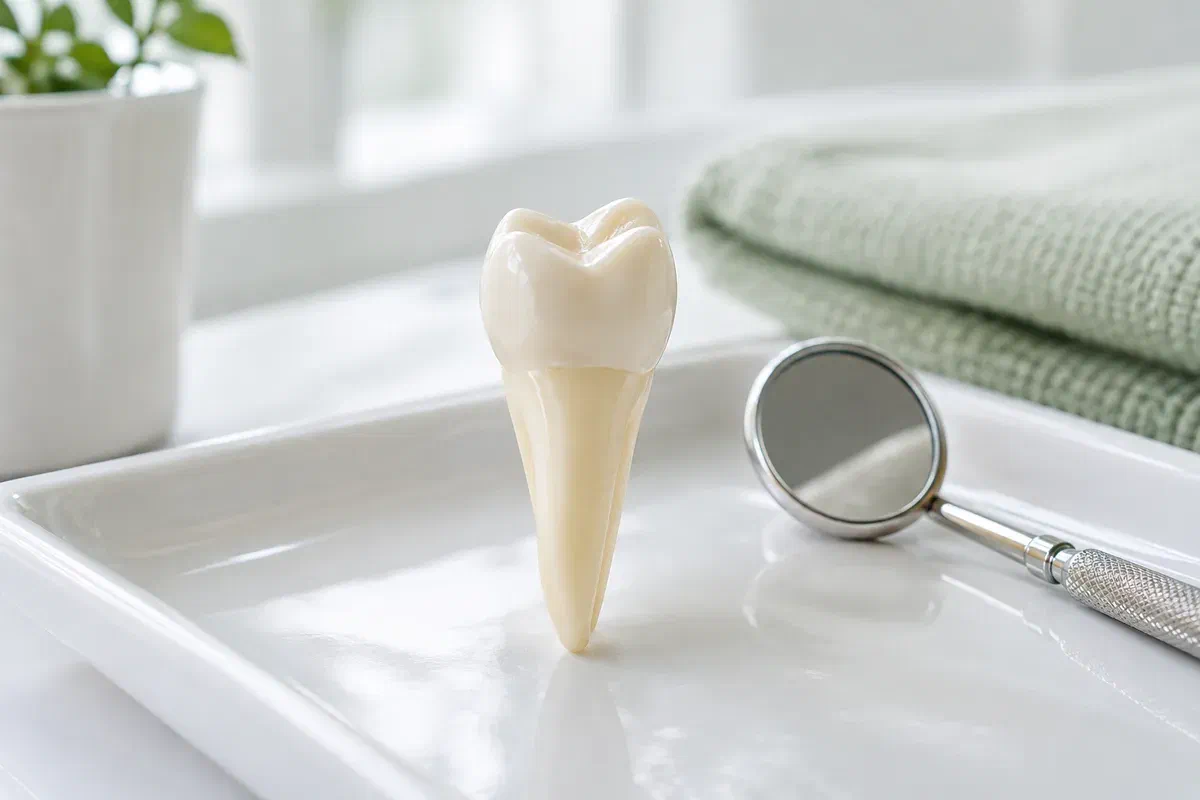
An intact premolar teaching model with a narrow root beside a dental mirror
What you might be dealing with

Not every break looks the same.

Three things shape the assessment of a damaged premolar: how the tooth reacts now, what you can see, and what work the tooth has had before.

Sensitivity since the break

A tooth that twinges briefly with cold after losing a cusp is not unusual. Sensitivity that lingers, intensifies over a few days, or throbs without a trigger suggests the pulp may be affected. Tell us how it has behaved since the moment it broke.

A missing piece around a filling

Fractures often follow the edge of an older restoration. The size of the gap you can feel says little about what lies below it. Wrap any fragment and bring it along, and mention whether chewing on that side now hurts.

A crack you cannot see

Some premolars split without an obvious missing piece, causing sharp pain on release after biting. Because the discomfort can seem to come from several teeth, show us the area. Careful testing helps confirm which tooth is cracked.

Swelling, constant pain, or a gum bump that keeps returning after a break should be looked at promptly, even if the tooth sometimes feels fine. Phone us for advice about timing.

Rebuilding a damaged tooth

Can this premolar be restored?

A broken premolar that is a suitable candidate may be kept with the right repair, and sometimes root canal treatment is part of that. The outcome depends on where the fracture runs, how much sound tooth remains, the gum and bone support, and your wider dental needs.

Because premolars often show when you smile, a broken one can be noticeable. The restoration chosen needs to resist chewing forces and look natural beside its neighbours. Mention any concerns about appearance so they are part of the plan from the outset.

Patient information: CDA — root canal treatment and restoring the tooth

An explanation of the fracture

Ask how far the break extends, whether it involves the pulp, and what remains uncertain. You should understand why a filling or bonding alone would or would not be sufficient.

Each stage of the repair

Treatment may involve canal work, temporary protection, a core build-up and a crown or other restoration. Seeing the sequence helps you understand the commitment.

Your circumstances included

Let us know if the tooth is visible, if you have commitments that limit appointment times, or if past dental care made you anxious. Those details help us arrange care sensibly while the tooth’s needs remain the priority.

Repairing the premolar

From the broken edge to a finished restoration

Ask what each visit is meant to accomplish and who will provide it. A fracture that runs deep, or complex canal anatomy, can mean an endodontist is the right person to see.

  1. Examine the fracture

    We ask how the break happened, examine the tooth, and use tests and imaging to assess both the pulp and how far the damage runs. Mention earlier root treatment, braces, trauma, or a filling that kept failing on that tooth.

  2. Numb and protect

    If canal treatment is needed and you choose it, local anaesthetic is given and a dental dam isolates the tooth from the rest of your mouth. The clinician then gains access to the canals. Agree on a way to signal for a pause.

  3. Treat inside the tooth

    Following the plan, the canals are disinfected, shaped and sealed. The work involved depends on the anatomy and the condition of the broken tooth. A temporary restoration may cover it between appointments, and you will receive instructions.

  4. Rebuild the missing structure

    When the internal work is complete, a build-up and the planned crown or other restoration replace what the break removed. Confirm the timing, fees and review plan, and know whether your current repair is temporary.

Protecting a weakened tooth

Treat it gently until it is fully rebuilt

Until its final restoration is placed, a fractured tooth remains vulnerable to further damage. Follow your own instructions closely, keep them somewhere easy to find, and tell us if symptoms worsen or begin to affect eating or sleep.

Eat carefully once numbness fades

Avoid chewing until full feeling returns, and be careful with hot drinks. Afterward, keep hard and sticky foods away from the treated side as advised. What is safe depends on whether a temporary or final restoration is on the tooth.

Notice how it is changing

Call if discomfort increases, swelling develops, or the tooth feels high when you bite. Describe whether it is getting better, holding steady or worsening. That trend is more useful than testing the tooth on crunchy food.

Don’t delay the final repair

A temporary cover offers limited protection for a tooth that has already fractured. Attend the restoration appointment even if the premolar feels fine, keep it clean, and report a loose temporary straight away.

Repair choices

The depth of the break guides the decision

A useful discussion covers what each option can achieve, what it involves, and what may happen if the fracture is left untreated.

Fracture or infection has reached the pulp

Canal treatment plus a protective restoration

Root canal care may be advised when the pulp is affected and the remaining tooth can support a strong repair. Consider the outlook and the final restoration together, assessing the tooth as a whole.

Pulp appears unaffected

Rebuild without root canal care

Many broken premolars can be restored with a filling, bonding or a crown alone. Ask what findings support this and how the tooth will be monitored to make sure the pulp stays healthy.

Break extends too far to restore

Extraction and replacement

Some fractures, particularly those running deep below the gum, leave a tooth that cannot reasonably be kept. In that case, talk about what losing it would mean for chewing and for your smile, which replacement choices fit your mouth, and how many appointments and how much healing time each would need.

Broken premolar questions

What to know after a tooth breaks

You don’t need to describe the fracture precisely. Show us where it is, and ask for the images to be explained.

(905) 876-4488
What should I do right after part of a premolar breaks off?
Rinse gently, keep any fragment, and avoid chewing on that side. Call the clinic to describe what happened and arrange an assessment. If there is swelling or severe pain, mention it so we can advise on timing.
Does a broken premolar always need a root canal?
No. Many fractures do not reach the pulp and can be restored directly. Root canal treatment is considered when the pulp is exposed, irreversibly inflamed or infected. Testing and imaging help the dentist decide.
Is a cracked tooth the same as a broken one?
Not exactly. A crack may run through the tooth without any piece coming away, while a break involves lost structure. Cracks can be harder to see and sometimes cause pain when you release a bite. Both need assessment.
Could grinding my teeth have caused the break?
Clenching and grinding put extra force on teeth and can contribute to fractures, especially in teeth with large fillings. If you suspect grinding, mention it. The dentist may discuss ways to protect your teeth afterward.
Can the original piece be glued back on?
Occasionally a fragment can be reattached, but often a new restoration is more appropriate. Bring the piece anyway, and the dentist will explain which approach suits the tooth and the nature of the break.
How soon should I be seen if I am coming from Georgetown?
It depends on your symptoms. A painless chip may be booked as a regular visit, while swelling or significant pain needs prompt advice. Call first so we can help you decide on timing before you make the trip.
Georgetown to Bronte Street

Bring the pieces. We’ll work out the repair.

Come to our Bronte Street practice to have a broken or cracked premolar assessed, or to discuss advice from another dentist. We start with a careful examination, then explain how the tooth could be treated and rebuilt.

Severe pain or swelling should prompt a phone call to the clinic. Online requests are for non-urgent visits.

Visit Milton Dental Clinic
Unit 1, 342 Bronte St. S, Milton, ON L9T 5B7
Get directions Clinic hours
Monday–Thursday
11am–7pm
Friday–Sunday
By appointment only

Areas we serve

  • Milton
  • Oakville
  • Mississauga
  • Georgetown
  • Halton Hills
  • Acton
  • Campbellville
  • Brampton
  • Burlington
  • Puslinch
  • Rockwood
  • Erin
  • Caledon
  • Etobicoke
  • Old Milton
  • Bronte Meadows
  • Timberlea
  • Dorset Park
  • Dempsey
  • Clarke
  • Beaty
  • Coates
  • Harrison
  • Scott
  • Willmott
  • Ford
  • Bowes
  • Cobden
  • Walker
  • Mountain View
  • Milton Heights
  • Hawthorne Village
  • Valley View
  • Fallingbrook
  • Nassagaweya
  • Trafalgar
  • Esquesing
  • Nelson
  • Brookville
  • Moffat
  • Glen Williams
  • Norval
  • Limehouse
  • Stewarttown
  • Ashgrove
  • Hornby
  • Silver Creek
  • Speyside
  • Scotch Block
  • North Oakville
  • River Oaks
  • Glen Abbey
  • West Oak Trails
  • Palermo
  • Bronte Creek
  • College Park
  • Joshua Creek
  • Uptown Core
  • Preserve
  • Iroquois Ridge
  • Lisgar
  • Meadowvale
  • Meadowvale Village
  • Churchill Meadows
  • Erin Mills
  • Central Erin Mills
  • Streetsville
  • East Credit
  • Creditview
  • Heartland
  • Sheridan
  • Mount Pleasant
  • Credit Valley
  • Huttonville
  • Churchville
  • Springbrook
  • Northwest Brampton
  • Bram West
  • Fletcher's Meadow
  • Fletcher's Creek South
  • Alton Village
  • Orchard
  • Millcroft
  • Headon Forest
  • Tansley
  • Brant Hills
  • Tyandaga
  • Kilbride
  • Lowville
  • Aberfoyle
  • Morriston
  • Arkell
  • Hillsburgh
  • Freelton
  • Carlisle
  • Waterdown
  • Flamborough
  • Mountsberg

How can we help?

Milton Dental Clinic

Have a question about your smile? Choose the option that works best for you.

For urgent dental concerns, please call.
Messages are reviewed during clinic hours.