

Illustrative consultation about a premolar tooth concern
Restorative Dentistry

Premolar Root Canals in Old Milton

A filling placed years ago can quietly outlast its welcome. For a premolar with older dental work that has started to complain, we look beneath the repair, explain what the pulp needs, and plan how to rebuild.

Old Milton · teeth with a history

When yesterday’s repair becomes today’s question

Plenty of people in Milton’s historic downtown have teeth that carry decades of dental work. A premolar might hold a large silver filling from long ago, or a crown fitted by a dentist who has since retired. Those repairs often serve well for years, then one day the tooth starts to react.

Beneath an older restoration, decay can creep along the edges or a crack can develop unseen. If the pulp, the living tissue inside, becomes irreversibly inflamed or infected, root canal treatment may help retain the tooth. What matters next is whether enough sound structure remains to support a new repair.

Our Bronte Street practice is a short way from Old Milton, so an assessment can be arranged without much upheaval. Bring whatever you remember about past treatment on that side. We will go over what the examination and images show and the stages that rebuilding might involve.

Have an older repair checked
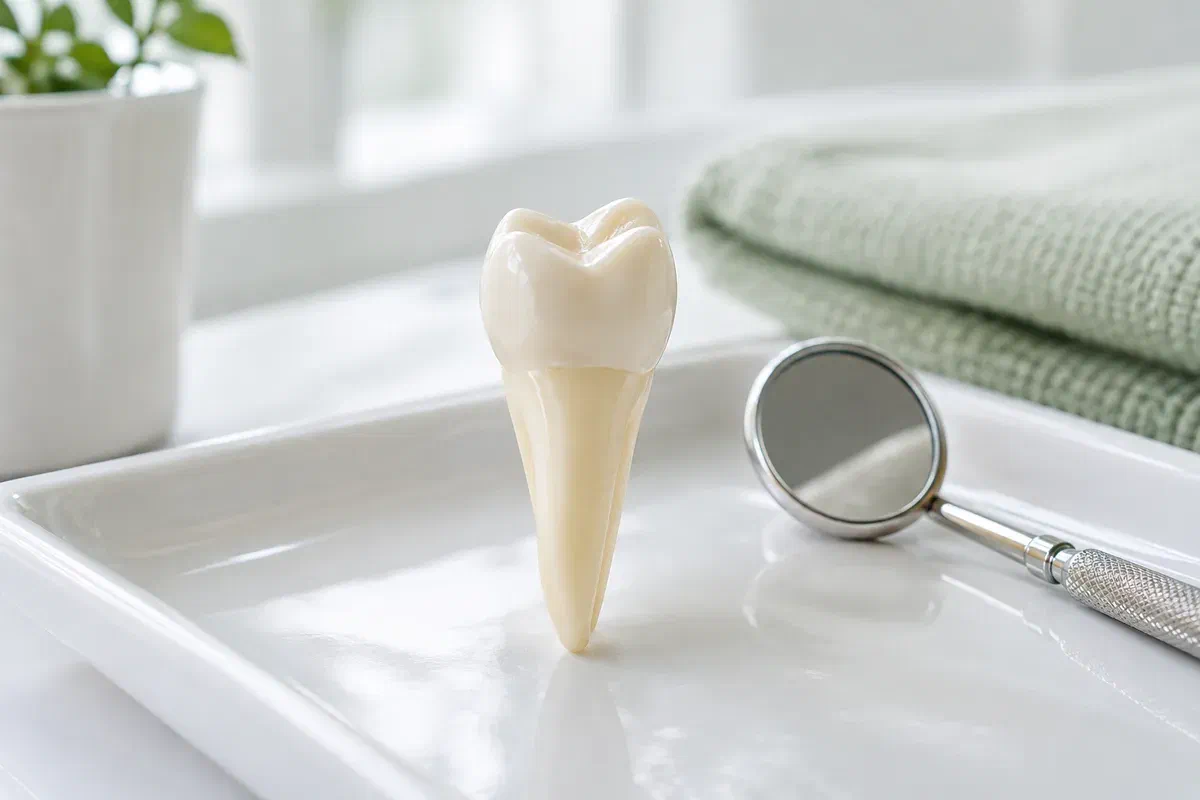
An intact premolar teaching model with a narrow root beside a dental mirror
Signs around older dental work

Is the old filling still doing its job?

Restorations age, and the tooth around them can change too. Pay attention to new sensations, how they behave, and when that tooth was last worked on.

A reaction that was not there before

Teeth with large fillings sometimes notice temperature more. What matters is change. Cold that now lingers, sensitivity that gets steadily worse, or a throb that arrives unprompted all deserve mention. Testing during the examination helps show whether the pulp is involved.

A piece breaking away from the repair

Older fillings can leave thin walls of tooth that eventually snap. A missing corner may look minor yet hide damage deeper down, or it may not. Keep the fragment if you can and let us know whether discomfort came with it.

A crowded area of past work

When neighbouring teeth also have crowns or fillings, it is easy to blame the wrong one. Point to where you feel it rather than naming a tooth. Precise testing lowers the chance of treating a premolar that is not the source.

A pimple-like spot on the gum that comes and goes, swelling, or pain that keeps returning should be examined even if the tooth often feels fine. Please phone us so we can suggest how soon you should be seen.

Saving a well-used tooth

Can this premolar carry another restoration?

If the tooth is suitable, treatment inside the canals followed by a fresh restoration may keep it chewing. The answer rests on the diagnosis, the amount of tooth left after older work is removed, the gum and bone support, and your wider treatment plans.

Replacing a dated filling or crown is also a chance to reconsider appearance, especially for a premolar that shows when you smile. Share any preferences at the planning stage so the new restoration fits both the bite and the look you want.

Patient information: CDA — root canal treatment and restoring the tooth

Clarity on what is happening

Ask which signs point to the pulp rather than just a worn-out filling, and whether anything is still uncertain. You should understand why replacing the old restoration alone would or would not solve the problem.

The full sequence, start to finish

Removing the old work, treating the canals, protecting the tooth temporarily and fitting the final restoration may happen in stages. Seeing that sequence makes comparisons with other choices fairer.

Your own priorities in the plan

Tell us if the tooth is on display, if mornings are easier than evenings, or if past dental experiences were difficult. These details help us arrange appointments sensibly without compromising the treatment itself.

What happens in the chair

Four stages, each with a purpose

Ask what every visit is meant to achieve and who will carry it out. Older restorations, curved roots or earlier treatment can make referral to an endodontist the right call.

  1. Look under the surface

    We review your dental and medical history, examine the premolar, and use suitable tests and X-rays. The aim is to understand both the pulp and the state of the tooth beneath its existing repair. Mention any earlier root work, injuries or braces.

  2. Get the tooth ready

    If treatment is advised and you agree, the area is numbed and a dental dam is placed to isolate the tooth. Part of the old restoration may be removed to reach the canals. Settle on a signal you can use to ask for a break.

  3. Work inside the canals

    Each canal is cleaned, disinfected, shaped and sealed according to the plan. How involved this is depends on the tooth’s anatomy and condition. A temporary filling may protect it between visits, and you will receive care instructions.

  4. Restore what was lost

    With the canals complete, a core build-up and the planned crown or other repair are placed as needed. Check when this will happen, what it will cost and when follow-up is due. Know which parts of the tooth are temporary for now.

The days that follow

Small precautions while the work is unfinished

Your instructions reflect your own treatment, so keep them handy. Get in touch if symptoms intensify or start interfering with daily life.

Patience with the numbness

Hold off on eating until feeling has fully returned, and take care with tea or coffee. After that, spare the treated premolar from heavy biting as directed. Safe foods depend on what restoration the tooth currently has.

Notice which way it is heading

Let us know if tenderness is increasing, if swelling appears, or if the tooth seems to hit first when you bite down. Describe the trend over a few days. That says more than biting on nuts to see whether it still hurts.

See the plan through

Come back for the final restoration even if everything feels settled. Keep cleaning around the tooth as shown, and call if the temporary filling loosens. Schedules change, so let us know early if the next visit needs moving.

Weighing the options

What a heavily restored premolar might need

Expect to hear what each route can achieve, what it requires from you, and the likely course if treatment is postponed.

When the pulp is affected and the tooth can be rebuilt

Root canal and a new restoration

Canal treatment is worth considering when the pulp requires it and the remaining structure can hold a new repair. Discuss the outlook and the restoration together, looking at the whole tooth rather than the canals alone.

If tests suggest the pulp is coping

Replace the old repair only

Sometimes a failing filling is the whole problem. A new restoration may be enough when the nerve shows no sign of lasting damage. Ask what supports that conclusion and how the tooth will be monitored afterward.

When too little sound tooth remains

Extraction and the space left behind

If keeping the premolar is not reasonable, removal and possible replacement can be explored. Ask how the gap would affect your bite and smile, which replacement options suit you, and how much healing and how many visits are involved.

Questions about older teeth

Clearing up the history of a tooth

Long-time Old Milton households often have dental stories spanning several clinics. You do not need to recall exact dates or materials. Share what you can, and ask for the tooth to be shown on an image so the plan makes sense.

(905) 876-4488
My filling is decades old. Does that mean the tooth needs a root canal?
No. Age alone does not decide it. Many older fillings simply need replacing. Root canal treatment is considered when tests and imaging suggest the pulp is irreversibly inflamed or infected. The dentist will explain which findings apply to your tooth.
Can a premolar be treated through a crown that is already there?
Sometimes. The crown’s fit, condition and material all matter, as does whether access through it is practical. In some cases the crown is kept and repaired, and in others replacement is sensible. Bring any information about when it was placed.
What if my old dental records are hard to find?
That is fairly common when a previous dentist has retired. Records can help but are not essential. We can take updated images and examine the tooth as it is today. Tell us what you remember about past treatment on that side.
Is a tooth that already had a root canal ever treated again?
It can be. If problems appear years later, retreatment, referral to an endodontist, or other options may be discussed. The choice depends on what the examination and images show and on whether the tooth can still be restored well.
Will removing an old metal filling weaken the tooth further?
Taking out the old material lets the dentist see what lies underneath, which is often necessary for an accurate plan. The final restoration is chosen to protect what remains. Ask how much tooth is expected to be left and how it will be reinforced.
How often should a treated premolar be checked?
Your dentist will suggest a review schedule, often alongside routine checkups. Follow-up images may be recommended to see how the area is healing. Mention any changes you notice between visits rather than waiting for the next appointment.
From Old Milton to Bronte Street

Let’s take a fresh look at a familiar tooth.

Visit our Bronte Street practice to have a premolar with older dental work assessed, or to review advice from a past dentist. We start with the examination, then explain how the tooth could be treated and restored.

Call us directly for significant pain or swelling. Online requests are meant for appointments that are not urgent.

Visit Milton Dental Clinic
Unit 1, 342 Bronte St. S, Milton, ON L9T 5B7
Get directions Clinic hours
Monday–Thursday
11am–7pm
Friday–Sunday
By appointment only

Areas we serve

  • Milton
  • Oakville
  • Mississauga
  • Georgetown
  • Halton Hills
  • Acton
  • Campbellville
  • Brampton
  • Burlington
  • Puslinch
  • Rockwood
  • Erin
  • Caledon
  • Etobicoke
  • Old Milton
  • Bronte Meadows
  • Timberlea
  • Dorset Park
  • Dempsey
  • Clarke
  • Beaty
  • Coates
  • Harrison
  • Scott
  • Willmott
  • Ford
  • Bowes
  • Cobden
  • Walker
  • Mountain View
  • Milton Heights
  • Hawthorne Village
  • Valley View
  • Fallingbrook
  • Nassagaweya
  • Trafalgar
  • Esquesing
  • Nelson
  • Brookville
  • Moffat
  • Glen Williams
  • Norval
  • Limehouse
  • Stewarttown
  • Ashgrove
  • Hornby
  • Silver Creek
  • Speyside
  • Scotch Block
  • North Oakville
  • River Oaks
  • Glen Abbey
  • West Oak Trails
  • Palermo
  • Bronte Creek
  • College Park
  • Joshua Creek
  • Uptown Core
  • Preserve
  • Iroquois Ridge
  • Lisgar
  • Meadowvale
  • Meadowvale Village
  • Churchill Meadows
  • Erin Mills
  • Central Erin Mills
  • Streetsville
  • East Credit
  • Creditview
  • Heartland
  • Sheridan
  • Mount Pleasant
  • Credit Valley
  • Huttonville
  • Churchville
  • Springbrook
  • Northwest Brampton
  • Bram West
  • Fletcher's Meadow
  • Fletcher's Creek South
  • Alton Village
  • Orchard
  • Millcroft
  • Headon Forest
  • Tansley
  • Brant Hills
  • Tyandaga
  • Kilbride
  • Lowville
  • Aberfoyle
  • Morriston
  • Arkell
  • Hillsburgh
  • Freelton
  • Carlisle
  • Waterdown
  • Flamborough
  • Mountsberg

How can we help?

Milton Dental Clinic

Have a question about your smile? Choose the option that works best for you.

For urgent dental concerns, please call.
Messages are reviewed during clinic hours.