

Illustrative consultation about a premolar tooth concern
Restorative Dentistry

Premolar Root Canals in Rockwood

Premolars look modest, yet the canals inside can be narrow, curved or doubled. For anyone travelling from Rockwood, we explain what the images show, how that shapes treatment, and when a specialist’s involvement helps.

More than meets the eye

Modest on the outside, intricate within

A common reaction to a premolar root canal plan is surprise at how much is involved. The tooth is smaller than a molar, after all. Its interior, however, can hold one canal, two, or occasionally more, and these may divide, curve or narrow along the way.

Premolars are positioned between the canine and the first molar, helping with chewing and often showing in a smile. If the pulp within becomes infected or irreversibly inflamed, treatment of the canal system may make it possible to keep the tooth. Anatomy is one of several factors that shape how that treatment is planned.

Making the trip from Rockwood, you will want those details explained up front. At our Bronte Street practice we review the images with you, describe what the anatomy suggests, and outline the stages and restoration. If a specialist would be better placed to treat the canals, we will say so.

Understand your premolar’s anatomy
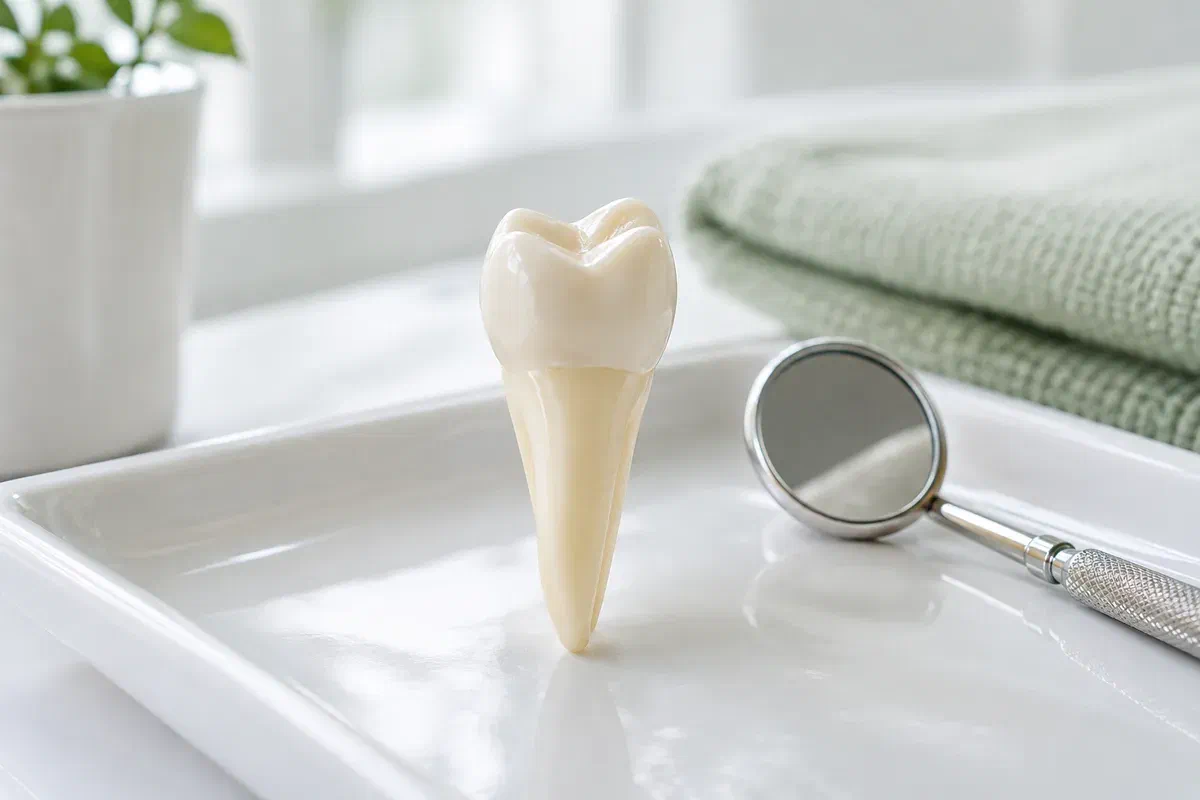
An intact premolar teaching model with a narrow root beside a dental mirror
Symptoms that start the process

What brought the tooth to attention?

The assessment begins with your experience. Explain what triggers the discomfort, how long it lingers, and any work the tooth has had in the past.

Sensitivity that keeps going

Brief sensitivity to cold is normal for many teeth. When it lasts well beyond the trigger, intensifies, or appears unprompted, the pulp may be involved. Describe the pattern, and the dentist will combine it with test results and imaging.

A break in the chewing surface

A lost cusp or cracked filling may expose the tooth to further damage. Its appearance does not reveal how deep the problem runs. Bring any fragment and note whether pain or sensitivity followed.

Hard to pin to one tooth

Neighbouring teeth can share the sensation, making identification tricky. Show us where you feel it rather than naming a tooth. Precise testing helps confirm the source before any complex treatment is undertaken.

Swelling, ongoing pain, or a returning bump on the gum should be assessed even if the tooth settles at times. Call the clinic before travelling so we can advise on timing.

Keeping a complex tooth

Is retention still the sensible choice?

Complex anatomy does not automatically rule out treatment. For a suitable premolar, root canal care and a good restoration may allow it to continue working. The decision weighs the diagnosis, remaining structure, gum and bone support, and the rest of your treatment needs alongside the canal layout.

Appearance and chewing both depend on the final restoration. For a premolar that shows when you smile, raise any priorities about how it will look early, so the restoration is part of the plan regardless of who treats the canals.

Patient information: CDA — root canal treatment and restoring the tooth

Images explained

Ask what the X-rays show about the canals, which findings suggest a pulp problem, and what is still uncertain. You should understand why a simpler filling would or would not suffice.

Who does what, and when

Canal treatment may be done here or by an endodontist, with temporary protection, build-up and restoration to follow. Knowing who handles each stage makes the plan easier to follow.

Your preferences included

Tell us if the tooth is visible, if your schedule is limited, or if past dental care made you uneasy. Those details help us explain arrangements, while the tooth’s clinical needs determine the treatment.

Treatment pathway

Assess the anatomy, then treat with care.

Ask what each appointment will accomplish and which clinician will provide it. Premolars with narrow, curved or multiple canals may be referred to an endodontist for the canal treatment.

  1. Map the tooth

    The dentist reviews your history and examines the premolar, using tests and imaging to evaluate the pulp, the canal anatomy and the potential for restoration. Mention any earlier root work, orthodontic movement or injury to that area.

  2. Prepare for canal work

    If treatment is appropriate and you decide to proceed, local anaesthetic is used and a dental dam isolates the tooth. An access opening is made. Agree on a signal you can use to ask for a pause.

  3. Locate and treat each canal

    The clinician locates the canals, then cleans, shapes, disinfects and seals them as planned. More complex anatomy can mean more time or an extra visit. An interim filling may seal the tooth in between, and you will receive care instructions.

  4. Complete the restoration

    Once the canals are finished, the tooth is given its build-up and planned protective restoration. Confirm timing, costs and follow-up, and check whether your present filling is temporary or final.

After canal treatment

Steady care until the restoration is in

Use the instructions written for your treatment and ask about anything unclear. If symptoms increase or affect daily life, get in touch.

Patience while numb

Avoid chewing until feeling returns, so you do not bite your cheek or tongue, and be careful with hot drinks. Later, spare the treated premolar from heavy chewing as advised. Food choices depend on the restoration currently in place.

Track the direction of symptoms

Tell us about discomfort that builds, swelling that appears, or a bite that feels uneven. Note whether things are improving, steady or worse over a few days. That trend is more useful than testing the tooth with hard foods.

Finish the restorative stage

Return for the final repair even when the premolar feels comfortable. Keep cleaning as shown, and call about a loose temporary. If you were treated by a specialist, make sure the restoration appointment here is booked.

Options for a complex premolar

Anatomy is one factor among several.

Expect to hear what each approach could achieve, the visits and effort it involves, and what may happen if the tooth is left as it is.

Pulp affected, tooth restorable

Canal treatment and restoration

Root canal care may be considered when the pulp requires it and the tooth can support a durable repair, whether treated here or by a specialist. Discuss the outlook and the final restoration as one plan.

Findings point to something simpler

A more limited approach

Not every sensitive premolar needs canal treatment. A filling or other limited care may be appropriate depending on the diagnosis. Ask what supports this and what follow-up would confirm the tooth is responding.

Keeping the tooth is not reasonable

Removal and replacement

If the premolar cannot be retained appropriately, extraction and replacement can be discussed. Ask how the space might affect your bite and smile, which replacement options suit, and how many visits and how much healing are involved.

Anatomy and referral questions

Why a small tooth can take careful work

You don’t need to understand dental anatomy. Ask for the X-ray to be explained, and for anything unclear to be shown again.

(905) 876-4488
What does an endodontist do that a general dentist might not?
Endodontists are dentists with additional training focused on root canal treatment. They often manage teeth with complex anatomy, previous treatment or other challenges. Your dentist will explain if a referral would benefit your particular premolar.
Does being referred mean my tooth is in bad shape?
Not necessarily. Referral often reflects anatomy or access rather than a poor outlook. Ask what prompted the recommendation and how it affects the overall plan, including timing and where each stage will happen.
If a specialist treats the canals, who places the crown?
Often the restoration is completed by your general dentist after the specialist finishes the canal work. Confirm this at the planning stage, so you know where to book and how records will be shared.
Why might extra imaging be suggested for a premolar?
Standard X-rays show the tooth in two dimensions, which can hide overlapping canals or roots. In some cases additional imaging helps clarify the anatomy. Ask what extra information it would provide and whether it is needed for you.
What if a canal is very narrow or hard to find?
Narrow or calcified canals can make treatment more involved. The clinician will explain how they plan to manage it, whether referral is advisable, and how it might affect the visit count or the outlook for the tooth.
How can I keep trips from Rockwood to a minimum?
Ask at the first visit how many appointments are expected and whether any stages can be booked back to back. If a specialist is involved, find out early which visits happen where. Book the final restoration well ahead, and if symptoms change between visits, call before setting out.
Rockwood to Bronte Street

Get a clear picture of the tooth before deciding.

Arrange a premolar assessment at our Bronte Street practice, or bring a referral or plan from another clinic. We review the anatomy with you, then explain the steps to treat and restore the tooth.

Call the clinic for severe pain or swelling. Online requests are intended for routine appointments.

Visit Milton Dental Clinic
Unit 1, 342 Bronte St. S, Milton, ON L9T 5B7
Get directions Clinic hours
Monday–Thursday
11am–7pm
Friday–Sunday
By appointment only

Areas we serve

  • Milton
  • Oakville
  • Mississauga
  • Georgetown
  • Halton Hills
  • Acton
  • Campbellville
  • Brampton
  • Burlington
  • Puslinch
  • Rockwood
  • Erin
  • Caledon
  • Etobicoke
  • Old Milton
  • Bronte Meadows
  • Timberlea
  • Dorset Park
  • Dempsey
  • Clarke
  • Beaty
  • Coates
  • Harrison
  • Scott
  • Willmott
  • Ford
  • Bowes
  • Cobden
  • Walker
  • Mountain View
  • Milton Heights
  • Hawthorne Village
  • Valley View
  • Fallingbrook
  • Nassagaweya
  • Trafalgar
  • Esquesing
  • Nelson
  • Brookville
  • Moffat
  • Glen Williams
  • Norval
  • Limehouse
  • Stewarttown
  • Ashgrove
  • Hornby
  • Silver Creek
  • Speyside
  • Scotch Block
  • North Oakville
  • River Oaks
  • Glen Abbey
  • West Oak Trails
  • Palermo
  • Bronte Creek
  • College Park
  • Joshua Creek
  • Uptown Core
  • Preserve
  • Iroquois Ridge
  • Lisgar
  • Meadowvale
  • Meadowvale Village
  • Churchill Meadows
  • Erin Mills
  • Central Erin Mills
  • Streetsville
  • East Credit
  • Creditview
  • Heartland
  • Sheridan
  • Mount Pleasant
  • Credit Valley
  • Huttonville
  • Churchville
  • Springbrook
  • Northwest Brampton
  • Bram West
  • Fletcher's Meadow
  • Fletcher's Creek South
  • Alton Village
  • Orchard
  • Millcroft
  • Headon Forest
  • Tansley
  • Brant Hills
  • Tyandaga
  • Kilbride
  • Lowville
  • Aberfoyle
  • Morriston
  • Arkell
  • Hillsburgh
  • Freelton
  • Carlisle
  • Waterdown
  • Flamborough
  • Mountsberg

How can we help?

Milton Dental Clinic

Have a question about your smile? Choose the option that works best for you.

For urgent dental concerns, please call.
Messages are reviewed during clinic hours.