

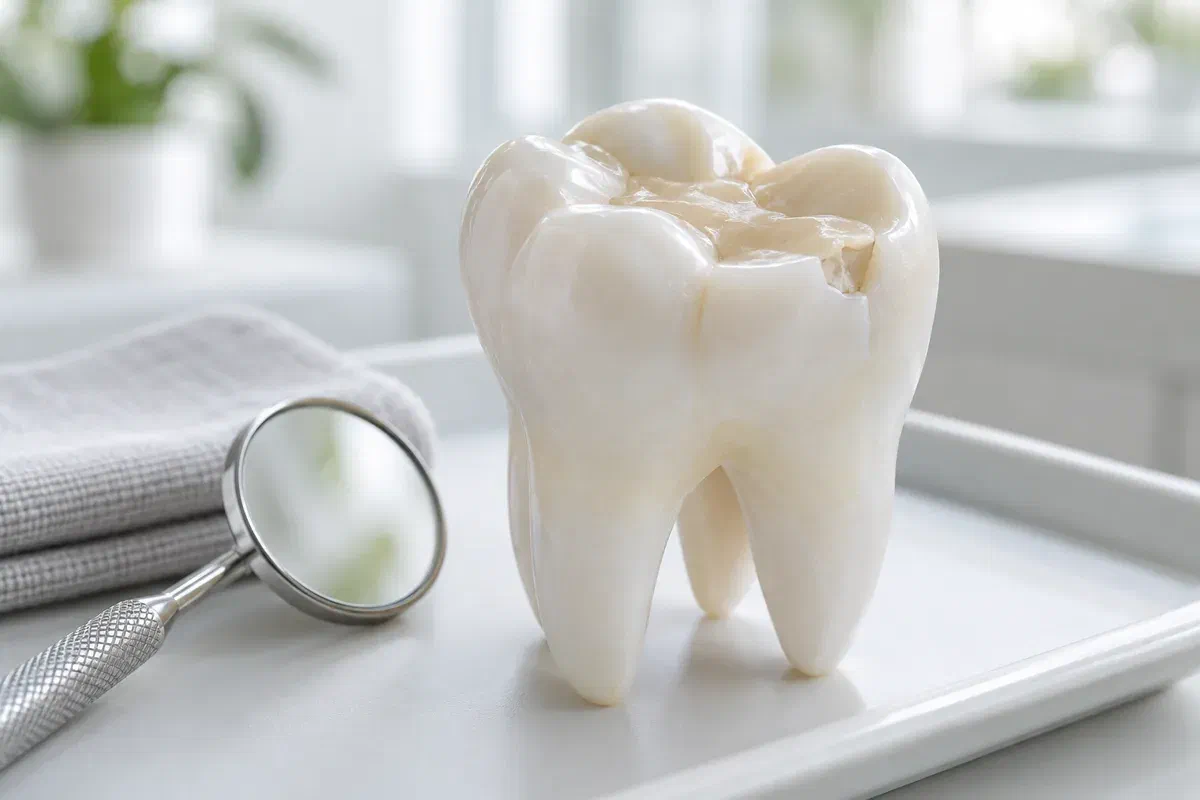
Illustrative dental consultation about a newly rough or broken filling
Restorative Dentistry

Replacement of Broken Fillings

A broken filling can change how a tooth feels overnight. Arrange an assessment in Milton to understand the damage, protect the remaining tooth, and discuss the right repair.

A closer look at broken filling replacement

A rough edge is a reason to look at the whole repair.

You might notice a missing corner while eating, a rough area with your tongue, or floss catching where it did not before. When a filling breaks, the first question is what has actually fractured. The damage may involve the restoration alone, part of the surrounding tooth, or a larger problem beneath the visible surface.

Replacement of a broken filling begins with that assessment. A small defect may sometimes be repaired, while a damaged restoration may need removal and replacement. If the tooth has lost more support, a different type of restoration may be considered. The size of the piece you notice does not always reveal the extent of the problem.

At Milton Dental Clinic, tell us when the break happened and whether the tooth has become painful, sensitive, or difficult to use. Bring any fragment you have without trying to put it back. We can discuss the findings and the practical steps needed to restore and protect the tooth.

Arrange a broken filling assessment
Illustrative molar model showing a small defect in a tooth-coloured filling
What to tell us when you call

The details help us understand the change.

A broken filling can be uncomfortable, but not every break feels the same. Explain the symptoms and whether the damaged edge is injuring your tongue or cheek.

A sharp or catching surface

A rough area may be an exposed filling edge or a piece of enamel that has fractured beside it. Avoid picking at the area with a tool. Describe whether it catches food, tears floss, or rubs soft tissue so the team can advise on the visit.

A new reaction to food or drink

Mention temperature sensitivity, discomfort with sweets, or tenderness during chewing. Tell us whether it stops quickly or continues after the trigger is gone. The pattern helps guide assessment of the remaining tooth and the tissues inside it.

A filling that has broken more than once

Repeated damage deserves a review of the tooth, restoration, and bite. Explain when previous repairs were made and whether a particular area keeps failing. Simply replacing the same shape without considering the cause may not address the underlying issue.

A comfortable tooth still needs review after a filling breaks. Absence of pain does not show whether the remaining restoration or surrounding enamel is adequately supported.

What an appropriate repair aims to do

Restore a useful surface and understand why it broke.

The aim is to rebuild the affected area in a way that suits the remaining tooth. That includes the chewing surface, contact with neighbouring teeth, and access for cleaning. The dentist can explain whether a direct filling is appropriate or whether a larger restoration needs consideration.

An assessment also creates an opportunity to discuss the circumstances of the break. A large older repair, decay, a cracked cusp, or heavy biting forces may change the recommendation. Understanding those findings helps you choose a plan with realistic expectations rather than focusing only on filling the visible space.

Patient information: Cleveland Clinic — dental filling care and complications

A repair with a defined scope

Ask which part needs treatment and whether sound material can remain. A limited repair and a complete replacement involve different amounts of intervention. The explanation should make clear why the proposed extent is appropriate.

A surface designed for everyday use

Discuss the shape and contact that need rebuilding, particularly if food has been trapping beside the tooth. Let the dentist know how the tooth felt before the break so the assessment includes changes beyond the missing piece.

A chance to review contributing factors

Mention clenching, grinding, chewing ice, or a recent change in your bite. These observations may be relevant to the repair plan and any protective advice. They do not establish the cause on their own, but they help the conversation.

From broken edge to planned restoration

Assess first. Explain the repair. Check how it works.

A visit may involve a final repair or an interim step, depending on the findings and available treatment time. Ask what will be completed and what may need a further appointment.

  1. Identify the damage

    The dentist examines the filling and surrounding tooth, reviews symptoms, and considers imaging where useful. The assessment looks for more than the visible missing corner. Tell us about any earlier discomfort or changes before the break.

  2. Discuss the proposed treatment

    Review the repair options, material, expected fee, and any uncertainty about deeper damage. Ask what would happen if the tooth needs more care once the old restoration is removed. You should understand the plan before treatment begins.

  3. Prepare and rebuild the area

    Comfort and isolation measures are used as appropriate. The damaged restoration and affected tooth tissue are managed, then the selected repair is placed or the tooth is temporarily protected. The exact approach depends on the defect and remaining support.

  4. Check the finished shape

    The dentist reviews the bite and the restoration’s contours. Ask about eating, cleaning, and follow-up, particularly if the repair is temporary. Tell the team if something feels unexpectedly high or sharp rather than assuming it must stay that way.

Before and after the repair

Keep the tooth clean and avoid testing its limits.

Follow the instructions for the material and stage of treatment. If you are waiting for an appointment, call for advice about a symptom that changes.

Reduce pressure on the damaged area

Avoid biting hard foods with the affected tooth while awaiting care. Choose food temperatures that do not provoke sensitivity. Do not repeatedly probe the break or try to remove material that still appears attached.

Follow the instructions after treatment

Wait until numbness wears off before chewing, and follow any additional restrictions for a temporary restoration. Ask when the tooth can return to ordinary use. A new repair may have different instructions from the filling it replaced.

Report persistent food trapping or discomfort

Keep brushing and cleaning between teeth as advised. Contact the clinic if the bite feels uneven, floss repeatedly catches, or discomfort is worsening. Describe the specific problem rather than waiting for another piece to break.

Patient information: NHS Wales — care while awaiting restoration assessment

Choosing the repair

The remaining tooth determines what can hold reliably.

Ask why the proposed option suits the damage. A familiar filling material is not necessarily the only consideration when a tooth has changed.

When the rest remains suitable

Repair a limited defect

A localized repair may be considered when the surrounding restoration and tooth are sound enough. The dentist assesses whether that approach can address the defect appropriately. Ask what would be retained and what needs replacement.

When a direct restoration is appropriate

Replace the filling

A new filling may be suitable if there is enough healthy tooth to support it. Discuss material choice in relation to the cavity, moisture control, and biting forces. The aim is a repair suited to the present tooth.

When support or the pulp is affected

Plan more extensive care

A crown or partial-coverage restoration may be considered for a weakened tooth. If the pulp requires treatment, replacing the filling alone is insufficient. Ask which finding changes the plan and how the additional care would be sequenced.

Broken filling questions

Know what to do with the change you have noticed.

You can arrange an assessment without knowing whether the fragment was filling material or tooth. Start with what happened and what feels different.

(905) 876-4488
Can I tell at home whether the filling or the tooth has broken?
It can be difficult, especially with tooth-coloured materials. Avoid trying to enlarge the opening or pull at a remaining edge. Bring any fragment you have and explain the event. The examination determines which structures are involved and whether there is damage that is not easily visible.
Does a tiny chip mean the entire filling must be replaced?
Not always. A limited repair may be possible, but the decision depends on the rest of the filling, the tooth, and the position of the defect. Ask why a small repair is or is not suitable rather than judging the treatment needed only by the size of the missing piece.
Should I save a fragment from a broken filling?
If you already have it, keep it in a small clean container and bring it to the appointment. Do not put it back in your mouth or try to glue it into place. It may help explain what happened, but it is not necessarily something that can be reused.
Why did my filling break while I was eating something soft?
The final break may happen during an ordinary meal even when the restoration or tooth was already weakened. The event alone does not identify the cause. Tell the dentist about previous symptoms, earlier repairs, and any known grinding so the assessment can consider the broader history.
Can the dentist replace my broken filling during the assessment visit?
Sometimes, but it depends on the findings, appointment time, and treatment needed. An interim repair or another visit may be appropriate. When booking, describe the break and symptoms; at the appointment, ask whether the proposed care is temporary or intended to complete the repair.
What if my replacement filling feels too high when I close my teeth?
Contact the clinic and describe the feeling, especially if the tooth seems to touch before its neighbours. A review can check the bite and other possible causes of discomfort. Avoid repeatedly clenching to test it or assuming you must wait until the next routine examination.
Replacement of broken fillings in Milton

Let’s check the break and plan the next repair.

Visit our Bronte Street practice for an assessment of a damaged filling. Bring the details of what happened, any saved fragment, and your questions about restoring the tooth for everyday use.

Please call for pain, swelling, or a sharp edge causing injury. Online appointment requests are for non-urgent enquiries.

Visit Milton Dental Clinic
Unit 1, 342 Bronte St. S, Milton, ON L9T 5B7
Get directions Clinic hours
Monday–Thursday
11am–7pm
Friday–Sunday
By appointment only

How can we help?

Milton Dental Clinic

Have a question about your smile? Choose the option that works best for you.

For urgent dental concerns, please call.
Messages are reviewed during clinic hours.