Floss that tears or sticks
When floss frays at one contact, a rough margin or missing corner is a common reason. Do not dig at it with a pick. Tell us whether food packs there, whether the edge rubs your cheek, and how long it has been happening.


Floss that suddenly shreds, or food that packs into one spot after every meal, can point to a broken filling. Visiting from Burlington, you can have the edge checked and the tooth properly rebuilt.
Plenty of broken fillings are found not at mealtime but at the bathroom sink. The floss slides in as usual, then frays or snaps on the way out, and the same gap fills with food after every lunch. Something has changed at the edge between filling and enamel. It could be a chip in the material, a flake of tooth, or a weakness that runs deeper than the surface.
Figuring out which comes before deciding on treatment. A small flaw at the margin can occasionally be touched up. A restoration that has cracked or pulled away might need to be removed and placed again. And when the tooth wall itself has thinned, a sturdier kind of restoration could be the more sensible conversation. How the floss behaves does not tell you how much is damaged.
For Burlington households, a call ahead helps us understand the change. Let us know when you first noticed it and whether the tooth is tender, reacts to temperature, or feels odd when you chew. Save any piece that came away, without trying to wedge it back. Then we can examine the area and talk you through what it needs.
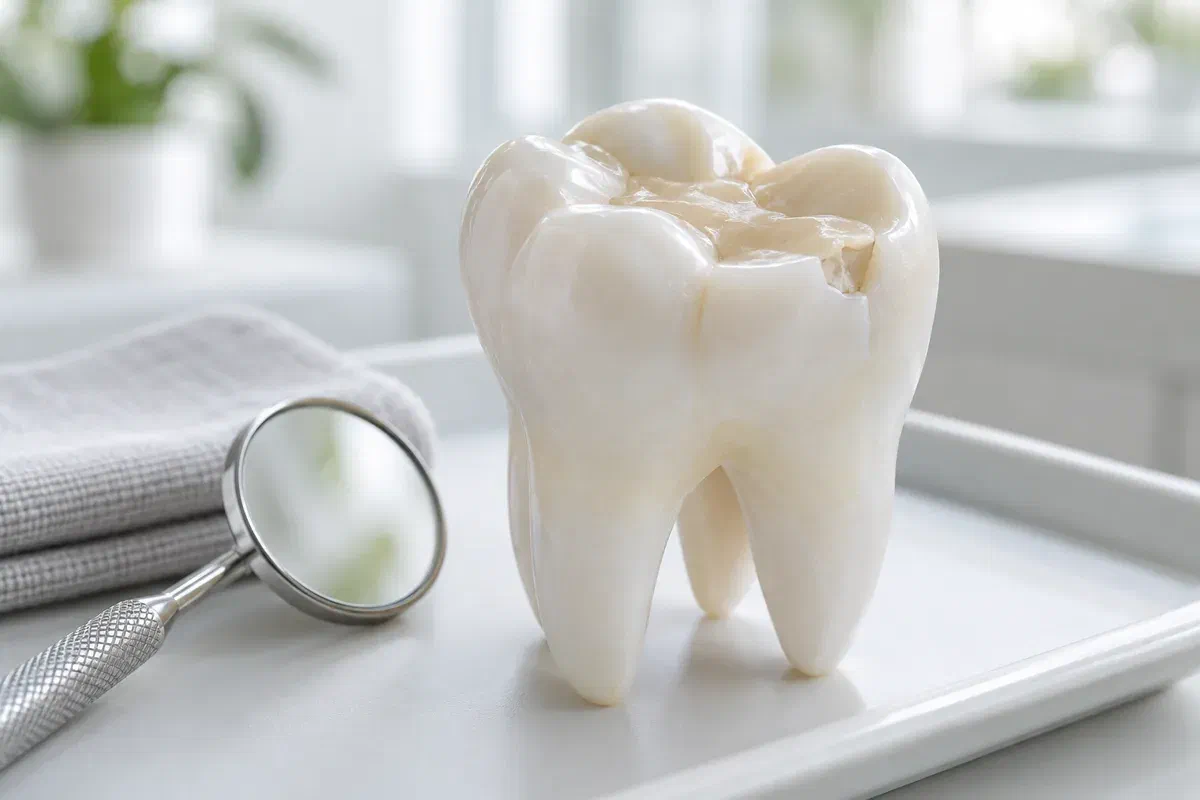
A broken filling rarely announces itself the same way twice. Share what you have noticed, including whether a sharp spot is bothering your tongue or the inside of your cheek.
When floss frays at one contact, a rough margin or missing corner is a common reason. Do not dig at it with a pick. Tell us whether food packs there, whether the edge rubs your cheek, and how long it has been happening.
Sensitivity to cold drinks, sweets, or chewing can follow a break. Note whether it stops right away or keeps going once the trigger has passed. Those details guide the dentist in judging the health of the tooth beneath the repair.
If the same spot between two teeth has been repaired before and is catching again, mention it. Fixing only the visible shape without reviewing the bite, the tooth, and the earlier work may let the same problem come back.
A painless tooth can still have a broken filling that needs attention. Lack of discomfort does not tell you whether the remaining restoration and enamel are well supported.
Between-teeth breaks show why shape matters so much. The replacement should restore a firm contact with the neighbouring tooth, a chewing surface that fits your bite, and smooth margins that floss can pass cleanly. The dentist will discuss whether a direct filling can achieve that or whether a larger restoration deserves thought.
It is also worth understanding the cause. An older wide filling, decay at the contact, a cracked cusp, or heavy chewing can each change the plan. Seeing the bigger picture lets you agree to a repair with realistic expectations rather than one aimed only at stopping the floss from catching.
Patient information: Cleveland Clinic — dental filling care and complications
Ask which part of the filling has failed and whether the rest is sound enough to keep. Touching up a margin and replacing the whole restoration are very different, and you should understand why one is suggested.
Describe where food collects and how the tooth felt before. A properly restored contact and contour help with chewing and cleaning, and your history helps the dentist consider changes beyond the visible chip.
Let the dentist know about clenching, grinding, ice chewing, or a recent shift in your bite. These observations do not establish a cause on their own, but they can inform the repair and any protective advice.
You might leave with a completed restoration or a temporary one, depending on the findings and how long the appointment is. It is reasonable to ask in advance.
Your dentist checks the restoration and the surfaces between the teeth, asks about symptoms, and may use an X-ray, which is often helpful for areas you cannot see. Mention any sensitivity or food trapping that started before the obvious break.
Go over the possible repairs, the suggested material, the expected fee, and anything uncertain until the old filling is removed. Ask how the plan might change if deeper damage turns up. Make sure it is clear to you before work starts.
Freezing and isolation are used as needed. The failing material and any compromised tooth are cleared, then the new restoration is shaped to meet its neighbour, or the tooth is temporarily protected. The technique depends on the defect and remaining structure.
The dentist tests how your teeth meet and often checks that floss passes the contact properly. Ask about eating, cleaning, and follow-up, especially with a temporary. If anything feels high or rough later, please tell us.
Instructions vary with the material and with whether the restoration is final. If symptoms change while you are waiting for a visit, give us a call.
Chew on the opposite side and skip hard foods for now. Avoid temperatures that trigger sensitivity. When flossing near the break, slide the floss out sideways instead of snapping it up, and do not keep testing the gap.
Wait for numbness to fade before eating, and follow any extra limits for a temporary filling. Ask when you can floss and chew normally on that tooth. A new restoration may have different guidance from the old one.
Keep brushing and cleaning between your teeth as advised. Contact the clinic if floss still shreds, food keeps packing in, or the tooth is becoming sore. Describe exactly what is happening rather than waiting for more to break.
Patient information: NHS Wales — care while awaiting restoration assessment
You can book without knowing whether the fragment was filling or tooth. Tell us what you noticed and how the tooth feels now.
Visit our Bronte Street practice for an assessment of a broken or catching filling. Bring what you have noticed while flossing or eating, any piece that came away, and your questions about restoring the tooth.
Call us for pain, swelling, or a sharp edge injuring your mouth. Online requests are for non-urgent appointments only.
