A fractured edge or split surface
A rough patch may be broken filling or enamel cracked away beside it. Do not grind it down with your teeth or a file. Let us know if it catches food, shreds floss, or irritates your cheek, since that guides timing.


Waking with a tight jaw and finding a filling cracked is not a coincidence worth ignoring. For households in Erin and Hillsburgh, we examine the break, consider the forces on it, and plan a repair.
Clenching through a tense day or grinding in your sleep often goes unnoticed, and a cracked filling is sometimes how it first comes to light. Heavy force is one possible part of the story, though not the only one. The first job is still to establish what broke: the restoration, a section of enamel along its edge, or a tooth already weakened beneath the surface.
From there the dentist can consider repair options. A small flaw may be mended where the rest of the filling holds. A cracked restoration may need full replacement. If the tooth has lost walls or cusps, a restoration that covers and braces it might be discussed. Bite forces can influence every one of those choices, and the visible chip rarely tells you the full extent.
Calling from Erin, mention when it broke, whether the tooth is tender, sensitive, or sore when you chew, and anything you have noticed about clenching or grinding, such as jaw stiffness or worn edges. Keep any fragment in a small container rather than pushing it back. We will go over what the examination shows before suggesting treatment.
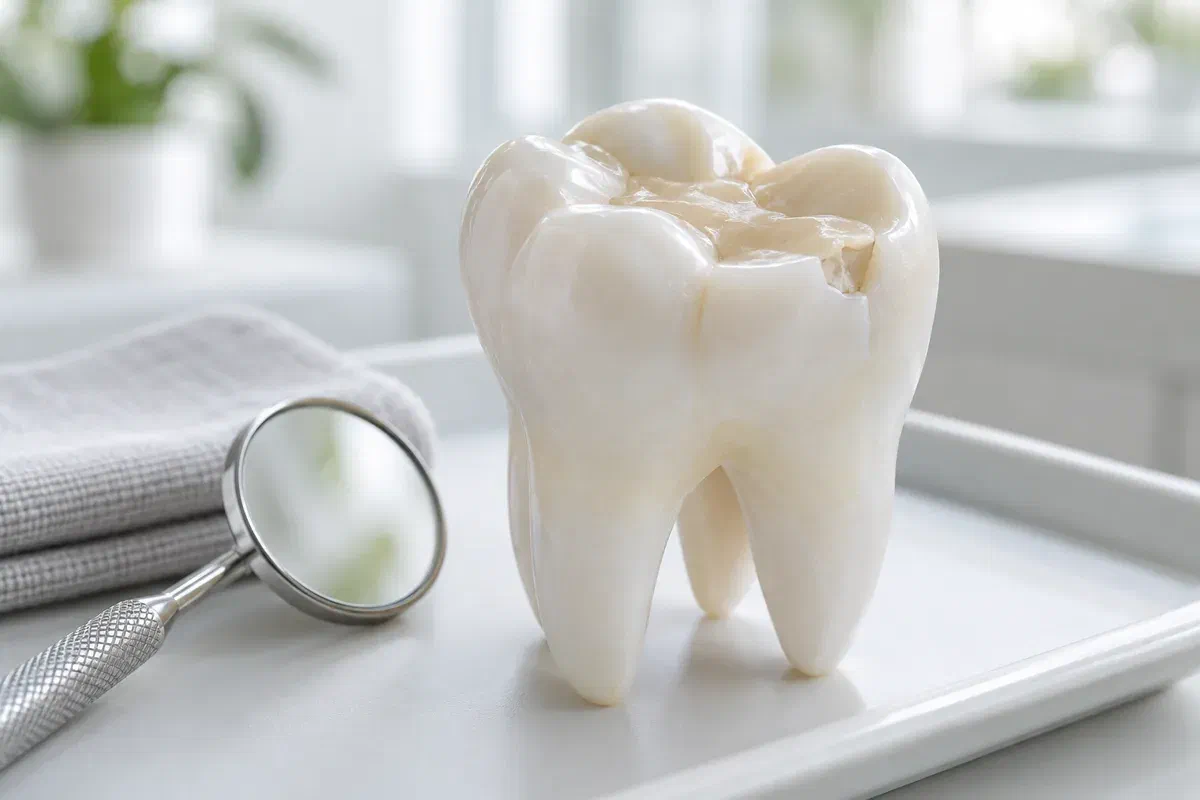
Every break is different, and some carry signs of heavy biting. Describe what you notice, including any sharp spot catching your tongue or cheek.
A rough patch may be broken filling or enamel cracked away beside it. Do not grind it down with your teeth or a file. Let us know if it catches food, shreds floss, or irritates your cheek, since that guides timing.
Pain on biting, sensitivity to cold or sweets, or soreness after clenching are all worth describing. Say how long the discomfort lasts. That helps the dentist judge the tooth, its nerve, and whether a crack might be involved.
Several fillings breaking, or one breaking repeatedly, can point to heavy forces. Share what you remember of earlier repairs. Replacing the same shape again without thinking about your bite may not prevent the next fracture.
Comfort is not proof of strength. A broken filling may not hurt while the remaining restoration and enamel are under strain and poorly supported.
A replacement should suit both the tooth and the way your teeth meet. It needs a chewing surface that contacts the opposite teeth evenly, a snug contact with its neighbours, and edges you can keep clean. You will hear whether a direct filling can handle the load or whether a stronger restoration should be considered.
Looking at causes is especially useful when force may play a part. Clenching, grinding, a large older restoration, decay, or a cracked cusp can each change the recommendation. Understanding which are present helps you agree to a plan with realistic expectations, including any steps to protect the repair.
Patient information: Cleveland Clinic — dental filling care and complications
Ask which part of the filling failed and whether the rest can stay. A limited repair and a full replacement differ, and in a tooth under heavy load, the reasoning for the proposed extent is worth understanding.
Describe what chewing on that side was like beforehand and whether food now wedges in beside it. Restoring even contact and the correct contour helps spread forces and makes cleaning easier.
Mention night grinding, daytime clenching, chewing ice or pens, and any recent shift in your bite. These do not prove the cause, but they may lead to a conversation about a night guard or other protective advice.
Depending on the findings and time booked, you may leave with a completed restoration or a temporary one. Ask beforehand so you know what to plan for.
The dentist examines the filling and tooth, checks for signs of wear or cracks, asks about symptoms, and may take an X-ray. The goal is to understand both the damage and the forces behind it.
You will go over the options, the material, the expected fee, and any uncertainty until the old filling is out. Ask how your bite affects the choice and what would change if a crack is found underneath.
Local anaesthetic and moisture control are used as needed. Once the failing material and any weakened tooth are cleared away, the new restoration is built up, or the tooth gets an interim cover. The approach depends on the defect and support left.
Because uneven contact can concentrate force, the bite is checked carefully before you leave. Ask about chewing, cleaning, and follow-up. If the tooth feels high once the numbness fades, call so it can be adjusted.
Follow the guidance for your material and stage of treatment. Call for advice if anything changes before your visit.
Chew on the other side, avoid hard or chewy foods, and choose comfortable temperatures. Try to notice and relax clenching during the day. Do not test the broken area or pull at attached pieces.
Wait for the freezing to wear off before eating, and follow any limits for a temporary. Ask when normal chewing can resume and whether a night guard or other protection is worth discussing.
Continue your regular brushing and flossing as advised. Contact the clinic if your bite feels uneven, floss snags, or the tooth is sore after clenching. Specific details help us decide what to review.
Patient information: NHS Wales — care while awaiting restoration assessment
You can book without knowing whether the fragment was tooth or filling. Tell us what happened and anything you notice about your bite.
At our Bronte Street practice, a broken filling is examined alongside your bite, and a suitable repair is planned. Bring a note of when it broke, the fragment if you saved it, and your questions about protecting the tooth.
For severe pain, swelling, or an edge cutting your mouth, call us directly. Online booking is for non-urgent visits.
