

Illustrative dental consultation about a newly rough or broken filling
Restorative Dentistry

Replacement of Broken Fillings in Oakville

Does a broken filling mean dropping everything, or can it wait a few days? From Oakville, start with a quick call. We help you sort urgency, then examine the tooth and plan its repair.

How soon should you be seen?

Today, this week, or next month?

The first thing many people want to know after a filling cracks is how quickly they need to act. That depends on what actually broke. A chip off the surface of the material is different from a split running into the tooth, and both are different from a break that exposes a deeper problem. You often cannot tell which from the mirror.

So timing and treatment both come back to an examination. A minor defect can sometimes be patched; a filling that is fractured through may need replacing; a tooth that has lost a wall might need a different type of restoration entirely. The size of the piece in your hand is a poor guide to how much the tooth needs.

Heading up from Oakville, a phone call is the sensible first step. Tell us when it happened, whether there is pain, swelling, or sensitivity, and whether you can chew comfortably. Hang on to any fragment in a clean container instead of trying to refit it. That conversation lets us advise how soon to book, and the examination fills in the rest.

Arrange an assessment of your filling
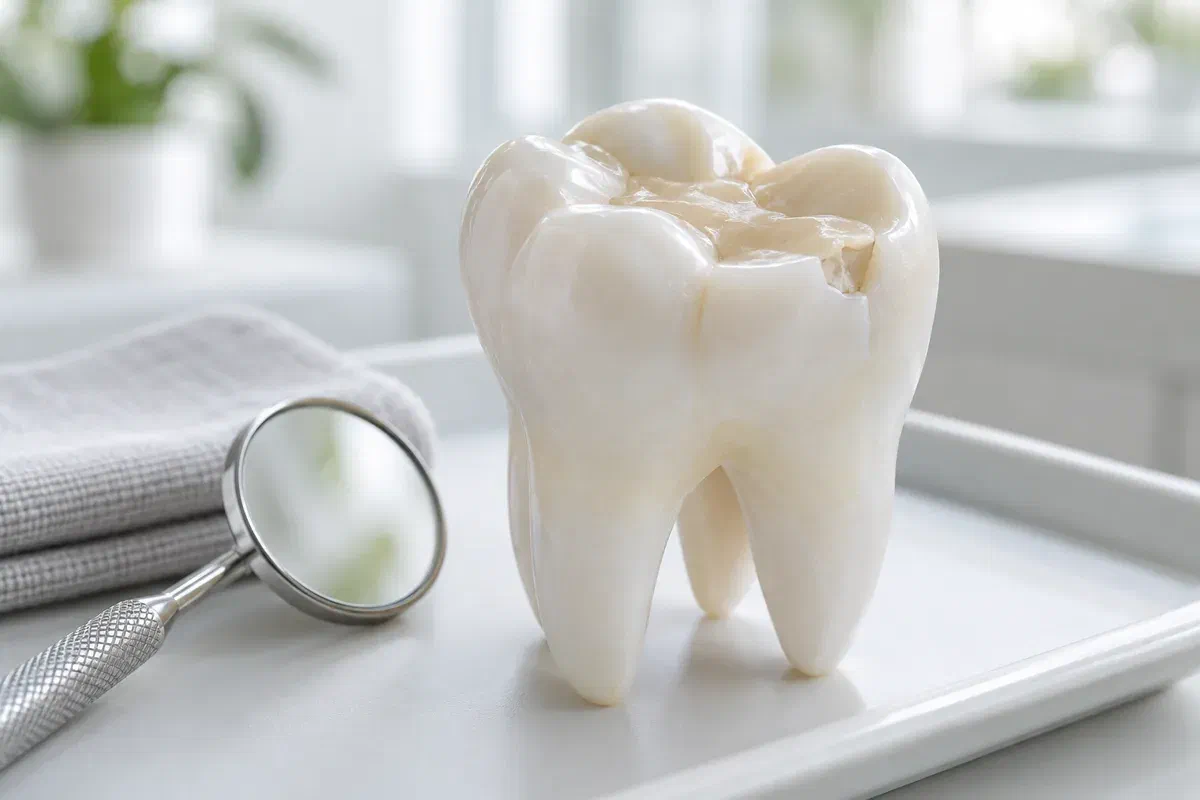
Illustrative molar model showing a small defect in a tooth-coloured filling
Helping us judge urgency

Tell us which of these you notice

Not every broken filling is an emergency, and not every comfortable one can be ignored. Describe your symptoms, including anything sharp catching your tongue or cheek, so we can prioritise your visit sensibly.

A rough spot cutting soft tissue

A sharp edge might be leftover filling or fractured enamel. Please do not try to file it down. If it is scraping your cheek, shredding floss, or packing food, say so, because an edge that is injuring your mouth may need attention sooner.

Pain or sensitivity that hangs on

Mention whether cold, heat, sugar, or chewing causes discomfort, and whether it settles quickly or lingers. Lasting pain, or an ache that wakes you, tells the team something different from a quick zing and can change how fast you should come in.

A repeat break on the same tooth

If this filling has failed before, the timing of the next repair matters less than understanding why. Share when earlier work was done. Repeating the same restoration without reviewing the tooth and bite may lead to another break.

Comfort does not equal stability. A tooth can feel normal after a filling breaks while the remaining restoration or enamel is left weak, so it still needs to be seen.

Beyond the immediate fix

Rebuild the tooth, then understand the break

Once urgency is settled, the focus shifts to restoring the tooth properly. A sound repair suits the structure that remains, gives you a usable chewing surface, sits snugly against neighbouring teeth, and leaves edges you can keep clean. The dentist will tell you whether a direct filling fits or if more coverage should be weighed.

The visit is also a chance to look at why it failed. A large or long-standing restoration, fresh decay, a cracked cusp, or strong biting forces can each change what is advised. That understanding helps you decide on a plan with realistic expectations, rather than treating the visible gap as the only issue.

Patient information: Cleveland Clinic — dental filling care and complications

Knowing the extent before you agree

Ask which section needs work and whether the rest of the filling can stay. A localized repair and a full replacement are quite different interventions, and the reasoning behind the proposed scope should be clear to you.

A surface that handles everyday eating

Explain whether food has been trapping next to the tooth and how it felt before it broke. Restoring the right contour and contact helps chewing and cleaning, and your description lets the dentist look beyond the missing fragment.

Clues about what led to the break

Mention grinding, clenching, chewing ice, or any change in how your teeth come together. These details do not prove what caused the damage, but they can shape the repair and the advice on protecting it later.

What a repair visit involves

Look closely. Agree the plan. Rebuild. Recheck.

Some visits end with a finished restoration and others with a temporary cover, depending on what the dentist finds and the time available. Ask which applies when you book.

  1. Examine the tooth

    The dentist checks the broken filling and the tooth around it, reviews your symptoms, and may take an X-ray where it helps. The aim is to see what the missing corner does not show. Tell us about any discomfort before the break.

  2. Explain the choices

    You will hear about the repair options, the material, the expected fee, and any uncertainty about deeper damage. Ask what happens if more treatment is needed once the old filling is removed. Treatment begins only once you understand the plan.

  3. Restore the area

    Freezing and isolation are used where appropriate. The damaged material and any affected tooth structure are dealt with, and then the new restoration is placed, or the tooth is covered temporarily. The method depends on the defect and remaining support.

  4. Check bite and shape

    The dentist reviews how the tooth meets its opposite and how the new surface is contoured. Ask about eating, cleaning, and follow-up, especially for a temporary repair. If something feels high or sharp later, let us know.

While you wait, and after

Protect the tooth and watch for changes

Follow the guidance for the material and stage of treatment. If a symptom changes before your appointment, call for advice rather than waiting.

Keep pressure off the broken side

Avoid hard food on that tooth until it is treated, and pick food and drink temperatures that do not provoke sensitivity. Try not to keep probing the gap, and leave any piece that still seems attached where it is.

Follow your post-repair advice

Wait until the freezing wears off before eating, and observe any limits that apply to a temporary filling. Ask when the tooth can go back to normal use. A replacement may come with different instructions than the one before.

Call if food traps or soreness grows

Continue brushing and cleaning between teeth as advised. Contact us if your bite feels uneven, floss keeps catching, or discomfort is getting worse. Describe the exact change rather than waiting for something else to break.

Patient information: NHS Wales — care while awaiting restoration assessment

Matching the repair to the damage

Three directions the plan can take

Ask why a specific option suits what was found. Simply repeating the material you had before is not always the best fit for a tooth that has changed.

If the surrounding filling is sound

A small, targeted repair

A localized repair may be an option when the rest of the restoration and tooth are in good enough condition. The dentist will assess whether it can address the defect properly. Ask what would be kept and what replaced.

If healthy tooth can support it

A full replacement filling

With plenty of healthy structure left, the old material can come out and a fresh filling go in. Which material makes sense depends on cavity size, whether the site stays dry during placement, and how hard that tooth works when you chew.

If support or the pulp is compromised

Wider restorative care

A tooth that has thinned or lost a cusp may be better off with an onlay or crown. When the nerve is involved, it needs its own treatment, and a new filling on top would not solve that. Ask what tipped the decision and which step comes first.

Timing and treatment

What people ask when a filling first breaks

You can call without knowing whether the piece was filling or tooth. Describe what happened and how the tooth feels, and we will take it from there.

(905) 876-4488
When does a broken filling count as a dental emergency?
Severe pain, swelling, a fever, or an edge that is cutting your mouth are reasons to call promptly. Swelling that affects breathing or swallowing needs emergency medical care. If the tooth is comfortable, it still needs assessment, but the team can help you choose a sensible time.
Is it okay to take a pain reliever while I wait?
Many people use over-the-counter pain relief while waiting for an appointment. Follow the package directions and check with a pharmacist or doctor if you have health conditions or take other medicines. Do not place tablets against the gum or tooth.
Can I go on holiday with a broken filling?
It is better to have the tooth assessed before you leave if possible, since a weakened tooth can break further or become sore while you are away. Call to explain your timing, and the team can suggest whether an interim step makes sense.
Could a small chip turn into a bigger break if I leave it?
It can. A broken edge may trap food, let the tooth weaken further, or give way under chewing forces. That does not mean every chip needs a complete replacement, but it is worth having the tooth assessed rather than waiting to see what happens.
Will one appointment be enough to replace the filling?
Often a replacement can be done in a single visit, but it depends on the findings and the time available. A temporary filling or a follow-up appointment is sometimes more appropriate. Ask whether the work done on the day is intended to be final.
What should I do if the new filling feels high afterwards?
Call the clinic and explain what you feel, particularly if the tooth contacts before the others when you bite. A quick review can check the bite and look for other causes. Avoid clenching repeatedly to test it, and do not wait for a routine checkup.
Planning a visit from Oakville

Call first. We will help you decide what comes next.

Our Bronte Street practice can assess a broken filling and plan the right repair. Bring a sense of when it happened, any piece you kept, and your questions about getting the tooth back to normal use.

Phone us about pain, swelling, or a sharp edge causing injury. Online appointment requests are meant for non-urgent concerns.

Visit Milton Dental Clinic
Unit 1, 342 Bronte St. S, Milton, ON L9T 5B7
Get directions Clinic hours
Monday–Thursday
11am–7pm
Friday–Sunday
By appointment only

Areas we serve

  • Milton
  • Oakville
  • Mississauga
  • Georgetown
  • Halton Hills
  • Acton
  • Campbellville
  • Brampton
  • Burlington
  • Puslinch
  • Rockwood
  • Erin
  • Caledon
  • Etobicoke
  • Old Milton
  • Bronte Meadows
  • Timberlea
  • Dorset Park
  • Dempsey
  • Clarke
  • Beaty
  • Coates
  • Harrison
  • Scott
  • Willmott
  • Ford
  • Bowes
  • Cobden
  • Walker
  • Mountain View
  • Milton Heights
  • Hawthorne Village
  • Valley View
  • Fallingbrook
  • Nassagaweya
  • Trafalgar
  • Esquesing
  • Nelson
  • Brookville
  • Moffat
  • Glen Williams
  • Norval
  • Limehouse
  • Stewarttown
  • Ashgrove
  • Hornby
  • Silver Creek
  • Speyside
  • Scotch Block
  • North Oakville
  • River Oaks
  • Glen Abbey
  • West Oak Trails
  • Palermo
  • Bronte Creek
  • College Park
  • Joshua Creek
  • Uptown Core
  • Preserve
  • Iroquois Ridge
  • Lisgar
  • Meadowvale
  • Meadowvale Village
  • Churchill Meadows
  • Erin Mills
  • Central Erin Mills
  • Streetsville
  • East Credit
  • Creditview
  • Heartland
  • Sheridan
  • Mount Pleasant
  • Credit Valley
  • Huttonville
  • Churchville
  • Springbrook
  • Northwest Brampton
  • Bram West
  • Fletcher's Meadow
  • Fletcher's Creek South
  • Alton Village
  • Orchard
  • Millcroft
  • Headon Forest
  • Tansley
  • Brant Hills
  • Tyandaga
  • Kilbride
  • Lowville
  • Aberfoyle
  • Morriston
  • Arkell
  • Hillsburgh
  • Freelton
  • Carlisle
  • Waterdown
  • Flamborough
  • Mountsberg

How can we help?

Milton Dental Clinic

Have a question about your smile? Choose the option that works best for you.

For urgent dental concerns, please call.
Messages are reviewed during clinic hours.