The implant tooth feels mobile
The source might be the crown, the abutment or the implant's attachment to bone. Leave it alone rather than testing it. When you phone, mention whether it changed suddenly, after an injury, or gradually.

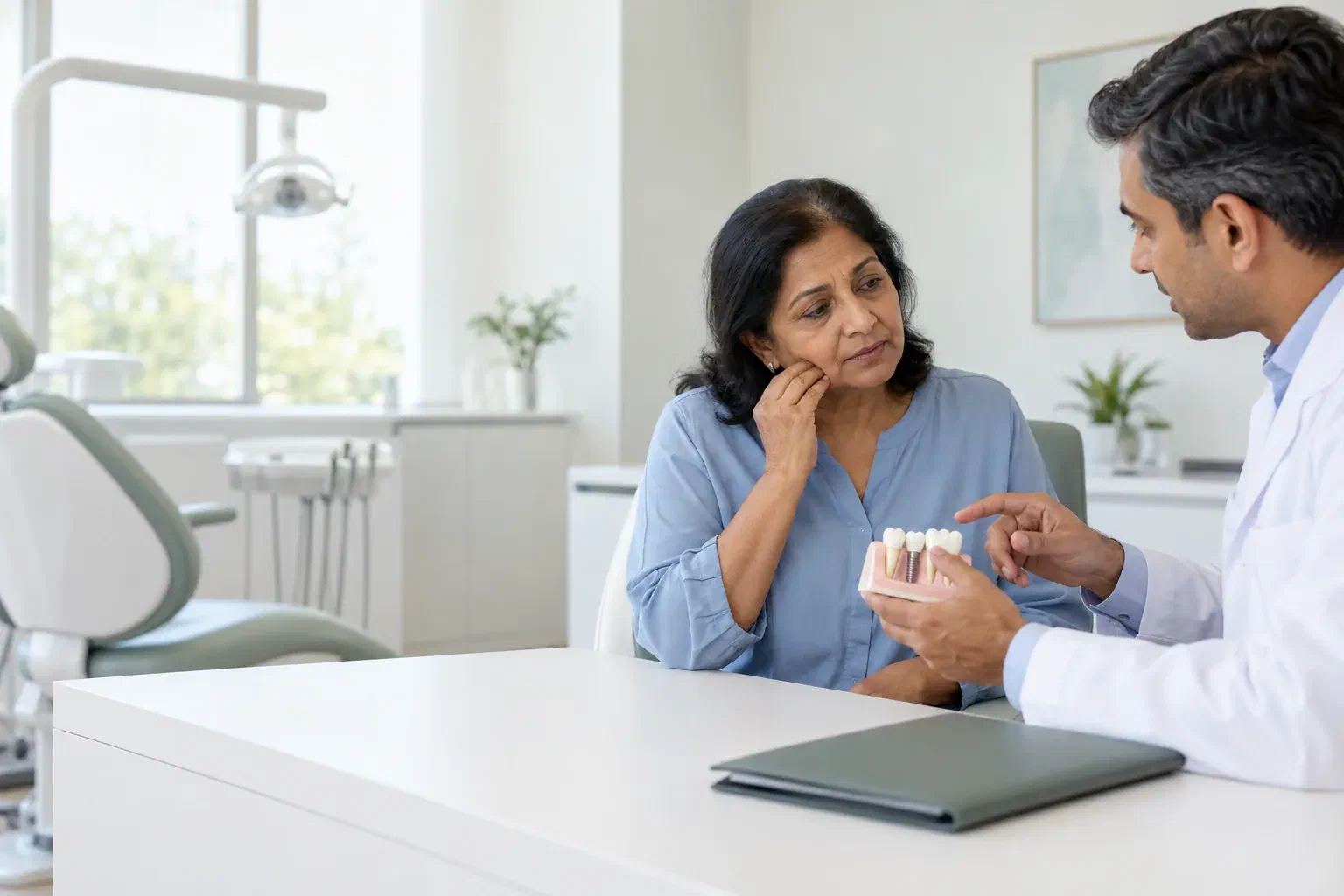
After one implant has failed, deciding whether to try again is personal. Coming from Caledon, you can learn what went wrong, what a second attempt would involve, and how it compares with simpler choices.
You put time, money and patience into the first implant, and it did not go as hoped. It is natural to feel wary of repeating the process. A useful decision rests on two things: an accurate account of what went wrong, and an honest look at what you want from the next stage.
The problem might be a loosened crown, a damaged connector, inflamed gum or lost bone support, and some of those can be managed without removing anything. An implant is taken out only when the findings show keeping it would not be wise. Placing a new one is a further decision, shaped by the cause, the remaining bone and gum, the planned tooth and your own priorities.
When you visit us from Caledon, we examine the implant, take suitable images and listen to how the first experience went. We explain what we see, whether a specialist should weigh in, and what each route would ask of you in visits, healing and upkeep. There is no pressure to choose another implant.
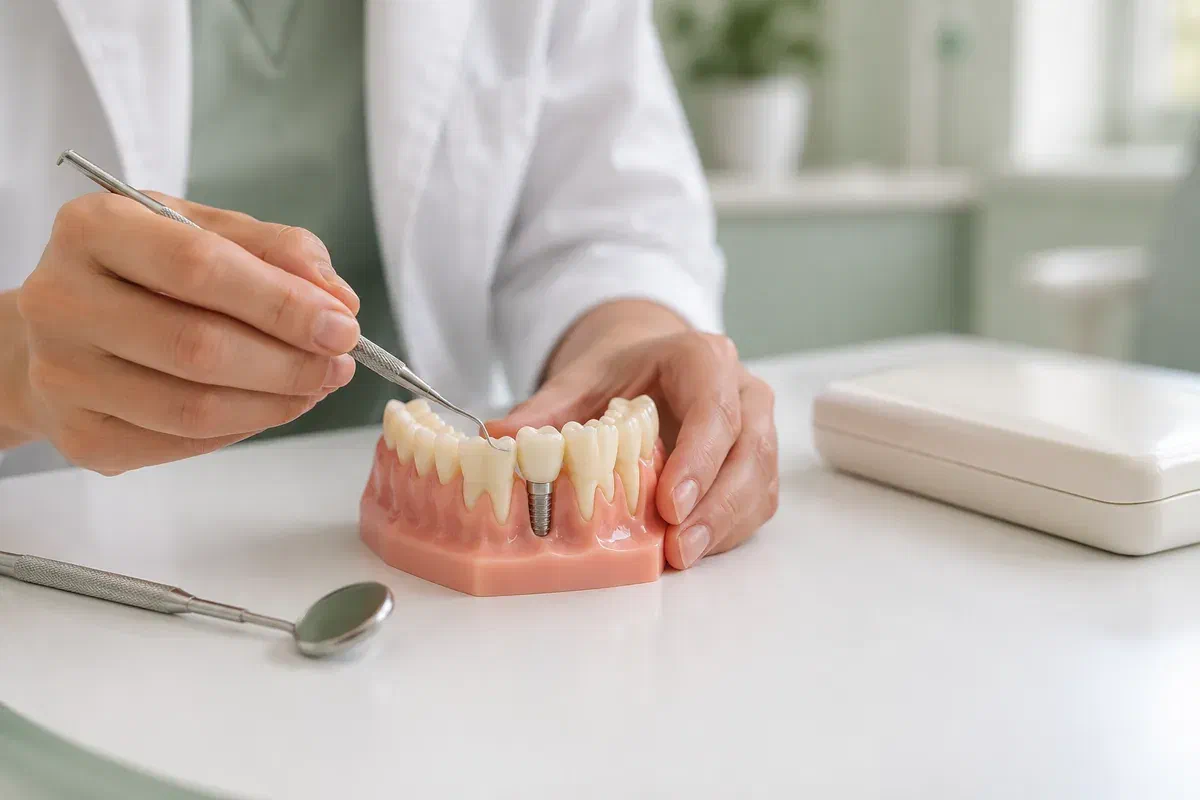
Give us the rough dates of the implant and its crown, and what has changed. Notes and X-rays from earlier treatment help explain the history.
The source might be the crown, the abutment or the implant's attachment to bone. Leave it alone rather than testing it. When you phone, mention whether it changed suddenly, after an injury, or gradually.
Changes in the tissue around an implant need an exam, even if the tooth is stable. Describe what you notice when cleaning, any tenderness and any drainage or taste. The visit shows whether the bone is involved.
If a dentist has already given you that news, ask what was seen and how it compares with older images. Understanding the specific change helps you judge both the recommendation and how you feel about the next step.
Crown trouble does not on its own mean the implant has to go. The part involved is identified before replacement is discussed.
The assessment looks at whether the implant can be maintained or should be removed. If you consider another implant, the plan has to address what contributed to the first problem. Without that, a second implant would be repeating the original conditions rather than starting fresh.
Think about what the coming months would ask of you. Before treatment, discuss how the space would look, what eating would be like and whether you would wear a removable tooth for a time. Seeing the interim stage, extra procedures and the final tooth clearly is often what helps people decide.
Patient information: ITI — assessing implant complications and removal
Ask whether the trouble was biological, mechanical, positional or a mixture. You do not need the jargon, but you should understand which part failed and what the evidence shows.
Bone and gum condition affect whether a second implant is realistic. Ask whether grafting or extra healing would be needed and how that changes the time and effort involved.
Compare another implant with alternatives, considering maintenance, temporary teeth, fees, visits and the chance of plan changes. Your tolerance for further treatment is a legitimate part of the decision.
Care may span several visits and possibly a specialist. You can stop and reconsider between stages. Ask who is responsible for each one and when the plan will be looked at again.
We cover symptoms, the crown, the gum, stability and appropriate imaging, along with what happened during the first treatment. Mention health changes, smoking, grinding, earlier work in the area and how easy it is to clean.
If a part repair or tissue treatment could address the problem, that is discussed before anything else. If removal is advised, ask for the reasons and the alternatives. Specialist assessment may help with complex questions.
If you go ahead, the procedure, its risks, home care and any graft or healing period are explained beforehand. A new implant can be considered later, but it is not presumed to go in the same day. The temporary tooth is arranged first.
Any new implant and its crown are evaluated and followed up separately. Healing may change the plan, and you can revisit your choice. Ask when you would be able to chew normally and how upkeep would be organised.
Advice after an assessment, removal, graft and new implant varies. Keep each set in writing, with the contact for the clinician treating you at that stage.
Until it is assessed, chew on the other side and do not try to tighten or remove anything. A part that has already come away should be kept safely and brought to the appointment.
After a procedure, follow the advice for cleaning, food and any temporary appliance. Check before wearing an existing denture over the area. If an instruction is difficult for you, mention it so we can adapt.
Follow-up visits check the tissue, components and new tooth. Call about new movement, discharge or worsening soreness rather than waiting for the next booking, and raise any trouble with cleaning.
Patient information: Cambridge University Hospitals — implant care and complications
You can ask for the diagnosis and the planned sequence in writing, which helps when more than one clinician is involved.
Book an appointment at our Bronte Street practice. Records from the first treatment and your questions are welcome. We will explain what happened, what further checks may help, and what each option would involve.
Call us about a moving implant, severe pain or swelling. Online booking is for non-urgent requests.
