Older fillings of mixed ages
Fillings placed over different years can be in very different condition. The dentist checks how each one is performing now and reviews records where they exist. Being metal does not give a filling a fixed expiry date.


Thinking about changing a few metal fillings but juggling work, family and a budget? From Brampton, you can get a staged plan that puts needed care first and lets optional changes follow when the timing suits.
Busy households rarely have room for one large dental project. If you have a handful of metal fillings you have been meaning to deal with, the real question is often practical: what has to happen soon, and what can fit into the calendar later on?
Answering that starts with an honest look at each filling. A tooth with a fracture, an open margin or decay underneath belongs near the front of the line. A filling that is sealed and comfortable may only need watching. Changes for appearance can then be slotted in wherever they suit you.
When you come in from Brampton, tell us about your schedule as well as your teeth. Share which fillings bother you, any discomfort, and what you would like to change. We will set out the clinical priorities, then help you shape a sequence that is realistic for work, school runs and your budget.
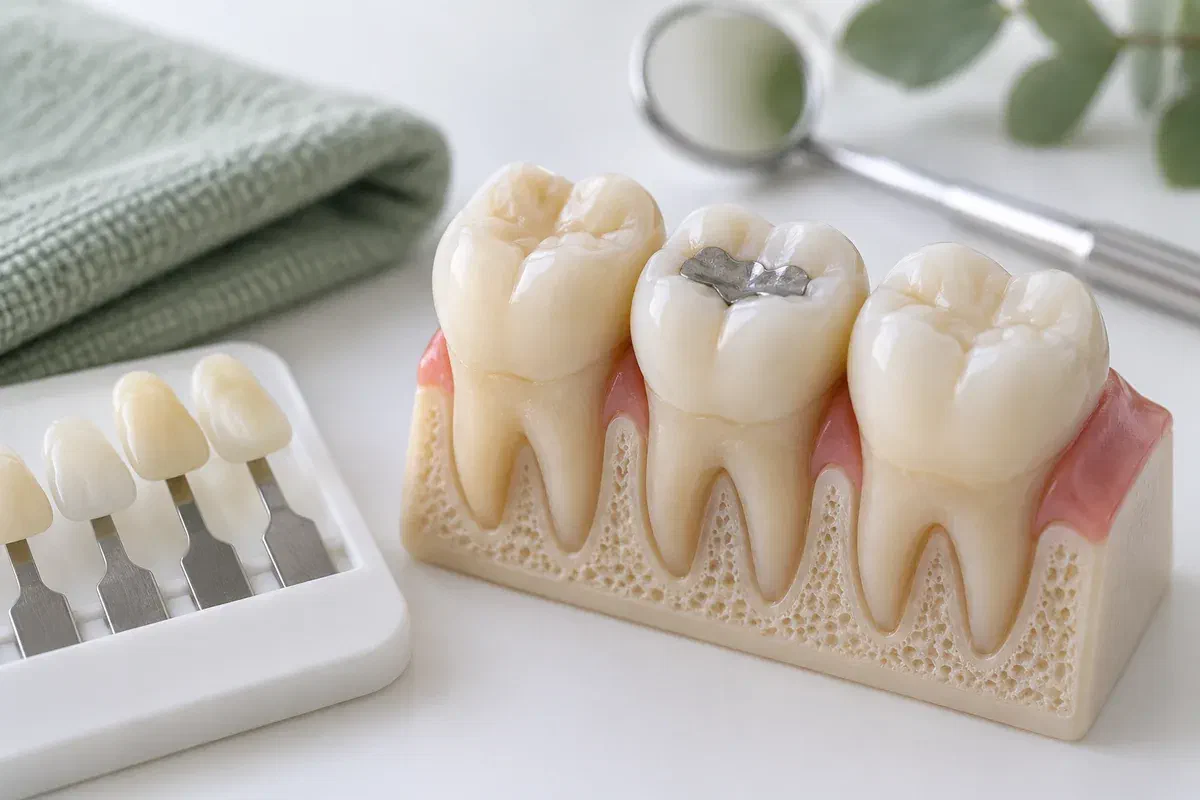
A useful review records the finding at each tooth. A filling’s colour is not enough to decide whether it ought to be removed.
Fillings placed over different years can be in very different condition. The dentist checks how each one is performing now and reviews records where they exist. Being metal does not give a filling a fixed expiry date.
There may be one visible filling you would happily swap and several you never think about. Pointing it out keeps the cosmetic part of the plan focused and avoids budgeting for changes you do not actually want.
Mention sore spots, sensitivity, food packing or a sharp edge separately. These may have causes unrelated to how a filling looks, and they may change the order of the plan. A diagnosis keeps treatment linked to a real finding.
Healthy amalgam fillings are not routinely removed to avoid illness. Bring any medical or material-sensitivity concern to your dentist and, if it applies, your physician.
Staging works best when each tooth has a clear label. Which ones have a defect that should not wait, which can be reviewed at future checkups, and which changes are mainly cosmetic? With that in hand, you can spread the work out without losing track of what matters.
Each tooth also gets its own material decision. A direct tooth-coloured filling can suit a smaller repair, while a larger cavity or weakened cusp may need an onlay or crown. A smile can look consistent even when the work behind it varies.
Patient information: FDA — choices of restorative materials
Ask what belongs in the first round of treatment and what can safely follow. That makes it easier to plan around commitments and costs, while the clinical needs set the order instead of convenience alone.
Matching a replacement to your tooth helps it blend in, though nearby enamel and existing work affect the overall look. Talk through each visible area before deciding which cosmetic changes to include.
A written outline with an estimate for each stage helps you compare options, check what your benefits may cover, and return with questions. It should still be adjusted if new findings appear along the way.
Discussing several fillings does not commit you to all of them at once. The exam helps settle a sensible scope and a realistic sequence.
The dentist examines each restoration, the teeth around it and any symptoms. Imaging may be suggested when it would add helpful information. Mention whether comfort, appearance or an earlier recommendation is your main reason for coming in.
Monitoring, repair and replacement are discussed for each relevant tooth. Ask about materials, costs and the possibility that a tooth needs more once an old filling is removed. You should be able to tell what is necessary from what is elective.
Booking considers the work involved, your comfort and how you will chew between appointments. Several fillings often mean more than one visit. Ask which area comes first and what to be careful with while the rest wait.
At the end of each appointment the new work is checked for contour and how your teeth meet, and you get care instructions. Confirm the next stage and any decisions still open, and mention new trouble with eating or cleaning.
When work happens over several visits, being clear about where a sensation is and what triggers it helps the team review the right tooth.
Let the freezing wear off before you eat, and follow advice specific to the material used. A tooth holding a temporary may need more care than one that is finished. Keep the instructions with your next appointment reminder.
Tell us about a tooth that meets first when you bite, discomfort that will not settle, or food catching in a new place. Note the side and the circumstances instead of assuming all treated teeth are involved.
Keep brushing, flossing and attending regular exams for every tooth, including metal fillings that are being monitored or scheduled for later. Waiting is part of the plan, not a reason to stop checking them.
You should leave knowing which teeth are involved and why. Bring questions about stages, appearance, coverage or advice from before.
Patient information: FDA — existing amalgam fillings
Book a planning visit at our Bronte Street practice to review your metal fillings, your priorities and your calendar. We will explain each tooth’s findings and help you choose a sequence you can actually keep.
For significant pain or swelling, please call the clinic. Online requests are intended for non-urgent appointments.
