

Illustrative consultation comparing options for several older restorations
Restorative Dentistry

Replacement of Metal Fillings in Burlington

Been told several metal fillings should be replaced and want to understand why? From Burlington, you can book a calm, tooth-by-tooth explanation of what was found and what your realistic choices are.

Understanding a filling recommendation

You were handed a list. Let’s go through it line by line.

Sometimes the subject of metal fillings arrives as a treatment plan: four, six or eight teeth listed for replacement, and not much time to absorb why. Wanting to understand that list before agreeing is sensible, not difficult. Good care can stand up to questions.

Our approach is to look at every listed tooth on its own terms. For each one, the dentist can describe what is visible, what X-rays add if they are needed, and whether the reason is a defect, a precaution or appearance. Some items may be clear-cut, while others may reasonably be watched.

Bring the earlier plan if you have it, along with any symptoms and goals of your own. Coming from Burlington, it helps to know the full picture in one sitting, so we will set out what needs attention now, what is optional, and how treatment could be paced if you go ahead.

Get a second look at your fillings
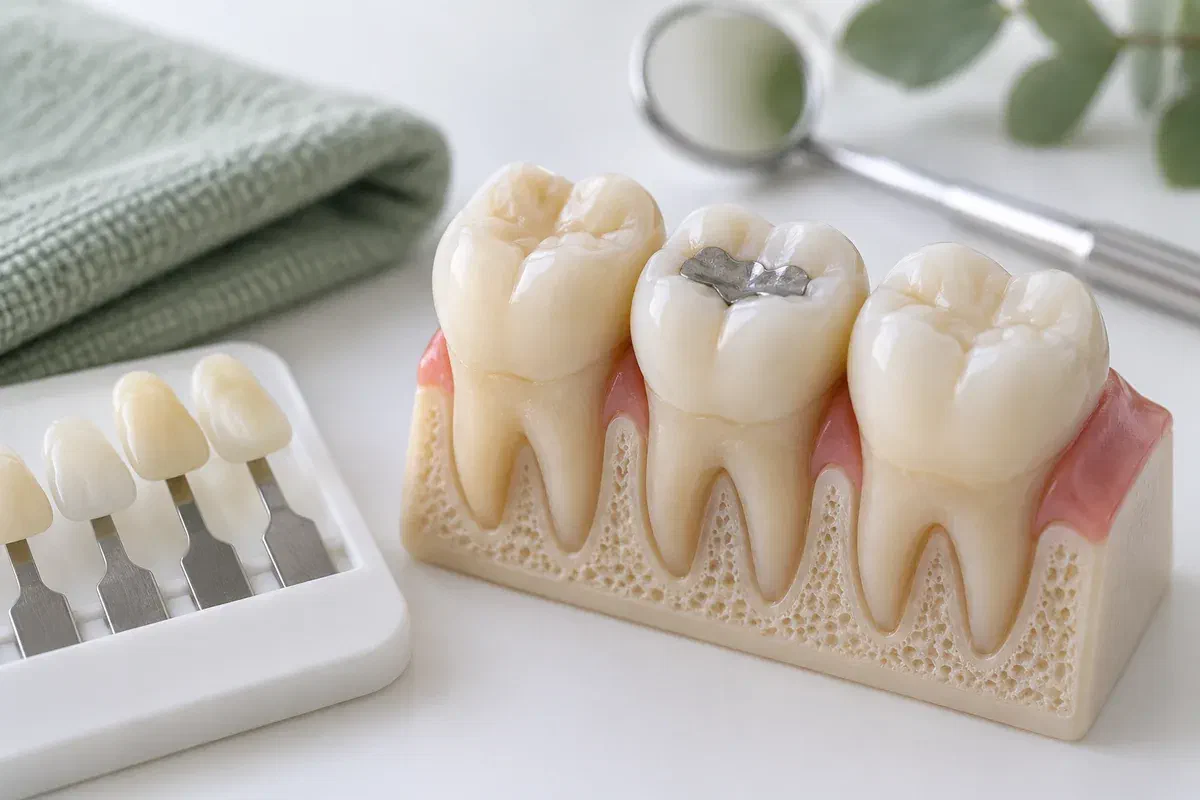
Teaching model of back teeth with a sound silver filling beside shade samples
Questions worth separating

Is it worn, is it visible, or is it hurting?

Each tooth should come with its own finding. The fact that a filling looks dark does not, by itself, mean it has to be removed.

Several fillings with no clear history

You may have no idea when your fillings were placed or by whom. The dentist judges how each one is functioning today and considers whatever records exist. A filling does not expire on a set date simply because it is metal.

One you would prefer to change

Perhaps one restoration shows when you speak and bothers you, while the rest do not. Saying so makes the appearance part of the plan concrete and stops it from spreading automatically to fillings you never notice.

A symptom that needs its own answer

Pain on biting, sensitivity to cold, food wedging or a sharp edge should each be described. The cause may lie somewhere other than the filling’s colour or age. Diagnosing the symptom helps tie any proposed treatment to the real issue.

Amalgam that is intact is not usually removed only to prevent disease. Raise a medical or material-sensitivity concern with your dentist, and with your physician when appropriate.

What clarity looks like

Every tooth on the plan should have a reason attached.

A long list becomes manageable once each entry is labelled. Is there a crack, decay or a broken margin? Is the tooth one to monitor? Or would the change mainly improve how it looks? When you can see those categories, deciding what to do becomes much less overwhelming.

The same goes for materials. A direct tooth-coloured filling may be fine for a small or moderate repair, while a tooth with large old fillings or weak cusps may need an onlay or crown. A cohesive smile does not require identical restorations underneath.

Patient information: FDA — choices of restorative materials

Priorities you can defend

Ask which items should be done soon and which can wait without much concern. This lets you plan around time and cost while keeping the clinical reasons visible. The order should come from findings, not from what is easiest to see.

A grounded talk about appearance

A careful shade choice helps a replacement blend, though your natural enamel and nearby restorations also influence the look. Discuss each visible area so your expectations match what is achievable.

An outline to compare against

A clear written plan with estimates for each stage lets you set it beside earlier advice, check your benefits, or come back with questions. It should still allow for changes if something unexpected is found.

How a review is structured

Examine, explain, sequence, check.

Reviewing a list of fillings does not oblige you to treat any of them. The exam helps define a sensible scope and order.

  1. Exam and your questions

    The dentist examines each listed filling, nearby teeth and any symptoms. Imaging may be suggested where it would genuinely help. Tell us whether you came mainly for comfort, appearance, or to understand a recommendation made elsewhere.

  2. Options for each tooth

    Monitoring, repair and replacement are discussed for every tooth on the list. Ask about materials, fees and the chance that a tooth needs more than a filling once the old one is out. Clarify which items are necessary and which are elective.

  3. A practical schedule

    Planning considers how much work each tooth involves, your comfort, and how you will eat between visits. A plan covering several fillings may need more than one appointment. Ask what will be done first and any precautions for the teeth still waiting.

  4. A final check

    Each finished restoration is checked for shape and bite, and you get care instructions. When treatment is staged, confirm the next visit and any decisions left open. Mention any new difficulty with chewing or cleaning before continuing.

Once treatment begins

Be precise about any new sensation.

When several teeth have been treated, saying where a feeling is and what sets it off helps the team zero in on the right tooth.

Stick to each stage’s guidance

Avoid chewing until the freezing has gone, and follow advice tied to the material used. A tooth with a temporary may need different care from one that is finished. Keep the instructions together with your next appointment.

Describe the change, not just the area

Tell us about a tooth that touches first, discomfort that hangs on, or food catching where it did not before. Mention the side and the situation, rather than assuming every treated tooth is involved. Precise detail makes the follow-up more useful.

Keep up with the fillings left alone

Every tooth still needs brushing, flossing and regular examinations, including metal fillings that were not treated. A decision to monitor means those fillings are checked again over time.

Narrowing the plan

Not every tooth on the list may need the same answer.

Weigh what each approach does for the teeth that were identified. Ask for the trade-offs before you decide how much treatment to accept.

When removal is not justified

Monitor fillings that are sound

A filling that is intact and working can be left and reviewed. Removing a sound filling can mean losing more natural tooth. Ask which changes would bring it back up for discussion and how its condition today will be documented.

When a defect or agreed goal exists

Treat the teeth with clear findings

A narrower plan can address a specific problem, or a cosmetic change you have agreed on, without replacing every metal filling. Discuss materials and the extent of work tooth by tooth. Restorations that look the same may not need the same care.

When a filling cannot do the job

Choose a different type of restoration

For a tooth with more extensive damage, an onlay, crown or other restoration may be proposed. Ask why, and what extra visits or preparation it involves. The decision rests on the tooth’s needs rather than a colour preference.

Second-opinion questions from Burlington

Ask anything about the plan you were given.

By the end, you should know which teeth are involved and why. Bring questions about scope, sequence, appearance or the reasoning behind earlier advice.

(905) 876-4488
Is it reasonable to ask for a second opinion on my filling plan?
Yes. Understanding the reasons behind a recommendation is part of informed consent. Bring any notes or X-rays you have. The dentist will give an independent assessment of each tooth and explain where findings agree or differ.
Why might two dentists see the same filling differently?
Judging an older filling involves some clinical interpretation, and conditions can change between visits. Ask what each finding is based on, such as a visible crack, a shadow on an X-ray or a symptom, so you can follow the reasoning.
What happens if more damage is found once an old filling is removed?
Sometimes decay or cracks beneath a filling are only visible after it is taken out. The dentist will explain any change and whether a larger restoration is advisable. Ask in advance how such a finding would be discussed with you.
Does mercury in amalgam mean I should remove fillings that look fine?
Raise it before arranging removal. The FDA does not recommend taking out intact amalgam fillings without a clinical reason if there is no decay underneath. Removal can cost healthy tooth structure and briefly increase mercury vapour exposure. A specific medical concern warrants a personal conversation.
Can my estimate cover only the teeth I decide to treat?
Yes. Ask for each tooth, surface, material and stage to be shown separately. Check whether exams, imaging or temporary care are listed on their own. If you have benefits, confirm how needed replacement and changes made mainly for appearance are each treated.
Could I plan visits from Burlington around my work schedule?
Often, yes, within what the teeth need. Ask whether some fillings can be grouped and which ones should not wait. If a tooth becomes sore before your next booking, call rather than holding on until the scheduled visit.

Patient information: FDA — existing amalgam fillings

Filling reviews for Burlington

Bring the plan. We will explain every tooth on it.

Book a review at our Bronte Street practice to go through your existing metal fillings and any earlier recommendation. You will leave knowing what was found at each tooth and which choices are yours to make.

If you have significant pain or swelling, phone the clinic. Online booking requests are for non-urgent visits.

Visit Milton Dental Clinic
Unit 1, 342 Bronte St. S, Milton, ON L9T 5B7
Get directions Clinic hours
Monday–Thursday
11am–7pm
Friday–Sunday
By appointment only

Areas we serve

  • Milton
  • Oakville
  • Mississauga
  • Georgetown
  • Halton Hills
  • Acton
  • Campbellville
  • Brampton
  • Burlington
  • Puslinch
  • Rockwood
  • Erin
  • Caledon
  • Etobicoke
  • Old Milton
  • Bronte Meadows
  • Timberlea
  • Dorset Park
  • Dempsey
  • Clarke
  • Beaty
  • Coates
  • Harrison
  • Scott
  • Willmott
  • Ford
  • Bowes
  • Cobden
  • Walker
  • Mountain View
  • Milton Heights
  • Hawthorne Village
  • Valley View
  • Fallingbrook
  • Nassagaweya
  • Trafalgar
  • Esquesing
  • Nelson
  • Brookville
  • Moffat
  • Glen Williams
  • Norval
  • Limehouse
  • Stewarttown
  • Ashgrove
  • Hornby
  • Silver Creek
  • Speyside
  • Scotch Block
  • North Oakville
  • River Oaks
  • Glen Abbey
  • West Oak Trails
  • Palermo
  • Bronte Creek
  • College Park
  • Joshua Creek
  • Uptown Core
  • Preserve
  • Iroquois Ridge
  • Lisgar
  • Meadowvale
  • Meadowvale Village
  • Churchill Meadows
  • Erin Mills
  • Central Erin Mills
  • Streetsville
  • East Credit
  • Creditview
  • Heartland
  • Sheridan
  • Mount Pleasant
  • Credit Valley
  • Huttonville
  • Churchville
  • Springbrook
  • Northwest Brampton
  • Bram West
  • Fletcher's Meadow
  • Fletcher's Creek South
  • Alton Village
  • Orchard
  • Millcroft
  • Headon Forest
  • Tansley
  • Brant Hills
  • Tyandaga
  • Kilbride
  • Lowville
  • Aberfoyle
  • Morriston
  • Arkell
  • Hillsburgh
  • Freelton
  • Carlisle
  • Waterdown
  • Flamborough
  • Mountsberg

How can we help?

Milton Dental Clinic

Have a question about your smile? Choose the option that works best for you.

For urgent dental concerns, please call.
Messages are reviewed during clinic hours.