Not knowing how bad things are
Uncertainty about old fillings often feeds anxiety. The dentist can examine each one and explain its present condition plainly. There is no universal age at which every metal filling must come out.


Want to deal with old silver fillings but dread long sessions in the chair? Coming from Erin or Hillsburgh, you can plan replacement around your comfort, with shorter visits, breaks and a pace you agree to.
For some people, the hardest part of replacing metal fillings is not the decision. It is picturing a long stretch with the mouth open, the sound of the drill and a numb lip afterward. That worry can keep a tooth that genuinely needs care waiting longer than it should.
Knowing the true scope helps. Often fewer teeth need treatment than people fear, because sound fillings can simply stay. For the teeth that do need work, the plan can be split into shorter appointments, with agreed signals for a pause and a clear explanation of each step before it happens.
Since you are coming from Erin, tell us how you feel about dental visits as well as which fillings concern you. The dentist will separate needed care from optional changes and talk with you about an appointment length and sequence that you can manage comfortably.
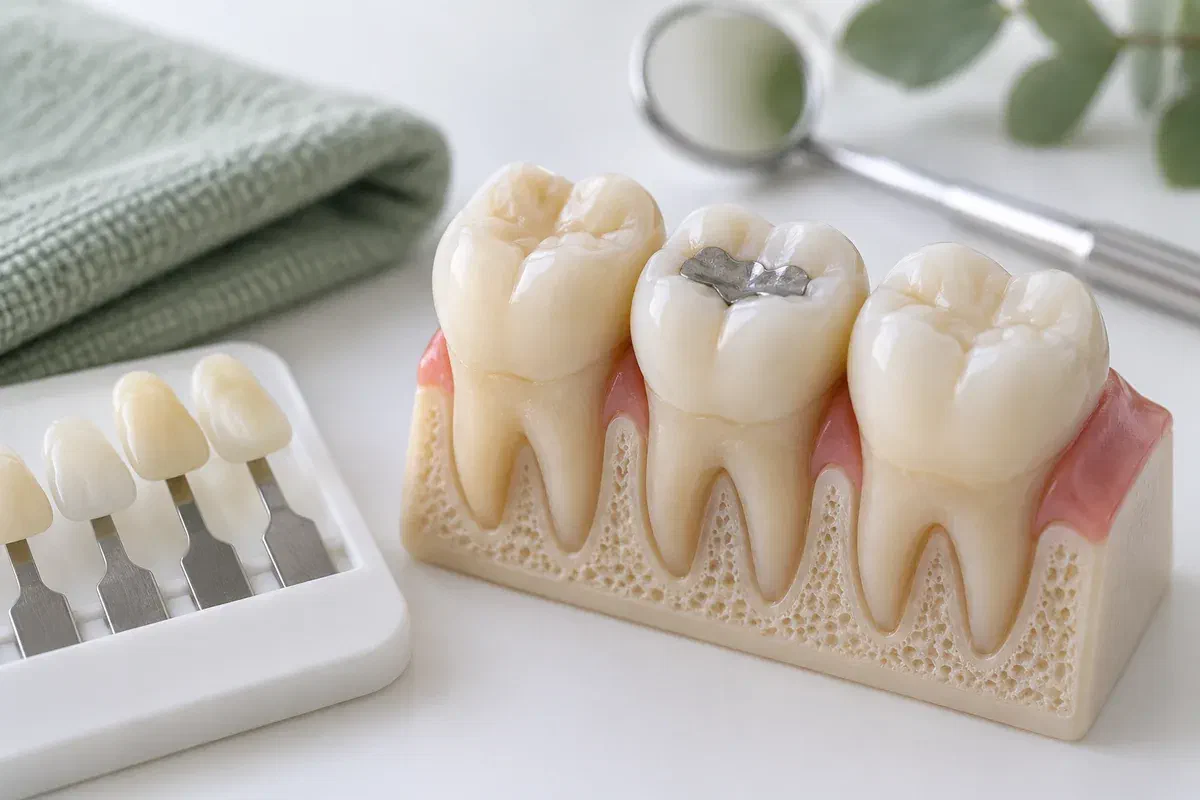
We note the finding at each tooth, and how you feel about treatment. A dark filling does not on its own mean it has to be removed.
Uncertainty about old fillings often feeds anxiety. The dentist can examine each one and explain its present condition plainly. There is no universal age at which every metal filling must come out.
If a visible filling bothers you, say so, even if you are unsure about treatment. Naming it keeps any cosmetic plan small and specific, rather than a long series of changes you may not want.
Pain, sensitivity, food catching or a sharp edge should be mentioned separately. These may need attention sooner, and they may have causes unrelated to appearance. Finding the cause first keeps treatment focused.
Sound amalgam fillings are not typically removed to prevent health problems. Discuss any medical or material-sensitivity concern with your dentist and, if relevant, your physician.
A plan feels more manageable when every tooth has a clear status. Ask which have a defect needing treatment, which can be watched, and which changes would be cosmetic. Very often, the list of teeth that must be treated is shorter than the list you were dreading.
Materials get decided tooth by tooth as well. Where the cavity is modest, a tooth-coloured filling placed in one sitting is often suitable; where the tooth has been weakened, an onlay or crown might be the better fit, and that usually means another appointment. A smile built from mixed restorations can still look natural.
Patient information: FDA — choices of restorative materials
Ask how the work could be divided and how long each appointment is likely to be. Clinical needs still set the order, but appointment length and breaks can often be planned around what you can manage.
A careful shade choice helps a new filling blend in, though your enamel and other work influence the result. Discuss each visible tooth so you know what is achievable before deciding.
Request a written outline with estimates for each stage. Knowing what each visit involves can make it less daunting. The outline may change if something new is found.
Talking about several fillings does not commit you to treating them. The exam helps settle a reasonable scope and order.
The dentist examines each filling, nearby teeth and any symptoms, and may suggest X-rays where helpful. You can share your worries about treatment, and what matters most to you, whether that is comfort, appearance or understanding past advice.
Monitoring, repair and replacement are compared for each relevant tooth. Ask about materials, fees and what might be found under an old filling. You should know which steps are needed and which are your choice.
Treatment can often be spread across visits so each is a manageable length. Agree on a signal for pausing. Ask which area comes first and how to look after teeth that are still waiting.
Before you get up, the dentist checks the shape of the new work and has you bite down gently to test it, then goes over aftercare. If more visits are planned, the next date is confirmed. Speak up about anything that feels odd when chewing or cleaning.
With several teeth treated, describing where a feeling is and what brings it on helps the team know which tooth to check.
Wait for numbness to pass before eating, and follow any guidance for the material used. A temporary may need more care than a finished filling. Keep the instructions handy.
Tell us about a tooth that touches first, sensitivity that lingers, or food catching in a new place. Note the side and when it happens. A clear description helps decide whether you need to come back.
Brush, floss and keep regular exams for every tooth, the untouched silver ones included. Those fillings will be looked at again during future checkups, which can be short and routine.
You should leave knowing which teeth need attention and why. Bring questions about comfort, timing, appearance or past experiences.
Patient information: FDA — existing amalgam fillings
Book a conversation at our Bronte Street practice about your metal fillings and how you feel about treatment. We will explain each tooth’s findings and help you plan visits that feel manageable.
For significant pain or swelling, please call the clinic. Online requests are intended for non-urgent appointments.
