

Illustrative consultation comparing options for several older restorations
Restorative Dentistry

Replacement of Metal Fillings in Mississauga

Cold drinks twinge near an old silver filling, or floss keeps catching? People from Mississauga can have that tooth assessed first, then decide calmly about any other metal fillings once the cause is known.

When a filled tooth starts acting up

Ice water, and one sharp twinge.

A symptom near an old filling has a way of making you suspicious of all of them. Cold sensitivity, a spot where food packs in, or a sore bite on one side can quickly turn into “maybe I should replace everything.” A better first step is to find out what is actually happening at that one tooth.

The cause may be the filling, such as a crack or a gap at its edge. It may also be a fractured cusp, gum recession or a tooth grinding habit, none of which call for removing the neighbouring fillings. Once the source is clear, it becomes easier to see what else, if anything, deserves attention.

So when you book from Mississauga, lead with the tooth that is bothering you, and tell us about any other fillings you have been wondering about. We will diagnose the symptom, review the rest one by one, and talk about treatment and cosmetic choices only once the picture is complete.

Have a troublesome filled tooth checked
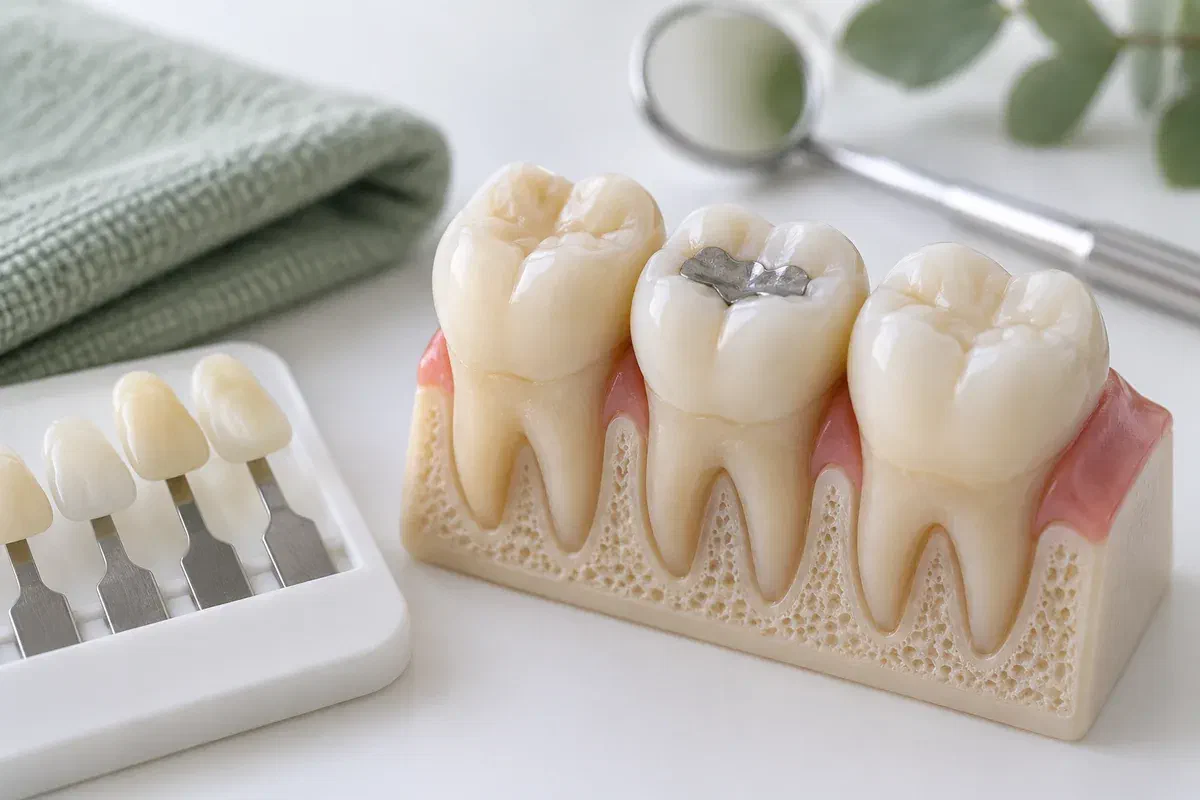
Teaching model of back teeth with a sound silver filling beside shade samples
Telling problems apart

Symptom, history and appearance, untangled.

The review notes what is going on at each tooth. How a filling looks cannot reveal on its own whether it should be replaced.

A row of fillings from years ago

You might not recall when your fillings went in or whether any were patched later. The dentist assesses their present condition and considers relevant records. There is no fixed lifespan after which every metal filling must go.

One filling that bothers you to look at

If a single restoration catches your eye in the mirror, say so. Naming it keeps the cosmetic question tied to that tooth, rather than turning into an assumption that all of them need changing.

The tooth that hurts or catches

Describe the twinge, ache, food trap or rough edge as its own issue. What explains a symptom may be quite different from what explains a dark filling. An examination links the proposed care to what is found.

Sound amalgam is not normally removed as a way of preventing health problems. If you have a medical or material-sensitivity worry, raise it with your dentist and, where relevant, your physician.

Why diagnosis comes first

Fix the cause, then decide about the rest.

Starting with a symptom keeps the plan honest. Once the troublesome tooth is explained, each remaining filling can be placed in a category: a defect to treat, a restoration to monitor, or a change you might choose for appearance. That way nothing is replaced on the strength of a hunch.

Materials are matched to the tooth, too. A small to moderate repair may suit a direct tooth-coloured filling, while a cracked or heavily filled molar may need more coverage. A healthy-looking smile can combine several kinds of restoration.

Patient information: FDA — choices of restorative materials

Urgent and non-urgent, clearly marked

Ask what should be treated soon and what can be considered later. That helps with planning around time and cost while keeping the clinical needs in focus, rather than following whichever filling is most noticeable.

A fair conversation about looks

Shade matching helps new work blend, but the colour of surrounding enamel and older restorations matters too. Discuss each visible area so you know what to expect before choosing the scope.

A written plan to revisit

Request a straightforward outline and estimates for each stage. It can help you compare options, check benefits or return with questions, while still allowing for changes if treatment reveals something new.

From the symptom to a plan

What happens, in the order it happens.

Looking at several fillings does not mean committing to all of them. The exam helps establish a sensible scope and order.

  1. Diagnose the tooth you came about

    The dentist examines the sore or sensitive tooth, its filling and its neighbours. Imaging may be recommended if it would clarify the cause. Then the other fillings are reviewed, and you can say whether comfort, appearance or earlier advice matters most.

  2. Discuss what each finding means

    For each tooth, monitoring, repair and replacement are compared. Ask about materials, fees and what would happen if more damage is found under an old filling. It should be plain which steps are needed and which are optional.

  3. Schedule what makes sense

    The plan considers the amount of work, your comfort and how you will chew in the meantime. Several fillings may need separate visits. Ask which area is first, and how to protect the symptomatic tooth if it must wait.

  4. Check the bite and the finish

    Each new restoration is checked for shape and bite, and you receive care instructions. With staged treatment, confirm the next visit and any decisions still open. If chewing or flossing becomes harder, tell us before the next step.

Afterwards

Has the original twinge settled?

After treating more than one tooth, describing where a feeling is and what sets it off tells the team which area to check.

Care for each stage as advised

Wait for the numbness to fade before eating, and follow guidance for the specific material placed. A tooth with a temporary and a finished tooth may need different handling. Keep the instructions with your next appointment details.

Notice whether the symptom has changed

Tell us if the original sensitivity lingers, if a tooth hits first when you bite, or if food catches somewhere new. Say which side and when, rather than assuming every treated tooth is involved. That detail guides the right follow-up.

Keep checking the fillings you kept

Regular brushing, flossing and exams still apply to every tooth, including metal fillings left in place. Monitoring means they are looked at again over time rather than forgotten once other work is done.

Deciding on scope

Treat the problem tooth. Then weigh the others on their merits.

Compare what each approach achieves for the teeth identified. Ask about trade-offs before deciding how much to do.

When nothing calls for removal

Keep sound fillings under review

An intact, working filling may stay in place and be checked periodically. Removing a sound filling can mean losing additional healthy tooth. Ask what signs would prompt reassessment and how its current state will be noted.

When specific teeth need care

Replace selected fillings

A targeted plan can address the tooth with a defect, and any agreed cosmetic change, without replacing every metal filling. Discuss the material and size of each repair. Fillings that look similar may need quite different treatment.

When a filling will not be enough

Protect a weakened tooth differently

If a tooth is cracked or has lost a lot of structure, an onlay, crown or other restoration may be recommended. Ask why, and what extra visits or preparation are involved. The choice is about the tooth’s strength, not just its colour.

Mississauga questions about filled teeth

Common worries, plain answers.

You should finish the visit knowing which teeth are involved and why. Ask about timing, symptoms, appearance or anything said at earlier appointments.

(905) 876-4488
Why is my tooth sensitive to cold next to an old filling?
Several things can cause it, including a gap at the filling’s edge, new decay, a crack or exposed root surface. The dentist examines the tooth and may suggest an X-ray to narrow it down. Treatment depends on the cause, not just the presence of a metal filling.
Could a cracked tooth be mistaken for a bad filling?
It can feel similar, especially if biting on one spot hurts. Cracks are not always easy to see, so the dentist may use several tests. If a crack is found, the tooth may need more support than a new filling alone.
Does food getting stuck mean a filling has failed?
Not always. Food trapping can come from a worn contact between teeth, a rough filling edge or gum changes. Point out exactly where it happens. The dentist can tell whether the filling is involved and what would help.
Should I remove amalgam I have no problems with because of mercury?
Discuss it before booking anything. The FDA’s advice is that amalgam that is in good condition, with no decay under it, should not be removed without a clinical reason. Removing it can sacrifice healthy tooth and briefly raise exposure to mercury vapour. An individual medical concern deserves its own discussion.
If one side is sore, can that be treated first?
Usually the symptomatic area takes priority. Ask how soon it should be treated and how to protect it until then. Other fillings can often be planned afterwards, once you have had time to consider them.
What should I do if the pain gets worse before my visit?
Call the clinic rather than waiting. Increasing pain, swelling or a broken filling may need earlier attention. If swelling affects your breathing or swallowing, seek emergency medical care immediately.

Patient information: FDA — existing amalgam fillings

Metal filling care for Mississauga

Let’s find out what that tooth is telling you.

Book an assessment at our Bronte Street practice for the filled tooth that is bothering you and any others on your mind. We will explain the cause, review each filling, and help you decide what to treat and when.

Significant pain or swelling should be phoned in to the clinic. Online appointment requests are for non-urgent concerns.

Visit Milton Dental Clinic
Unit 1, 342 Bronte St. S, Milton, ON L9T 5B7
Get directions Clinic hours
Monday–Thursday
11am–7pm
Friday–Sunday
By appointment only

Areas we serve

  • Milton
  • Oakville
  • Mississauga
  • Georgetown
  • Halton Hills
  • Acton
  • Campbellville
  • Brampton
  • Burlington
  • Puslinch
  • Rockwood
  • Erin
  • Caledon
  • Etobicoke
  • Old Milton
  • Bronte Meadows
  • Timberlea
  • Dorset Park
  • Dempsey
  • Clarke
  • Beaty
  • Coates
  • Harrison
  • Scott
  • Willmott
  • Ford
  • Bowes
  • Cobden
  • Walker
  • Mountain View
  • Milton Heights
  • Hawthorne Village
  • Valley View
  • Fallingbrook
  • Nassagaweya
  • Trafalgar
  • Esquesing
  • Nelson
  • Brookville
  • Moffat
  • Glen Williams
  • Norval
  • Limehouse
  • Stewarttown
  • Ashgrove
  • Hornby
  • Silver Creek
  • Speyside
  • Scotch Block
  • North Oakville
  • River Oaks
  • Glen Abbey
  • West Oak Trails
  • Palermo
  • Bronte Creek
  • College Park
  • Joshua Creek
  • Uptown Core
  • Preserve
  • Iroquois Ridge
  • Lisgar
  • Meadowvale
  • Meadowvale Village
  • Churchill Meadows
  • Erin Mills
  • Central Erin Mills
  • Streetsville
  • East Credit
  • Creditview
  • Heartland
  • Sheridan
  • Mount Pleasant
  • Credit Valley
  • Huttonville
  • Churchville
  • Springbrook
  • Northwest Brampton
  • Bram West
  • Fletcher's Meadow
  • Fletcher's Creek South
  • Alton Village
  • Orchard
  • Millcroft
  • Headon Forest
  • Tansley
  • Brant Hills
  • Tyandaga
  • Kilbride
  • Lowville
  • Aberfoyle
  • Morriston
  • Arkell
  • Hillsburgh
  • Freelton
  • Carlisle
  • Waterdown
  • Flamborough
  • Mountsberg

How can we help?

Milton Dental Clinic

Have a question about your smile? Choose the option that works best for you.

For urgent dental concerns, please call.
Messages are reviewed during clinic hours.