

Illustrative routine consultation about changes to an older filling
Restorative Dentistry

Replacement of Worn Fillings in Acton

“We’ll keep an eye on it” can sound vague. For anyone travelling from Acton, we explain exactly what watching a worn filling involves, what would change the plan and when repair makes more sense.

What “watching it” means

Monitoring is a plan, not a shrug.

Being told that a filling is worn but fine for now can leave you wondering what you are supposed to do next. The honest answer is usually: keep using it normally, keep cleaning it well and know which changes deserve a call. Good monitoring comes with those details spelled out.

Fillings tend to change slowly. Their surfaces flatten, their contours soften and their edges may lose some of their neat fit against the tooth. Many of those changes stay stable for a long time. Others progress to the point where they affect chewing or cleaning, or reveal a problem underneath. The dentist judges which is happening by examining the restoration, the tooth around it and your bite.

If you are coming from Acton, bring along what you remember about previous advice and any records you can get. Describe how the tooth has felt lately. We will tell you what we see now, what would prompt treatment, and when it makes sense to look again.

Ask what monitoring involves
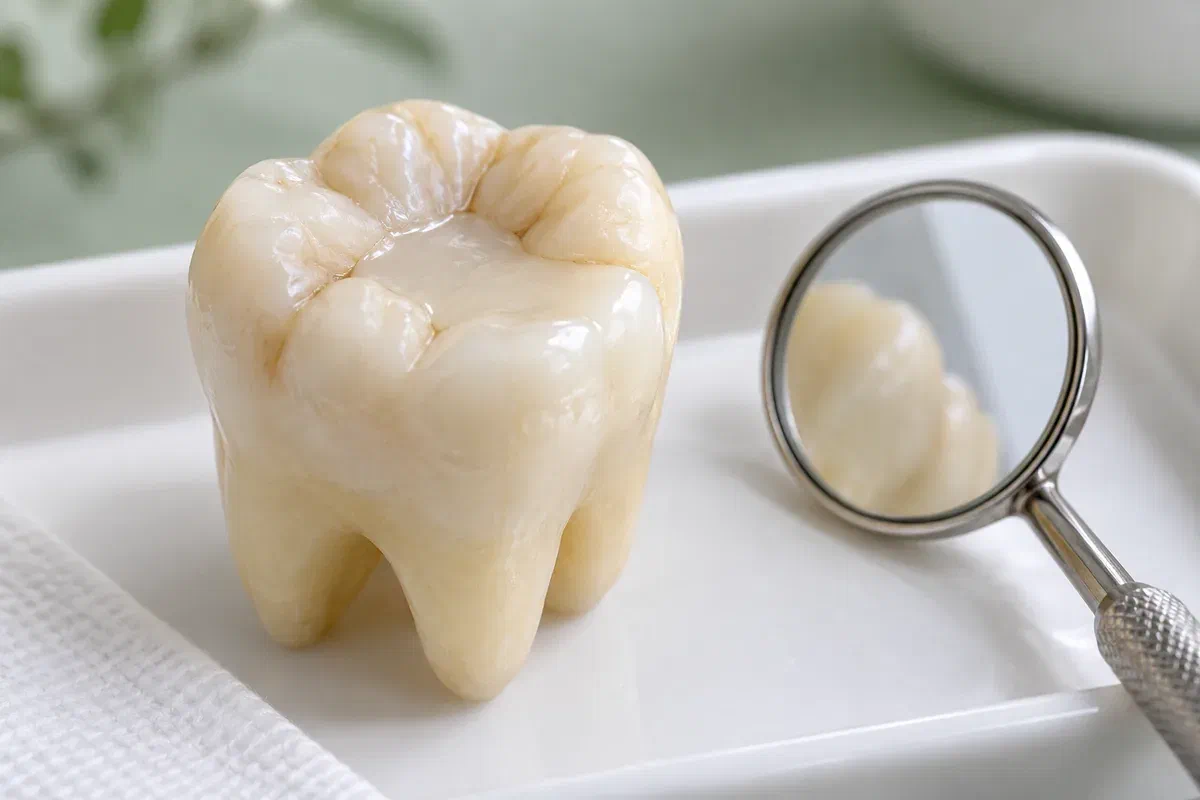
Illustrative molar teaching model with a gently worn tooth-coloured restoration
Changes to keep track of

Which differences are worth reporting?

Some shifts are part of a wider pattern, while others are specific to one filling. Knowing what to watch for helps you and the dentist spot meaningful change early.

Chewing feels less firm

A tooth that once bit cleanly might start to feel flatter or less effective. Mention whether it remains comfortable. The dentist compares the surface with the opposing teeth and your bite, since wear can happen on either side.

Floss or food acting differently

A new catch with floss, fraying, or food that keeps sticking in one gap may mean the edge or contact has altered. Those signs have several possible causes. Note where and how often they happen between visits.

More teeth looking worn

If you notice wear spreading to other teeth or restorations, mention grinding, clenching or previous comments about wear. A broader pattern may change the plan for the filling being monitored.

A filling does not have a built-in expiry. Its state today, the tooth surrounding it and how it works are what decide whether watching remains reasonable.

Why watching can be the right call

Preserving what works, with a clear point for action

Every time a filling is replaced, a little more tooth may be involved, so leaving a sound restoration in place has real value. Monitoring does not mean ignoring the area. It means agreeing on a threshold, so that treatment happens when the finding justifies it rather than on a hunch.

When that threshold is reached, the aim becomes restoring a useful surface and a contact that can be cleaned, with attention to the cause of the wear. Material and shape are chosen for the demands on the tooth. If wear is widespread, one replacement may be only part of care.

Patient information: Cleveland Clinic — filling longevity and maintenance

An agreed trigger for treatment

Ask what change would make treatment preferable: a problem at the edge, decay beneath, a fracture, or loss of function. Knowing this helps you understand why the filling is not being replaced simply for looking older.

Keeping healthy material

Watching, or making only a small repair, may let sound restoration and tooth remain in place. Discuss whether that is suitable. It relies on the type of defect and on the area being easy to maintain.

Paying attention to load

Tell the dentist about habits that put extra force on your teeth. Protective advice or a wider assessment may help a monitored filling last, because the forces acting on it will continue.

At each review

How a monitored filling is checked

A review may confirm that monitoring continues, or it may lead to repair or replacement. Ask what the dentist is comparing against last time.

  1. Re-examine the restoration

    Surfaces, edges, the surrounding tooth and your bite are checked again. Any symptoms since your last visit are discussed, and records are compared. Imaging is used when it is likely to add useful information.

  2. Compare with the agreed threshold

    The dentist explains whether things are stable or have moved closer to needing care. Ask about materials and fees if treatment is now suggested. If monitoring continues, confirm the next review and what to report before then.

  3. Treat when the time comes

    If treatment is agreed, the tooth is made comfortable and kept dry while the work is done. The amount of old material removed reflects its condition and the tooth beneath. The new or repaired surface is shaped for its role.

  4. Recheck the finished tooth

    The repair is assessed against neighbouring and opposing teeth. Ask about cleaning and the next review. If broader wear was noted, confirm whether protection or further assessment still applies.

Between visits

Live normally, but stay observant.

Whether the filling is being watched or has just been repaired, ordinary use is the best guide. There is no need to test it on hard food.

After any treatment, wait for feeling

If work was done, avoid chewing until the numbness wears off and take care with anything hot. Follow any instructions about the material or a temporary stage. Ask when normal use can resume.

Notice your bite

Call if the tooth starts to feel high, meets before the others or makes chewing uncomfortable. Describe ordinary biting rather than pressing hard to test it. A review can look at the filling and other causes.

Keep the routine going

Clean carefully around monitored and repaired fillings alike, and keep your review appointments. If a guard was suggested for grinding, ask how it fits your routine, and mention any appliance that is damaged or uncomfortable.

Where monitoring fits

Observation sits alongside two other choices.

Ask which response matches what has actually been found. Different fillings in your mouth may be on different paths.

When the wear is acceptable to monitor

Continue to observe

A restoration that functions and can be kept clean may be reviewed over time. Agree on the interval and what to report in between. Observation is an active decision about present condition, not an assurance the filling will never need treatment.

When a limited intervention suits

Make a small correction

Some surface or edge issues can be addressed without replacing everything. The dentist can explain whether that is appropriate and what limits remain. Ask how the correction will be assessed later on.

When the threshold has been reached

Move to replacement

Once wear or damage becomes significant, a new filling or a different restoration may be needed. Discuss the remaining tooth and the forces on it. More extensive damage may require more than another direct filling.

Acton questions about monitoring

Living with a filling that is being watched

You should understand both how the filling is doing now and what would change the plan.

(905) 876-4488
How often should a monitored filling be checked?
It varies with the finding, your overall dental health and the dentist’s advice. Many monitored fillings are reviewed at regular checkups. Ask what interval is suggested for yours and why.
What change would mean the filling needs replacing?
Possible triggers include a problem at the edge, decay beneath the restoration, a fracture, or a loss of function that affects chewing or cleaning. The dentist can explain which findings matter for your particular tooth.
Is it risky to leave a worn filling in place?
Leaving a sound, maintainable filling is often reasonable. The key is regular review and reporting new symptoms. If the dentist has concerns about a specific risk, they will discuss it with you.
Can I do anything at home to help a monitored filling last?
Good cleaning, attending reviews and following any advice about grinding protection all help. Avoid using teeth as tools or biting very hard objects. Mention habits you think might be adding stress.
Why did my previous dentist want to replace it when you suggest monitoring?
Dentists can reasonably interpret findings differently, and conditions change over time. Ask us to explain our reasoning and share any notes you were given, so we can discuss the difference openly.
Should I call between reviews if I notice something small?
Yes, if the change is new or persistent, such as food trapping or sensitivity. A quick conversation can help decide whether it needs an earlier visit. Pain or a broken filling deserves a prompt call.
Monitoring and repair for Acton

Know what you are watching for.

Book a review at our Bronte Street practice to discuss a worn filling. We will assess it in context and explain whether monitoring, repair or replacement fits, and what would change our advice.

Call us if the tooth hurts or the filling breaks. Online requests are for appointments that can wait.

Visit Milton Dental Clinic
Unit 1, 342 Bronte St. S, Milton, ON L9T 5B7
Get directions Clinic hours
Monday–Thursday
11am–7pm
Friday–Sunday
By appointment only

Areas we serve

  • Milton
  • Oakville
  • Mississauga
  • Georgetown
  • Halton Hills
  • Acton
  • Campbellville
  • Brampton
  • Burlington
  • Puslinch
  • Rockwood
  • Erin
  • Caledon
  • Etobicoke
  • Old Milton
  • Bronte Meadows
  • Timberlea
  • Dorset Park
  • Dempsey
  • Clarke
  • Beaty
  • Coates
  • Harrison
  • Scott
  • Willmott
  • Ford
  • Bowes
  • Cobden
  • Walker
  • Mountain View
  • Milton Heights
  • Hawthorne Village
  • Valley View
  • Fallingbrook
  • Nassagaweya
  • Trafalgar
  • Esquesing
  • Nelson
  • Brookville
  • Moffat
  • Glen Williams
  • Norval
  • Limehouse
  • Stewarttown
  • Ashgrove
  • Hornby
  • Silver Creek
  • Speyside
  • Scotch Block
  • North Oakville
  • River Oaks
  • Glen Abbey
  • West Oak Trails
  • Palermo
  • Bronte Creek
  • College Park
  • Joshua Creek
  • Uptown Core
  • Preserve
  • Iroquois Ridge
  • Lisgar
  • Meadowvale
  • Meadowvale Village
  • Churchill Meadows
  • Erin Mills
  • Central Erin Mills
  • Streetsville
  • East Credit
  • Creditview
  • Heartland
  • Sheridan
  • Mount Pleasant
  • Credit Valley
  • Huttonville
  • Churchville
  • Springbrook
  • Northwest Brampton
  • Bram West
  • Fletcher's Meadow
  • Fletcher's Creek South
  • Alton Village
  • Orchard
  • Millcroft
  • Headon Forest
  • Tansley
  • Brant Hills
  • Tyandaga
  • Kilbride
  • Lowville
  • Aberfoyle
  • Morriston
  • Arkell
  • Hillsburgh
  • Freelton
  • Carlisle
  • Waterdown
  • Flamborough
  • Mountsberg

How can we help?

Milton Dental Clinic

Have a question about your smile? Choose the option that works best for you.

For urgent dental concerns, please call.
Messages are reviewed during clinic hours.