

Illustrative routine consultation about changes to an older filling
Restorative Dentistry

Replacement of Worn Fillings in Brampton

Waking with a tired jaw and seeing flatter fillings in the mirror? For visitors from Brampton, we look at worn restorations alongside clenching or grinding, so any repair is planned with the cause in mind.

Wear and heavy bites

Fillings under pressure

Clenching during a stressful week. Grinding at night that a partner hears before you notice it. Over months and years, that extra force can show up on teeth and fillings as flattened surfaces, small chips at the edges or a bite that feels different.

Not every worn filling is caused by grinding, and not every grinder needs new fillings. The dentist looks at the restoration, the natural tooth around it and how your teeth come together, and considers whether the wear is local or part of a broader pattern. That shapes whether to watch, repair or replace, and whether protection should be part of the conversation.

Before a visit from Brampton, jot down any jaw tiredness, morning headaches or comments from others about grinding, as well as what you have noticed about the filling itself. If you have used a night guard before, mention it. We will explain our findings and the reasoning behind any suggestion.

Discuss worn fillings and grinding
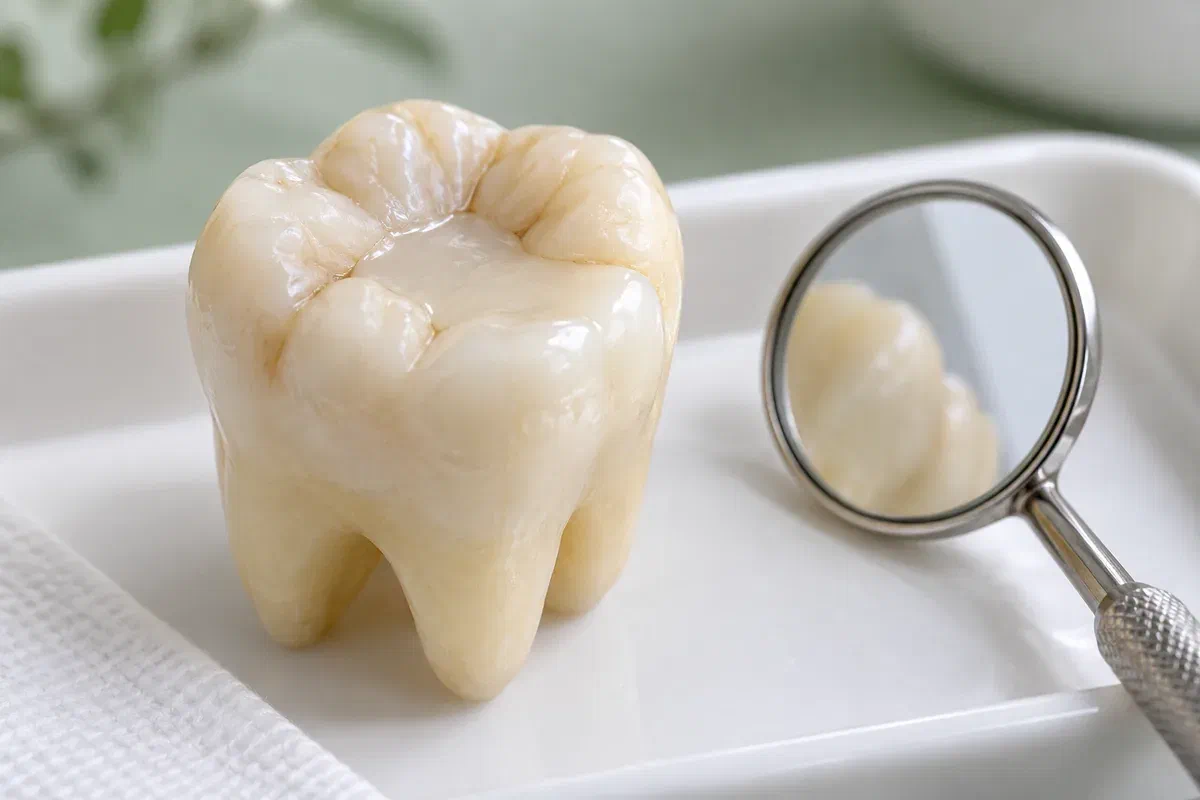
Illustrative molar teaching model with a gently worn tooth-coloured restoration
Signs of extra load

Look for the pattern as well as the filling.

Wear driven by heavy forces rarely affects just one tooth. Seeing the overall picture helps decide what a single repair can realistically do.

Flat or shiny chewing surfaces

Grooves that were once clearly defined may now look polished and flat. Mention whether the tooth feels comfortable and functional. The dentist checks it against the teeth it meets, since wear often shows on both sides of the bite.

Edges that catch or feel chipped

A rough margin, a tiny chip or floss that suddenly frays can suggest a change at the edge or contact. These signs have several possible explanations. Describe exactly where you feel it and when it started.

Several teeth wearing together

Wear on a number of teeth and restorations often points to grinding or clenching. Share any history and previous advice. Replacing one filling may not address the concern if the forces behind it continue unchanged.

A filling’s age is less telling than its present condition, the health of the tooth around it and the forces it handles every day.

Planning with the forces in mind

Why the repair and the bite belong in one plan

When treatment is needed, the aim is a durable surface and a contact you can keep clean. With heavy loading, the reason for the wear deserves as much attention as the repair itself. Ask what makes treatment preferable to monitoring for this particular tooth.

Material and shape should be chosen for the demands on the tooth. If grinding is affecting several areas, a filling replacement may be only one part of care, alongside advice on protection. Knowing that helps keep expectations realistic.

Patient information: Cleveland Clinic — filling longevity and maintenance

A clear reason for each repair

Ask whether the concern is the surface, the edge, the tooth beneath or something else. A filling should not be replaced only because it looks flatter than it did when it was new.

Keeping sound tooth where possible

Some worn restorations can be watched or repaired locally. Ask whether healthy material and tooth can stay. That depends on the defect and whether the result can be kept clean and functional.

Thinking about protection

Where clenching or grinding is likely, a conversation about a night guard or wider assessment may be relevant. New material on its own will meet the same forces that wore down the previous surface.

Your appointment

How we approach wear linked to clenching

The visit may be a review, a repair, or the start of a staged plan. It is worth asking what the dentist is assessing and whether protection will be discussed.

  1. Examine the filling and the wider bite

    Surfaces, edges, the surrounding tooth and the way your teeth meet are assessed. Signs of wear elsewhere are noted. Symptoms and records are reviewed, with imaging when useful. Mention jaw discomfort, chips or repeated repairs.

  2. Explain the options and the cause

    The dentist discusses monitoring, repair or replacement and how grinding may be involved. Ask about materials, fees and protective options. If the filling is to be watched, confirm what will be checked and which changes need an earlier call.

  3. Restore the area if needed

    If treatment proceeds, local anaesthetic and moisture control are used as needed. The amount of old material removed depends on what is found. The new surface is shaped with your bite and its demands in mind.

  4. Balance the bite

    The repair is checked against opposing and neighbouring teeth. Ask about cleaning and follow-up. If protection was recommended, confirm the next step, such as an impression or scan for a guard.

Protecting the repair

Gentle use first, then everyday chewing

Follow the instructions for your repair. There is no need to bite hard objects to prove the filling is secure.

Avoid chewing while numb

Wait for sensation to return and take care with hot food or drinks. Follow any extra guidance for the material or a temporary stage. Ask when normal use can resume if you are unsure.

Watch for a high spot

A repaired tooth that meets first can feel sore, especially if you clench. Call if chewing stays uncomfortable or the bite feels off. Describe a normal bite rather than grinding to test it.

Use protection if advised

If a night guard was recommended, wear it as instructed and bring it to reviews. Mention any damage, poor fit or difficulty wearing it. Keep up with cleaning and your planned check-ups.

Choosing a response

Monitor, mend or replace?

The amount of treatment should match the finding. Fillings worn by the same habit may still need different responses.

When wear is acceptable to monitor

Watch and protect

A filling that still functions and can be maintained may be observed, sometimes alongside protective advice. Agree on the review plan and the symptoms to report. Monitoring reflects present condition and is not a guarantee against future care.

When a limited repair is suitable

Mend a chipped or worn area

A small chip or worn section can sometimes be repaired without replacing the whole filling. The dentist will say whether that suits your tooth and what it leaves unresolved. Ask how it will be reviewed.

When the existing filling no longer serves

Replace with the load in mind

Significant wear may call for a new filling or a different type of restoration. Discuss the remaining tooth and the forces it faces. Extensive damage may need more than another direct filling.

Asked by Brampton visitors

Grinding, clenching and worn fillings

You should leave understanding the current condition of the filling and why a particular next step makes sense.

(905) 876-4488
How can I tell if I grind my teeth at night?
Signs can include jaw tiredness on waking, headaches, flattened teeth or someone hearing you grind. None of these is conclusive alone. Mention them to the dentist, who can look for patterns of wear during the examination.
Will a night guard stop my fillings from wearing?
A guard is designed to help protect teeth and restorations from grinding forces, but it does not guarantee they will never wear. The dentist can explain whether one is suitable and how it fits with your repair plan.
Are some filling materials better for people who grind?
Material choice is one factor. The size of the restoration, remaining tooth and overall wear pattern also matter. Ask the dentist how the options compare for your tooth and what protection might be advised as well.
Can stress make worn fillings worse?
Stress is often linked with clenching or grinding, which can add load to teeth. If you notice clenching during busy periods, mention it. The dentist can discuss how that may relate to the wear seen.
Why did my filling chip at the edge rather than wear evenly?
Edges can be thinner and more exposed to force, especially with a heavy bite. A chip may also relate to the tooth around it. The dentist examines the area to decide whether repair or replacement is appropriate.
Could jaw soreness be related to a worn filling?
Jaw soreness has many possible causes, including clenching. A change in the bite from a worn or high filling may play a part in some cases. Describe your symptoms so the dentist can assess the teeth and bite.
Worn filling reviews for Brampton

Repair the wear, and talk about what is causing it.

Book a visit at our Bronte Street practice to have worn fillings examined with your bite and any grinding in mind. We will explain whether monitoring, repair, replacement or protection makes sense.

Call the clinic if a tooth is painful or a filling breaks. Online requests are for appointments that are not urgent.

Visit Milton Dental Clinic
Unit 1, 342 Bronte St. S, Milton, ON L9T 5B7
Get directions Clinic hours
Monday–Thursday
11am–7pm
Friday–Sunday
By appointment only

Areas we serve

  • Milton
  • Oakville
  • Mississauga
  • Georgetown
  • Halton Hills
  • Acton
  • Campbellville
  • Brampton
  • Burlington
  • Puslinch
  • Rockwood
  • Erin
  • Caledon
  • Etobicoke
  • Old Milton
  • Bronte Meadows
  • Timberlea
  • Dorset Park
  • Dempsey
  • Clarke
  • Beaty
  • Coates
  • Harrison
  • Scott
  • Willmott
  • Ford
  • Bowes
  • Cobden
  • Walker
  • Mountain View
  • Milton Heights
  • Hawthorne Village
  • Valley View
  • Fallingbrook
  • Nassagaweya
  • Trafalgar
  • Esquesing
  • Nelson
  • Brookville
  • Moffat
  • Glen Williams
  • Norval
  • Limehouse
  • Stewarttown
  • Ashgrove
  • Hornby
  • Silver Creek
  • Speyside
  • Scotch Block
  • North Oakville
  • River Oaks
  • Glen Abbey
  • West Oak Trails
  • Palermo
  • Bronte Creek
  • College Park
  • Joshua Creek
  • Uptown Core
  • Preserve
  • Iroquois Ridge
  • Lisgar
  • Meadowvale
  • Meadowvale Village
  • Churchill Meadows
  • Erin Mills
  • Central Erin Mills
  • Streetsville
  • East Credit
  • Creditview
  • Heartland
  • Sheridan
  • Mount Pleasant
  • Credit Valley
  • Huttonville
  • Churchville
  • Springbrook
  • Northwest Brampton
  • Bram West
  • Fletcher's Meadow
  • Fletcher's Creek South
  • Alton Village
  • Orchard
  • Millcroft
  • Headon Forest
  • Tansley
  • Brant Hills
  • Tyandaga
  • Kilbride
  • Lowville
  • Aberfoyle
  • Morriston
  • Arkell
  • Hillsburgh
  • Freelton
  • Carlisle
  • Waterdown
  • Flamborough
  • Mountsberg

How can we help?

Milton Dental Clinic

Have a question about your smile? Choose the option that works best for you.

For urgent dental concerns, please call.
Messages are reviewed during clinic hours.