

Illustrative routine consultation about changes to an older filling
Restorative Dentistry

Replacement of Worn Fillings in Georgetown

Your tongue keeps returning to a rough ridge on an old filling. From Georgetown, have that edge examined and find out whether it can be smoothed, repaired, replaced or simply watched for now.

The edge your tongue finds

That rough spot has a story.

The tongue is remarkably sensitive to tiny changes. A ledge, a rough patch or a slight step between filling and tooth can feel enormous, and once you have found it, it is hard to stop checking. That sensation is a fair reason to book a look, even when nothing hurts.

With years of chewing and brushing, a restoration can lose its smooth finish, wear unevenly or develop a margin that no longer blends neatly with the enamel. Sometimes the cause is minor surface wear. Sometimes the tooth beside the filling has changed, or a small piece has chipped away. The dentist examines the area as a whole, including how your bite meets it, before recommending anything.

Coming in from Georgetown, let us know which side and which tooth, roughly when you first felt the change and whether it catches floss or food. Previous records or comments from another dentist add useful background. We will describe what we see and explain whether refining, repairing, replacing or monitoring makes the most sense.

Get a rough filling edge checked
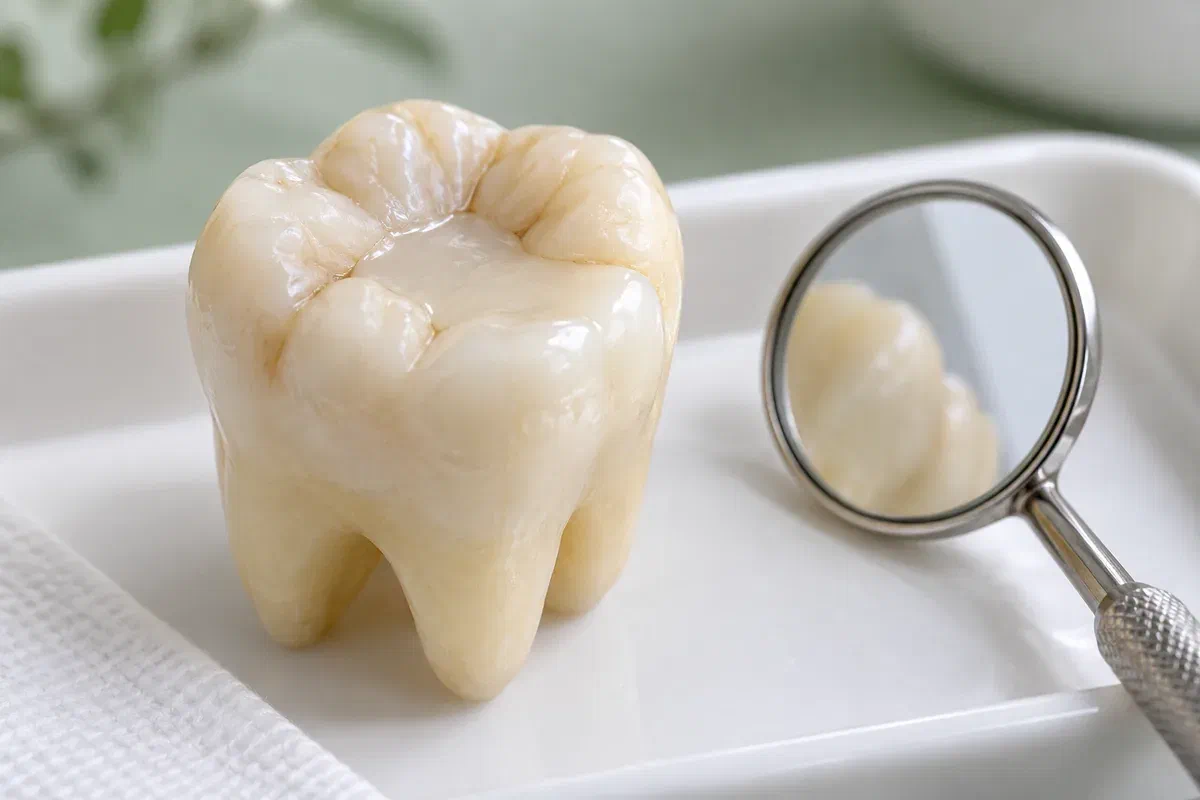
Illustrative molar teaching model with a gently worn tooth-coloured restoration
Clues to share

Small sensations can point to specific changes.

A rough filling may be a one-off, or it may be one sign of wider wear. Your description helps the dentist focus the examination and judge the bigger picture.

A surface that has lost its finish

The filling might feel gritty or flatter, or chewing may feel slightly different on that side. Tell the dentist whether the tooth is still comfortable to use. The surface is assessed in relation to the opposite teeth, which can wear against it.

A step or gap at the margin

If your tongue or floss catches where the filling meets the tooth, the edge may have changed. Food lodging nearby can be part of the same picture. Several explanations are possible, so point out the exact spot.

Roughness in more than one place

Noticing ridges or chips on several teeth may suggest clenching, grinding or another source of wear. Mention any habits or earlier advice. That wider context can change whether one repair is the right answer.

Age alone does not decide when a filling should go. What it is like today, how the surrounding tooth looks and how it functions are far more informative.

A considered fix

Smooth things out without removing more than necessary.

If something does need doing, the aim is to leave you with a surface that feels comfortable, a margin that can be cleaned well and a filling that functions properly. The cause of the wear is part of that conversation too. Ask what makes treatment more appropriate than keeping an eye on it.

The material and contour should match the job the tooth does every day. When roughness turns up across several teeth or relates to the bite, replacing a single filling may only be part of a broader plan. Understanding that from the outset keeps your expectations grounded.

Patient information: Cleveland Clinic — filling longevity and maintenance

Knowing the exact problem

You should be told whether the issue is surface wear, a change at the edge, a concern in the tooth beneath or something different. An older-looking filling is not by itself enough reason to replace it.

Keeping what is healthy

Some rough edges can be refined, and some defects can be repaired locally while the rest of the restoration stays. Ask which parts can remain. That relies on the nature of the defect and keeping the area maintainable.

Allowing for everyday stress

Tell the dentist about clenching, chewing hard objects or other habits that strain your teeth. A discussion about protection or a wider wear review may follow, since fresh material will face the same daily forces.

What to expect

Finding the rough spot, then deciding what it needs

Your appointment might be a check, a quick refinement, a larger repair or part of a staged plan. It is fine to ask at the beginning what the dentist will be looking at.

  1. Locate and examine the area

    The dentist checks the filling’s surfaces and margins, the tooth around it and how your teeth meet. Your symptoms and any records are reviewed, and imaging is used if it adds useful detail. Mention pain or any piece that has broken.

  2. Explain the choices

    You will hear why monitoring, smoothing, repair or replacement might suit the finding. Ask about materials, fees and whether wider wear needs assessing. If monitoring is advised, agree on what to look out for between visits.

  3. Treat the area if you agree

    When work proceeds, the tooth is numbed if needed and kept dry. The extent of any removal reflects what is found in the old filling and the surrounding enamel. The new or refined surface is finished so it feels smooth.

  4. Check smoothness and bite

    The finished area is assessed with your tongue, floss and bite in mind, against the teeth beside and opposite it. Ask about cleaning and any planned follow-up, and confirm whether further assessment or protective advice applies.

Over the next few days

Your tongue will be the first to report back.

Follow the instructions given for your restoration. It is not necessary to bite on anything particularly hard to confirm the repair is sound.

Hold off while numb

Avoid chewing until sensation has fully returned, and take care with very hot food and drinks. Follow any instructions about the material or a temporary step. Ask before you leave when the tooth can be used normally.

Mention anything that still catches

Once things settle, the area should feel smooth. Call if a sharp spot remains, if floss still catches, or if the tooth seems to hit first when you bite. Describe a normal bite rather than repeatedly testing it.

Stick with ongoing care

Continue brushing and flossing well and attend recommended reviews. If a guard for clenching was suggested, ask how to fit it into your nights. Tell us if an existing appliance is cracked or uncomfortable.

Possible paths

Refine it, rebuild part of it, or replace it

How much treatment is right depends on the finding. Two restorations side by side can reasonably be handled in different ways.

When the wear is acceptable for now

Observe it over time

A filling that still works and is easy to keep clean may simply be watched. Agree on when it will be reviewed and what changes to report. Monitoring is a deliberate choice based on how it is now, and it does not guarantee future care will be unnecessary.

When a focused repair suits

Refine or rebuild one part

A rough margin or chipped section may be smoothed or added to without taking out the whole filling. The dentist will explain whether this is appropriate and what it will not resolve. Ask how it will be judged at a later visit.

When the existing filling is past helping

Replace the restoration

Extensive wear or associated damage may call for a new filling or another type of restoration. Discuss how much natural tooth is left and what it has to cope with. Larger damage sometimes needs more than another direct filling.

Questions from Georgetown

About rough edges and older fillings

A good review should leave you knowing what is happening at that edge now and why one next step is suggested over another.

(905) 876-4488
Why does a tiny rough spot feel so large to my tongue?
Your tongue has a dense supply of nerve endings and tends to exaggerate small changes. A minor ledge can feel significant. That does not mean it is unimportant, so it is still worth having the area examined to understand the cause.
Can a sharp edge on a filling damage my tongue or cheek?
A sharp edge can irritate soft tissue, especially if you keep touching it. If it is cutting or causing a sore, call the clinic. The dentist can assess whether smoothing or another step would help.
Is a rough edge always a sign the filling has broken?
No. Roughness may come from surface wear, a small chip, staining or changes in the tooth beside the restoration. The dentist examines the area to identify which applies before recommending any treatment.
Could the roughness be the tooth rather than the filling?
It could. Enamel next to a filling can also wear, chip or change. Telling the two apart is part of the examination, and it influences whether the restoration, the tooth or both need attention.
How long does it take to smooth a rough filling?
A simple refinement is usually quick, but the time depends on what is found. If a larger repair or replacement is needed, the dentist will explain how long that is likely to take and whether a separate visit is required.
Does a worn filling always mean the bite is wrong?
Not necessarily. Normal function wears restorations over time. However, the dentist will check how your teeth meet, because a bite problem or grinding may contribute to wear in some cases.
Georgetown filling checks

Let’s smooth out the question.

Visit our Bronte Street practice and show us the spot your tongue keeps finding. After a close look at the edge, the tooth and your bite, we will tell you whether monitoring, refinement, repair or replacement seems the right fit.

Please phone if the tooth is painful or a piece has broken off. Online requests are for non-urgent appointments.

Visit Milton Dental Clinic
Unit 1, 342 Bronte St. S, Milton, ON L9T 5B7
Get directions Clinic hours
Monday–Thursday
11am–7pm
Friday–Sunday
By appointment only

Areas we serve

  • Milton
  • Oakville
  • Mississauga
  • Georgetown
  • Halton Hills
  • Acton
  • Campbellville
  • Brampton
  • Burlington
  • Puslinch
  • Rockwood
  • Erin
  • Caledon
  • Etobicoke
  • Old Milton
  • Bronte Meadows
  • Timberlea
  • Dorset Park
  • Dempsey
  • Clarke
  • Beaty
  • Coates
  • Harrison
  • Scott
  • Willmott
  • Ford
  • Bowes
  • Cobden
  • Walker
  • Mountain View
  • Milton Heights
  • Hawthorne Village
  • Valley View
  • Fallingbrook
  • Nassagaweya
  • Trafalgar
  • Esquesing
  • Nelson
  • Brookville
  • Moffat
  • Glen Williams
  • Norval
  • Limehouse
  • Stewarttown
  • Ashgrove
  • Hornby
  • Silver Creek
  • Speyside
  • Scotch Block
  • North Oakville
  • River Oaks
  • Glen Abbey
  • West Oak Trails
  • Palermo
  • Bronte Creek
  • College Park
  • Joshua Creek
  • Uptown Core
  • Preserve
  • Iroquois Ridge
  • Lisgar
  • Meadowvale
  • Meadowvale Village
  • Churchill Meadows
  • Erin Mills
  • Central Erin Mills
  • Streetsville
  • East Credit
  • Creditview
  • Heartland
  • Sheridan
  • Mount Pleasant
  • Credit Valley
  • Huttonville
  • Churchville
  • Springbrook
  • Northwest Brampton
  • Bram West
  • Fletcher's Meadow
  • Fletcher's Creek South
  • Alton Village
  • Orchard
  • Millcroft
  • Headon Forest
  • Tansley
  • Brant Hills
  • Tyandaga
  • Kilbride
  • Lowville
  • Aberfoyle
  • Morriston
  • Arkell
  • Hillsburgh
  • Freelton
  • Carlisle
  • Waterdown
  • Flamborough
  • Mountsberg

How can we help?

Milton Dental Clinic

Have a question about your smile? Choose the option that works best for you.

For urgent dental concerns, please call.
Messages are reviewed during clinic hours.