

Illustrative routine consultation about changes to an older filling
Restorative Dentistry

Replacement of Worn Fillings in Halton Hills

Sometimes a worn filling needs only a little polishing; sometimes it needs rebuilding. Households in Halton Hills can have older fillings reviewed and learn which approach suits each tooth.

Polish, patch or replace

Finding the smallest step that genuinely helps

Most people assume a worn filling has only two futures: leave it or drill it out. In practice there is often more nuance. A slightly rough surface might be smoothed, a chipped corner might be added to, and only some restorations reach the point where starting again is the better choice.

Working out which applies means looking at more than the filling’s appearance. The dentist considers how much material has worn, whether the edge still meets the tooth well, how the area contacts its neighbours and how your bite lands on it. A tooth that looks tired may still be serving you well, while one that looks tidy could hide a problem at the margin.

For families in Halton Hills juggling school, work and activities, it can help to raise the filling when booking a routine visit for yourself or others in the household. Mention what you have noticed and any earlier advice about wear. We will explain the options and why we favour one over another.

Review an older filling
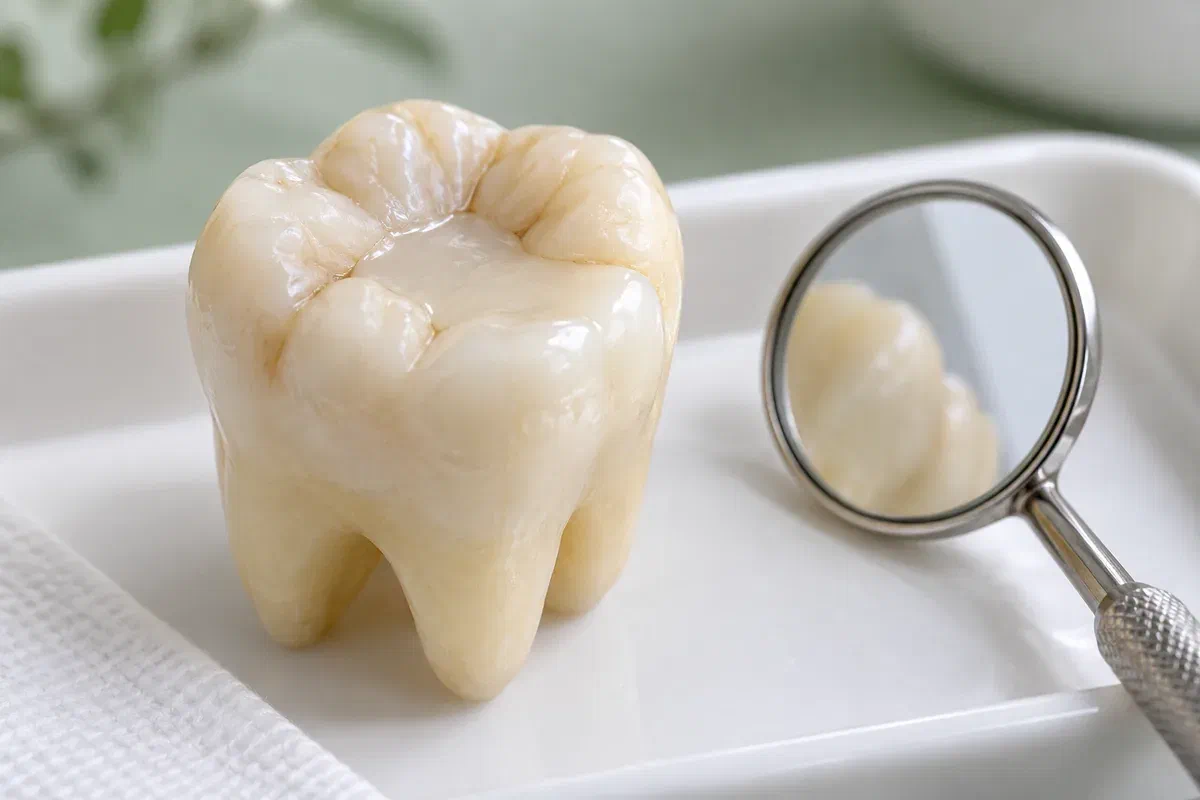
Illustrative molar teaching model with a gently worn tooth-coloured restoration
Things to point out

Tell us how it feels, where it catches and what has changed.

A single changed filling may stand alone or be part of wider wear. Describing what you notice helps the dentist decide which.

Roughness or flattening

Your tongue might find a rough patch, or chewing may feel smoother than before. Mention whether the tooth is comfortable. The surface is examined alongside the opposing teeth, since the way they meet shapes how a filling wears.

Trouble at the contact

Floss that catches, frays or will not pass easily, or food lodging beside the filling, can suggest the edge or contact has changed. Other causes are possible, so note the location and frequency.

Wear on several teeth

Wear across a number of teeth may relate to grinding, clenching or other habits. Mention anything you know and any previous advice. The broader pattern may matter more than any single filling.

Fillings do not need replacing at a set age. How a restoration works now and the condition of the tooth around it are the better guides.

Doing enough, not too much

The right-sized repair

A conservative approach keeps sound tooth and restoration in place where it can. When treatment is indicated, the goal is a smooth, usable surface and a contact that can be cleaned, with attention to the cause of the wear. Ask what tips the balance from smoothing or patching to full replacement.

The material and contour should suit how hard that tooth works. If wear is widespread or connected to the bite, replacing one filling may be just part of the picture. Understanding that helps you judge what any repair will change.

Patient information: Cleveland Clinic — filling longevity and maintenance

A finding that justifies treatment

Ask whether the concern lies in the surface, the edge, the tooth below or elsewhere. Replacement should be linked to a specific problem rather than the filling simply looking worn.

Saving what can be saved

A limited repair or a period of monitoring may suit some restorations. Ask whether healthy material and tooth can remain, and what the trade-offs are. This depends on the defect and how maintainable the result will be.

Considering the load

Mention habits that place extra stress on your teeth, such as night-time clenching. Protection or a wider assessment might be worth discussing, because new material will meet the same forces as the old.

During your visit

Here is how the decision is made.

Your appointment may be a review, a smaller repair, a replacement, or part of a longer plan. Ask what the dentist intends to check first.

  1. Inspect the filling closely

    Surfaces and margins are examined along with the surrounding tooth and how your teeth meet. Symptoms and any earlier records are reviewed, with imaging if it adds information. Mention pain, chips or past repairs.

  2. Compare the approaches

    The dentist explains whether smoothing, a partial repair, a replacement or monitoring would suit the finding. Ask about materials, fees and any broader wear review. If you are watching it, agree what will be checked next time.

  3. Carry out the chosen step

    If treatment goes ahead, appropriate comfort measures and isolation are used. How much old material is removed depends on its condition and the tooth beneath. The repaired or new surface is shaped for function.

  4. Confirm comfort and fit

    The result is checked against neighbouring and opposing teeth. Ask about cleaning and any follow-up. If wider wear was noted, confirm which assessment or protective advice comes next.

Back to daily routines

Everyday eating is the test that counts.

Follow the instructions given for your repair. Chewing something unusually hard to check the result is unnecessary.

Let sensation return

Avoid chewing while numb and be careful with hot drinks or food. If a child is coming with you, keep an eye on snacks until your numbness fades. Ask when ordinary use can resume if the instructions were unclear.

Notice a high or uneven bite

Phone if the repaired tooth seems to touch first or chewing stays uncomfortable. Describe a normal bite rather than clenching to test it. A review can look at the restoration and any other cause.

Carry on with the wider plan

Keep cleaning and attending your reviews. If protection for grinding has been discussed, ask how it fits your routine. Let us know about a damaged appliance or difficulty wearing it.

A range of responses

From a light touch to a fresh start

The amount of care should match what the examination finds. It may differ between restorations, even in the same quadrant.

When the wear is acceptable

Leave it and review

A filling that still functions and can be maintained may be monitored. Agree on when it will be reviewed and what to report. This is an active choice based on present condition, not a guarantee the restoration will never need care.

When a light-touch repair is enough

Smooth or patch

A rough area or small chip may be refined or added to without replacing the whole filling. Ask whether this suits your tooth and what it will not fix. Find out how it will be checked at future visits.

When the existing repair has reached its limit

Replace the filling

Significant wear or related damage may mean a new filling or a different restoration. Discuss the remaining tooth and its demands. Larger damage may require a plan beyond another direct filling.

Halton Hills questions

Choosing between a small fix and a new filling

You should leave understanding the filling’s present condition and the reasoning for the option recommended.

(905) 876-4488
What is the difference between polishing and repairing a filling?
Polishing smooths a surface without adding material. A repair adds new material to a defined area. Neither replaces lost shape across the whole restoration. The dentist can explain which, if either, suits your filling.
Does a partial repair last as long as a new filling?
It depends on the size of the defect, the material and the forces on the tooth. A repair may be a sensible choice in some situations and not in others. Ask the dentist about the expected limits of each option for your tooth.
Can family members have their fillings reviewed on the same day?
Appointments for several people can sometimes be coordinated. Mention this when booking. Each person’s fillings are still assessed individually, and treatment may be scheduled separately if needed.
Do children’s fillings wear the same way as adults’?
Fillings in children’s teeth can also change with use, and baby teeth are eventually lost. The dentist considers the child’s age and the tooth involved when advising. Mention any concerns at their regular visit.
What if a worn filling feels fine but looks dull?
A dull appearance alone does not mean treatment is needed. The dentist assesses function, the edge and the surrounding tooth. If it is working and maintainable, monitoring may be appropriate.
Will smoothing a rough filling make it thinner?
Smoothing removes a small amount of surface, so it is used carefully and only where enough material remains. Ask whether the filling has sufficient thickness for refinement or whether another approach would be better.
Halton Hills filling reviews

Find out how much your filling really needs.

Book a visit at our Bronte Street practice, for yourself or alongside others in your household. We will examine the worn restoration and explain whether monitoring, smoothing, repair or replacement is the most suitable route.

Call if the tooth becomes painful or the filling breaks. Use online requests for non-urgent appointments.

Visit Milton Dental Clinic
Unit 1, 342 Bronte St. S, Milton, ON L9T 5B7
Get directions Clinic hours
Monday–Thursday
11am–7pm
Friday–Sunday
By appointment only

Areas we serve

  • Milton
  • Oakville
  • Mississauga
  • Georgetown
  • Halton Hills
  • Acton
  • Campbellville
  • Brampton
  • Burlington
  • Puslinch
  • Rockwood
  • Erin
  • Caledon
  • Etobicoke
  • Old Milton
  • Bronte Meadows
  • Timberlea
  • Dorset Park
  • Dempsey
  • Clarke
  • Beaty
  • Coates
  • Harrison
  • Scott
  • Willmott
  • Ford
  • Bowes
  • Cobden
  • Walker
  • Mountain View
  • Milton Heights
  • Hawthorne Village
  • Valley View
  • Fallingbrook
  • Nassagaweya
  • Trafalgar
  • Esquesing
  • Nelson
  • Brookville
  • Moffat
  • Glen Williams
  • Norval
  • Limehouse
  • Stewarttown
  • Ashgrove
  • Hornby
  • Silver Creek
  • Speyside
  • Scotch Block
  • North Oakville
  • River Oaks
  • Glen Abbey
  • West Oak Trails
  • Palermo
  • Bronte Creek
  • College Park
  • Joshua Creek
  • Uptown Core
  • Preserve
  • Iroquois Ridge
  • Lisgar
  • Meadowvale
  • Meadowvale Village
  • Churchill Meadows
  • Erin Mills
  • Central Erin Mills
  • Streetsville
  • East Credit
  • Creditview
  • Heartland
  • Sheridan
  • Mount Pleasant
  • Credit Valley
  • Huttonville
  • Churchville
  • Springbrook
  • Northwest Brampton
  • Bram West
  • Fletcher's Meadow
  • Fletcher's Creek South
  • Alton Village
  • Orchard
  • Millcroft
  • Headon Forest
  • Tansley
  • Brant Hills
  • Tyandaga
  • Kilbride
  • Lowville
  • Aberfoyle
  • Morriston
  • Arkell
  • Hillsburgh
  • Freelton
  • Carlisle
  • Waterdown
  • Flamborough
  • Mountsberg

How can we help?

Milton Dental Clinic

Have a question about your smile? Choose the option that works best for you.

For urgent dental concerns, please call.
Messages are reviewed during clinic hours.