A flattened or reshaped surface
You may have noticed a smoother feel while chewing, or been told the outline has changed. Say whether the tooth is comfortable. Its surface is assessed with the opposing teeth and your bite in mind, not in isolation.


Been advised to replace several older fillings and want to understand why? If you are coming from Mississauga, we can review each restoration and explain, tooth by tooth, what the wear does and does not mean.
Hearing that several fillings need replacing can feel like a lot at once. It is reasonable to want the reasons laid out clearly, filling by filling, before agreeing to treatment. A careful review should make that possible, whatever it concludes.
Worn is a broad description. For one tooth it may mean a smoothed chewing surface that still works well; for another, an edge that has opened or a contact that now traps food. The dentist weighs each restoration against the natural tooth around it and the way your teeth meet, then decides what, if anything, that particular tooth needs.
If you are travelling from Mississauga, bring any treatment plan or notes you were given, and recent images if you have them. Tell us what you have felt yourself. We will explain our own findings in plain language and point out where monitoring, a smaller repair or replacement seems most appropriate.
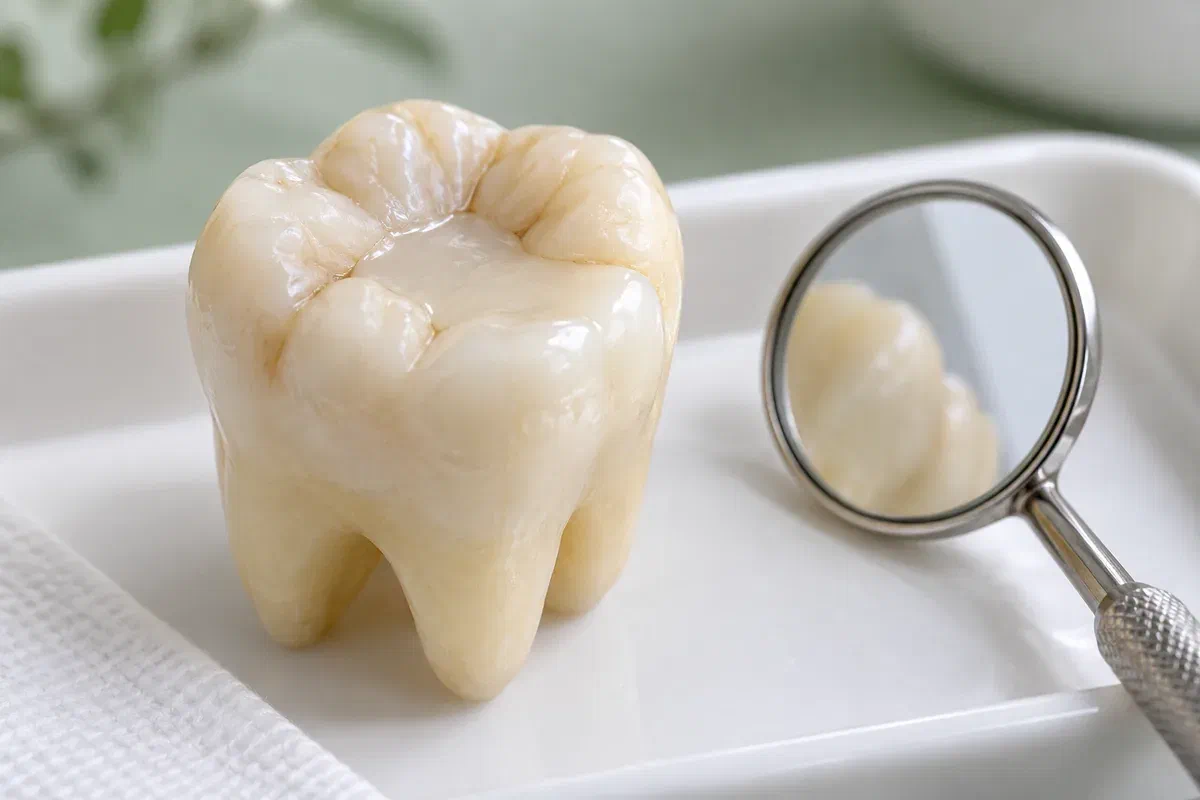
Some changes are local to one restoration. Others are part of a wider wear pattern, and treating them one filling at a time may miss the bigger reason.
You may have noticed a smoother feel while chewing, or been told the outline has changed. Say whether the tooth is comfortable. Its surface is assessed with the opposing teeth and your bite in mind, not in isolation.
A new snag, shredded floss or food packing into one gap can indicate a change at the edge or contact. The same signs can arise for other reasons. Point to the location and say how often it happens.
Wear on several restorations may relate to clenching, grinding or other habits. Share anything you know, including earlier advice. Understanding that pattern matters before deciding whether new fillings alone would help.
There is no standard lifespan after which every filling should be removed. Present condition, the surrounding tooth and real function are what guide the advice.
A review is useful whether it confirms a plan or suggests a smaller one. Where treatment is warranted, the goal is a sound surface and a cleanable contact, with attention to what caused the wear. You are entitled to ask what moves a particular tooth from watching to treating.
If wear is widespread or linked to the bite, replacing fillings may only be one element of care. The material and shape chosen should reflect the load on each tooth. Knowing this helps you weigh the plan and its realistic limits.
Patient information: Cleveland Clinic — filling longevity and maintenance
For each restoration, you should hear whether the concern is the surface, the margin, the tooth beneath or something else. Replacement purely because a filling looks dated is not a clinical reason.
Some restorations may be fine to monitor, and others may need only a local repair. Ask which sound material and tooth can stay. The answer depends on the defect and whether the area can be maintained.
Heavy clenching or other habits can load teeth and fillings alike. Protection or a broader assessment may be worth discussing, since new material does not change the pressures acting on it.
This may be an assessment-only visit, or it may lead to treatment now or in stages. Ask early on what the dentist will be checking and what decisions are likely.
Surfaces, margins, the surrounding tooth and your bite are all checked. Any symptoms, previous plans and records you bring are reviewed, and imaging is used where it adds information. Mention discomfort or past repeat repairs.
The dentist explains which fillings could be monitored, which might be repaired and which may need replacement. Ask about materials, fees and sequencing. For anything being watched, agree on what will be compared and what should prompt a call.
When work goes ahead, the tooth is kept comfortable and isolated. The amount of old material removed depends on what is found. The new or repaired surface is shaped to suit that tooth’s role in your bite.
The finished tooth is assessed against its neighbours and the teeth opposite. Ask how to clean it and whether a review is planned. If wider wear was noted, confirm which further step or protective advice applies.
Your dentist will give instructions for the particular repair. Testing it on very hard food is unnecessary and could be unhelpful.
Do not chew until sensation returns, and take care with hot drinks or food. Follow any instructions about the material or a temporary stage. If you are unsure when the tooth can return to normal use, ask.
Contact the clinic if the treated tooth feels like it meets first or chewing stays uncomfortable. Describe an ordinary bite instead of repeatedly clenching. A review can check the repair and other explanations.
If other fillings are being monitored or treated in stages, keep the next appointments. Continue cleaning well. If protection for grinding was suggested, ask how it fits your routine, and mention any problem wearing an appliance.
A good review explains both the condition of each filling now and the reasoning behind each suggested step.
Book a review at our Bronte Street practice and bring any existing plan. We will look at each worn restoration in context and explain where monitoring, repair or replacement seems fitting.
Please call if a tooth hurts or a filling breaks. The online form handles non-urgent appointment requests.
