

Illustrative routine consultation about changes to an older filling
Restorative Dentistry

Replacement of Worn Fillings in Rockwood

New to our clinic and unsure about the fillings you brought with you? Coming from Rockwood, start with a review that uses your history and today’s examination to judge which restorations still serve you.

A fresh set of eyes

Starting with a new dentist, carrying old fillings

Moving to a new practice often means meeting your own mouth again through someone else’s eyes. Fillings placed years ago, by different dentists, may each be at a different stage. Some will look tired, some will be holding up nicely, and it is not always obvious which is which.

Wear develops slowly. A surface flattens, the outline softens or an edge stops fitting quite as snugly against the enamel. A first examination can only show the present moment; earlier records, where available, help reveal whether a filling has been stable for years or has changed recently. Combined with a look at the tooth around it and your bite, that context shapes sensible advice.

If you are joining us from Rockwood, ask your previous clinic to send recent records, or bring what you have. Tell us about any fillings that have bothered you and any advice you were given about wear. We will explain our findings and how we suggest handling each restoration.

Book a new-patient filling review
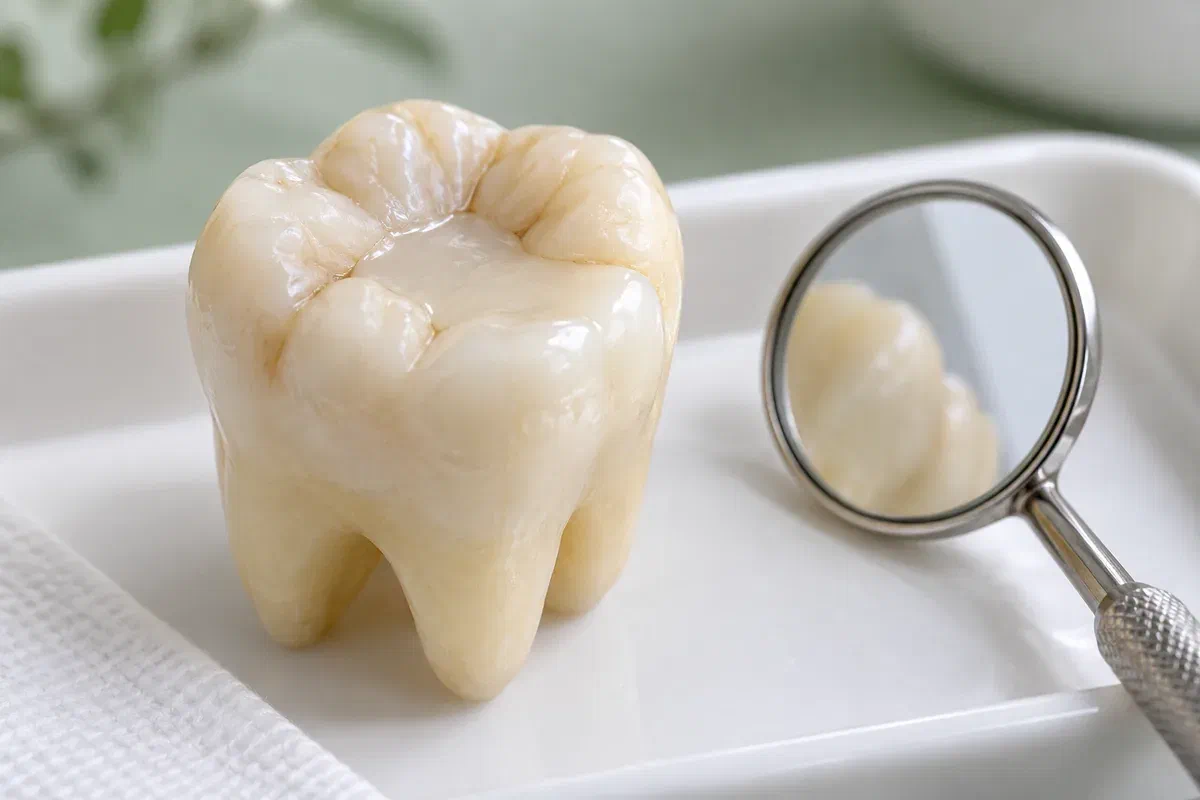
Illustrative molar teaching model with a gently worn tooth-coloured restoration
What helps a first review

Bring your history along with your questions.

A new dentist sees wear without knowing how fast it developed. Your observations and records fill that gap and show whether changes are local or widespread.

A filling you suspect has flattened

Point out any tooth that chews differently or feels smoother than before. Say whether it is comfortable. The dentist assesses the surface alongside the teeth opposite and your bite, which may also have changed over time.

Trouble flossing or food lodging

A catch with floss or food sticking beside one filling may relate to its edge or contact. Other causes are possible. Mention where it happens and whether it began before or after your last dental visit elsewhere.

Previous comments about wear

If an earlier dentist noted grinding, clenching or general wear, share it. The overall pattern matters, and a single replacement may not address a concern that involves several teeth.

There is no set date by which every filling should be redone. Its current condition, the tooth around it and its function guide the decision far better than age.

A considered starting point

Advice built on more than one snapshot

Where treatment is indicated, it should restore a useful surface and a contact you can clean, while taking account of why the wear occurred. That may be a limited repair or a new restoration. If our advice differs from what you heard before, ask us to explain the finding behind it.

The chosen material and contour should suit the work that tooth does. When wear is widespread or bite-related, one replacement may be only part of care. Understanding that from the start makes the overall plan easier to follow.

Patient information: Cleveland Clinic — filling longevity and maintenance

Reasons you can compare

Ask whether a concern relates to the surface, the margin, the tooth beneath or something else. That makes it easier to compare advice from different dentists and to see why a filling might be replaced rather than kept.

Conserving sound restorations

Many older fillings may be suited to monitoring, and some to local repair. Ask which can stay as they are. The answer depends on the defect and whether the result will be maintainable.

Considering how hard you bite

Let the dentist know about habits that load your teeth. Protective advice or a broader wear assessment may be relevant, because a new filling still has to cope with the same forces.

Your first visits

Getting to know your fillings, then planning

An initial appointment is usually an assessment. Treatment may follow at the same visit or later, depending on the findings and your preferences.

  1. Review records and examine

    Previous notes and images are read alongside a direct examination of each filling’s surfaces and edges, the surrounding tooth and your bite. New imaging is taken if it would add useful information.

  2. Prioritise and explain

    The dentist sorts restorations into those to monitor, repair or replace, and explains why. Ask about materials, fees and timing. For any filling being watched, agree on what will be compared at the next visit.

  3. Treat when agreed

    When work proceeds, comfort measures and isolation are used. How much of an old filling is removed depends on what is found in it and the tooth beneath. The new or repaired surface is shaped for its function.

  4. Set a baseline for the future

    The finished work is checked against nearby and opposing teeth, and the findings become part of your record here. Ask about cleaning and follow-up, and confirm any further assessment of wider wear.

After treatment

Normal meals, normal cleaning, honest feedback

Follow the instructions for your repair. You do not need to chew anything unusually hard to see if the new surface is working.

Let the anaesthetic wear off

Avoid chewing until full feeling returns, and be careful with hot drinks. Follow any advice about the material or a temporary stage. Ask when you can use the tooth normally if you are unsure.

Tell us if the bite feels off

Call if the treated tooth seems to meet first or chewing remains uncomfortable. Describe a normal bite instead of clenching to test it. A short review can examine the restoration and any other cause.

Keep the new routine going

Continue cleaning and attend the reviews recommended here. If a guard for grinding was suggested before or now, ask how it fits your routine, and tell us about any appliance problems.

How each filling might be handled

Different fillings, different plans

Ask how much treatment each finding needs. Restorations placed at different times may well be on different paths.

When the wear is acceptable

Monitor from a new baseline

A filling that works and can be kept clean may be observed, with today’s findings as a reference point. Agree on the review timing and the symptoms to report. Monitoring is not a promise that it will never need care.

When a limited repair suits

Repair what is localised

A defined surface or edge problem may be addressed without replacing the whole restoration. The dentist will explain whether that is appropriate and its limits. Ask how it will be checked at a later visit.

When the existing filling has reached its limit

Replace where it no longer serves

Significant wear or related damage may need a new filling or another type of restoration. Discuss the remaining tooth and what it must withstand. Extensive damage may call for more than a direct filling.

Rockwood questions for a new practice

Changing dentists with older fillings

You should understand the present condition of your fillings and why each recommendation has been made.

(905) 876-4488
How do I get my dental records sent from another clinic?
You can usually request them from your previous clinic, or we can help you with the request. Records can provide useful history, though a direct examination is still needed to assess your fillings today.
Why might a new dentist recommend something different?
Dentists can interpret findings differently, and teeth change over time. Ask us to explain what we see and why. Sharing previous notes helps us understand earlier advice and discuss any difference openly.
Do I need new X-rays if my old ones are recent?
Not always. If recent images are available and suitable, they may be enough. The dentist will explain whether additional imaging would add information for assessing your fillings.
Can I ask for my fillings to be reviewed one at a time?
Yes. Treatment can often be prioritised and staged. The dentist can suggest which fillings, if any, need attention first and which can be monitored.
What if I do not know when my fillings were placed?
That is common. Age is less important than present condition, so the examination will focus on how each filling and the tooth around it are doing now.
Will my first visit include treatment?
Usually the first visit focuses on assessment and planning. Straightforward treatment may sometimes follow at the same appointment if time allows and you agree. Ask when booking what to expect.
New patients from Rockwood

Begin with a clear picture of your fillings.

Arrange a first visit at our Bronte Street practice and bring any records you have. We will look at your fillings in context and explain whether each one is best monitored, repaired or replaced.

If a tooth hurts or a filling breaks, call the clinic. Online requests are for non-urgent appointments.

Visit Milton Dental Clinic
Unit 1, 342 Bronte St. S, Milton, ON L9T 5B7
Get directions Clinic hours
Monday–Thursday
11am–7pm
Friday–Sunday
By appointment only

Areas we serve

  • Milton
  • Oakville
  • Mississauga
  • Georgetown
  • Halton Hills
  • Acton
  • Campbellville
  • Brampton
  • Burlington
  • Puslinch
  • Rockwood
  • Erin
  • Caledon
  • Etobicoke
  • Old Milton
  • Bronte Meadows
  • Timberlea
  • Dorset Park
  • Dempsey
  • Clarke
  • Beaty
  • Coates
  • Harrison
  • Scott
  • Willmott
  • Ford
  • Bowes
  • Cobden
  • Walker
  • Mountain View
  • Milton Heights
  • Hawthorne Village
  • Valley View
  • Fallingbrook
  • Nassagaweya
  • Trafalgar
  • Esquesing
  • Nelson
  • Brookville
  • Moffat
  • Glen Williams
  • Norval
  • Limehouse
  • Stewarttown
  • Ashgrove
  • Hornby
  • Silver Creek
  • Speyside
  • Scotch Block
  • North Oakville
  • River Oaks
  • Glen Abbey
  • West Oak Trails
  • Palermo
  • Bronte Creek
  • College Park
  • Joshua Creek
  • Uptown Core
  • Preserve
  • Iroquois Ridge
  • Lisgar
  • Meadowvale
  • Meadowvale Village
  • Churchill Meadows
  • Erin Mills
  • Central Erin Mills
  • Streetsville
  • East Credit
  • Creditview
  • Heartland
  • Sheridan
  • Mount Pleasant
  • Credit Valley
  • Huttonville
  • Churchville
  • Springbrook
  • Northwest Brampton
  • Bram West
  • Fletcher's Meadow
  • Fletcher's Creek South
  • Alton Village
  • Orchard
  • Millcroft
  • Headon Forest
  • Tansley
  • Brant Hills
  • Tyandaga
  • Kilbride
  • Lowville
  • Aberfoyle
  • Morriston
  • Arkell
  • Hillsburgh
  • Freelton
  • Carlisle
  • Waterdown
  • Flamborough
  • Mountsberg

How can we help?

Milton Dental Clinic

Have a question about your smile? Choose the option that works best for you.

For urgent dental concerns, please call.
Messages are reviewed during clinic hours.