

Illustrative consultation about the jaw ridge and a future tooth replacement
Restorative Dentistry

Ridge Augmentation in Etobicoke

Grafting a jaw ridge involves surgery, healing and several reviews, so a longer trip deserves careful planning. Coming from Etobicoke, you can map out the visits, the purpose of augmentation and where to turn for urgent help.

Care that spans several visits

Plan the trips around the healing, not the other way round.

The ridge is the jawbone that stays behind once a tooth has gone, and it often shrinks over the following months and years. When a planned implant or other replacement needs more width, height or a better outline than the site has, ridge augmentation may be used to add to it.

Before anyone plans travel, the reason for grafting should be pinned down. Is the bone too narrow for the implant position? Is a hollow going to show beside the new tooth? Looking at the gap cannot answer either question, so examination and often imaging come first.

Etobicoke is the longest trip for many who visit our Bronte Street practice, so we try to make each appointment count. We start with your replacement goal and the site findings, then explain which steps could be grouped, whether a specialist is involved, and how ridge treatment fits.

Plan your ridge appointments
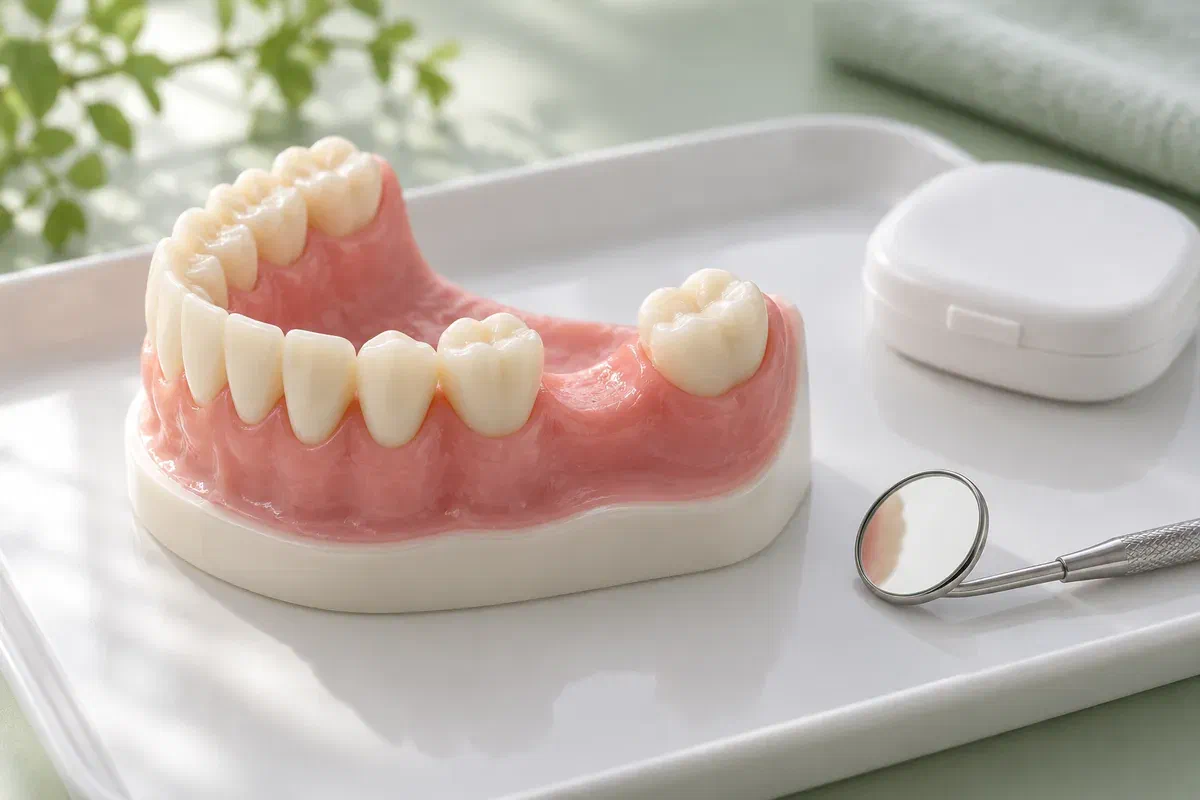
Illustrative jaw model showing a smooth gum ridge in a missing-tooth space
Getting the assessment right first

One careful look can save extra journeys.

A thorough first assessment covers the ridge, the neighbouring anatomy and the tooth you want. Ask which finding makes augmentation relevant before planning further visits.

Bone that may not hold an implant

The proposed implant needs enough bone in the right spot, clear of nerves, the sinus and adjacent roots. When dimensions fall short, augmentation may be considered. Imaging taken at the first visit can often settle this sooner.

A visible dip in the ridge

A sunken area can make a replacement look uneven at the gum. Describe what you notice, ideally with photos. The cause could be bone, gum, restoration shape, or more than one, and the answer changes how many stages are needed.

Past work done closer to home

If an extraction, graft or implant was done by another office, ask them to send records and images ahead of time. That history helps us read the site. It does not by itself mean the area is ready for what comes next.

Plenty of replacement plans need no augmentation. Whether yours does depends on the specific option you choose.

Deciding if the commitment fits

Weigh what grafting adds against the visits it takes.

When indicated, augmentation is meant to give the planned treatment a better site, such as room for an implant in the right position or a ridge shape that suits the final tooth. Ask your clinician what grafting would make possible in your case that the current bone does not.

Then look at the full picture. Surgery, a healing period, review visits and the chance of further care all add up, and travel adds to that. Nobody can promise a set amount of new bone or a guaranteed implant, and the plan you agree to should acknowledge that.

Patient information: AAP — ridge modification for implant planning

A clear target

Ask to see where the replacement tooth would sit and why the present ridge falls short. Once the goal is visible, it is easier to judge whether the extra appointments are worth it.

A schedule you can keep

Grafting may be combined with implant placement or staged with healing in between. Ask which sequence is proposed, roughly how many visits it involves, and which ones could be combined.

Materials agreed in advance

Graft and membrane options vary by procedure. Settle any preferences about where materials come from before surgery is booked, so nothing needs to be rearranged on the day.

A visit-by-visit outline

Four appointments with a clear purpose each

Exact timing depends on the defect and the restoration. Ask who will carry out each stage and whether any follow-up could happen nearer home.

  1. Assessment with records in hand

    We examine the site, review imaging and go over your gum and general health. Bring any records from other offices. Mention smoking, medications, earlier grafts, or slow healing, and describe what you want the replacement to do.

  2. Planning that leaves no loose ends

    We cover technique, materials, recovery, fees and alternatives, plus a provisional schedule. Ask about donor sites, membranes, and any removal visit. Confirm what you will wear in the gap and how you will get home comfortably on surgery day.

  3. The procedure

    If you go ahead, the site is treated using the comfort plan and method discussed. You leave with written instructions specific to your treatment. Recovery varies, so follow your own guidance rather than general expectations.

  4. Reviews before the restoration

    Follow-ups check healing and decide when the next stage is reasonable. Feeling comfortable does not show that the bone is ready. Ask what must be confirmed before booking the implant or restoration.

Recovering away from the clinic

Know what to watch for once you are home.

Keep your written instructions and contact numbers with you. Ask in advance about work, exercise, cleaning or an appliance that could press on the treated ridge.

Settle the temporary tooth before you leave

A partial or denture may need adjusting or a break from wear. Confirm the arrangement before heading home, rather than finding out later that it presses on the site. Plan meals and appearance for the first days.

Follow the home routine closely

You will be shown how to clean near the site and the rest of your mouth, and what to eat. Avoid stretching your lip to inspect the area. Call before changing the routine.

Report changes early

Keep review visits even when things feel fine. Contact the treating team promptly about worsening pain, fresh bleeding, discharge, or an opening wound. A quick call can tell you whether a trip in is needed.

Patient information: Cambridge University Hospitals — bone grafting for implants

Routes and their trip counts

Each pathway asks for a different number of visits.

Ask what is clinically reasonable for your anatomy and goals. Compare the full course of care, including the restoration and the travel each option involves.

When the ridge must be prepared

Graft, heal, then decide

A staged approach lets the site heal before implant placement is reconsidered. It usually means more visits. Ask about review points and what happens if the gain falls short.

When the site is suitable

Augmentation at implant surgery

Selected cases allow both in one procedure, which may reduce the number of surgical visits. It suits only some defects. Ask what supports it and how it changes your temporary tooth and aftercare.

When you choose not to augment

A replacement without a graft

A bridge, removable partial or another implant approach may be considered, each with its own assessment and upkeep. Compare their limits rather than assuming grafting is the only route.

Planning from Etobicoke

Practical questions about travel and recovery

We can explain the site and sequence with a model or image. Bring questions about the journey home as well as the final tooth.

(905) 876-4488
Can some of my reviews be done by a dentist nearer to where I live?
Sometimes routine checks can be shared, but the treating clinician usually needs to see the site at key points. Ask which reviews must be in person with the surgical team and how records would be passed between offices.
Should someone drive me home after the procedure?
That depends on the comfort or sedation arrangements planned. Ask in advance. If sedation is used, you will normally be told not to drive yourself, so arrange a ride before the day.
What should I do if swelling appears on the second or third day?
Some swelling is common after oral surgery and often peaks in the first few days. Call the treating team if it is getting worse or comes with fever or discharge. Seek emergency care right away if it affects breathing or swallowing.
Is there anything I can do before surgery to help healing?
Following your clinician’s instructions is the main thing. If you smoke, ask about stopping or cutting back, since smoking can affect healing. Mention all medications and supplements so the plan accounts for them.
How do I know the site is truly ready for the implant?
Readiness is judged from examination, healing time for the procedure performed, and imaging where appropriate. Feeling fine is only one part. Ask what the clinician is looking for at the review.
What happens if the graft does not take as hoped?
The site is reassessed and options are discussed again, which could include further treatment or a different replacement. Asking about this before surgery helps you weigh the overall plan.
Ridge planning for Etobicoke

Fewer trips, better planned.

Schedule a consultation at our Bronte Street practice to review the ridge at your missing-tooth site. Send any records ahead, and we will discuss the proposed replacement, the assessment still needed, and whether augmentation or another route fits.

If a treated site changes after you get home, call your treating clinician first, and seek nearby urgent care if the situation cannot wait.

Visit Milton Dental Clinic
Unit 1, 342 Bronte St. S, Milton, ON L9T 5B7
Get directions Clinic hours
Monday–Thursday
11am–7pm
Friday–Sunday
By appointment only

Areas we serve

  • Milton
  • Oakville
  • Mississauga
  • Georgetown
  • Halton Hills
  • Acton
  • Campbellville
  • Brampton
  • Burlington
  • Puslinch
  • Rockwood
  • Erin
  • Caledon
  • Etobicoke
  • Old Milton
  • Bronte Meadows
  • Timberlea
  • Dorset Park
  • Dempsey
  • Clarke
  • Beaty
  • Coates
  • Harrison
  • Scott
  • Willmott
  • Ford
  • Bowes
  • Cobden
  • Walker
  • Mountain View
  • Milton Heights
  • Hawthorne Village
  • Valley View
  • Fallingbrook
  • Nassagaweya
  • Trafalgar
  • Esquesing
  • Nelson
  • Brookville
  • Moffat
  • Glen Williams
  • Norval
  • Limehouse
  • Stewarttown
  • Ashgrove
  • Hornby
  • Silver Creek
  • Speyside
  • Scotch Block
  • North Oakville
  • River Oaks
  • Glen Abbey
  • West Oak Trails
  • Palermo
  • Bronte Creek
  • College Park
  • Joshua Creek
  • Uptown Core
  • Preserve
  • Iroquois Ridge
  • Lisgar
  • Meadowvale
  • Meadowvale Village
  • Churchill Meadows
  • Erin Mills
  • Central Erin Mills
  • Streetsville
  • East Credit
  • Creditview
  • Heartland
  • Sheridan
  • Mount Pleasant
  • Credit Valley
  • Huttonville
  • Churchville
  • Springbrook
  • Northwest Brampton
  • Bram West
  • Fletcher's Meadow
  • Fletcher's Creek South
  • Alton Village
  • Orchard
  • Millcroft
  • Headon Forest
  • Tansley
  • Brant Hills
  • Tyandaga
  • Kilbride
  • Lowville
  • Aberfoyle
  • Morriston
  • Arkell
  • Hillsburgh
  • Freelton
  • Carlisle
  • Waterdown
  • Flamborough
  • Mountsberg

How can we help?

Milton Dental Clinic

Have a question about your smile? Choose the option that works best for you.

For urgent dental concerns, please call.
Messages are reviewed during clinic hours.