

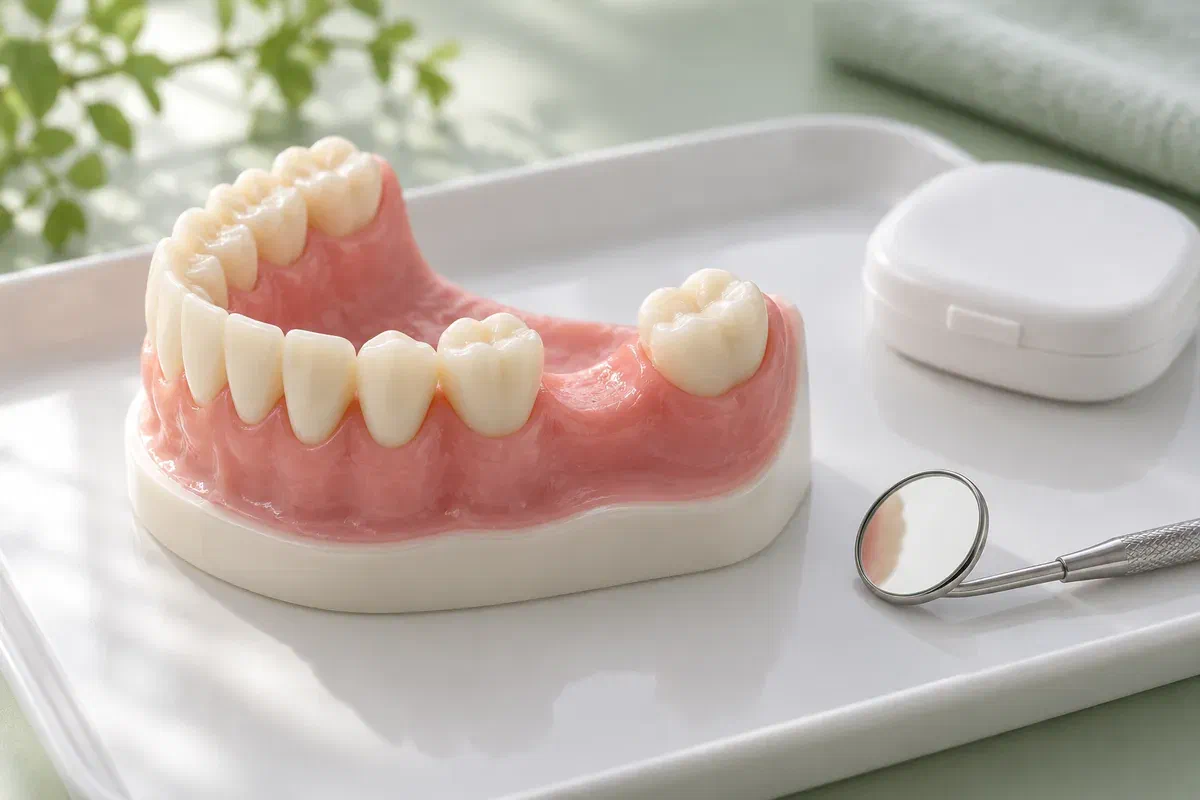
Illustrative consultation about the jaw ridge and a future tooth replacement
Restorative Dentistry

Ridge Augmentation in Milton

Being told a site lacks enough bone for an implant raises more questions than it answers. In Milton, we talk through what ridge augmentation would change, how it might be staged, and which other routes deserve a look.

When you hear “not enough bone”

A short sentence at a consultation deserves a full explanation.

Once a tooth is gone, the bony ridge that held it can narrow or lose height over time. That ridge is what a future implant or bridge has to work with. Ridge augmentation is the term for procedures that add to a deficient area so it better suits the replacement being planned.

Hearing that a site is short on bone is a starting point, not a verdict. It helps to know which measurement falls short, by how much, and for which proposed position. A gap can look ordinary in the mirror while the bone underneath is thin, and the reverse can also be true.

Our Milton team starts with the replacement tooth you have in mind and the findings at the site itself. From there we can describe what extra assessment would help, whether a specialist’s input makes sense, and how any work on the ridge would connect to the final restoration.

Talk through your ridge findings
Illustrative jaw model showing a smooth gum ridge in a missing-tooth space
What the assessment looks at

Three questions sit behind most ridge recommendations.

Your dentist weighs the shape of the bone, the nearby anatomy and the tooth you hope to end up with. You are welcome to ask which of these is driving the suggestion.

Is there room for the planned implant?

An implant needs a certain width and height of bone in the position chosen for it. Nearby nerves, sinuses and roots also limit where it can go. Imaging is often what answers this, because the gum surface rarely shows how much bone lies beneath.

Will the replacement look and fit naturally?

A dip in the ridge can leave a replacement tooth looking long or leave a shadow along the gumline. Tell us what bothers you when you smile or wear a partial. The fix might involve bone, gum tissue, the design of the tooth, or more than one of these.

What has already happened at this site?

Earlier extractions, injuries, grafts or implants all leave a history. Records from previous care can explain why the area looks the way it does today. Even so, an old graft does not mean the ridge is now ready for the next step without a fresh look.

Plenty of missing teeth and implant plans never need ridge augmentation. Whether you do depends on the specific replacement being considered.

What augmentation is meant to achieve

Bone is added for a reason you should be able to name.

Where it is appropriate, the goal is a site that better supports the treatment that comes next. A helpful way to judge a recommendation is to ask what it would allow that is not possible now. That might be a better implant angle, a more natural tooth shape, or another clearly stated aim.

It also asks something of you. Augmentation can mean a surgical appointment, weeks or months of healing, extra reviews and, occasionally, more treatment than first expected. A fair conversation sets these out next to the potential gain, and no clinician can promise a set amount of new bone or a particular implant result.

Patient information: AAP — ridge modification for implant planning

See where the new tooth will sit

A model, scan or sketch can show the intended tooth position and why the current ridge falls short of it. Linking the two makes it far easier to judge whether the extra step is worthwhile.

Know the order of events

Some people have grafting and implant placement together, while others wait for the graft to heal first. Ask which order is suggested for you and why. Knowing the gap between stages helps you plan around work and a temporary tooth.

Understand the materials

The graft and any membrane are chosen to suit the procedure and the site. If you have views about where materials come from, raise them early. You should be told what is planned and whether an alternative would change the approach.

From first look to final tooth

Four stages, each with its own checkpoint.

Timing and technique vary with the defect and the planned restoration. It is reasonable to ask who will carry out each step and where you will be seen afterwards.

  1. Examine the gap and the goal

    We look at the missing-tooth area, any imaging, your gum health and your medical history. Let us know about smoking, medications, past grafts, or slow healing after earlier dental work. We also discuss what you want the replacement to do.

  2. Lay out the proposal

    You will hear about the technique, the materials, likely recovery, fees and the alternatives. Ask whether bone would be taken from another area, whether a membrane is used, and whether anything might need removing later. Settle the temporary tooth plan too.

  3. Complete the procedure you agreed to

    If you go ahead, the site is treated with the comfort measures and method discussed beforehand. You leave with instructions written for your procedure. Recovery differs from person to person, so lean on that advice rather than someone else’s experience.

  4. Check healing before moving on

    A follow-up visit looks at how the area has healed and when the next assessment or stage can happen. A calm, comfortable gum does not prove the bone beneath is ready. Ask what the clinician will look for before giving the go-ahead.

Looking after the treated ridge

Healing goes best when the plan is followed closely.

Keep your written instructions and the after-hours contact details somewhere handy. Check whether any exercise, cleaning habit or appliance could press on the area.

Treat your temporary tooth with care

A removable partial or denture may need trimming or a break from wear while the site heals. Avoid letting it sit on the area unless you have been told it can. Raise concerns about how you will look or eat beforehand so there are no surprises.

Clean and eat the way you were shown

You will be given steps for the treated spot and for the rest of your mouth. Resist the urge to pull your lip back to check on it or prod it with your tongue. Ask first if you want to change anything in the routine.

Go to every review

Keep follow-up appointments even when nothing hurts. Call the treating team if pain is getting worse, bleeding returns, there is discharge, or the wound seems to open. They can judge whether what you notice is part of normal healing.

Patient information: Cambridge University Hospitals — bone grafting for implants

Weighing the routes

Grafting is one path among several.

The right choice depends on your anatomy and what you want from the finished tooth. Compare complete plans, including the restoration, not just the first procedure.

When the site needs building up beforehand

Graft first, implant later

Staging lets the ridge heal before the implant question is revisited. Ask when the review points fall and what would happen if the site still falls short. The wait between stages depends on the procedure and on how you heal.

When conditions at the site allow it

Graft and implant together

In some cases the ridge can be augmented at the same visit the implant is placed. Many defects are not suited to this. Ask what makes it reasonable in your case and how it changes the temporary tooth and aftercare.

When you decide against augmentation

A replacement without grafting

A bridge, a removable partial, or a different implant approach may be worth considering. Each has its own assessment, limits and upkeep. Lay them side by side before assuming a graft is the only way forward.

Questions we hear in Milton

Clear answers before you commit to surgery.

We can explain the site, the materials and the sequence with a model or on a screen. Bring questions about recovery as well as about the finished tooth.

(905) 876-4488
What does it mean when a dentist says I have bone loss at a gap?
It usually means the ridge has shrunk in width, height or both since the tooth was lost. Whether that matters depends on the replacement being planned. Ask which dimension is short, how it was measured, and what it would prevent if left as it is.
Why can’t the dentist tell how much bone I have just by looking?
The gum covers the bone, and its thickness varies from person to person. A site can look full but be thin underneath. Imaging and careful examination give a much clearer picture of the shape and position of the bone than the surface does.
Could a graft be suggested for appearance rather than for an implant?
Sometimes the main concern is a hollow that makes a bridge or partial look less natural. In that case the plan may focus on contour rather than implant support. Ask whether bone, gum tissue or tooth design is the main target.
Who performs ridge augmentation?
Depending on the procedure, it may be carried out by a dentist with suitable training or by a specialist such as a periodontist or oral surgeon. We can explain who is proposed for each stage and how information will be shared between offices.
Is it normal for a graft site to feel tender after the first few days?
Some tenderness is common early on, but pain that grows instead of settling should be reported. The same goes for discharge or an opening in the gum. Your treating team can tell you whether what you feel matches the expected course.
What happens if the graft does not produce enough bone?
The site is reassessed and the options are discussed again. That might mean further treatment, a different implant plan, or another kind of replacement. Asking about this possibility before surgery helps you weigh the whole pathway.
Plan your next step in Milton

Bring the gap, the questions and any past records.

Book a consultation at our Bronte Street practice to look at the ridge where a tooth is missing. We will go over the replacement you are considering, explain what further assessment might involve, and discuss whether augmentation or another route suits you.

If you already had surgery at the site and something has changed, use the contact details your treating clinician gave you or call us for guidance.

Visit Milton Dental Clinic
Unit 1, 342 Bronte St. S, Milton, ON L9T 5B7
Get directions Clinic hours
Monday–Thursday
11am–7pm
Friday–Sunday
By appointment only

Areas we serve

  • Milton
  • Oakville
  • Mississauga
  • Georgetown
  • Halton Hills
  • Acton
  • Campbellville
  • Brampton
  • Burlington
  • Puslinch
  • Rockwood
  • Erin
  • Caledon
  • Etobicoke
  • Old Milton
  • Bronte Meadows
  • Timberlea
  • Dorset Park
  • Dempsey
  • Clarke
  • Beaty
  • Coates
  • Harrison
  • Scott
  • Willmott
  • Ford
  • Bowes
  • Cobden
  • Walker
  • Mountain View
  • Milton Heights
  • Hawthorne Village
  • Valley View
  • Fallingbrook
  • Nassagaweya
  • Trafalgar
  • Esquesing
  • Nelson
  • Brookville
  • Moffat
  • Glen Williams
  • Norval
  • Limehouse
  • Stewarttown
  • Ashgrove
  • Hornby
  • Silver Creek
  • Speyside
  • Scotch Block
  • North Oakville
  • River Oaks
  • Glen Abbey
  • West Oak Trails
  • Palermo
  • Bronte Creek
  • College Park
  • Joshua Creek
  • Uptown Core
  • Preserve
  • Iroquois Ridge
  • Lisgar
  • Meadowvale
  • Meadowvale Village
  • Churchill Meadows
  • Erin Mills
  • Central Erin Mills
  • Streetsville
  • East Credit
  • Creditview
  • Heartland
  • Sheridan
  • Mount Pleasant
  • Credit Valley
  • Huttonville
  • Churchville
  • Springbrook
  • Northwest Brampton
  • Bram West
  • Fletcher's Meadow
  • Fletcher's Creek South
  • Alton Village
  • Orchard
  • Millcroft
  • Headon Forest
  • Tansley
  • Brant Hills
  • Tyandaga
  • Kilbride
  • Lowville
  • Aberfoyle
  • Morriston
  • Arkell
  • Hillsburgh
  • Freelton
  • Carlisle
  • Waterdown
  • Flamborough
  • Mountsberg

How can we help?

Milton Dental Clinic

Have a question about your smile? Choose the option that works best for you.

For urgent dental concerns, please call.
Messages are reviewed during clinic hours.