

Illustrative consultation about the jaw ridge and a future tooth replacement
Restorative Dentistry

Ridge Augmentation in Oakville

Graft and implant, or a bridge with no surgery to the bone? If you are coming from Oakville with that choice in front of you, we compare complete pathways so ridge augmentation is judged on what it adds.

Starting with the choice

Is the extra surgery buying you a better tooth?

That is the question most people end up asking once ridge augmentation is mentioned. The ridge is the strip of jawbone left after a tooth goes, and its dimensions shape what can be built on it. Augmentation adds to an area that is too thin or too low for the replacement in mind.

So the value of grafting depends entirely on the plan it supports. For an implant, it may create room in the right position. For a bridge, the concern is more often how the gum and tooth line look. Neither the size of the gap nor how it appears tells you how much bone is there.

When someone from Oakville comes to our Bronte Street practice with this decision, we look at the site, then weigh it against each replacement you are considering. We can explain what imaging or specialist input would help and how ridge work would fit each route.

Compare your replacement routes
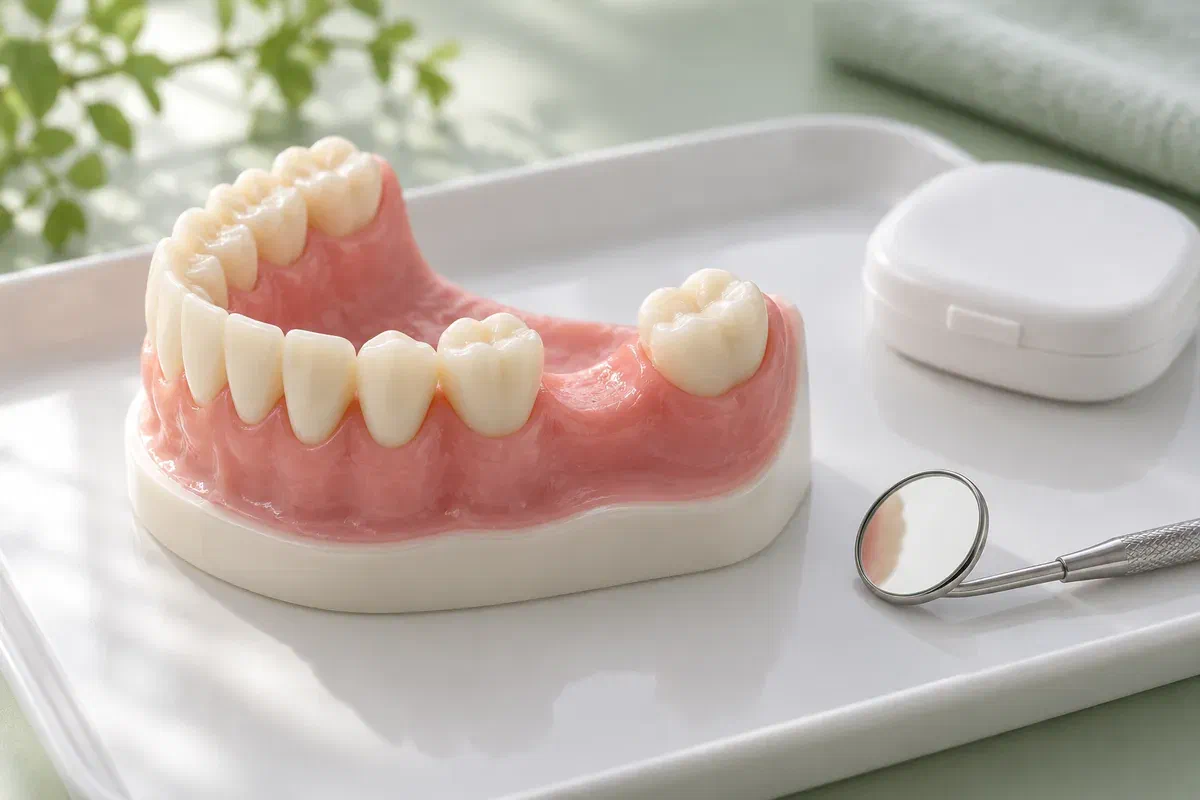
Illustrative jaw model showing a smooth gum ridge in a missing-tooth space
What tips the balance

Findings that make grafting part of the discussion

The bone’s shape, the surrounding anatomy and the tooth you want all play a part. Asking which one is decisive in your case keeps the conversation focused.

Width or height that falls short

For an implant, the bone has to accommodate it in a sensible position, clear of nerves, roots and the sinus. When the measurements fall short, grafting is one response. Scans usually reveal this far better than a look at the gum.

A dip that would show

With a bridge or an implant, a hollow in the ridge can make the new tooth look longer or leave a dark gap near the gum. Describe what you see in photos or the mirror. Bone, soft tissue and tooth design can each be part of the answer.

A site with a past

A difficult extraction, an injury, or earlier grafting changes how the area should be read. Share what you know. History guides the assessment, but it does not stand in for checking the site as it is today.

Many replacement plans proceed with no augmentation at all. Whether it belongs in yours depends on the option you choose.

The case for it, and the cost

Weigh the gain against the extra time and healing.

When grafting is indicated, it is meant to make the planned treatment more workable, perhaps an implant placed where the tooth should be, or a replacement whose gumline blends with its neighbours. Ask your clinician to say plainly which of those is the goal.

Then put that next to the commitment. Augmentation usually means surgery, healing, more appointments, and the chance that further treatment is needed. No one can promise how much bone will form, and a graft does not secure an implant result. Those facts belong in the comparison.

Patient information: AAP — ridge modification for implant planning

Picture both outcomes

Ask how the finished tooth would look and function with grafting and without it. Seeing the difference, on a model or a scan, is often what makes the decision clear.

Compare timelines honestly

A bridge may be quicker, while grafting and implant placement may run over months, done together or in stages. Ask which sequence is proposed, so you can plan around work and a temporary tooth.

Know what goes into the site

Graft materials and membranes vary by procedure. If where they come from matters to you, say so before booking. You should understand the plan and whether another material would change it.

If you choose augmentation

What happens, step by step

Each defect and restoration has its own timing. Ask who will do the surgery and the restoration, and where reviews will take place.

  1. A thorough site assessment

    Expect an examination of the gap, imaging where useful, and a review of your gums and general health. Tell us if you smoke, take regular medications, have had grafts before, or healed slowly in the past. State the result you are after.

  2. A detailed plan to agree

    This covers technique, materials, recovery, fees and the options you are setting aside. Ask whether bone would come from elsewhere in your mouth, whether a membrane is used, and whether a removal visit might follow. Fix the temporary tooth arrangement now.

  3. The procedure itself

    On the day, the site is treated using the method and comfort measures agreed earlier. You will get instructions tailored to what was done. Recovery varies, so follow yours rather than general advice.

  4. A healing review

    Later, the clinician checks the area and decides when the next step can be considered. Comfortable gums are a good sign but not proof that the bone is ready. Ask what they need to see before moving to the implant or restoration.

During recovery

Small habits that protect a graft

Keep your instruction sheet and contact numbers handy. Ask about workouts, cleaning, or any appliance that might press on the area.

Go easy with any temporary tooth

A removable partial may need adjusting or leaving out for a while. It should not simply rest on the treated ridge unless you have been told it can. Settle eating and appearance concerns before surgery.

Clean and chew as directed

You will be told how to clean near the site and the rest of your mouth. Try not to stretch your lip to look at the area or press on it. Ask before changing your routine.

Keep every follow-up

Attend reviews even if the area feels fine. Call the treating team about worsening pain, new bleeding, discharge, or a wound that opens. They can judge whether it is part of normal healing.

Patient information: Cambridge University Hospitals — bone grafting for implants

The three main routes

Staged, combined, or no graft at all

Ask what makes sense for your anatomy and expectations. Compare each option by where it ends up, not by the first appointment.

When the site must be prepared

A graft that heals first

Staging allows the ridge to mature before an implant is reconsidered. Ask when reviews fall and what happens if the result is not enough. The interval depends on the procedure and your healing.

When conditions are favourable

One surgery for both steps

Some sites allow both at once, but many defects do not. Ask what supports this for you and how it changes the temporary tooth and aftercare.

When you would rather avoid grafting

A bridge or partial instead

A bridge, removable partial, or a different implant approach may suit you, each with its own assessment, limits and maintenance. Comparing them properly avoids treating grafting as the only option.

Deciding from Oakville

Questions to settle before choosing a route

We are happy to show the site and the options with a model or image. Ask about recovery as well as the end result.

(905) 876-4488
Would a bridge avoid the need for a bone graft?
Often a bridge does not rely on bone at the gap in the same way an implant does, so grafting may not be needed for support. A hollow can still affect appearance. A bridge also involves the neighbouring teeth, which is part of the comparison.
How do I compare the upkeep of an implant and a bridge?
Both need daily cleaning and regular checks, but in different ways. A bridge needs cleaning under the false tooth, while an implant needs attention around the gum. Ask how each would be maintained in your mouth.
Does the graft use my own bone?
It can, but processed human, animal or synthetic materials are also used, sometimes with a membrane. The choice depends on the procedure. Ask what is planned and say if you have preferences about origin.
If I choose a bridge now, can I change to an implant later?
Sometimes, though the site and the supporting teeth would need fresh assessment at that point. Bone may have changed in the meantime. It is worth asking how today’s choice could affect later options.
Can the gum be built up instead of the bone?
In some cases the concern is mainly soft tissue, and gum procedures may be considered. Other cases need bone, and some need both. The examination should show which tissue is responsible for the problem you see.
How much time should I plan to spend on appointments?
It depends on whether the graft is staged or combined and on how you heal. Ask for an outline covering consultation, surgery, reviews and the restoration, so you can group visits sensibly around work.
Ridge planning for Oakville

Make the choice with all the options in view.

Arrange a consultation at our Bronte Street practice to review the ridge at a missing-tooth site. We will compare the replacements you are weighing, explain what assessment is still needed, and discuss whether augmentation has a place.

For a change after surgery you have already had, contact your treating clinician as instructed or call us for advice.

Visit Milton Dental Clinic
Unit 1, 342 Bronte St. S, Milton, ON L9T 5B7
Get directions Clinic hours
Monday–Thursday
11am–7pm
Friday–Sunday
By appointment only

Areas we serve

  • Milton
  • Oakville
  • Mississauga
  • Georgetown
  • Halton Hills
  • Acton
  • Campbellville
  • Brampton
  • Burlington
  • Puslinch
  • Rockwood
  • Erin
  • Caledon
  • Etobicoke
  • Old Milton
  • Bronte Meadows
  • Timberlea
  • Dorset Park
  • Dempsey
  • Clarke
  • Beaty
  • Coates
  • Harrison
  • Scott
  • Willmott
  • Ford
  • Bowes
  • Cobden
  • Walker
  • Mountain View
  • Milton Heights
  • Hawthorne Village
  • Valley View
  • Fallingbrook
  • Nassagaweya
  • Trafalgar
  • Esquesing
  • Nelson
  • Brookville
  • Moffat
  • Glen Williams
  • Norval
  • Limehouse
  • Stewarttown
  • Ashgrove
  • Hornby
  • Silver Creek
  • Speyside
  • Scotch Block
  • North Oakville
  • River Oaks
  • Glen Abbey
  • West Oak Trails
  • Palermo
  • Bronte Creek
  • College Park
  • Joshua Creek
  • Uptown Core
  • Preserve
  • Iroquois Ridge
  • Lisgar
  • Meadowvale
  • Meadowvale Village
  • Churchill Meadows
  • Erin Mills
  • Central Erin Mills
  • Streetsville
  • East Credit
  • Creditview
  • Heartland
  • Sheridan
  • Mount Pleasant
  • Credit Valley
  • Huttonville
  • Churchville
  • Springbrook
  • Northwest Brampton
  • Bram West
  • Fletcher's Meadow
  • Fletcher's Creek South
  • Alton Village
  • Orchard
  • Millcroft
  • Headon Forest
  • Tansley
  • Brant Hills
  • Tyandaga
  • Kilbride
  • Lowville
  • Aberfoyle
  • Morriston
  • Arkell
  • Hillsburgh
  • Freelton
  • Carlisle
  • Waterdown
  • Flamborough
  • Mountsberg

How can we help?

Milton Dental Clinic

Have a question about your smile? Choose the option that works best for you.

For urgent dental concerns, please call.
Messages are reviewed during clinic hours.