

Illustrative consultation about the jaw ridge and a future tooth replacement
Restorative Dentistry

Ridge Augmentation in Rockwood

A ridge graft may involve more than one clinician: a dentist planning the tooth and a specialist handling surgery. If you are coming from Rockwood, we explain who does what, why augmentation might be proposed, and the other paths.

Knowing your care team

Two offices, one plan

Being referred elsewhere for part of your treatment can feel confusing. Ridge augmentation, which rebuilds jawbone that has thinned or shrunk after a tooth was lost, is sometimes performed by a periodontist or oral surgeon, while your dentist designs the tooth that will eventually sit on the ridge.

Whoever does the surgery, the reason for it should be the same and stated clearly: perhaps too little bone for an implant in the right place, or a hollow that would show beside a bridge or crown. Neither is obvious from the gum, which can look healthy over thin bone.

From Rockwood, you may be weighing several offices. At our Bronte Street practice, we start with the replacement you want and the findings at the site, then explain what further assessment is needed, whether specialist planning makes sense, and how each stage would link to the final tooth.

Ask who would handle each stage
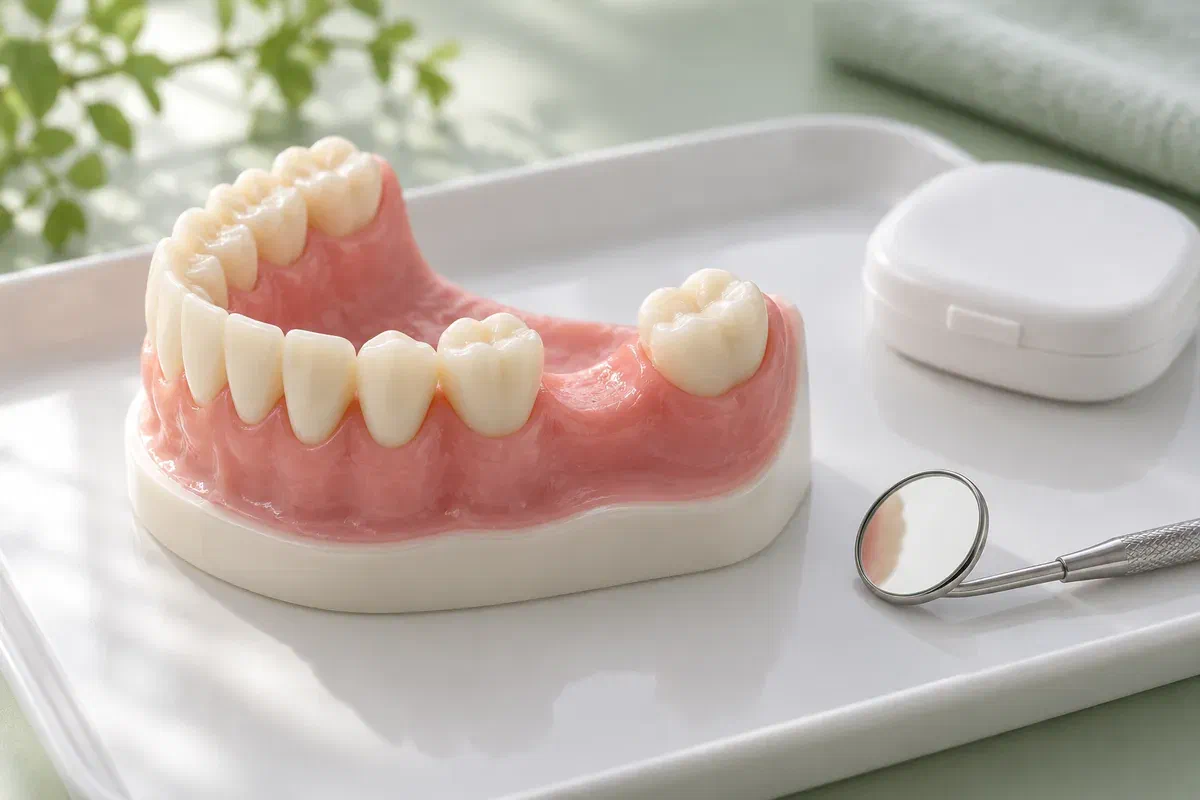
Illustrative jaw model showing a smooth gum ridge in a missing-tooth space
What gets assessed, and by whom

Why a referral might be suggested

The ridge, the structures around it and the planned tooth are all considered. Ask which finding makes grafting relevant and whether it calls for specialist involvement.

Bone shortfall at the implant site

If the ridge cannot hold an implant in the position the crown requires, augmentation may be considered. Larger defects or sites near nerves and the sinus may benefit from specialist planning. Imaging usually clarifies the situation.

A visible ridge defect

A dip that affects how a replacement looks can involve bone, gum tissue, or the shape of the tooth itself. Describe what you see. The answer can determine whether a surgical specialist, your dentist, or both should be involved.

Treatment history from other offices

Extractions, grafts or implants done elsewhere can shape the site. Ask those offices to share records. The history helps everyone read the area, though it does not confirm that it is ready for the next stage.

Plenty of replacement plans need no augmentation and no referral. It depends on the replacement you choose and the site’s findings.

Shared goals across the team

Everyone should be working toward the same tooth.

If grafting is indicated, its purpose is to give the restorative stage a better site, such as enough bone for an implant where the crown should be, or a contour that lets the tooth blend in. Ask both the restoring dentist and the surgeon to describe that shared aim.

The commitment includes surgery, healing time, reviews at one or more offices, and possibly further treatment. Neither clinician can guarantee a particular amount of new bone or promise how a later implant will perform. Clear communication between offices helps you understand each stage.

Patient information: AAP — ridge modification for implant planning

One picture of the end result

Ask for the planned tooth position to be shown and shared between offices. When the surgeon and the restoring dentist work from the same picture, the reasons for each step are easier to follow.

A sequence everyone agrees on

Grafting may be paired with implant placement or done first, with healing in between. Ask who decides the timing and how each office will know when you are ready to move on.

Materials discussed in advance

Graft and membrane options vary by procedure. Raise preferences about material sources with whoever will perform the surgery, and ask whether alternatives would alter the plan.

How the hand-offs work

Four stages, and who owns each

Technique and timing depend on the defect and the restoration. Confirm which office handles each step and who to call between visits.

  1. Restorative assessment

    The site is examined with any useful imaging, and your gums and medical history are reviewed. Mention smoking, medications, earlier grafts or poor healing. We discuss the replacement goal and whether a specialist opinion would help.

  2. Surgical planning

    Whoever will operate explains technique, materials, recovery, fees and alternatives. Ask about donor sites, membranes, and possible removal visits. Agree how the gap will be managed and which office provides the temporary tooth.

  3. The surgery

    If you proceed, the treating clinician uses the agreed method and comfort arrangements. You receive instructions for your specific procedure and a contact for questions. Recovery varies, so follow that guidance.

  4. Back to the restoring dentist

    Once the surgical team confirms healing, the restorative stage is planned. A comfortable gum does not prove the site is ready on its own. Ask what the surgeon will report and what we will check before the restoration.

Between appointments

Follow the surgeon’s instructions, and keep everyone informed.

Keep your written instructions with the treating office’s contact details. Ask whether exercise, cleaning or an appliance could put pressure on the ridge.

Check the temporary with the right office

A partial or denture may need adjusting or a pause while healing happens. Ask which office will make adjustments. Do not let it rest on the site unless you have been told it can.

Stick to the cleaning and diet advice

The treating clinician will explain how to look after the site and your other teeth. Avoid pulling your lip or pressing to check it. Ask before changing what you were told.

Keep reviews at both offices

Attend follow-ups even when comfortable. Contact the surgical team about worsening pain, new bleeding, discharge or an opening wound, and let your restoring dentist know of any change too.

Patient information: Cambridge University Hospitals — bone grafting for implants

Different routes, different teams

Who is involved depends on the path you choose.

Ask what is sensible for your anatomy and goals. Compare full pathways, including the restoration and the number of offices involved.

When the ridge needs work first

Specialist grafting, then implant

The site heals before implant placement is reconsidered. Ask when reassessment happens, who does it, and what would follow if the bone gain is not enough.

When the defect suits it

A single combined surgery

Some cases allow augmentation and implant placement together, often by one surgical clinician. Many defects do not. Ask what supports this and how it affects your temporary and aftercare.

When augmentation is declined

Restoring without grafting

A bridge, removable partial or a different implant plan may be possible, sometimes handled entirely by your restoring dentist. Compare their limits and upkeep before deciding.

Rockwood referral questions

Specialists, second opinions and records

We can explain the site and plan using a model or image. Bring questions about each office’s role as well as the final tooth.

(905) 876-4488
What is the difference between a periodontist and an oral surgeon for ridge grafting?
Both are dental specialists who may perform ridge procedures. Periodontists focus on gums and supporting bone, and oral and maxillofacial surgeons on surgery of the mouth and jaws. Ask why a particular specialist is suggested for your site.
Can my own dentist perform ridge augmentation?
Some general dentists with additional training carry out certain grafting procedures. Others refer. Ask about the clinician’s experience with your type of procedure and why that arrangement is proposed.
Is it reasonable to get a second opinion before grafting?
Yes. Ridge augmentation is a planned procedure, and taking time to hear another view is reasonable. Ask for copies of your imaging and treatment plan to share, so the second clinician does not have to start from scratch. Different opinions sometimes reflect different but reasonable approaches, so ask each to explain their reasoning.
How do the offices share my records and images?
Records are usually sent between offices with your consent. Ask how and when information will be shared, and keep your own copy of the treatment plan for reference. If you notice that one office seems unaware of a recent step, mention it so the gap can be closed before your next appointment.
Who should I call if something feels wrong after surgery?
Contact the office that performed the surgery first, using its postoperative instructions. Let your restoring dentist know too. For uncontrolled bleeding or swelling affecting breathing or swallowing, seek urgent or emergency care.
Will the fees come from more than one office?
If more than one office is involved, each usually provides its own estimate. Ask for written estimates from each so you can see the full cost of the pathway before deciding.
Coordinated care for Rockwood

Start with a plan that names every stage.

At our Bronte Street practice, we can act as the starting point for the whole pathway. After examining the gap, we will explain whether a referral is sensible, who would handle each stage, and how the eventual tooth ties the pieces together, with or without a graft.

If a treated site changes, contact the office that performed the surgery first, or call us for advice.

Visit Milton Dental Clinic
Unit 1, 342 Bronte St. S, Milton, ON L9T 5B7
Get directions Clinic hours
Monday–Thursday
11am–7pm
Friday–Sunday
By appointment only

Areas we serve

  • Milton
  • Oakville
  • Mississauga
  • Georgetown
  • Halton Hills
  • Acton
  • Campbellville
  • Brampton
  • Burlington
  • Puslinch
  • Rockwood
  • Erin
  • Caledon
  • Etobicoke
  • Old Milton
  • Bronte Meadows
  • Timberlea
  • Dorset Park
  • Dempsey
  • Clarke
  • Beaty
  • Coates
  • Harrison
  • Scott
  • Willmott
  • Ford
  • Bowes
  • Cobden
  • Walker
  • Mountain View
  • Milton Heights
  • Hawthorne Village
  • Valley View
  • Fallingbrook
  • Nassagaweya
  • Trafalgar
  • Esquesing
  • Nelson
  • Brookville
  • Moffat
  • Glen Williams
  • Norval
  • Limehouse
  • Stewarttown
  • Ashgrove
  • Hornby
  • Silver Creek
  • Speyside
  • Scotch Block
  • North Oakville
  • River Oaks
  • Glen Abbey
  • West Oak Trails
  • Palermo
  • Bronte Creek
  • College Park
  • Joshua Creek
  • Uptown Core
  • Preserve
  • Iroquois Ridge
  • Lisgar
  • Meadowvale
  • Meadowvale Village
  • Churchill Meadows
  • Erin Mills
  • Central Erin Mills
  • Streetsville
  • East Credit
  • Creditview
  • Heartland
  • Sheridan
  • Mount Pleasant
  • Credit Valley
  • Huttonville
  • Churchville
  • Springbrook
  • Northwest Brampton
  • Bram West
  • Fletcher's Meadow
  • Fletcher's Creek South
  • Alton Village
  • Orchard
  • Millcroft
  • Headon Forest
  • Tansley
  • Brant Hills
  • Tyandaga
  • Kilbride
  • Lowville
  • Aberfoyle
  • Morriston
  • Arkell
  • Hillsburgh
  • Freelton
  • Carlisle
  • Waterdown
  • Flamborough
  • Mountsberg

How can we help?

Milton Dental Clinic

Have a question about your smile? Choose the option that works best for you.

For urgent dental concerns, please call.
Messages are reviewed during clinic hours.