An interim cover is holding the fort
The temporary seals the tooth while the next stage is arranged and is not meant to stay. Check how long it should last and what to avoid chewing. Once the pain is gone, the tooth can still be brittle.


Core, post, temporary, crown: the second half of root canal care has several parts and it helps to see them laid out. From Brampton, get a full plan for restoring the tooth before you commit.
People are sometimes surprised that the root canal bill was not the last one for that tooth. The canal treatment handled the interior. What sits on top, the part that takes the pressure of every bite, usually needs its own planning, and sometimes its own foundation, before the tooth is truly complete.
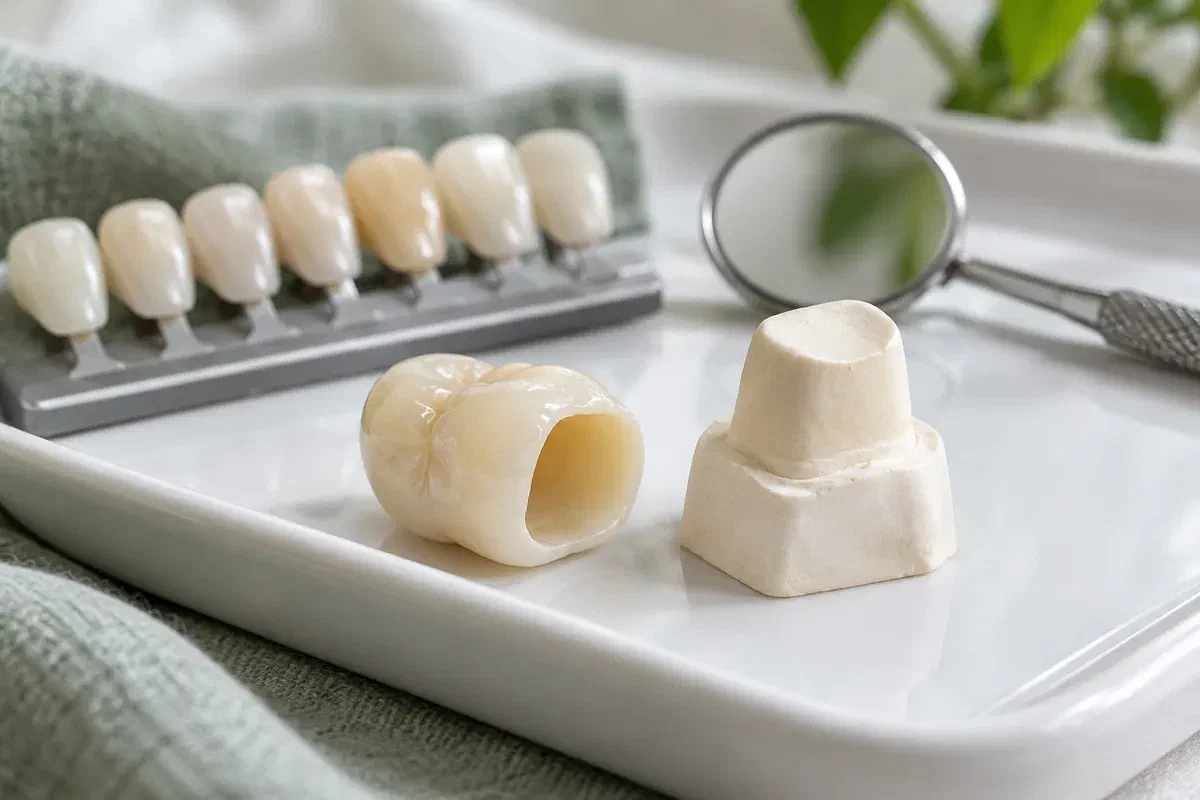
For a tooth that has lost a lot of structure, that top layer is often a crown. Not every case calls for one, though. The dentist checks where the tooth is, which cusps and walls remain, earlier fillings, any cracks and the way you bite, and then explains whether full coverage or a more limited repair makes sense.
If you travel from Brampton, a single assessment can map the rest of the journey. Bring the name of the office that did the root canal, any reports, and tell us if the filling is temporary. You will leave knowing what the foundation involves, which restoration is proposed, what each part costs and how follow-up works.
Your root canal provider can tell you which stages are outstanding. A tooth with an interim cover has different rules from one with a finished crown.
The temporary seals the tooth while the next stage is arranged and is not meant to stay. Check how long it should last and what to avoid chewing. Once the pain is gone, the tooth can still be brittle.
Extensive decay, a break or a large old filling may mean the tooth needs more than a patch. Ask what is left to build on and how a crown would attach. That shapes both the core and the final cover.
When a specialist treated the canals, confirm when to return for the restoration and whether X-rays and notes have been sent. Ask about any planned recheck. Clear roles keep the plan moving.
Call the clinic if the temporary chips or falls out, the tooth hurts or swelling starts before the crown is placed. New problems are worth reporting straight away.
On a tooth that needs it, a crown can hold weakened structure together and give back a chewing surface you can use with confidence. It also has to fit closely and seal at the edges. Ask how the design you are quoted addresses your tooth’s damage, so you know what you are paying for and why.
The tooth’s position steers the priorities. A back molar takes the brunt of chewing, and a tooth near the front may raise questions about colour and shape. These are balanced with how much natural tooth can stay.
Patient information: ADA — the role of a dental crown
Ask which parts of the tooth need protecting and the reasoning. The plan should explain how the restoration fits what remains and whether a less extensive design is possible. A bigger restoration is not always the better buy.
A core build-up may replace lost structure so the crown has something to hold. A post appears in the plan only when it suits retaining that core. Ask for each component to be listed with its purpose.
The crown is assessed with the teeth beside and opposite it. Mention anything that feels high or catches. What you notice helps the dentist refine the bite.
The appointments needed depend on the tooth, its foundation and the method used to make the crown. Ask for the sequence and a written estimate before the crown stage.
The dentist examines the root-treated tooth, its present filling, your symptoms and the records you bring. Imaging may be needed. Where the canal work or healing raises questions, further assessment can come first.
If a build-up is part of the plan, it is completed and the tooth is shaped for the restoration. Material and appearance are covered where relevant. Freezing or other comfort measures are available, as the tissues can still feel pressure.
Impressions or a scan capture the shape for the crown. A temporary may be placed, with instructions for eating and brushing around it. Note your next appointment and what to do if it loosens.
The crown’s fit, contacts, appearance and bite are confirmed before it is cemented. Ask how to clean along the edge and when to book a review. Regular exams still matter for the crown and the tooth inside it.
Each stage comes with its own instructions. A root-treated tooth under a crown still relies on daily cleaning, exams and a call if something changes.
Avoid sticky or hard foods and any habits you were cautioned about while the temporary is on. If it comes away, ring the clinic. Glue from home is not a safe fix, and the tooth should not be left uncovered.
After the final crown is placed, notice how it feels through ordinary meals. Tell us about a tall spot, ongoing tenderness or a shift in how your teeth meet. Avoid biting down hard just to check.
Use a fluoride toothpaste twice a day and an interdental cleaner that suits the area. Ask if floss frays or the spot is awkward to reach. Decay can begin where crown and tooth meet, so keep regular exams.
Your plan should be clear about who does what, when and for how much. Bring any written instructions from your root canal.
Patient information: AAE — restoration principles after root canal treatment
Book time at our Bronte Street practice to plan the restoration your treated tooth needs. Bring your records and questions, and the dentist will examine it and lay out the core, crown and follow-up in plain terms.
Phone if the temporary is lost or pain is building. Online requests are for non-urgent visits.
