The interim filling has a shelf life
It was placed to seal the tooth for a limited period. Ask when it should be replaced and which foods could crack or pull it out. A quiet tooth may still be too weak for firm chewing.


A good crown on a root-treated tooth should disappear into your bite. For households in Campbellville, we plan the restoration with fit, contacts and comfortable chewing in mind from the first visit.
The best compliment for a restored tooth is that you forget which one it was. That takes more than a root canal. Once the inside has been treated, the outside needs rebuilding so that it meets its neighbours properly, closes evenly against the opposite teeth and stands up to the meals you actually eat.
For a back tooth with much of its structure gone, a crown is often how that is achieved. Some teeth, though, keep enough of their walls for a filling or partial restoration. Before suggesting either, the dentist studies the tooth’s position, its remaining cusps, cracks, previous work and the pattern of your bite.
Campbellville sits within Milton’s boundaries, northwest of the town centre, so many people fit appointments around rural routines and work. Tell us who did your root canal and whether the filling on top is temporary, and bring any paperwork. We will plan the foundation, restoration and follow-up with your schedule in mind.
Confirm with your root canal provider what is still outstanding. A tooth under a temporary needs more caution than one with its permanent crown.
It was placed to seal the tooth for a limited period. Ask when it should be replaced and which foods could crack or pull it out. A quiet tooth may still be too weak for firm chewing.
When decay or fracture has taken structure, the tooth may no longer meet its neighbours as it should. Ask what remains and how a crown would restore those contacts. The core and the cover are designed together.
If a specialist did the root canal, ask when to book the restoration and confirm records are on their way. Note any review they want. Knowing who arranges what keeps things moving.
Please call if the temporary chips or comes out, pain develops or there is swelling before your crown visit. Phoning first can save an unnecessary drive.
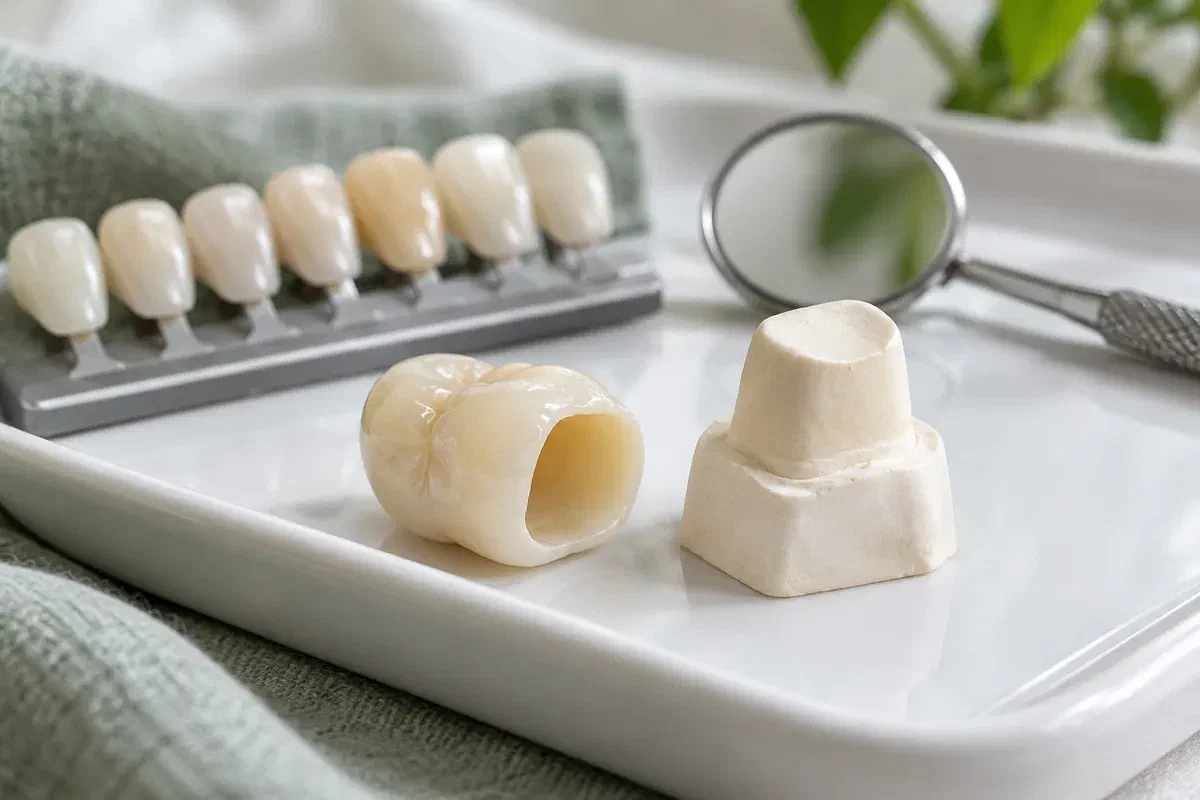
On a tooth that needs it, a crown can hold weakened structure together and rebuild a working shape. Close-fitting margins and a good seal help protect the tooth beneath. Ask how the design addresses the specific damage on your tooth, because the right crown for one tooth is not automatically right for another.
The demands on a tooth vary. A molar does much of the heavy chewing, and a tooth near the front may need to match your smile. Both are weighed with the aim of keeping as much natural tooth as practical.
Patient information: ADA — the role of a dental crown
Ask which cusps or walls need protecting and why. You should see how the crown relates to what is left and whether a lighter design would be enough. Extra coverage should earn its place.
Where structure is lost, a core build-up gives the crown its shape. A post is added only when it helps keep the core in place. Ask what is in your plan and the role of each part.
The crown is checked against neighbouring teeth so floss passes snugly, and against the opposing teeth for an even bite. Mention any high point or catch. That feedback helps the dentist fine-tune it.
Some teeth are finished in two visits, others need more, depending on the core and the crown-making method. Get the sequence and an estimate in writing before beginning.
Your symptoms, paperwork and the current filling are reviewed along with the tooth itself. An X-ray is often part of this. Should the canals or healing raise doubts, further assessment may come before the final crown.
Where needed, a core is placed, after which the tooth is shaped to receive the restoration. Material and appearance are discussed when relevant. Comfort measures are offered because surrounding tissues can still feel pressure.
Impressions or a scan capture the tooth and how it meets the others. A temporary may be fitted with tips on eating and cleaning. Confirm your next appointment and what to do if the temporary moves.
Contacts, fit, appearance and bite are adjusted and checked before cementation. Ask how to keep the edge clean and when to return. Regular exams continue to look after the crown, gums and tooth.
Follow the instructions for each stage. A crowned, root-treated tooth still needs good cleaning, regular exams and a call when something feels off.
Avoid hard, sticky and chewy foods while it is on, along with anything else you were cautioned about. If it lifts or comes off, phone us. Gluing it at home or leaving the tooth bare can cause problems.
When the final crown is in normal use, notice whether meals feel even. Food packing between teeth, a high spot or lasting tenderness are all worth mentioning. Avoid repeated hard biting to test it.
Fluoride toothpaste twice a day and floss or a small brush between teeth help keep the margin healthy. Ask for help if floss tears. Decay can still develop where crown meets tooth, so keep up with exams.
A good plan sets out who does each step, when and at what cost. Bring any written instructions from your root canal.
Patient information: AAE — restoration principles after root canal treatment
Visit our Bronte Street practice to plan the restoration your treated tooth needs. Bring your records and any questions, and the dentist will examine the tooth and talk through fit, foundation and the follow-up that suits you.
If the temporary is lost or symptoms are worsening, phone us. Online requests work best for non-urgent appointments.
