Is this filling temporary?
Many teeth leave a root canal with an interim seal. Ask how long it should stay and which foods could dislodge it. A tooth that no longer hurts can still be too fragile for heavy chewing.


A little preparation makes the crown stage after a root canal smoother. If you’re coming from Erin or Hillsburgh, gather a few details first and we can plan the restoration in fewer, better-used visits.
Think of the restoration visit as the point where two parts of your care join up. One clinician may have treated the canals; another may now rebuild the tooth. The more of that history you can bring, from treatment notes to X-rays, the faster the dentist can focus on what the outside of the tooth needs.
That need varies. Back teeth weakened by decay, fracture or large fillings frequently call for a crown to protect them during chewing. Teeth that held on to most of their walls may do well with less. The decision rests on position, remaining cusps, cracks, existing work and the way your teeth meet.
From Erin village, Hillsburgh or the countryside around them, a well-prepared first appointment can save extra trips. Ask your root canal provider for records, check whether the filling is temporary, and jot down your questions. We will examine the tooth and explain the core, restoration and follow-up in one conversation.
Whoever treated the canals can tell you what comes next. Their instructions for a tooth under a temporary will differ from the care of a finished crown.
Many teeth leave a root canal with an interim seal. Ask how long it should stay and which foods could dislodge it. A tooth that no longer hurts can still be too fragile for heavy chewing.
Old decay, breaks and earlier restorations may have removed a lot of structure. Ask what remains and whether they expect a crown to be needed. The answer helps both offices plan the foundation.
If a specialist did the work, ask when the restoration should happen and whether they will send their report and images. Find out about any review they want. It avoids waiting on each other.
Ring us if the temporary breaks or falls out, pain returns, or swelling develops before your crown is made. Mention anything new as soon as you notice it.
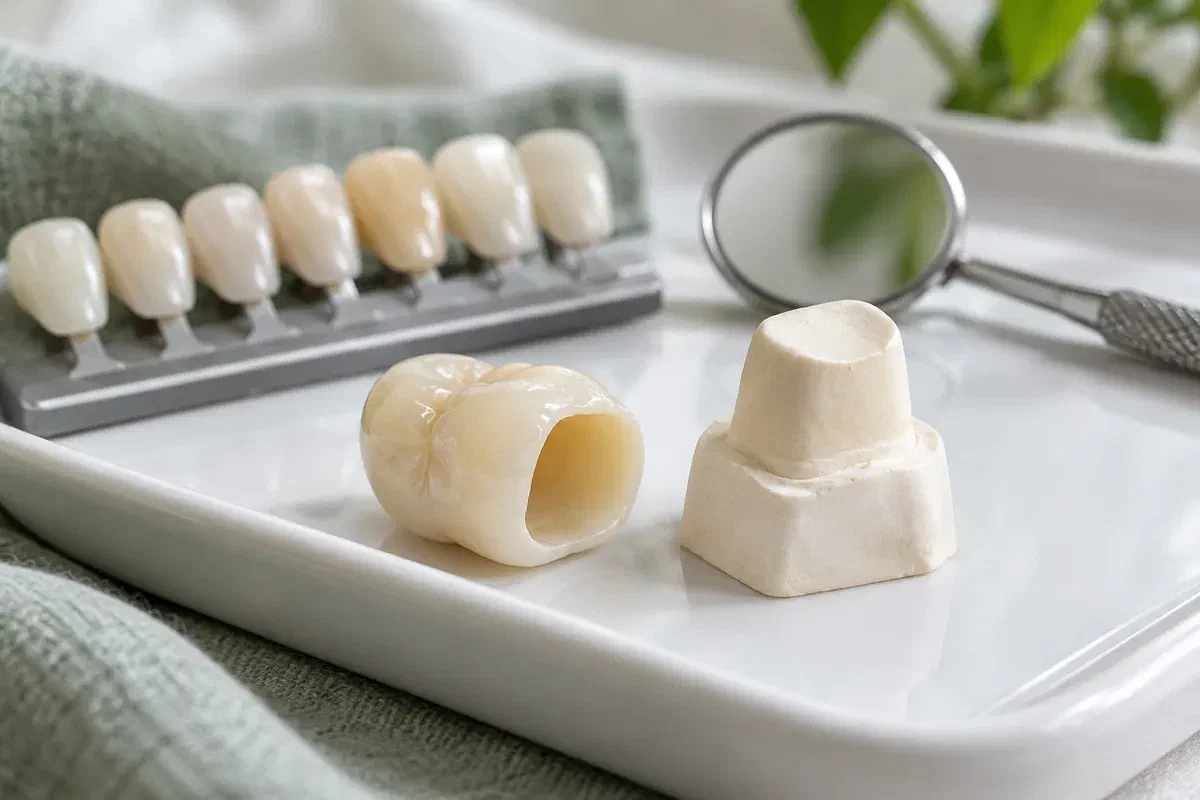
Where the tooth calls for it, a crown can hold weakened walls together and restore a shape that copes with chewing. It also has to fit tightly at its edges and seal the tooth. Ask how the proposed design deals with your tooth’s specific damage rather than accepting the first crown suggested as a default.
Tooth position changes the conversation. A molar takes the brunt of chewing, and a front tooth needs to look right beside its neighbours. Preserving natural tooth where possible is part of the same weighing up.
Patient information: ADA — the role of a dental crown
Ask which cusps or walls need protection and the reason. The plan should show how the restoration relates to the remaining tooth and whether a lighter option exists. Covering more is not automatically wiser.
When structure is missing, a build-up provides the shape the crown needs. A post is considered only when it helps hold that build-up. Ask what your plan includes and the job each part does.
The new crown is tested with the teeth around it and the ones it closes on. Tell the dentist about any high spot or catch. Your sense of the bite guides the final adjustments.
Appointment numbers vary from tooth to tooth, depending on the foundation and the way the crown is produced. A full outline and estimate let you plan around work and home.
The dentist goes through your records and examines the treated tooth, its filling and any symptoms. X-rays may be needed. If questions remain about the canals or healing, further assessment may be advised first.
Where a core is part of the plan, it is placed before the tooth is shaped for the restoration. Material and appearance are discussed as relevant. Local anaesthetic or other comfort measures are offered.
A scan or impression gives the detail needed for the crown. If a temporary goes on, you will be shown how to eat and clean around it. Ask what to do should it come off before your next visit.
The fit, contacts, appearance and bite are checked, and then the crown is cemented. You will be shown how to clean along the edge and told when to return. Routine exams keep watching the tooth over time.
Follow the guidance for the temporary and for the final crown. A root-treated tooth still needs daily cleaning, check-ups and a call when something changes.
Keep sticky and hard foods off that side and follow any other advice you were given. If the temporary comes out, phone the clinic. Avoid gluing it yourself or leaving the tooth uncovered.
When the crown is ready for everyday use, notice whether chewing feels comfortable. A high contact, tenderness that lingers or a change in your bite should be reported. Clenching to test it is not recommended.
Fluoride toothpaste and floss or an interdental brush help protect the margin. Ask for a quick demonstration if access is tricky. The tooth under the crown can still decay, so stay with your exam schedule.
A useful plan shows who does each part, when, and the cost. Bring any written advice from your root canal.
Patient information: AAE — restoration principles after root canal treatment
Book a visit at our Bronte Street practice to restore your tooth after root canal treatment. Send or bring your records, and the dentist will assess the tooth and explain what it needs and how many visits to expect.
If your temporary comes out or the tooth is getting worse, call us. Online requests are for non-urgent visits.
