
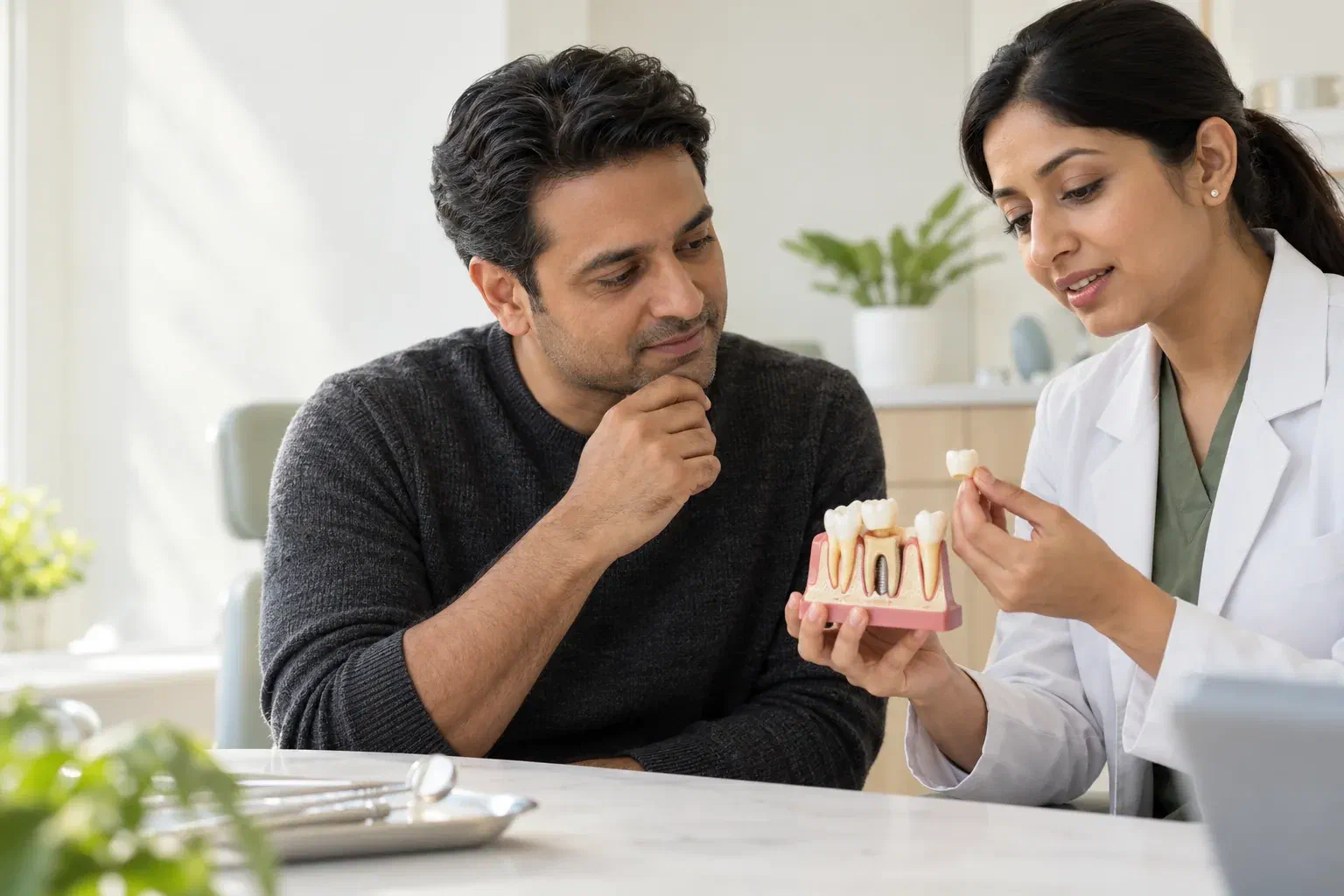
Illustrative consultation about a crown after root canal treatment
Restorative Dentistry

Root Canal Crown Restoration in Old Milton

A tooth with decades of fillings behind it often needs careful rebuilding once its root canal is done. From Old Milton, plan a restoration that respects what remains and suits how you chew.

Rebuilding a long-serving tooth

Years of repairs, one more decision

Plenty of teeth that end up needing a root canal have a history: a filling from years ago, a later patch beside it, perhaps a crack nobody noticed. Once the canals are treated, the question shifts to the outside of the tooth. How much sound structure is left, and what will keep it working for meals and conversation?

Sometimes the answer is a crown, especially when old restorations and decay have hollowed out a back tooth. In other cases the tooth keeps enough of its walls for a smaller repair. The dentist weighs position, cusps, cracks, existing work and your bite rather than following a rule that every treated tooth gets the same cap.

Our Bronte Street practice is close to Old Milton, the town’s historic downtown, and we regularly see teeth that were treated somewhere else. Tell us who did the root canal, whether the filling on top is temporary, and what you were told to watch for. From there we can lay out the core, the final restoration and how it will be followed.

Talk through rebuilding your tooth
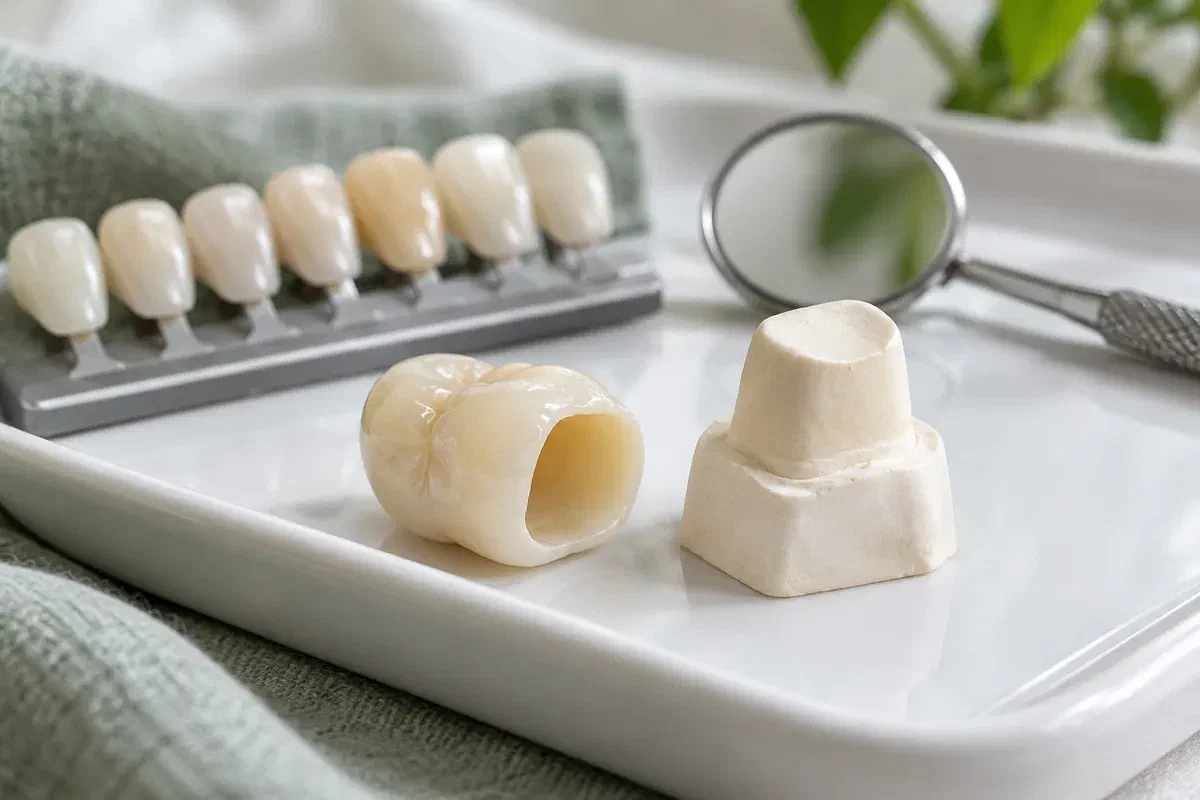
Illustrative ceramic crown and prepared-tooth model beside a shade guide
Moments to book the next step

Is the work on that tooth really done?

Your root canal provider can confirm what is left to do. Looking after a provisional seal calls for different habits than caring for a permanent crown.

A provisional seal is still in place

The material placed after treatment is meant to bridge a gap in time. Ask how many weeks it is expected to hold and what to avoid eating until then. The absence of pain does not mean the tooth can handle full chewing force.

Older fillings took up most of the tooth

Large historic restorations, common in long-time Old Milton smiles, may leave little natural crown once treatment is finished. Ask which walls survive and how a new restoration would attach to them. The core and the outer cover work as a pair.

A specialist did the treatment

After care with an endodontist, find out when you should return to a general dentist and which notes are on their way. Note any follow-up the specialist booked. Knowing who arranges the crown saves confusion later.

Get in touch if the provisional seal chips or comes out, the tooth starts aching, or swelling appears before your crown visit. Report new problems as they happen.

Why the cover matters

Strength on the outside, respect for the work inside

When a treated tooth is weakened, a well-designed crown can brace what remains and restore a working shape. The edges need to fit snugly and seal properly. Ask how the proposed restoration answers the damage your tooth actually has, since a one-size approach rarely suits a tooth with a long repair history.

Every tooth has a job. Molars grind food under heavy load, and front teeth are on show when you speak and smile. Those roles are discussed alongside how much original tooth can be kept.

Patient information: ADA — the role of a dental crown

Cover where cover is needed

Find out which parts of the tooth need protecting and why. The plan should make clear how the restoration meets the remaining structure and whether a lighter option exists. More coverage is not automatically safer.

A solid core underneath

A build-up may be placed to replace missing structure and give the crown a stable base. A post is considered only when it helps retain that core. Ask which components your tooth needs and the purpose of each.

Contacts and bite confirmed

The crown is checked against neighbouring teeth and the opposing ones. Mention any high spot or catching when you chew. Your feedback shows where an adjustment may help.

The appointments, in order

Four stages, one finished tooth

Visit numbers vary with the tooth, the foundation it needs and how the crown is made. Ask for the complete outline and a written estimate before starting.

  1. Assess what is there now

    The dentist examines the tooth, its old and new restorations, any symptoms and your treatment records. X-rays may be needed. If questions remain about the canals or healing, more assessment may come before the permanent crown.

  2. Replace missing structure

    Old filling material may be removed and a build-up placed where indicated, then the tooth is shaped. Material and appearance are discussed when relevant. Local anaesthetic or other comfort measures remain available even after a root canal.

  3. Capture the shape and cover the tooth

    Impressions or a scan record the details for the crown. A temporary may be fitted with advice on chewing and cleaning around it. Check your next booking and what to do if the temporary shifts.

  4. Seat the crown and set reviews

    Fit, contacts, appearance and bite are confirmed before the crown is cemented. Ask how to clean along the margin and when to return. Routine exams keep watch on the crown, the gums and the tooth under it.

Caring for the finished tooth

A crown still asks for daily attention

Follow the guidance for each stage, temporary and final. A root-treated tooth continues to need cleaning, monitoring and a prompt call when something changes.

Guard the temporary

Steer clear of the foods and habits you were warned about, since they can loosen or crack the interim crown. If it comes off, phone us. Avoid home glue and do not leave the tooth exposed without advice.

Pay attention at meals

After the final crown is cleared for use, note whether chewing feels even and comfortable. Mention a tall spot, ongoing tenderness or a different feel when your teeth come together. Avoid pressing hard just to test it.

Clean right to the edge

Use fluoride toothpaste and a between-teeth cleaner suited to the area. Ask us if floss tears or access is awkward. The tooth at the crown margin can still decay, so stay on your exam schedule.

Options for the top of the tooth

How much tooth is left shapes the answer

Ask why one restoration is preferred and how the others would differ in protection, preparation and upkeep.

When the remaining tooth needs bracing

Full crown coverage

A crown is often advised where old restorations, decay or fracture have taken much of the tooth. Discuss the core, the material and how the tooth will be shaped. It is only suitable if the remaining structure can carry the finished crown.

When strong walls remain

A partial or direct restoration

Some teeth can be restored with a filling, onlay or other partial design. Ask what makes your tooth suitable and how it will be protected. A completed root canal does not on its own require a full crown.

When something is still unclear

Investigate before committing

Lingering symptoms, a suspected crack or doubtful support may need a closer look before a crown is made. Ask what is missing and how the tooth will be protected meanwhile. A new crown should never hide an unsolved problem.

Questions from Old Milton

Before the final restoration

Expect your plan to spell out who handles each step, when it happens and what it costs. Bring the notes from your root canal visit.

(905) 876-4488
My tooth already had an old crown. Does it need a new one after the root canal?
It depends. Sometimes the root canal is done through an existing crown and the opening is sealed, and sometimes the crown needs replacing because of its condition or fit. The dentist assesses the crown, the tooth under it and the access before recommending a plan.
Why is my root-treated tooth turning darker?
A treated tooth can change shade over time for several reasons. It is worth mentioning at your visit, since appearance is one factor in choosing a restoration. The dentist can explain what may be causing it and which options might address the colour of a visible tooth.
Can a tooth decay again after it has had a root canal?
Yes. The tooth no longer has a live nerve, but its outer structure can still decay, especially along the edges of fillings and crowns. Daily cleaning, fluoride toothpaste and regular exams remain important for a treated tooth.
Is there a deadline for getting the crown on?
There is no single date for everyone, but the restorative stage should not be put off. Follow the timing your clinicians recommend. If something gets in the way, call to talk about protecting the tooth and rebooking rather than letting the temporary carry on indefinitely.
Will I need freezing for the crown even though the nerve is gone?
Possibly. The gum and surrounding tissues can still feel pressure and discomfort during preparation. The clinician will decide on suitable comfort measures. Mention any past experiences so the team can plan the visit with you.
Why are the root canal and crown billed separately?
They are separate procedures, and the restoration can include a core, a post if needed, a temporary and the final crown. Ask for an estimate covering the whole restorative plan and check your benefits before treatment begins.

Patient information: AAE — restoration principles after root canal treatment

Near Old Milton

Finish what the root canal started.

Visit our Bronte Street practice, close to the historic downtown, to plan your restoration after root canal treatment. Bring your records and questions so we can examine the tooth and explain the foundation, coverage and follow-up.

Phone us if your temporary comes out or symptoms are getting worse. Online booking is for non-urgent requests.

Visit Milton Dental Clinic
Unit 1, 342 Bronte St. S, Milton, ON L9T 5B7
Get directions Clinic hours
Monday–Thursday
11am–7pm
Friday–Sunday
By appointment only

Areas we serve

  • Milton
  • Oakville
  • Mississauga
  • Georgetown
  • Halton Hills
  • Acton
  • Campbellville
  • Brampton
  • Burlington
  • Puslinch
  • Rockwood
  • Erin
  • Caledon
  • Etobicoke
  • Old Milton
  • Bronte Meadows
  • Timberlea
  • Dorset Park
  • Dempsey
  • Clarke
  • Beaty
  • Coates
  • Harrison
  • Scott
  • Willmott
  • Ford
  • Bowes
  • Cobden
  • Walker
  • Mountain View
  • Milton Heights
  • Hawthorne Village
  • Valley View
  • Fallingbrook
  • Nassagaweya
  • Trafalgar
  • Esquesing
  • Nelson
  • Brookville
  • Moffat
  • Glen Williams
  • Norval
  • Limehouse
  • Stewarttown
  • Ashgrove
  • Hornby
  • Silver Creek
  • Speyside
  • Scotch Block
  • North Oakville
  • River Oaks
  • Glen Abbey
  • West Oak Trails
  • Palermo
  • Bronte Creek
  • College Park
  • Joshua Creek
  • Uptown Core
  • Preserve
  • Iroquois Ridge
  • Lisgar
  • Meadowvale
  • Meadowvale Village
  • Churchill Meadows
  • Erin Mills
  • Central Erin Mills
  • Streetsville
  • East Credit
  • Creditview
  • Heartland
  • Sheridan
  • Mount Pleasant
  • Credit Valley
  • Huttonville
  • Churchville
  • Springbrook
  • Northwest Brampton
  • Bram West
  • Fletcher's Meadow
  • Fletcher's Creek South
  • Alton Village
  • Orchard
  • Millcroft
  • Headon Forest
  • Tansley
  • Brant Hills
  • Tyandaga
  • Kilbride
  • Lowville
  • Aberfoyle
  • Morriston
  • Arkell
  • Hillsburgh
  • Freelton
  • Carlisle
  • Waterdown
  • Flamborough
  • Mountsberg

How can we help?

Milton Dental Clinic

Have a question about your smile? Choose the option that works best for you.

For urgent dental concerns, please call.
Messages are reviewed during clinic hours.