

Illustrative consultation about reassessing a previously root-treated tooth
Restorative Dentistry

Root Canal Retreatment

A previously treated tooth deserves a fresh assessment when something changes. Discuss root canal retreatment in Milton, the reasons it may be considered, and the steps needed to restore the tooth afterward.

A closer look at root canal retreatment

Understand what has changed before choosing another treatment.

A tooth that has already received root canal treatment can sometimes need further attention. It may not have healed as expected, or a later problem may have affected it. Root canal retreatment involves revisiting the internal treatment when the findings indicate that this could help retain the tooth.

An uncomfortable root-treated tooth does not automatically need the same procedure repeated. The assessment must consider the source of the symptoms, the existing restoration, possible cracks, and whether the tooth can be restored usefully. Knowing which problem the proposed retreatment would address is an essential part of deciding.

At Milton Dental Clinic, bring what you remember about the first treatment and any recent changes. We can review the tooth, explain the information needed, and discuss specialist assessment where appropriate. You deserve a plan that connects the diagnosis, internal treatment, and final restoration, with room to ask questions about each stage.

Arrange a review of your treated tooth
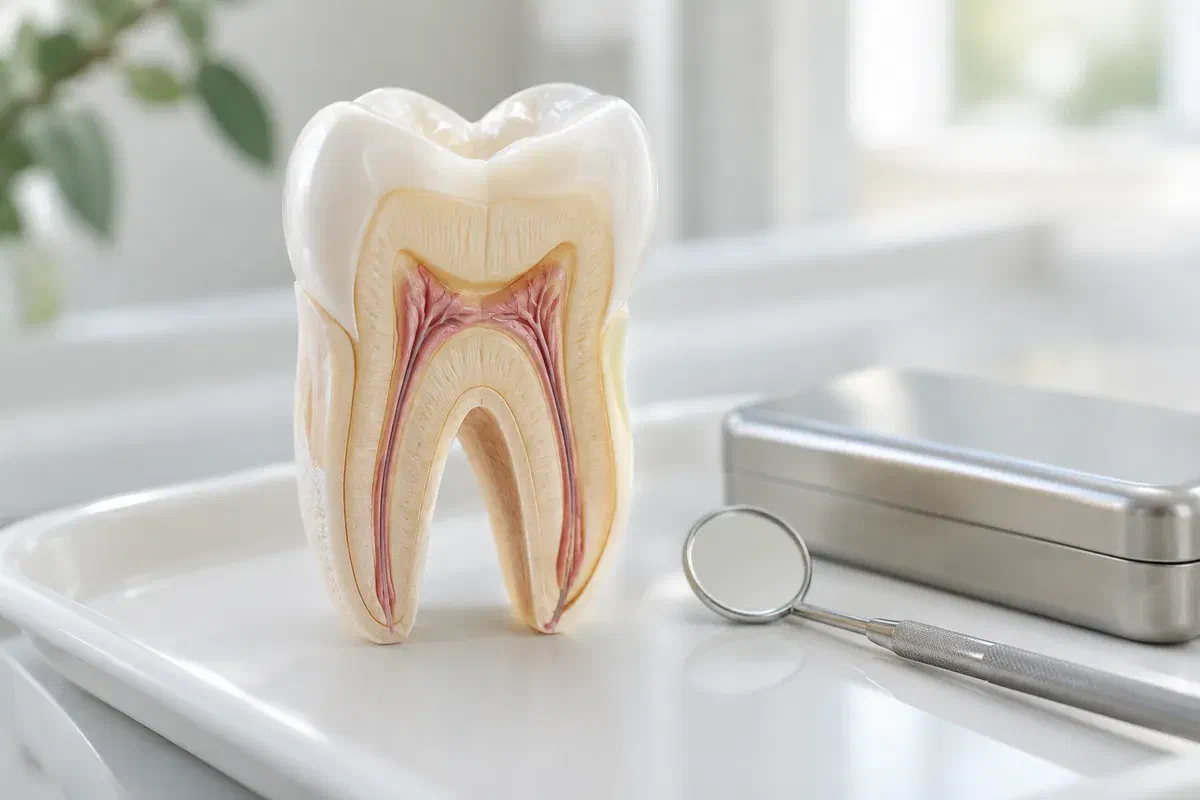
Illustrative cutaway molar teaching model used to explain the root canal space
Reasons to seek another assessment

A new symptom or finding needs an explanation.

Tell us when the concern began and how it differs from your earlier experience. The history helps frame the examination without establishing the diagnosis on its own.

Discomfort after a settled period

Mention a return of tenderness, pain during chewing, or a change you cannot locate precisely. Explain whether the feeling is constant or linked to a particular action. The clinician considers the treated tooth and other possible sources before recommending further internal treatment.

A concern found during review

Sometimes the reason for reassessment is an examination or imaging finding rather than pain. Ask what the finding means, how earlier records compare, and whether further observation or investigation is needed. The absence of discomfort does not settle every question about healing.

Damage to the existing restoration

A loose crown, new decay, or a broken filling can affect a tooth that was previously treated. Tell us when the damage occurred and whether the area has been exposed. The restorative problem and the condition of the canals need to be considered together.

Keep any recommended review even if symptoms improve. If pain, swelling, or a recurring gum bump develops before the appointment, contact the team to discuss the timing of assessment.

What retreatment is intended to do

Explore retention with a realistic view of the whole tooth.

For a suitable tooth, retreatment offers another opportunity to address a problem within the root canal system. The clinician should explain why that approach fits the findings and what may limit its outcome. Keeping a natural tooth is a meaningful aim, but the proposal also needs a workable restoration afterward.

A careful discussion includes the existing crown or filling, any post, the remaining tooth, and the treatment history. Ask what needs to be removed or changed to reach the canals. Understanding the complete pathway makes it easier to compare retreatment with other reasonable options rather than considering the internal procedure in isolation.

Patient information: AAE — understanding endodontic retreatment

A defined reason to revisit the canals

Ask which aspect of the first treatment or subsequent change may be relevant. You should know what the clinician hopes to address and which uncertainties remain. A second procedure should have a stated purpose beyond the fact that the tooth is uncomfortable.

Specialist input when the case needs it

Previous treatment can make access and assessment more complex. An endodontist may be recommended to evaluate the tooth or perform the procedure. Ask what the referral will help clarify and how the findings will be shared with the dentist planning the restoration.

A plan for the tooth after treatment

Discuss the final seal and protective restoration before committing to the internal work. Include the likely appointments and costs for that stage. The tooth needs a coordinated plan that continues after the canals have been treated again.

Your retreatment pathway

Review the cause, agree on access, then complete the restoration.

The number and sequence of appointments vary. Ask which clinician is responsible for each stage and how the tooth will be protected between visits.

  1. Gather the history and examine the tooth

    Bring available treatment records and describe your symptoms. Examination and appropriate imaging help assess the tooth and surrounding tissues. Additional tests or specialist review may be needed before a recommendation can be made.

  2. Discuss the proposed approach

    The clinician explains whether retreatment is suitable, the anticipated difficulties, and the alternatives. Ask about access through or removal of an existing restoration, estimated costs, and what would happen if the findings change during treatment.

  3. Revisit the internal treatment

    If retreatment proceeds, existing canal filling material is removed as needed so the canals can be reassessed, cleaned, and resealed. Appropriate isolation and comfort measures are used. Some teeth require more than one appointment before this stage is finished.

  4. Restore and review the tooth

    Arrange the agreed final restoration and follow-up. Confirm whether a separate clinician will complete the crown or other repair. Review appointments allow the team to assess symptoms, function, and healing rather than judging the outcome solely by early comfort.

Between treatment and review

Protect the interim repair and keep the next stage moving.

Ask for instructions that reflect the work actually completed at your visit. A temporary covering, a finished restoration, and an unfinished treatment stage may need different precautions.

Clarify what you can chew

Avoid chewing while numb and follow the clinician’s advice about loading the tooth afterward. Do not test it with hard foods. If a temporary filling or crown loosens, contact the treating team for guidance rather than waiting for the next scheduled visit.

Report the course of your symptoms

Tell the clinician if discomfort is increasing, your bite feels unusually high, or swelling develops. Describe when the change began and what triggers it. Follow the individual pain-management advice provided, and ask before using medication that may conflict with your health history.

Attend the restorative and healing reviews

Keep both types of appointment if they are arranged with different clinicians. Ask when records will be exchanged and whom to contact with questions. Completing the final restoration does not cancel a recommended review of the root treatment.

Comparing the next steps

The route depends on the problem and the tooth’s outlook.

Ask why each reasonable option is or is not suitable. A recommendation should account for both the internal condition and the ability to keep the tooth functioning afterward.

When revisiting the canals is appropriate

Nonsurgical retreatment

This approach re-enters the tooth to address the canal system. Access through existing restorative work may add complexity. Ask what the clinician expects to achieve and what will be needed to restore the access and protect the tooth afterward.

When another approach needs consideration

Endodontic surgical assessment

In selected situations, a specialist may consider treatment around the root end. Surgery and nonsurgical retreatment address different circumstances and may sometimes be combined. Ask why a surgical opinion is relevant rather than assuming it is automatically the next step.

When retaining the tooth is not reasonable

Removal and a replacement discussion

A severely compromised tooth may not have a suitable retention pathway. Discuss the reasons, the implications of removal, and replacement choices where appropriate. Ask for the complete sequence and maintenance considerations so the options can be compared fairly.

Questions about treating a tooth again

Bring the questions that the first treatment did not answer.

You can request an explanation of the diagnosis and proposed sequence before deciding. If you have several estimates, compare what each includes.

(905) 876-4488
Does needing retreatment mean the first root canal was done incorrectly?
Not necessarily. Healing can be affected by complex anatomy, later decay, restoration damage, or other changes. The clinician needs the history and current findings to discuss likely explanations. A recommendation for retreatment alone does not establish why the original tooth developed a problem.
Will my existing crown always need to be removed for retreatment?
No single access plan suits every tooth. The clinician assesses the crown, any post, and the work needed to reach the canals. Ask whether access through the restoration or removal is proposed, what risks are involved, and whether a new crown is included in the estimate.
Can a tooth be retreated if it has a post inside it?
A post can make access more complicated and may require specialist assessment. Whether it can be managed depends on the post, remaining tooth, and proposed approach. Ask how its presence affects the risks and whether other options should be considered.
Why might an old root-treated tooth need review when it does not hurt?
An examination or imaging finding can raise a question about the tooth without causing noticeable symptoms. The clinician interprets that finding alongside the treatment history and any earlier images. Ask whether observation, additional assessment, or intervention is recommended and what supports that decision.
Is the final crown included in a root canal retreatment appointment?
It may be a separate stage with another clinician. Ask what will be placed at the end of retreatment, who will arrange the final repair, and how soon to attend. Check the estimates for both the internal work and the planned restoration.
What should I do if symptoms return while I am waiting for a retreatment consultation?
Contact the treating clinic or the team arranging the consultation and describe the change. They can reassess the urgency and advise on an earlier review. Do not assume a future specialist appointment means new swelling or worsening pain should be left unreported.
Root canal retreatment in Milton

Let’s review the tooth and the reason for another procedure.

Book an assessment at our Bronte Street practice for a previously treated tooth. Bring available records and your questions so we can discuss the findings, specialist input where appropriate, and the restorative stages that may follow.

For increasing pain or swelling, call the clinic rather than waiting for a reply to an online appointment request.

Visit Milton Dental Clinic
Unit 1, 342 Bronte St. S, Milton, ON L9T 5B7
Get directions Clinic hours
Monday–Thursday
11am–7pm
Friday–Sunday
By appointment only

How can we help?

Milton Dental Clinic

Have a question about your smile? Choose the option that works best for you.

For urgent dental concerns, please call.
Messages are reviewed during clinic hours.