

Illustrative consultation about reassessing a previously root-treated tooth
Restorative Dentistry

Root Canal Retreatment in Acton

A small pimple-like bump on the gum near an old root canal is easy to dismiss, especially when it drains and fades. Coming from Acton, you can have it examined, learn what it may signal, and find out whether retreating the tooth makes sense.

The bump that keeps returning

A spot on the gum can be a message from the root.

It shows up as a little blister on the gum, sometimes with a bad taste, then flattens for a few weeks before reappearing. Often there is barely any pain. Near a tooth that already had a root canal, a recurring bump like this can be the body draining an infection from around the root, and it is worth having looked at rather than waited out.

Its presence does not tell us the cause by itself. The source might be the treated canals, a crack in the root, a gum pocket, or a neighbouring tooth. Examination and imaging help trace it. When the old root canal does appear responsible, retreatment, which means reopening the tooth and cleaning and resealing its canals, may give the tooth a chance to settle.

For anyone booking from Acton, a quick photo of the bump when it is visible can be useful, since it may have gone down by the day of your appointment. Tell us roughly when the original treatment was done. We will look at the tooth, describe what further information is needed, and raise specialist input if the picture is complex.

Have the gum bump checked
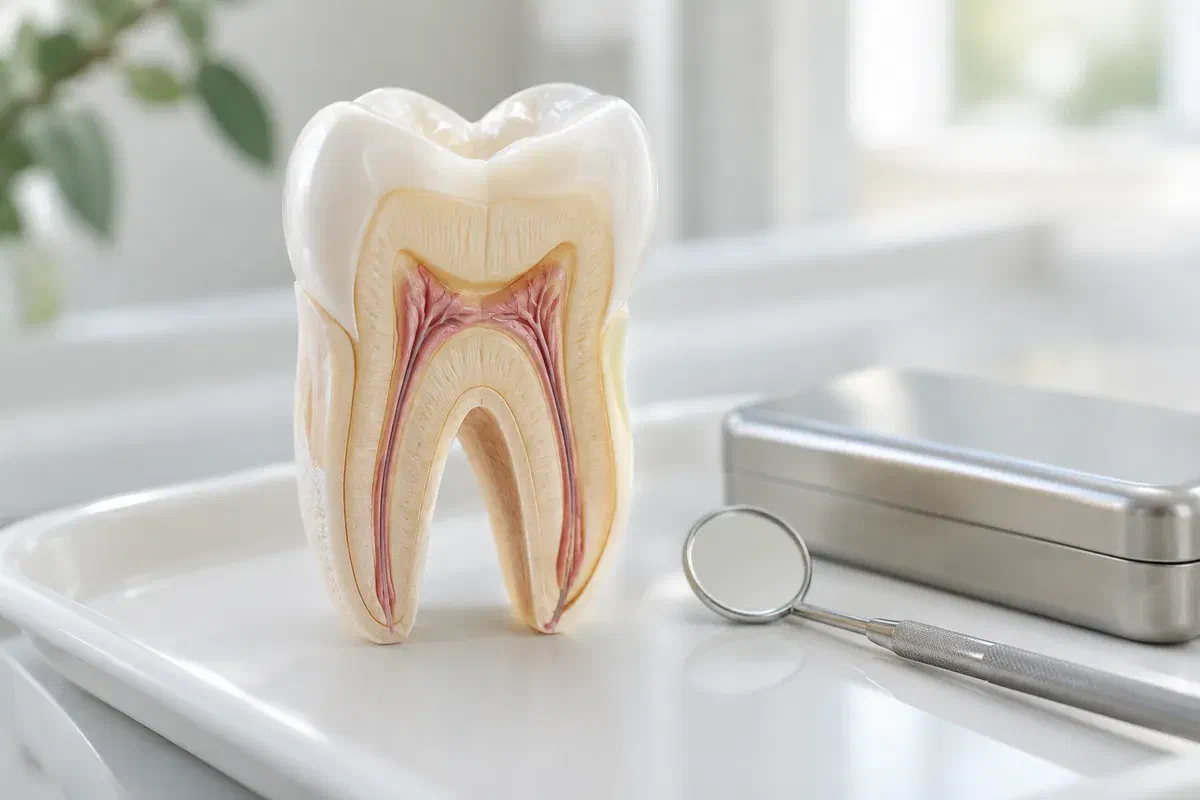
Illustrative cutaway molar teaching model used to explain the root canal space
Signs that point back to the tooth

Quiet symptoms still count.

Describe when you first noticed the change and how it compares with the period after the first root canal. Your account helps guide the exam, though it cannot prove the source.

A returning ache or tenderness

Along with the bump, you may notice mild soreness on biting or pressure in the area. Mention whether it comes and goes. The treated tooth is weighed against other possible sources before more internal treatment is suggested.

An imaging or exam finding

A dentist may have noticed the bump, or an X-ray change near the root, during a routine visit. Ask what it suggests, how earlier images compare, and whether further testing is planned. Little or no pain does not mean healing is complete.

A worn or damaged restoration

Decay at a crown margin or a cracked filling can let bacteria back toward the canals. Say when the damage appeared and whether the tooth has been exposed. Problems above and below the gumline are assessed together.

Don’t cancel a review because the bump has flattened. If pain grows, swelling spreads, or you feel unwell, call before your appointment so the team can advise on how soon to come in.

What treatment can address

Clear the source, then protect the tooth.

Where the canals are the likely origin, retreatment aims to remove what remains of the old filling, clean the system again, and seal it, giving the area around the root a chance to heal. Ask why the findings suggest this and what could limit success. Keeping your natural tooth is a good aim when it can be restored properly.

Expect to talk about the crown or filling, any post, the remaining tooth, and the earlier treatment. Ask what would need to be removed for access. Understanding each stage lets you compare retreatment fairly with surgery around the root tip or removal of the tooth.

Patient information: AAE — understanding endodontic retreatment

A specific cause in mind

Ask what the retreatment is expected to deal with and what remains uncertain. If a crack is suspected, ask how that would change the plan. A second procedure needs a clear target, not just a symptom.

An endodontist for complex cases

Tracing a draining spot back to its source can require specialist testing. An endodontist may be recommended to assess or treat the tooth. Ask what the referral will add and how results will reach your restoring dentist.

A restoration that seals it off

Agree on the final seal and covering before starting. Ask about the visits and costs involved. A good restoration protects the canals from being reached again, so it deserves as much planning as the retreatment.

Tracing the problem to a solution

Find the source, then treat it.

The number of visits and their order depend on the tooth. Ask who handles each part and how the tooth is protected while you wait.

  1. Examine and trace the bump

    Describe your symptoms and bring any records. Examination, testing and suitable imaging help locate the source. In some cases the drainage path is traced on an X-ray to show which root it leads to. Specialist assessment may be suggested.

  2. Explain the options

    You will hear whether retreatment is suitable, what might complicate it, and the alternatives. Ask about the crown, what the estimate includes, and what would happen if a crack or other finding appears during treatment.

  3. Treat the canals once more

    If you go ahead, the old filling material is removed where needed and the canals are cleaned and sealed again. The tooth is isolated and numbed. Some teeth need more than one appointment for this part.

  4. Seal, restore and recheck

    The final restoration is placed and follow-up arranged. Confirm whether another clinician will complete it. Reviews check whether the bump has stopped returning and how the bone is healing, rather than relying on early comfort.

Afterwards

Give the area time, and keep watching.

Your care advice should reflect the work done at that visit. A temporary covering, a completed restoration, and an unfinished stage each have their own precautions.

Chew carefully for now

Wait for the numbness to pass before eating, then follow advice about using the tooth. Avoid very hard foods on that side. If a temporary comes loose, contact the treating clinic for guidance rather than leaving it until the next visit.

Notice whether the bump returns

Tell the clinician if the bump reappears, discomfort increases, or swelling develops. Note when and how it changed. Use the pain-relief approach recommended for you, and ask first about any medicine that might interact with your health conditions.

Attend every review

Healing around the root takes time, and review visits may be with a different clinician from the one placing the crown. Ask how information is passed along and who to call. A finished crown does not cancel a healing review.

Ways forward

The right approach depends on where the drainage starts.

Ask why each realistic option does or does not suit your tooth. A sound recommendation considers the canals and the tooth’s ability to keep functioning afterward.

If the canals are the source

Nonsurgical retreatment

The canals are accessed from the top of the tooth and treated again. Existing crowns or posts can make this harder. Ask what the clinician expects to achieve and how the opening will be sealed afterward.

If the root tip needs direct care

Endodontic surgical assessment

A specialist may consider treating the end of the root through the gum in selected cases. It suits different circumstances from retreatment and is sometimes combined with it. Ask why it is being suggested instead of assuming it is the obvious next step.

If the tooth cannot be kept

Removal and a replacement discussion

A cracked root or a badly damaged tooth may not be retainable. Discuss why, what removal would involve, and possible replacements. Ask for the full sequence and maintenance needs of each so they can be compared fairly.

Gum bump questions

What that spot might mean

Ask for the diagnosis and proposed order of treatment to be explained before you decide. If you have more than one estimate, check what each covers.

(905) 876-4488
What is the bump on my gum near my root canal tooth?
A recurring bump can be a drainage point for infection around a root, sometimes called a sinus tract. It can also have other causes. Examination and imaging help identify where it comes from before treatment is recommended.
The bump went away. Do I still need an appointment?
Yes. A draining bump often shrinks and returns, so its disappearance does not mean the cause has resolved. Keep the appointment, and bring a photo if you took one while it was visible.
Should I squeeze or pop the bump?
No. Pressing on it can irritate the gum and does not deal with the source. Keep the area clean with normal brushing, and contact the clinic if it becomes more swollen or painful.
Can a cracked root cause a gum bump?
It can. A crack in the root may allow bacteria to collect and drain through the gum. Cracks affect whether a tooth can be kept, so if one is suspected, ask how it was identified and how it changes the options.
Why would a tooth that does not hurt need retreatment?
Infection around a treated root can be present with little or no pain. A bump, imaging change, or other finding may suggest it. Ask the clinician to explain what supports their recommendation and whether monitoring is an option.
What should I watch for while waiting to be seen from Acton?
Note whether the bump returns, whether pain is increasing, and whether swelling is spreading. Call the clinic if any of these change. For swelling that affects breathing or swallowing, seek emergency medical care straight away.
Retreatment for Acton

Let’s find out where that bump is coming from.

Book an assessment with our Bronte Street team for a root-treated tooth with a gum bump or other change. Bring any records or photos, and we will go over the cause, the possible need for a specialist, and how the tooth would be restored.

Rising pain or swelling is a reason to call the clinic directly, not to wait for an online request to be answered.

Visit Milton Dental Clinic
Unit 1, 342 Bronte St. S, Milton, ON L9T 5B7
Get directions Clinic hours
Monday–Thursday
11am–7pm
Friday–Sunday
By appointment only

Areas we serve

  • Milton
  • Oakville
  • Mississauga
  • Georgetown
  • Halton Hills
  • Acton
  • Campbellville
  • Brampton
  • Burlington
  • Puslinch
  • Rockwood
  • Erin
  • Caledon
  • Etobicoke
  • Old Milton
  • Bronte Meadows
  • Timberlea
  • Dorset Park
  • Dempsey
  • Clarke
  • Beaty
  • Coates
  • Harrison
  • Scott
  • Willmott
  • Ford
  • Bowes
  • Cobden
  • Walker
  • Mountain View
  • Milton Heights
  • Hawthorne Village
  • Valley View
  • Fallingbrook
  • Nassagaweya
  • Trafalgar
  • Esquesing
  • Nelson
  • Brookville
  • Moffat
  • Glen Williams
  • Norval
  • Limehouse
  • Stewarttown
  • Ashgrove
  • Hornby
  • Silver Creek
  • Speyside
  • Scotch Block
  • North Oakville
  • River Oaks
  • Glen Abbey
  • West Oak Trails
  • Palermo
  • Bronte Creek
  • College Park
  • Joshua Creek
  • Uptown Core
  • Preserve
  • Iroquois Ridge
  • Lisgar
  • Meadowvale
  • Meadowvale Village
  • Churchill Meadows
  • Erin Mills
  • Central Erin Mills
  • Streetsville
  • East Credit
  • Creditview
  • Heartland
  • Sheridan
  • Mount Pleasant
  • Credit Valley
  • Huttonville
  • Churchville
  • Springbrook
  • Northwest Brampton
  • Bram West
  • Fletcher's Meadow
  • Fletcher's Creek South
  • Alton Village
  • Orchard
  • Millcroft
  • Headon Forest
  • Tansley
  • Brant Hills
  • Tyandaga
  • Kilbride
  • Lowville
  • Aberfoyle
  • Morriston
  • Arkell
  • Hillsburgh
  • Freelton
  • Carlisle
  • Waterdown
  • Flamborough
  • Mountsberg

How can we help?

Milton Dental Clinic

Have a question about your smile? Choose the option that works best for you.

For urgent dental concerns, please call.
Messages are reviewed during clinic hours.