

Illustrative consultation about reassessing a previously root-treated tooth
Restorative Dentistry

Root Canal Retreatment in Brampton

When a crown loosens or a filling breaks on a tooth that once had a root canal, the canals underneath may need checking too. From Brampton, you can have both layers assessed and hear whether retreatment, a new restoration, or something else fits.

Above and below the gumline

The crown came loose. What about the root canal under it?

A crown popping off during dinner, or a piece of filling crumbling away, tends to feel like a simple repair job. On a tooth that has had a root canal, there is a second question hiding underneath. Once the seal on top is broken, saliva and bacteria can reach the treated canals, and the inside of the tooth may need attention as well as the outside.

That does not mean every failed restoration leads to retreatment. Sometimes a new crown or filling is all that is needed; sometimes the canals need cleaning and resealing first; occasionally the tooth is too damaged to keep. Sorting out which applies depends on examination, imaging, and an honest look at how much sound tooth remains.

If you are coming from Brampton with a loose crown, keep it in a clean container and bring it along. Tell us when it came off and how long the tooth has been exposed. We will check the tooth and canals together, explain what we find, and talk about a specialist if the case looks complex.

Have the tooth and canals checked
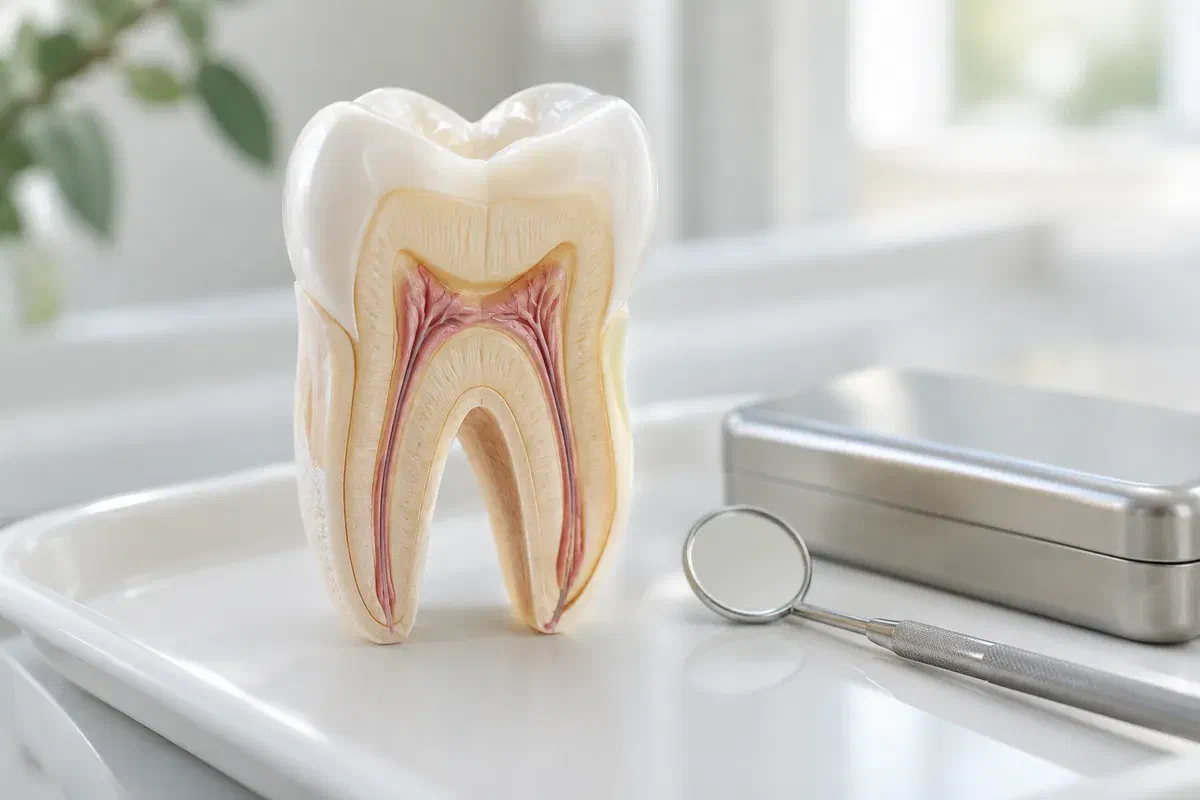
Illustrative cutaway molar teaching model used to explain the root canal space
What you might be noticing

A broken repair, a returning ache, or an X-ray note

Let us know what happened and how it differs from the way the tooth felt after its first treatment. Your story directs the examination, but tests confirm what is going on.

Tenderness creeping back

Biting may feel sore again, or there may be a dull ache near the exposed tooth. Say whether it is steady or only appears with chewing. Other possible causes are considered before anyone recommends more work inside the canals.

A note from your last checkup

Your dentist may have spotted a change near the root on an X-ray. Ask what it showed, how it compares with earlier images, and whether monitoring or further testing is suggested. Absence of pain does not answer every question about healing.

A crown off or a filling broken

Lost crowns, fractured fillings and new decay at the edges are common reasons a treated tooth is reassessed. Mention how long it has been uncovered. The repair and the condition of the canals are judged together, not one at a time.

Even if the tooth feels fine, don’t leave an exposed root-treated tooth for long. If pain rises, swelling develops, or a gum bump keeps returning before your appointment, call so we can review the timing.

Why the canals may be revisited

Fix the foundation before you replace the roof.

When the canals are suspected of being affected, retreatment can address that before a new crown is fitted. The clinician should explain why the findings support it and what might limit it. Keeping a natural tooth is a worthwhile aim, but only when a durable restoration can be placed afterward.

Expect a discussion about the old crown or filling, any post, the remaining structure, and the original treatment. Ask whether new decay changes the picture and what must be removed to reach the canals. Seeing every stage at once makes it easier to compare retreatment with simply restoring the tooth, or with other choices.

Patient information: AAE — understanding endodontic retreatment

A reason tied to the findings

Ask whether the retreatment is meant to address contamination from the exposed tooth, an issue from the first treatment, or something else. You should know the aim and what remains uncertain. An open tooth alone does not always mean the canals must be redone.

Specialist help for tricky access

Posts, old materials and damaged tooth structure can make re-entry harder. An endodontist may be recommended to assess the tooth or do the retreatment. Ask what the referral will clarify and how the results will reach the dentist restoring the tooth.

The new crown in the plan from day one

Agree on the final seal and restoration before starting canal work. Ask how many visits and what costs that stage will involve. A tooth that has lost its crown needs a complete plan, not two unconnected repairs.

Getting the tooth back in service

Protect, assess, retreat if needed, rebuild

The order and number of visits depend on the tooth. Ask who handles each part and how the tooth is covered between appointments.

  1. Cover the tooth and examine it

    A temporary covering may be placed first to protect the exposed tooth. Bring any records and describe your symptoms. Examination and imaging assess the canals and surrounding bone, and specialist input may be suggested before a recommendation.

  2. Choose the right sequence

    You will hear whether retreatment is needed or whether restoration alone is reasonable, along with the likely difficulties and alternatives. Ask whether the old crown can be reused, what the estimate covers, and how new findings would be handled.

  3. Clean and reseal if indicated

    If retreatment goes ahead, the previous root filling is removed where needed and the canals are reassessed, cleaned and sealed again. The tooth is isolated and kept comfortable. Some teeth require more than one visit.

  4. Place the restoration and review

    Arrange the final crown or filling and the follow-up visits. Confirm whether another clinician will do the restoration. Reviews look at symptoms, bite and healing over time rather than relying only on how the tooth feels at first.

Until the final crown is on

A temporary is only temporary.

Ask for instructions that reflect what was done at your visit. A provisional covering, a finished restoration, and an incomplete stage each need slightly different care.

Spare the tooth when eating

Avoid eating until the freezing wears off, then follow advice about how much to use the tooth. Steer clear of sticky or very hard foods that can pull off a temporary. If it loosens, call the treating clinic rather than waiting for the next booking.

Track discomfort and swelling

Let the clinician know if soreness is increasing, the bite feels high, or swelling appears. Note when it started and what makes it worse. Follow the pain advice you were given, and ask before taking medication that may conflict with your health history.

Finish both the crown and the reviews

If restoration and healing checks are with different clinicians, keep both. Ask how records will be shared and who to contact in between. A new crown does not cancel a recommended review of the root treatment.

Which repair fits

The answer depends on what lies beneath.

Ask why each realistic option does or does not suit the tooth. A good recommendation considers the canals, the remaining structure, and the tooth’s ability to keep working.

If the inside needs redoing

Nonsurgical retreatment

With the crown already off, the canals can sometimes be reached more directly and treated again. Posts and old materials may still add complexity. Ask what the clinician hopes to address and how the tooth will be sealed and protected afterward.

When a root-end approach is worth considering

Endodontic surgical assessment

In selected situations, a specialist may suggest treating the tip of the root. Surgery and retreatment address different circumstances and may be combined. Ask why a surgical opinion applies to your tooth rather than assuming it follows automatically.

When too little tooth remains

Removal and a replacement discussion

If decay or fracture has left the tooth unrestorable, keeping it may not be reasonable. Discuss why, what removal involves, and possible replacements. Ask for the full sequence and maintenance needs of each so you can compare them fairly.

Your questions, answered

Lost crowns and treated teeth

You are entitled to an explanation of the diagnosis and proposed order of treatment before deciding. If you have more than one estimate, compare what each includes.

(905) 876-4488
Can my old crown just be cemented back on?
Sometimes, if the crown and the tooth beneath are both in good condition. If there is new decay, a poor fit, or concern about the canals, re-cementing may not be wise. The clinician will examine both before advising.
How long can a root-treated tooth stay without its crown?
It is best not to leave it exposed, because the seal protecting the canals may be compromised and the tooth can be more prone to breaking. Call to arrange an assessment and ask whether a temporary covering can be placed in the meantime.
Does a post in the tooth make retreatment harder?
It can. Removing or working around a post adds steps and may call for specialist assessment. Whether it can be managed depends on the post, the remaining tooth, and the planned approach. Ask how it affects the risks.
What should I do with a crown that fell out?
Keep it clean and dry in a small container and bring it to your appointment. Avoid trying to glue it back yourself, since household adhesives can damage the tooth and crown. Chew on the other side until the tooth is seen.
Will I need a temporary crown during retreatment?
Often a temporary covering or crown protects the tooth between stages. Its type depends on the work done and the time until the final restoration. Ask how to care for it and what to do if it comes loose.
Can I schedule retreatment and the new crown in fewer trips from Brampton?
Ask about the likely sequence when planning begins. Some stages must be separate for clinical reasons, but knowing the full order helps you arrange time off and travel. Evening hours from Monday to Thursday may also help.
Help for Brampton visitors

Bring the crown, and we will check what is underneath.

Book an assessment with our Bronte Street team for a root-treated tooth that has lost its crown or filling. Bring the crown if you have it, and we will explain the findings, whether a specialist should be involved, and the restoration that follows.

Call the clinic directly if pain is getting worse or swelling has started, instead of waiting on an online request.

Visit Milton Dental Clinic
Unit 1, 342 Bronte St. S, Milton, ON L9T 5B7
Get directions Clinic hours
Monday–Thursday
11am–7pm
Friday–Sunday
By appointment only

Areas we serve

  • Milton
  • Oakville
  • Mississauga
  • Georgetown
  • Halton Hills
  • Acton
  • Campbellville
  • Brampton
  • Burlington
  • Puslinch
  • Rockwood
  • Erin
  • Caledon
  • Etobicoke
  • Old Milton
  • Bronte Meadows
  • Timberlea
  • Dorset Park
  • Dempsey
  • Clarke
  • Beaty
  • Coates
  • Harrison
  • Scott
  • Willmott
  • Ford
  • Bowes
  • Cobden
  • Walker
  • Mountain View
  • Milton Heights
  • Hawthorne Village
  • Valley View
  • Fallingbrook
  • Nassagaweya
  • Trafalgar
  • Esquesing
  • Nelson
  • Brookville
  • Moffat
  • Glen Williams
  • Norval
  • Limehouse
  • Stewarttown
  • Ashgrove
  • Hornby
  • Silver Creek
  • Speyside
  • Scotch Block
  • North Oakville
  • River Oaks
  • Glen Abbey
  • West Oak Trails
  • Palermo
  • Bronte Creek
  • College Park
  • Joshua Creek
  • Uptown Core
  • Preserve
  • Iroquois Ridge
  • Lisgar
  • Meadowvale
  • Meadowvale Village
  • Churchill Meadows
  • Erin Mills
  • Central Erin Mills
  • Streetsville
  • East Credit
  • Creditview
  • Heartland
  • Sheridan
  • Mount Pleasant
  • Credit Valley
  • Huttonville
  • Churchville
  • Springbrook
  • Northwest Brampton
  • Bram West
  • Fletcher's Meadow
  • Fletcher's Creek South
  • Alton Village
  • Orchard
  • Millcroft
  • Headon Forest
  • Tansley
  • Brant Hills
  • Tyandaga
  • Kilbride
  • Lowville
  • Aberfoyle
  • Morriston
  • Arkell
  • Hillsburgh
  • Freelton
  • Carlisle
  • Waterdown
  • Flamborough
  • Mountsberg

How can we help?

Milton Dental Clinic

Have a question about your smile? Choose the option that works best for you.

For urgent dental concerns, please call.
Messages are reviewed during clinic hours.