Soreness after years of comfort
It might be tender to bite on, or there might be a dull pressure you cannot pinpoint. Say whether it is constant or brought on by chewing. Neighbouring teeth and the gum are checked alongside the treated one.


Many treated teeth carry a post and crown, and both shape how a second root canal would work. From Campbellville, you can have the tooth reviewed, hear how that existing work affects access, and plan visits that suit a rural schedule.
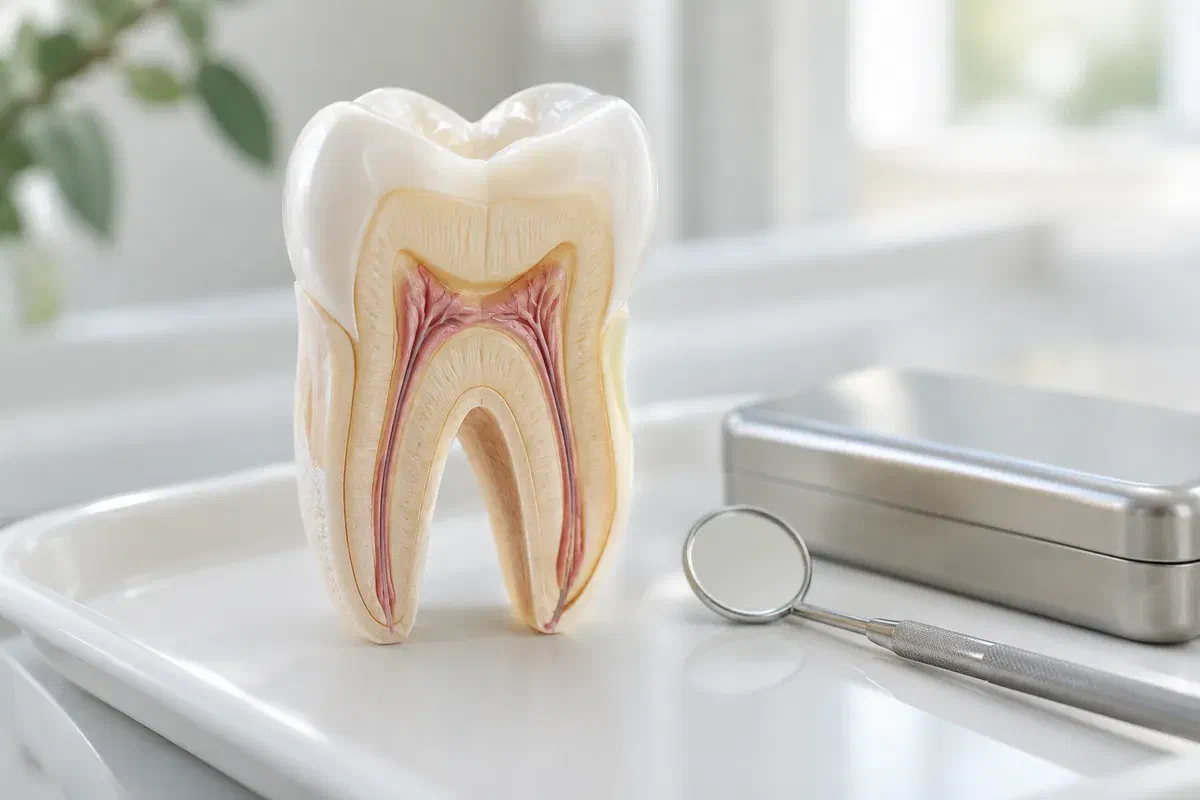
After a root canal, a tooth is often rebuilt with a post anchored in one of the canals and a crown over the top. Years later, if that tooth needs its canals treated again, those layers have to be worked through or removed first. That is a big part of why retreatment can be more involved than the original procedure.
None of this matters until the cause is clear. A treated tooth may need attention because healing did not finish, because new decay or a leaking crown let bacteria in, or because of a crack. The ache could also come from elsewhere. Retreatment, cleaning and resealing the canals again, is considered only when the canals look responsible and the tooth can be rebuilt soundly.
Living out in Campbellville, you may prefer appointments that combine sensibly with other errands in town. Tell us what you know about the earlier work, including whether a post was placed. We will examine the tooth, explain the imaging, and talk through specialist involvement when the existing restoration makes access complex.
Tell us when it began and how it compares with the months after the original root canal. Your description directs the examination; testing confirms what it means.
It might be tender to bite on, or there might be a dull pressure you cannot pinpoint. Say whether it is constant or brought on by chewing. Neighbouring teeth and the gum are checked alongside the treated one.
Imaging may show a change at the root tip with no symptoms. Ask what it suggests, whether older images are available, and whether observation or further tests make sense. Comfort alone does not confirm that healing is complete.
Rocking when you bite, a chipped edge, or decay at the margin may affect the post and canals below. Mention when you noticed it. The crown, post and canals are assessed as one unit, not separately.
Keep any arranged review even if symptoms ease. If pain increases, swelling appears, or a gum bump keeps recurring, call before making the trip so the team can advise on timing.
In a suitable tooth, retreatment gives a second chance to deal with a problem in the canal system. You should be told why the findings support it and what might hold back the result. A post adds a step but does not always rule retreatment out. Keeping your own tooth is worthwhile when enough remains to rebuild it.
Ask about the crown, the post, the amount of tooth left around it, and what is known of the first treatment. Find out whether access is planned through the crown or by removing it, and what removing a post involves. Seeing each step lets you compare retreatment with the other options more realistically.
Patient information: AAE — understanding endodontic retreatment
Ask what the retreatment would address and which questions remain open. You should know whether the main concern is the canal work, leakage from the restoration, or both. Soreness alone is not a reason to start.
Removing posts and old filling material can be technically demanding. An endodontist may be recommended to assess or perform the retreatment. Ask what the referral will clarify and how findings will be passed back for the restoration.
Once a post is removed, the tooth will need a new core and crown. Discuss this before the canal work begins, including visits and costs. Planning the rebuild early avoids surprises later.
The order and number of visits depend on the tooth. Ask who handles each step and how the tooth will be protected while you wait.
Bring any records and describe your symptoms. Examination and imaging show the crown, post, canals and bone. Further tests or a specialist view may be needed before a recommendation.
The clinician explains whether retreatment suits the tooth, whether the crown and post can be managed, and the alternatives. Ask about risks of post removal, the estimate, and what would change the plan during treatment.
If treatment proceeds, the crown or post is worked through or removed, the old filling is taken out, and the canals are disinfected and sealed again. The tooth is isolated and numbed. This may take more than one visit.
A new core and final crown are placed, followed by reviews. Confirm who will do this and when. Follow-up assesses symptoms, chewing and healing over time instead of relying on comfort in the first week.
Ask for advice specific to the work done at each visit. A temporary crown, a finished restoration, and a stage left open need different care.
Let the numbness wear off before eating, then follow guidance about loading the tooth. Teeth without their final crown can be more fragile, so avoid hard foods. If a temporary loosens, call the treating clinic before your next appointment.
Tell the clinician if soreness is increasing, the bite feels high, or swelling develops. Note the timing and triggers. Follow the pain-relief advice provided, and ask before taking medicines that may conflict with your other prescriptions.
Restorative and healing reviews may involve different clinicians. Ask whether visits can be arranged close together, how records will be exchanged, and whom to contact. A new crown does not remove the need for a recommended review.
Ask for the diagnosis and the order of treatment to be explained before you decide. If you have estimates from different places, compare what each covers.
Book a visit with our team on Bronte Street to review a tooth with a previous root canal. Bring any records, and we will go through what the imaging shows, the role a specialist might play, and how the tooth would be rebuilt.
Call the clinic about worsening pain or swelling rather than waiting for a reply to an online booking request.
