

Illustrative consultation with a patient bringing records for another dental opinion
Restorative Dentistry

Root Canal Second Opinions

Feel clearer about a root canal recommendation before deciding. Arrange a second opinion in Milton to review the findings, understand the alternatives, and ask what each pathway would mean for your tooth.

A closer look at root canal second opinions

Make room for the questions behind your decision.

Being advised to have a root canal can bring several questions at once. You may want to understand the diagnosis, whether the tooth can be kept, how treatment compares with extraction, or why a tooth that is not painful still needs attention. A second opinion provides another assessment and an opportunity to work through those questions.

The purpose is not to promise a different answer. Another clinician may agree with the recommendation, suggest additional investigation, or identify a different reasonable approach. The value lies in understanding the evidence, the uncertainty, and the practical implications of the choices available to you.

At Milton Dental Clinic, explain what you have been told and what remains unclear. Bring available records and the proposed treatment plan where possible. We can assess the tooth, discuss the findings in context, and explain when an endodontist’s opinion would be helpful. You do not need to arrive with the technical vocabulary to ask for clarity.

Arrange another opinion on your tooth
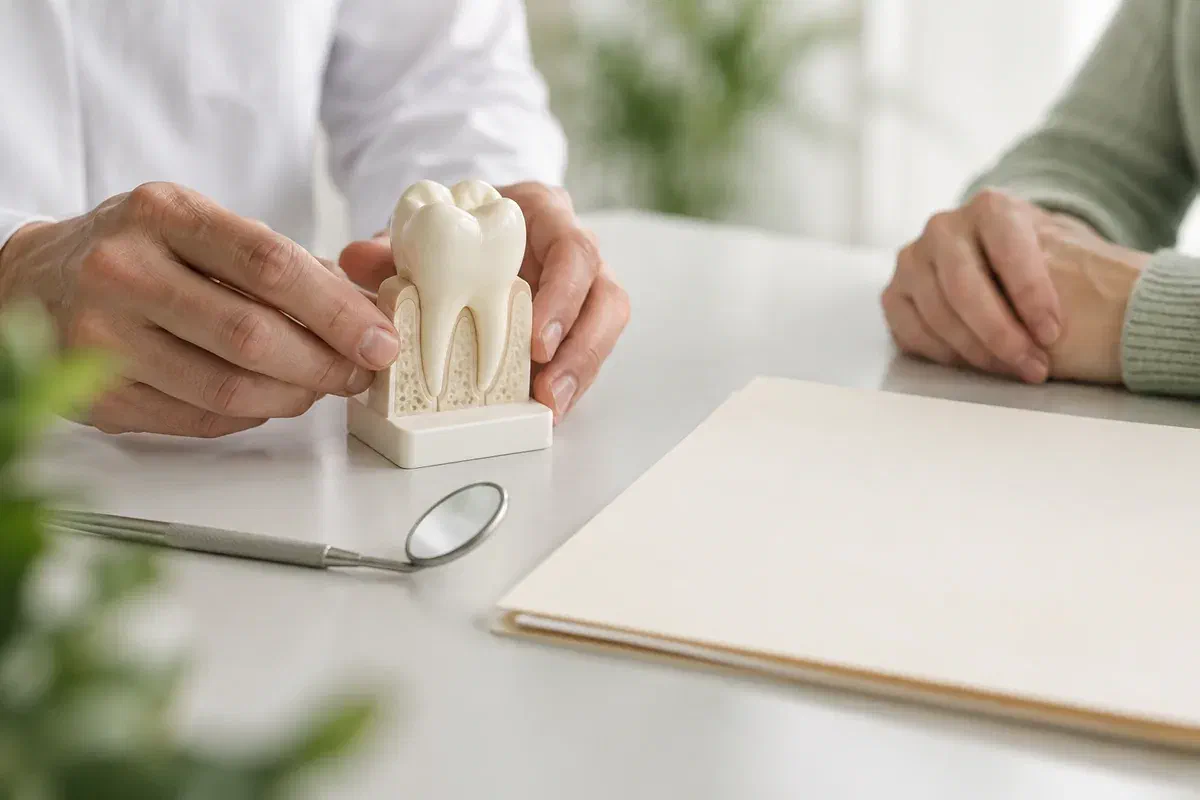
Illustrative review of a tooth model and a plain records folder at a consultation
When another conversation may help

Start with the part of the recommendation you want to understand.

Different questions need different kinds of review. Tell the team whether your concern is the diagnosis, the treatment itself, the overall plan, or an unresolved symptom.

The reason for treatment is unclear

You may remember the recommendation but not the findings behind it. Ask what is happening inside or around the tooth and how the examination supports that conclusion. A clear explanation should connect the proposed procedure to a specific problem.

You have been offered different options

Root canal treatment, extraction, and restoration can involve very different commitments. Bring the plans you have received so the discussion can compare their scope. Two estimates may appear different because they include different stages, rather than because the clinicians disagree about everything.

The tooth has already been treated

If you are being advised to retreat or remove a root-treated tooth, share the earlier history and current concern. The remaining structure, restoration, and possible causes of symptoms all matter. A specialist review may help resolve questions that require more detailed assessment.

A second opinion should not postpone urgent assessment of worsening pain, facial swelling, or a new dental injury. Call and describe those symptoms when arranging the appointment.

What a useful second opinion provides

Leave with an explanation you can use.

A helpful consultation separates what is known from what still needs investigation. Ask which findings are clear, what assumptions are being made, and what further information could change the recommendation. This can make an unfamiliar treatment decision feel more concrete without suggesting that every uncertainty can be removed.

The discussion can also bring the full pathway into view. Internal treatment may be followed by a build-up, crown, or other restoration, while extraction may lead to a separate replacement decision. Comparing complete plans helps you understand appointments, maintenance, and costs alongside the immediate procedure.

Patient information: AAE — seeking informed choices before irreversible care

An opportunity to explain your priorities

Tell us what matters most to you, including keeping the tooth, managing anxiety, arranging visits around work, or understanding expense. These priorities do not replace the clinical findings, but they help shape a conversation about reasonable choices.

A clearer account of the alternatives

Ask what the alternatives would achieve and what their limitations are. If a particular approach is not suitable, request the reason. You should be able to distinguish an option that is clinically inappropriate from one that is possible but involves different compromises.

A next step that has an owner

Before leaving, confirm who will arrange any referral, provide records, or book further care. If you return to your original dentist, ask how the opinion can be shared. A useful consultation ends with practical instructions rather than another unclear handoff.

Your second-opinion appointment

Bring the history. Review the findings. Discuss the decision.

Let the team know that you are booking a second opinion so the appointment can be planned appropriately. The review may require more than a conversation about an existing image.

  1. Share the recommendation and records

    Provide the tooth involved, the proposed treatment, and any available reports or images. Explain whether treatment has started and whether an urgent appointment is already booked. Ask how records can be transferred securely rather than relying on a photograph of a screen.

  2. Describe your own experience

    Explain the symptoms, timing, triggers, and changes you have noticed. Mention medications, relevant health history, and previous care of the tooth. Your description helps the clinician focus the examination and understand what the earlier recommendation was responding to.

  3. Have the tooth assessed

    The clinician reviews the records and performs appropriate examination and tests. Additional imaging may be recommended if it answers a question that existing records cannot. Ask why any further investigation is useful and whether specialist input is needed.

  4. Work through the findings and options

    Discuss whether the assessment supports the original plan, suggests another approach, or leaves a question unresolved. Ask about timing, expected stages, and the consequences of waiting. Confirm the next action and how the opinion will be documented or shared.

After the consultation

Turn the explanation into an organized next step.

A second-opinion visit may end with a recommendation rather than treatment. Keep the information you receive and make sure you know what to do while deciding or waiting.

Compare the same parts of each plan

Check whether estimates include the assessment, internal treatment, temporary protection, and final restoration. If extraction is discussed, ask whether replacement planning is separate. Write down any differences in scope before deciding that one plan is simply cheaper or quicker.

Clarify who is providing interim care

If treatment has already started elsewhere, confirm whom to contact about a temporary filling or changing symptoms. Do not assume the second-opinion appointment has automatically transferred responsibility for every stage. Tell both teams about any agreed change in arrangements.

Ask about the time available to decide

The appropriate interval depends on the tooth and findings. Request guidance on timing and symptoms that should prompt an earlier call. If your circumstances make the recommended schedule difficult, discuss that openly so the next step can be planned.

Where the review may lead

The outcome can be agreement, another route, or more information.

A second opinion is an assessment, not a guarantee of a particular treatment. Ask what supports the conclusion and how confident the clinician can be from the available findings.

When the findings support the plan

Proceed with the recommended care

Another clinician may confirm that root canal treatment is a reasonable way to retain the tooth. You can still ask about comfort, the final restoration, and coordination with your existing dentist. Agreement can be useful when it resolves the questions that were holding you back.

When another approach is appropriate

Consider a different treatment pathway

The assessment may identify an alternative or a different sequence of care. Ask what finding changes the recommendation and what each pathway would mean for the tooth. A preferred option should be explained rather than presented as a simple vote between clinicians.

When the question remains unresolved

Seek further diagnostic or specialist input

Some symptoms or complex teeth need more investigation before treatment can be recommended confidently. An endodontist specializes in root canal care and related diagnosis. Ask what the referral is intended to establish and how the tooth should be managed in the meantime.

Patient information: AAE — the role of an endodontist

Questions about another opinion

You can ask for clarity without knowing the answer first.

Write down the two or three concerns you most want the visit to address. That can help keep the discussion focused on the decision you are facing.

(905) 876-4488
Do I need to cancel my existing root canal appointment before seeking a second opinion?
Discuss the timing with the clinicians involved, especially if the tooth is painful or treatment is urgent. You can ask about another assessment without assuming that delaying care is harmless. Make sure each clinic knows about relevant appointments and any agreed change to your treatment arrangements.
Can a second opinion be given from an X-ray alone?
An image can provide useful information, but it does not replace every part of an examination, symptom history, or clinical testing. The dentist decides what is needed to assess your question. Ask whether existing images are sufficient and why further checks may be recommended.
What should I bring if I do not know which tooth needs the root canal?
Bring the written plan, estimate, or referring clinician’s details if available. Describe the area and symptoms in your own words. The team can help identify what records are needed; you are not expected to know the tooth numbering system before booking.
Does asking for another opinion mean I must change dentists?
No. You may choose to return to your usual dentist after the review. Confirm how the findings can be shared and who will arrange any further care. A second opinion can support your understanding of an existing plan without automatically transferring ongoing treatment.
What if the two dentists recommend different root canal options?
Ask each clinician to explain the findings, assumptions, and full treatment sequence behind the recommendation. Differences may involve prognosis, restoration, or information available at the visit. A specialist assessment may help where a specific clinical uncertainty remains.
Can I seek a second opinion after root canal treatment has already begun?
Yes, but tell the reviewing team exactly what stage has been completed and whether the tooth has temporary protection. Arrange access to relevant records and clarify interim care with the treating clinician. An unfinished tooth still needs a plan while you consider the advice.
Root canal second opinions in Milton

Let’s make the recommendation easier to understand.

Arrange a second-opinion assessment at our Bronte Street practice. Share the proposed plan and the questions you would like answered so we can review the tooth and discuss an appropriate next step.

Please call when booking if treatment is already underway or symptoms are worsening, so the team understands the timing of your concern.

Visit Milton Dental Clinic
Unit 1, 342 Bronte St. S, Milton, ON L9T 5B7
Get directions Clinic hours
Monday–Thursday
11am–7pm
Friday–Sunday
By appointment only

How can we help?

Milton Dental Clinic

Have a question about your smile? Choose the option that works best for you.

For urgent dental concerns, please call.
Messages are reviewed during clinic hours.