

Illustrative consultation with a patient bringing records for another dental opinion
Restorative Dentistry

Root Canal Second Opinions in Old Milton

An old root canal acting up again, or a crowned tooth now flagged for retreatment or removal? From Old Milton, a short trip to our Bronte Street practice lets you review the history, the findings and every realistic option.

Old teeth, new questions

Years of dental history, one decision to make.

A tooth treated decades ago can start to ache, or show a change on an X-ray, long after you had stopped thinking about it. Then come the options: redo the root canal, remove the tooth, or something in between. It is reasonable to want another dentist to look before you choose, especially when the tooth carries a crown or a large filling you have had for years.

Another opinion won’t necessarily change the advice. The reviewing dentist may agree, ask for more testing first, or describe a different path that is also sensible. Its real value is helping you see what the evidence shows, where it falls short, and how each choice would play out for a tooth with a long story.

Many people living on Old Milton’s established streets have seen several dentists over the years, so records may be scattered. Bring what you can find: the current plan, old reports, even a note of roughly when the tooth was treated. We can examine it, explain what we see, and say when an endodontist would be worth involving.

Ask about an older treated tooth
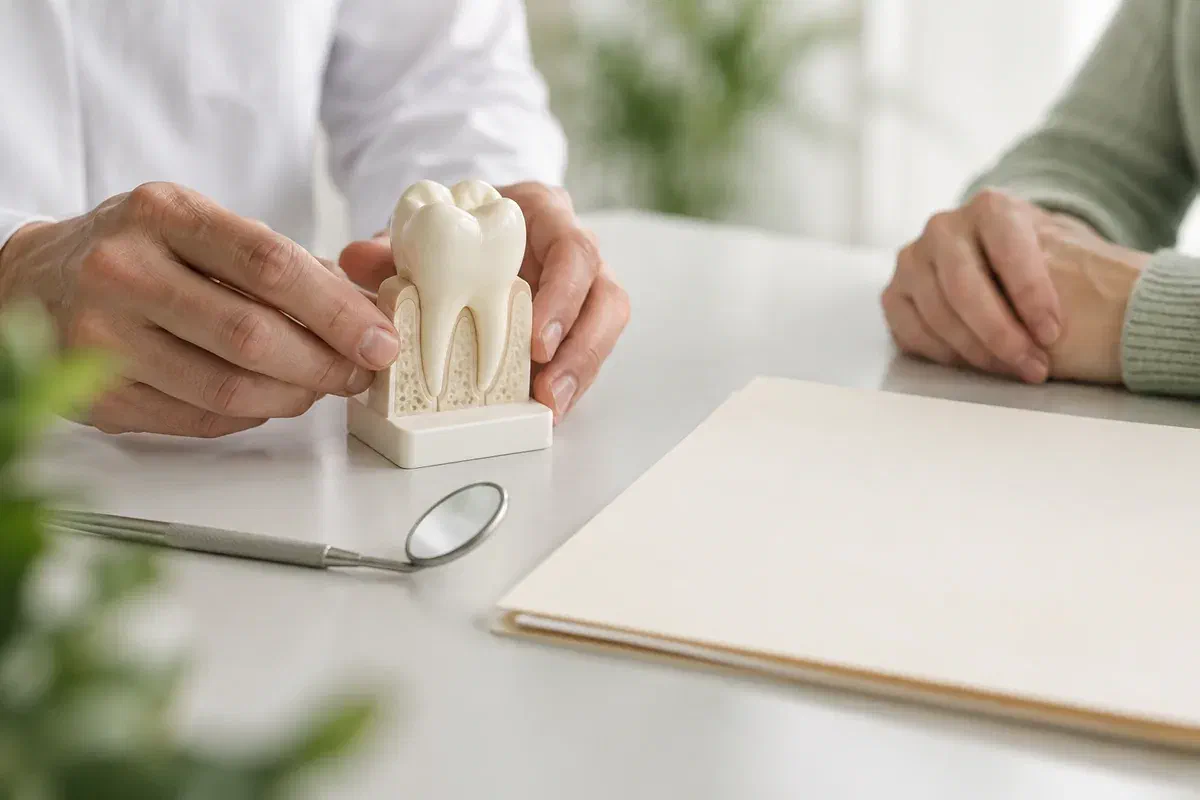
Illustrative review of a tooth model and a plain records folder at a consultation
Where the doubt usually sits

Retreat, remove, or wait and watch?

Say which part of the advice you want reviewed. It might be the diagnosis itself, the treatment proposed, the full plan, or a symptom no one has been able to explain.

Nobody explained what changed

A tooth that was settled for years can need attention for several reasons. Ask what has changed, where in or around the tooth the problem is thought to be, and what the exam showed. The explanation should connect the proposed treatment to that specific finding.

Your plans point in different directions

Retreatment, extraction and a new crown can each mean a different number of visits and a different long-term commitment. Bring each plan you have been given. They sometimes look far apart only because one includes later stages the other doesn’t mention.

The tooth has a long track record

Share what you remember about earlier treatment and what you are noticing now. How much natural tooth is left, the condition of the crown or filling, and the likely cause of symptoms all shape the advice. Specialist assessment can help when a previously treated tooth is hard to read.

New swelling, rapidly worsening pain or a broken tooth should be seen promptly rather than waiting for a review appointment. Describe what is happening when you call so the team can book you appropriately.

Why the second look helps

Clarity about the tooth, and about what comes after.

Think of the visit as a way to divide the picture into firm findings and open questions. Ask what is clear, what is being inferred, and what further information might alter the advice. With an older treated tooth, some uncertainty may be unavoidable, but knowing where it lies still helps.

You will also want to see beyond the first procedure. Retreatment is usually followed by a new or repaired restoration, while removal often leads to a separate conversation about replacing the tooth. Viewing each route from start to finish lets you compare visits, upkeep and expense fairly.

Patient information: AAE — seeking informed choices before irreversible care

Your preferences, heard

Maybe keeping your own tooth matters a great deal, or perhaps fewer appointments or the overall cost weighs more. Those wishes don’t outrank the clinical findings, but they help the dentist frame which reasonable options fit your situation.

Honest comparison of the routes

Ask what each choice is likely to achieve and what its drawbacks are. When an option is not recommended, ask for the reason. It helps to know whether something is unsuitable for clinical reasons or simply involves a different set of compromises.

Someone responsible for the next step

Agree on who sends records, who arranges any referral and who books further care. If your regular dentist will carry on, ask how the findings will be passed along. You should leave knowing exactly what happens next.

The appointment, step by step

History first, then the tooth, then the talk.

When you call, mention that this is a second opinion on a previously treated tooth. That helps us plan time for records review and any testing that may be needed.

  1. Gather the paperwork

    Tell us which tooth is involved and what has been proposed. Share reports or images if you have them, and say whether any treatment has begun or is already scheduled. We can explain how to request records securely from previous offices.

  2. Walk us through the tooth’s story

    Describe when it was treated, what has changed since, and what the symptoms feel like now. Mention medications and health conditions that may matter. That background helps focus the examination and makes sense of the earlier recommendation.

  3. Examination and testing

    The dentist reviews what you have brought and examines the tooth with suitable tests. Fresh imaging may be suggested if older images can’t answer the question. Feel free to ask what each test is for and whether a specialist would add clarity.

  4. Weigh what was found

    Together you look at whether the findings support the earlier plan, suggest something else, or leave a question unresolved. Discuss timing, the stages involved and the risks of waiting. Confirm what happens next and how the opinion will be recorded.

In the days that follow

Put the advice in order before you choose.

Often a second-opinion visit ends with guidance rather than treatment. Keep any written notes, and make sure you know how to look after the tooth while you decide.

Check what each estimate includes

Look for the assessment, the retreatment or other internal work, temporary protection and the final crown or filling. If removal is an option, ask whether replacing the tooth is quoted separately. Differences in scope can make one plan look quicker than it really is.

Confirm who to call in the meantime

If work has started at another office, find out who handles a lost temporary or new discomfort. A second-opinion visit does not take over every stage automatically. Keep both offices informed of any change you agree on.

Get a sense of the timeline

How long you can reasonably take depends on the tooth and the findings. Ask which symptoms should bring you back sooner. If the advised timing clashes with your circumstances, mention it so a workable plan can be made.

What the review might conclude

Three ways a second opinion can land.

The visit gives you an assessment, not a guaranteed treatment. Ask what the conclusion rests on and how certain it can be given the information available.

When the findings agree

Carry on with the advised treatment

The reviewing dentist may find that retreatment or root canal care is a sensible way to keep the tooth. You can still ask about comfort, the new restoration and how your usual dentist fits in. Confirmation can be helpful in itself when it answers the doubts you came with.

When a different approach fits better

Change the plan

Sometimes the review points toward another option or a different order of steps. Ask which finding prompted the change and what each route would mean for this particular tooth. The preferred choice should be explained, not decided by counting opinions.

When the picture is still unclear

Look deeper before deciding

Previously treated teeth can be complex, and some need further investigation first. Endodontists specialize in root canal treatment and in diagnosing problems around the roots. Ask what a referral is intended to clarify and how the tooth should be managed until then.

Patient information: AAE — the role of an endodontist

Questions we hear about older treated teeth

What people in Old Milton tend to ask.

Bring a short list of the questions that matter most to you. It keeps the visit focused on your decision.

(905) 876-4488
Can a tooth that had a root canal years ago need treatment again?
Yes, a previously treated tooth can develop new problems over time, for example around the root or beneath an ageing restoration. The dentist will look at what has changed. Ask what the findings suggest and how confident the assessment can be.
My old dental records are with an office that has closed. Is that a problem?
It can make the history less complete, but a review can still go ahead. Bring whatever you have and describe what you remember. The dentist will examine the tooth and may suggest new imaging if it would answer the question.
Is retreating a tooth always better than taking it out?
Not always. The right choice depends on how much sound tooth remains, the condition of the restoration and what is causing the problem. Ask the dentist to explain the trade-offs of each option for your tooth specifically.
Will my existing crown have to come off?
That depends on the treatment that is recommended and the condition of the crown. Ask whether the plan involves working through it, replacing it, or leaving it in place, and how that affects the overall scope and number of visits.
Should I postpone the treatment I already booked while I get another opinion?
Talk to the office where it is booked before changing anything, particularly if the tooth hurts. Waiting is not always harmless. Let each office know about the other appointment so timing can be coordinated sensibly.
Can my regular dentist keep looking after me after the review?
Certainly. A second opinion does not mean switching practices. Ask how the findings will be shared with your dentist and who will book any treatment, so the next step is clear.
Second opinions close to Old Milton

Bring the tooth’s history. We’ll take it from there.

Arrange a second-opinion review at our Bronte Street practice, a short trip from Milton’s historic downtown. Share the proposed plan and the questions you have, and we will assess the tooth and discuss a sensible next step.

If treatment is already in progress or the tooth is getting worse, please phone when booking so we can understand how soon to see you.

Visit Milton Dental Clinic
Unit 1, 342 Bronte St. S, Milton, ON L9T 5B7
Get directions Clinic hours
Monday–Thursday
11am–7pm
Friday–Sunday
By appointment only

Areas we serve

  • Milton
  • Oakville
  • Mississauga
  • Georgetown
  • Halton Hills
  • Acton
  • Campbellville
  • Brampton
  • Burlington
  • Puslinch
  • Rockwood
  • Erin
  • Caledon
  • Etobicoke
  • Old Milton
  • Bronte Meadows
  • Timberlea
  • Dorset Park
  • Dempsey
  • Clarke
  • Beaty
  • Coates
  • Harrison
  • Scott
  • Willmott
  • Ford
  • Bowes
  • Cobden
  • Walker
  • Mountain View
  • Milton Heights
  • Hawthorne Village
  • Valley View
  • Fallingbrook
  • Nassagaweya
  • Trafalgar
  • Esquesing
  • Nelson
  • Brookville
  • Moffat
  • Glen Williams
  • Norval
  • Limehouse
  • Stewarttown
  • Ashgrove
  • Hornby
  • Silver Creek
  • Speyside
  • Scotch Block
  • North Oakville
  • River Oaks
  • Glen Abbey
  • West Oak Trails
  • Palermo
  • Bronte Creek
  • College Park
  • Joshua Creek
  • Uptown Core
  • Preserve
  • Iroquois Ridge
  • Lisgar
  • Meadowvale
  • Meadowvale Village
  • Churchill Meadows
  • Erin Mills
  • Central Erin Mills
  • Streetsville
  • East Credit
  • Creditview
  • Heartland
  • Sheridan
  • Mount Pleasant
  • Credit Valley
  • Huttonville
  • Churchville
  • Springbrook
  • Northwest Brampton
  • Bram West
  • Fletcher's Meadow
  • Fletcher's Creek South
  • Alton Village
  • Orchard
  • Millcroft
  • Headon Forest
  • Tansley
  • Brant Hills
  • Tyandaga
  • Kilbride
  • Lowville
  • Aberfoyle
  • Morriston
  • Arkell
  • Hillsburgh
  • Freelton
  • Carlisle
  • Waterdown
  • Flamborough
  • Mountsberg

How can we help?

Milton Dental Clinic

Have a question about your smile? Choose the option that works best for you.

For urgent dental concerns, please call.
Messages are reviewed during clinic hours.