

Illustrative consultation about crown options and appointment planning
Restorative Dentistry

Same-Day Dental Crowns in Georgetown

Chairside or laboratory-made? For anyone in Georgetown weighing up a crown, the more useful question is which method suits this particular tooth, and whether a same-day dental crown is genuinely on the table.

Two ways to make a crown

Chairside and laboratory crowns, side by side

A crown is a restoration that covers a tooth whose condition calls for full coverage. There is more than one way to make it. In a same-day pathway, the crown is designed, produced and fitted in one planned treatment visit, usually with digital equipment on site. In a staged pathway, it is often made by a dental laboratory and fitted at a later appointment.

Neither route is automatically better. Which one suits you depends on how much sound tooth remains, whether a core build-up or other treatment comes first, the material that the position calls for and how closely the crown must match nearby teeth. What is available for your case matters as well. The choice of method follows from those findings.

Coming from Georgetown, let us know whether fewer visits are a priority. The team can review the tooth, explain whether one-visit treatment is appropriate and offered, and compare it honestly with a staged option. Please don’t treat an online booking as confirmation of chairside fabrication; we will tell you what is actually arranged.

Compare crown methods for your tooth
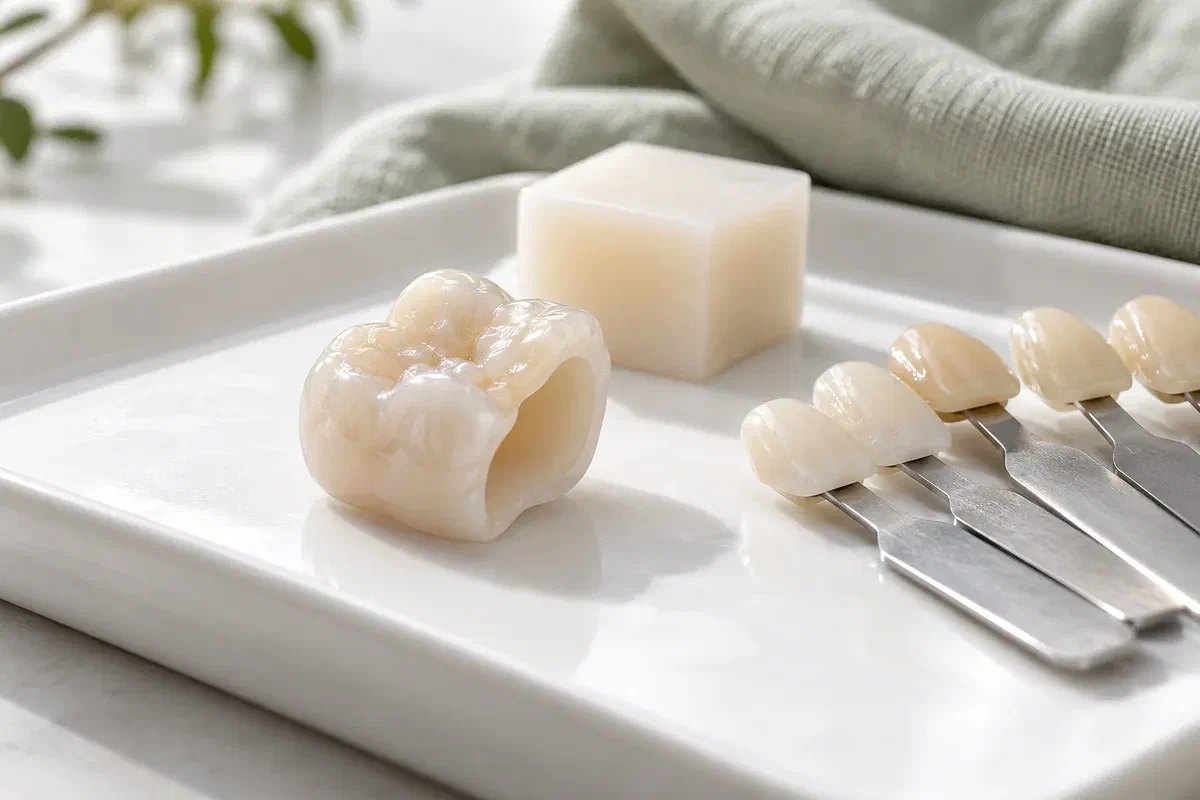
Illustrative ceramic crown, material sample, and shade guide on a white tray
What tips the decision

Some teeth point one way, some the other.

Your starting point might be a damaged tooth, an older restoration or a recommendation from elsewhere. Describing it helps the team decide what the first appointment should be.

How much of the tooth is left

The extent of damage affects both whether a crown is needed and how it can be made. A big filling or broken edge prompts the conversation but doesn’t decide it. Expect the first visit to focus on assessment and protection.

How your time is structured

Tell us about shifts, family care, travel or other limits. Ask how long each pathway’s appointments would take and whether an exam comes first. A single visit may be long, while a staged plan spreads the time over two shorter ones.

How visible the tooth is

Front teeth, or teeth near other crowns, may need fine work on shade, translucency and shape. Explain what you expect. The method that best meets those needs is the right one, even if it means another visit.

Choosing between crown methods is a planned discussion. A painful or fractured tooth needs a phone call so the team can deal with immediate needs and availability first.

Where the chairside route shines

Two strengths, and one limit

For a suitable tooth, with the arrangements available, a chairside crown completed in one treatment visit can reduce return trips and may mean you never wear a temporary. That is the main practical difference from a staged crown. Ask whether it actually applies to the plan you are being offered.

The limit is that convenience is not a clinical reason. Whichever method is used, the crown needs the right design and material, an accurate fit and a stable bite. Ask what will be checked before it is fixed in place, and what the dentist would do if a satisfactory result is not possible within the appointment.

Patient information: Cleveland Clinic — same-day crown methods and suitability

Time you can plan around

Ask whether the quoted time covers preparing the tooth, designing and producing the crown, fitting it and waiting in between. Find out if you stay at the clinic. That makes the chairside and staged options easier to compare honestly.

No temporary phase, when things go to plan

If the definitive crown is placed in the same visit, a temporary may not be needed. If the plan has to change, ask what will protect the tooth and when you would return. Understand that contingency before starting.

A staged crown may have its own advantages

For some teeth, laboratory fabrication or another method may offer something chairside work cannot. Ask what that would be for your tooth, and compare full plans and fees. The best choice balances your circumstances with the restoration’s requirements.

How the chairside version works

Assessment first. Fabrication later in the visit.

This is the usual sequence when a same-day crown suits the tooth and is available. Your dentist will explain where your case differs.

  1. Decide whether to crown, then how

    The tooth, your symptoms, your bite and any necessary imaging are reviewed. You and the dentist confirm that a crown is appropriate, whether earlier treatment is needed and which method fits. Availability, timing, material, fees and alternatives are agreed before booking the definitive work.

  2. Prepare and scan

    With comfort measures in place, the tooth is shaped and, if needed, built up. Chairside work generally relies on a digital scan rather than traditional impressions; ask how your prepared tooth and bite will be captured.

  3. Design on screen, produce on site

    The crown is designed digitally and then manufactured for the prepared tooth, with finishing that depends on the material. Ask how long you are likely to wait and what would happen if a laboratory crown or another visit became the better option.

  4. Assess and place

    Fit, contact points, appearance and bite are evaluated before the crown is placed. This is your chance to comment on the look. You go home with care instructions and guidance on scheduling a review.

Care is the same either way

However it was made, the crown needs looking after.

Follow the instructions for what was actually placed. Before leaving, confirm whether that was the final crown or a temporary.

Wait, then eat with care

Hold off on chewing until the numbness passes. Afterwards, follow your dentist’s advice for the new crown, and avoid hard or very sticky foods rather than testing it. Temporary crowns come with additional precautions until the final one goes on.

Keep an eye on the bite

If the tooth consistently feels high, chewing hurts, or symptoms increase, get in touch and describe what you notice in everyday use. A review will show whether the crown or another part of the tooth needs attention.

Clean the edge where crown meets tooth

Ask how to clean along the crown margin, and brush your natural teeth with a fluoride toothpaste. Regular exams and home care still matter. Let us know about catching floss, sore gums or a place you cannot reach.

Georgetown crown pathways compared

Three routes, one goal

Ask which routes are clinically sound and what each would require. Deciding to cover a tooth and deciding how to make the covering are related, yet separate.

Suitable tooth, available arrangement

Chairside crown, one visit

Certain teeth and materials work well with a planned single appointment. Confirm what the visit will involve and whether an earlier assessment is needed. Availability is case-specific; mentioning a crown when booking does not secure same-day production.

When lab fabrication suits

Laboratory crown, staged visits

This approach may involve a dental lab and a temporary between appointments. Ask why it is recommended for this tooth and how long the interval would last. Several visits can be the appropriate path to the planned crown.

When the findings point elsewhere

No crown yet, or a different repair

After an assessment, a filling, an onlay or other treatment may be better suited, and some teeth need a separate issue treated first. Ask how the findings shape the treatment plan, instead of choosing a crown because a particular schedule appeals.

Georgetown questions: chairside or lab?

Weighing the two methods

Find out whether your first booking is an assessment or a confirmed crown appointment. Ask about the tooth and the method as well as the timing.

(905) 876-4488
Which lasts longer, a chairside crown or a lab crown?
There is no single answer. Longevity depends on the material, the tooth, your bite, habits such as grinding and how well the crown is cared for. Ask the dentist how these factors apply to the options for your tooth.
Are the materials different for same-day crowns?
They can be. The materials that suit chairside equipment are not always the same as those a laboratory might use. Ask which material is proposed for your tooth, and why it suits that position and your bite.
Will I get a temporary if I choose the lab route?
Often, yes. A staged crown usually involves temporary protection between preparation and fitting. Ask how long you would wear it and what precautions apply in the meantime.
Does requesting a same-day crown guarantee one will be made?
No. The team must confirm the tooth’s suitability, the treatment it needs and availability. Your first appointment might be an assessment only, so call before planning around a one-visit crown.
Is the fit of a digitally made crown checked the same way?
Yes. Whatever the method, the dentist checks fit, contacts, appearance and bite before placing the crown. Ask what will be reviewed and how adjustments are handled if something is not quite right.
How should I clean around a same-day crown compared with a lab one?
The same way. Brush and clean between your teeth as advised, and keep regular checkups. The method used to make the crown does not protect the tooth beneath from future problems.
Crown planning for Georgetown

Let’s compare the options for your tooth.

Call our Bronte Street practice about a crown assessment and the methods available. Tell us about your schedule and priorities, and we will explain whether a chairside crown is suitable, how it compares with staged care and what must be confirmed first.

Phone to confirm suitability and availability for a one-visit crown. An online request does not guarantee same-day fabrication or an urgent visit.

Visit Milton Dental Clinic
Unit 1, 342 Bronte St. S, Milton, ON L9T 5B7
Get directions Clinic hours
Monday–Thursday
11am–7pm
Friday–Sunday
By appointment only

Areas we serve

  • Milton
  • Oakville
  • Mississauga
  • Georgetown
  • Halton Hills
  • Acton
  • Campbellville
  • Brampton
  • Burlington
  • Puslinch
  • Rockwood
  • Erin
  • Caledon
  • Etobicoke
  • Old Milton
  • Bronte Meadows
  • Timberlea
  • Dorset Park
  • Dempsey
  • Clarke
  • Beaty
  • Coates
  • Harrison
  • Scott
  • Willmott
  • Ford
  • Bowes
  • Cobden
  • Walker
  • Mountain View
  • Milton Heights
  • Hawthorne Village
  • Valley View
  • Fallingbrook
  • Nassagaweya
  • Trafalgar
  • Esquesing
  • Nelson
  • Brookville
  • Moffat
  • Glen Williams
  • Norval
  • Limehouse
  • Stewarttown
  • Ashgrove
  • Hornby
  • Silver Creek
  • Speyside
  • Scotch Block
  • North Oakville
  • River Oaks
  • Glen Abbey
  • West Oak Trails
  • Palermo
  • Bronte Creek
  • College Park
  • Joshua Creek
  • Uptown Core
  • Preserve
  • Iroquois Ridge
  • Lisgar
  • Meadowvale
  • Meadowvale Village
  • Churchill Meadows
  • Erin Mills
  • Central Erin Mills
  • Streetsville
  • East Credit
  • Creditview
  • Heartland
  • Sheridan
  • Mount Pleasant
  • Credit Valley
  • Huttonville
  • Churchville
  • Springbrook
  • Northwest Brampton
  • Bram West
  • Fletcher's Meadow
  • Fletcher's Creek South
  • Alton Village
  • Orchard
  • Millcroft
  • Headon Forest
  • Tansley
  • Brant Hills
  • Tyandaga
  • Kilbride
  • Lowville
  • Aberfoyle
  • Morriston
  • Arkell
  • Hillsburgh
  • Freelton
  • Carlisle
  • Waterdown
  • Flamborough
  • Mountsberg

How can we help?

Milton Dental Clinic

Have a question about your smile? Choose the option that works best for you.

For urgent dental concerns, please call.
Messages are reviewed during clinic hours.