

Illustrative consultation about a removable denture and repair arrangements
Restorative Dentistry

Same-Day Denture Repairs

A damaged denture can interrupt an ordinary day. Call about same-day denture repair availability in Milton, explain what has broken, and let us help you understand the assessment and possible next steps.

A closer look at same-day denture repairs

Get the damage assessed and the next step organized.

A cracked denture, detached tooth, or damaged attachment can affect eating, speech, and confidence about leaving home. It is understandable to want a quick repair. The first step is finding out what is damaged and whether the appliance can be repaired safely and usefully within the available time.

Some repairs can be completed promptly, while others need additional records, parts, laboratory work, or a different treatment plan. The type of denture, its fit before the break, and the condition of the remaining material all influence that decision. Same-day repair is a possibility to confirm, not a result that can be promised from a description alone.

Call Milton Dental Clinic before bringing a broken appliance to our Bronte Street practice. Describe the problem, explain whether it is a full, partial, or implant-retained denture, and tell us about any soreness or injury. We can discuss assessment and availability, including what to bring and what arrangements may be needed while the denture is out of use.

Discuss an appointment for your damaged denture
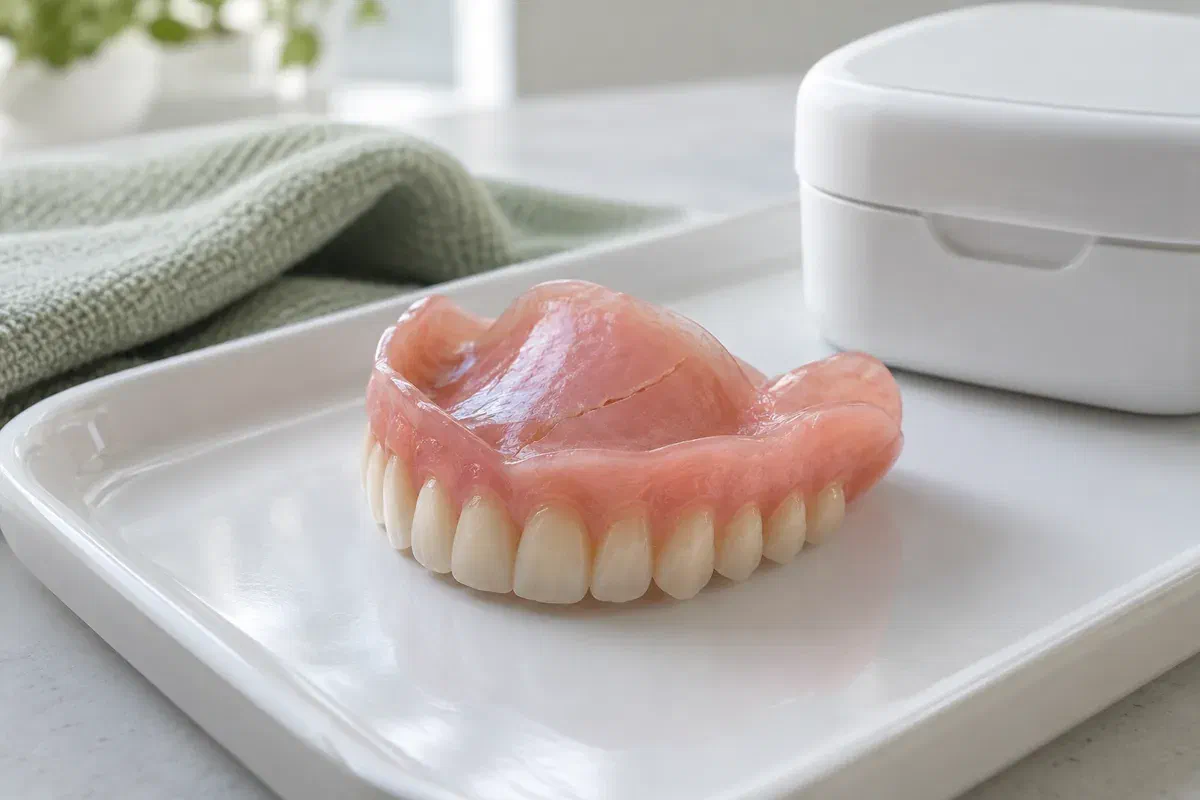
Illustrative upper denture with a fine fracture in its pink acrylic base
What to mention when you call

The break and the fit both matter.

A useful description helps the team plan the visit. You do not need to identify the material precisely, but any details about the denture and how it broke can help.

A crack or separation in the base

Explain whether the pink base has a fine crack, has separated into pieces, or has a missing section. Keep the pieces together in a sturdy container. Do not repeatedly bend the denture or hold it together in your mouth to test whether it still works.

A tooth or small component has come away

Save any detached denture tooth or component you can find. Tell the team if the denture uses metal clasps or implant attachments, because the repair requirements may differ. Avoid using an appliance with a loose part that could detach during eating or speaking.

A recurring break or a previously poor fit

Mention earlier repairs, looseness, rocking, or sore spots that were present before the damage. A repair may reconnect material without resolving a fit problem. Understanding the earlier experience helps determine whether repair alone is a reasonable answer.

Do not use household glue or attempt to file, heat, or bend the appliance. Those changes can affect its fit, damage the material, and make professional assessment or repair more difficult.

The purpose of a prompt repair

Restore usefulness where the appliance remains suitable.

When a repair is appropriate, retaining a usable denture can help reduce the disruption caused by a break. You may be able to return to a familiar appliance rather than beginning a replacement process immediately. Ask whether the proposed repair is expected to serve as ongoing care or as an interim measure.

Speed is only one part of that decision. The denture should be assessed for the damage and its relationship to your mouth. A recurring fracture, worn teeth, or an unstable fit may require another approach. You should understand what the repair can address and what limitations would remain afterward.

Patient information: ADA — professional adjustment and repair of partial dentures

An explanation of what can be repaired

Ask the clinician to identify the damaged part and describe the proposed work. Reattaching a denture tooth, repairing a base, and replacing a component are different tasks. A clear description helps you understand why their timing and costs may differ.

Practical arrangements for the day

Confirm when the denture needs to be left, whether a return fitting visit is required, and how collection will be arranged. Tell the team about transportation or communication needs. An agreed plan is more useful than assuming the appliance can be fixed while you wait.

A chance to address repeated problems

If the same area has broken before, ask what may be contributing to the damage. A fit review or different long-term plan may be recommended. The discussion can distinguish restoring the appliance today from reducing the chance of another avoidable interruption.

Your repair assessment and return visit

Call first, bring the appliance, and confirm the repair plan.

Availability and turnaround depend on the damage and required work. The team will explain what can be confirmed before the visit and what requires examination.

  1. Describe the damage and arrange assessment

    Call with the type of denture, how it broke, and any pain or injury. Mention an implant-retained appliance or repeated repair. Ask about availability and instructions for bringing the denture rather than arriving with an assumed same-day deadline.

  2. Review the appliance and your mouth

    Bring all recovered pieces and any relevant denture records. The clinician considers the damage, existing fit, and surrounding tissues or supporting teeth where applicable. Additional records or impressions may be needed to plan the repair properly.

  3. Agree on the work and expected timing

    Discuss whether repair is appropriate, what it will involve, the estimate, and any limitations. Laboratory requirements or replacement components can affect turnaround. Confirm what to do while the appliance is unavailable and how you will be informed if the plan changes.

  4. Check the repaired denture before use

    The repair should be reviewed with attention to fit, comfort, and the way the teeth meet. Ask how to return to wearing and cleaning it. If the repair is temporary or further care is advised, confirm that next stage before leaving.

Using the denture after repair

A repaired appliance should feel usable, not something to force.

Follow the instructions for your specific denture and the work completed. Tell the clinician about a new pressure point or movement instead of trying to reshape the appliance yourself.

Return to use as advised

Ask whether any food or wearing restrictions apply after the repair. Notice how the denture behaves during normal speech and meals. If it does not seat properly or becomes painful, seek advice rather than biting down hard to force it into position.

Clean and handle it carefully

Use a cleaning method suitable for its material and any attachments. Handle it over a soft towel or water-filled basin to reduce damage if it slips. Ask about storage while it is out of your mouth, and avoid hot water that could distort the appliance.

Keep the planned fit review

A repair does not replace regular assessment of the mouth and denture. Attend any recommended adjustment visit and mention continuing looseness, soreness, or changes in chewing. If a replacement or reline was discussed, clarify when that decision should be revisited.

Patient information: CDA — caring for dentures

Choosing a repair that makes sense

The quickest option still needs to suit the appliance.

Ask whether the proposed work addresses the immediate damage, the fit, or both. The right next step depends on what remains usable.

When the appliance can continue to serve

A repair to the existing denture

A suitable base fracture, detached tooth, or other repairable defect may be addressed while retaining the denture. The clinician can explain the expected limitations. Same-day completion depends on the particular repair and available clinical and laboratory arrangements.

When the damage is not the only concern

Repair with additional fit-related care

An appliance that was loose or uncomfortable may need adjustment, a reline, or other assessment as well as repair. These are different procedures with their own indications. Ask whether the work can be combined or should be staged.

When repair would leave substantial limitations

A replacement or interim arrangement

An extensively damaged, repeatedly repaired, or unsuitable denture may need replacement. Discuss the available interim options and realistic timing. A short-term repair may sometimes have a role, but you should understand whether it is intended to bridge a gap until new care is completed.

Questions about getting a denture repaired quickly

Know what to bring and what to confirm.

A telephone description helps with planning, but a reliable repair recommendation generally requires assessment of the appliance and its clinical context.

(905) 876-4488
Can I arrive without calling and have my denture repaired the same day?
Please call first. The team needs to discuss the damage, appointment availability, and any laboratory or component requirements. Some repairs may be possible promptly, but others need more time. Calling helps avoid an unnecessary trip or an expectation that cannot be confirmed.
Should I bring every piece of the broken denture, even a small fragment?
Bring the pieces you can safely recover, including detached denture teeth or components. Place them in a sturdy container so they are not lost during travel. Do not attempt to glue them together; the clinician needs to assess the original damage and how the parts relate.
What if a denture tooth has come off but the pink base still fits?
Keep the detached tooth if you have it and arrange an assessment. The repair plan depends on the appliance, the attachment area, and the bite. Ask whether to leave the denture out while waiting, particularly if anything else is loose or sharp.
Can an implant-retained denture use the same repair process as an ordinary denture?
Some repairs are similar, but implant attachments and their components can add specific requirements. Tell the clinic about the implants when booking and bring any system information you have. The attachment, denture base, and supporting implants may need different checks.
Will repairing a broken denture also stop it from rocking?
Not necessarily. Reconnecting a broken part does not automatically correct an existing fit problem. Explain when the rocking began and whether it preceded the break. The clinician can discuss whether adjustment, a reline, or replacement should be considered alongside the repair.
Can someone else collect my repaired denture for me?
Ask the clinic before arranging collection. A fitting check in your mouth may be needed to assess comfort and the bite, so collection alone may not complete the care. Tell the team about transport difficulties so the return appointment can be planned appropriately.
Same-day denture repair enquiries in Milton

Let’s find a practical next step for your damaged denture.

Call our Bronte Street practice to describe the damage and discuss assessment and repair availability. We can explain what to bring, what needs to be checked, and whether a prompt repair or another plan may be appropriate.

Call before travelling to the clinic. Same-day repair is subject to assessment and availability; an online request does not confirm turnaround.

Visit Milton Dental Clinic
Unit 1, 342 Bronte St. S, Milton, ON L9T 5B7
Get directions Clinic hours
Monday–Thursday
11am–7pm
Friday–Sunday
By appointment only

How can we help?

Milton Dental Clinic

Have a question about your smile? Choose the option that works best for you.

For urgent dental concerns, please call.
Messages are reviewed during clinic hours.