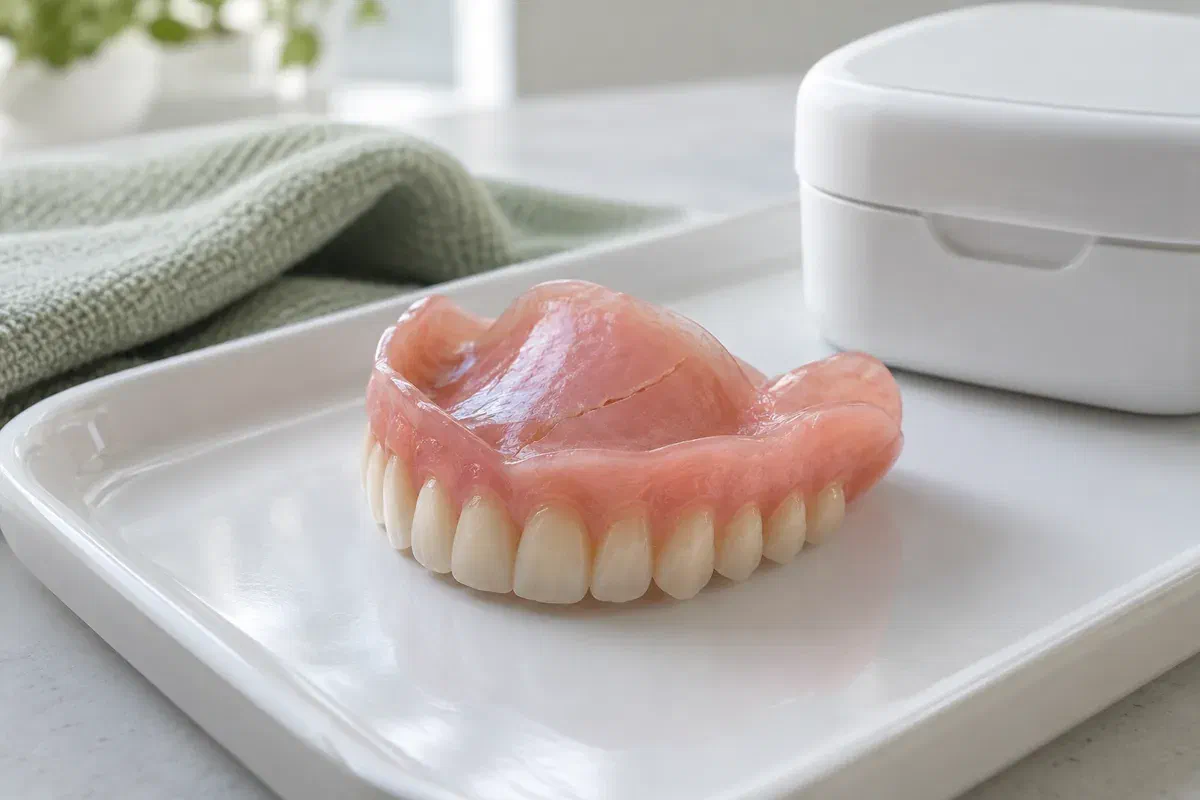
A broken or split base
Describe whether the acrylic shows a fine line, a full break or a missing piece. Put the parts in a firm container. Wearing a split denture through a workday can widen the crack, so it is safer to keep it out.


Going to work, serving customers or chairing a meeting without your denture is hard to face. From Puslinch, call to describe what broke, ask about prompt repair availability and plan how to get through the days it may be away.
For many people the hardest part of a broken denture is not the meal they miss but the conversation they dread. Speaking with clients, answering the phone or running a farm stand without your front teeth can feel impossible. That pressure pushes people toward quick fixes. A better plan starts with a clear description of the damage and an honest picture of how long the repair might take.
Timing varies with the kind of break. A neat crack in the acrylic may be dealt with fairly promptly. A missing front tooth that needs matching, a broken clasp, an implant attachment or a denture that already fitted poorly could involve impressions, lab work or a different approach. Until the appliance has been examined, nobody can responsibly say it will be ready by the end of the day.
From Puslinch, ring our Bronte Street practice before you head out, ideally with your work schedule in mind. Explain what kind of denture you wear, what broke and whether your mouth is sore. We can discuss an assessment slot, what to bring and how to handle the days the denture might be away, including whether an older spare could help.
Use whatever words come naturally. Knowing what broke, how it had been fitting and when you most need it back helps us plan a sensible visit.
Describe whether the acrylic shows a fine line, a full break or a missing piece. Put the parts in a firm container. Wearing a split denture through a workday can widen the crack, so it is safer to keep it out.
Front teeth affect speech and appearance most. Save any tooth or clasp that came off, and mention implant attachments if you have them. A part that is barely holding may come off mid-sentence or mid-meal, so leave the denture out.
Tell us about slipping when you talk, clicking, sore spots or past repairs. A repair joins material without reshaping the fit, so these details help the clinician decide whether a repair on its own will serve you well.
Avoid temporary glue or home kits to get through a shift. They can distort the fit, damage the acrylic and make the eventual repair longer, not shorter.
If the denture suits repair, getting it fixed can shorten the time you spend avoiding conversations and meals, and avoid starting a replacement under pressure. It is fair to ask up front whether this fix is meant to last or simply to carry you until other treatment is arranged.
A quick result is only valuable if the denture still works for you. The clinician will look at the break alongside the fit, your bite and any natural teeth. A denture that keeps breaking, has worn teeth or shifts when you speak may need more than a repair, and you deserve a clear explanation of what will remain afterward.
Patient information: ADA — professional adjustment and repair of partial dentures
Ask which part failed and how it will be fixed. Matching and attaching a new front tooth, mending a cracked base and replacing a clasp take different amounts of time and carry different estimates.
Ask when to drop off the denture, whether you will need to return for a try-in and when it is likely to be ready. Mention shift times or travel needs. That lets you arrange your week instead of guessing.
If breaks keep happening, ask what might be causing them. A fit or bite review could be offered, and some people ask about keeping a spare. Planning ahead can make the next problem less disruptive.
Repair times depend on the damage and the work required. We can tell you some things over the phone, but firm timing usually comes once the denture has been examined.
Tell us the type of denture and the damage, and mention any pain or cut. Mention implants or earlier repairs, and when you most need the denture back. We will suggest a time rather than promise a same-day finish.
Bring all pieces, any loose teeth and records from when the denture was made. The clinician reviews the damage, the fit and your gums or remaining teeth, and may take impressions if the repair calls for them.
You will hear whether repair is sensible, what work is proposed, the estimate and any limits. If lab work or tooth matching is needed, ask when it should be ready and how you can cope at work in the meantime.
The repaired denture is tried in to confirm comfort, seating and bite. Try speaking a few sentences before leaving. Ask about wearing and cleaning it again, and book any further care.
Your clinician will give advice specific to this denture and repair. If you notice new pressure, rubbing or movement, call rather than adjusting it yourself.
Ask whether any food or wear restrictions apply for a few days. Notice how it holds when you talk at length and eat normally. If it will not seat properly or becomes painful, get advice instead of biting down to force it.
Use a cleaner suited to its material and any attachments. Work over a towel or a basin with some water in it. Ask about storage when it is out, and keep it away from hot water, which can warp acrylic.
A repair does not replace routine assessment of your mouth and denture. Keep any adjustment appointment and say if slipping, soreness or chewing changes continue. Where relining or replacing came up, ask when that conversation should pick up again.
Patient information: CDA — caring for dentures
A phone description helps with planning, though a reliable repair recommendation depends on examining the denture and your mouth.
Call our Bronte Street practice with your denture and your calendar in front of you. We can book an assessment, explain what to bring and talk through repair options that fit both your mouth and your week.
Please phone before setting out. Same-day repair can only be confirmed after the denture is examined, and an online request does not secure a repair slot.
