

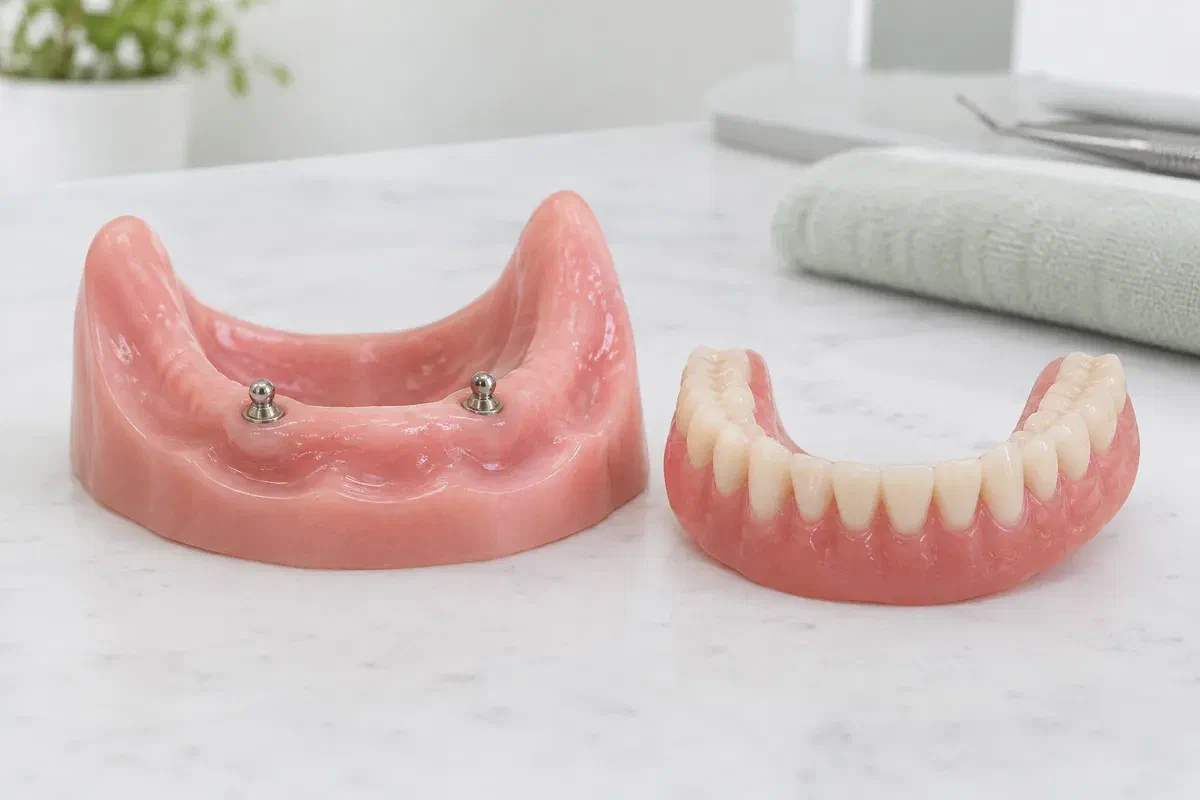
Illustrative discussion of a removable implant-retained denture
Restorative Dentistry

Snap-In Dentures in Acton

A lower denture that floats or lifts is one of the most common reasons people ask about implants. For adults in Acton, we explain how a removable snap-in denture uses implant attachments, who may be suited, and what care it needs.

The lower denture problem

A plate that floats on the tongue.

Upper dentures often have the palate to help them stay put. Lower ones have far less to grip, and the tongue and cheeks are constantly nudging them. That is why many conversations about snap-in dentures start with the lower jaw, though upper arches can be considered too.

A snap-in denture is a removable appliance that clips onto attachments connected to dental implants. You still lift it out for cleaning and overnight care as advised. That makes it different from a fixed implant bridge, which stays in, and from a conventional denture, which has no implant connection. Comfort, cost, cleaning and treatment stages vary between them.

If you are coming from Acton, expect us to ask plenty of questions first. Which denture moves, when, and what has been tried already? After an examination, we explain whether implant assessment is worthwhile and whether a removable attachment approach seems suitable. Bring your current denture, upper and lower if you wear both.

Ask about a lower implant denture
Illustrative lower-jaw model with attachment heads beside a removable overdenture
Familiar complaints

Chewing on one side. Talking carefully.

Several things can make a denture unstable, from the shape of the ridge to the age of the appliance. Specific details help the team assess what is going on.

Lifting that never quite stops

Tell us whether it lifts when you open wide, slides when you chew or catches food underneath. Mention relines or adjustments and how long they helped. Implants may be one route, but a refit or new conventional denture is sometimes considered first.

Firmer teeth that you can still remove

Some people are happy to keep taking their teeth out each night if they would only stay put during the day. Others prefer something fixed. Your preference here guides the design from the outset.

Managing small attachments

Clipping a lower denture on and off takes some dexterity, and cleaning around attachments needs good light and steady hands. Let us know about arthritis, eyesight or help from someone at home, so the plan is realistic.

Implant attachments do not cure every denture complaint. If implants already support a denture that has started to move, both the attachment components and the implants should be checked.

What might improve

Anchoring the lower arch.

For suitable patients, implant attachments may help a lower denture resist the lifting caused by the tongue and chewing. Talk about which situations bother you most, so expectations are grounded. Ask what level of movement is normal for the specific design suggested.

Attachments also introduce maintenance. Inserts wear with daily use, the denture teeth and base need periodic review, and the gum around each implant needs careful cleaning and professional checks. Plan for that ongoing care alongside the treatment itself.

Patient information: Leeds Teaching Hospitals — removable implant overdentures

Implant numbers decided by assessment

A lower snap-in denture is often illustrated with two implants, but your plan depends on your jaw, anatomy and the attachment design. Upper arches usually have different requirements. Ask why the recommended arrangement suits you.

Easier access for cleaning

Taking the denture out lets you reach its fitting surface and the attachment heads in your mouth. Ask the team to show you the tools and the angles that work best for the lower jaw. Access only helps if you can keep the routine going.

Feeling the connection before deciding

Ask to see a lower model with attachments and to try seating and releasing a denture. Find out which parts tend to wear. That hands-on experience makes comparing options more meaningful.

What treatment involves

Four stages toward a steadier fit.

There are usually several appointments, and sometimes more than one clinician. Ask about the sequence, intervals between visits and what you will wear during healing.

  1. Assess both arches

    We look at your upper and lower ridges, current dentures, medical history and goals. Imaging may be recommended if implants are being considered. Tell us about smoking, any past implant care and anything that makes handling your dentures hard.

  2. Settle the plan

    Implant suitability, attachment arrangement, appearance and maintenance are explained. The dentist will say whether your lower denture could be modified to take attachments or a new one would suit better, and outline surgical, restorative and follow-up costs.

  3. Allow the implants to heal

    New implants are placed and given time to heal before the attachments are used as intended. Existing implants are assessed too. You will learn when the denture can be connected and how to manage during the interim.

  4. Fit and fine-tune

    The finished denture is checked for fit, retention, bite and appearance. You practise putting it in and taking it out until it feels natural, and review cleaning, overnight care and the first adjustment visits.

Settling into the new routine

Look after the lower attachments daily.

Each attachment system and denture material has its own care needs. Ask for written instructions and a demonstration before going home.

Line it up, then press

Guide the lower denture over the attachments and press it down evenly with your fingers. Do not bite it into position. If it starts to feel stiff, loose or different, particularly after an adjustment, call the clinic.

Brush around every attachment

With the denture out, clean its teeth, underside and attachment housings using suitable products. Then brush gently around each implant in the lower jaw, where food can collect. Ask before trying any new soak or cleaner.

Notice when hold changes

Worn inserts are one reason for reduced retention, but the gums or denture can change too. Report movement, sore spots, bleeding or a damaged part, and leave component replacement to the clinic. Keep regular reviews.

Options for a full lower arch

Three designs, three daily routines.

Find out how each suitable design is cleaned, maintained and repaired. Appearance is important, but it is only one consideration.

When implants are not preferred

Conventional lower denture

A new or relined denture may improve things without surgery. Ask what fit is realistic for your lower ridge. It still needs maintenance, though its path and components are simpler than an implant-retained appliance.

When attachments suit your anatomy

Snap-in lower overdenture

Implants add hold while the denture remains removable. Attachment systems vary in their needs. Compare stability, handling, cleaning and maintenance for the proposed system rather than relying on the snap-in label.

When fixed teeth are appropriate

Fixed lower implant bridge

A fixed bridge stays in and needs specialised cleaning underneath. Implant number, space and maintenance requirements differ. Ask whether it is suitable for your lower jaw and how the overall commitment compares.

Patient information: ITI — fixed and removable implant replacement considerations

Acton snap-in denture questions

Answers for lower denture wearers.

A lower jaw model with attachments can clarify a lot. Ask the clinician to demonstrate how the denture engages, releases and is cleaned.

(905) 876-4488
Why are lower dentures harder to keep in place?
The lower jaw has less surface for a denture to rest on, and the tongue and cheeks move around it constantly. The ridge that supports a lower denture can also shrink gradually after teeth are lost, leaving even less to hold onto. An examination, sometimes with imaging, can show which of these factors apply to you and whether attachments could help.
Is a snap-in denture only for the lower jaw?
No. Snap-in designs can be considered for either arch, but upper and lower jaws have different anatomy and support. Ask the clinician whether an upper, lower or both would be appropriate in your case.
Will food still get under a lower snap-in denture?
Some food can still collect beneath a removable denture, though better retention may reduce movement. Rinsing after meals and cleaning around the attachments as shown helps. Mention it at your review if food trapping is frequent, because it can sometimes point to a fit that needs attention.
Do I need a new upper denture as well?
Not necessarily. The two dentures need to work together for a balanced bite, so your upper denture will be assessed too. The clinician will explain whether it can stay as is or should be adjusted or replaced.
Is bone loss a reason I might not be suitable?
Bone volume and quality are part of the implant assessment. Reduced bone does not always rule implants out, but it affects planning. Imaging helps the clinician explain what is possible in your jaw.
Does it hurt to clip the denture in?
Seating a well-fitted denture should not be painful. If it hurts to connect or remove, or you notice sore spots, contact the clinic. Discomfort can signal a fit or tissue problem that needs checking.
Planning a visit from Acton

Tell us what your lower denture does.

Our Bronte Street team can assess whether a removable implant denture might help. Bring both dentures if you wear them, along with questions about hold, cleaning, handling and the stages involved.

If an existing implant denture suddenly loosens or becomes painful, please explain what has changed when you call to book.

Visit Milton Dental Clinic
Unit 1, 342 Bronte St. S, Milton, ON L9T 5B7
Get directions Clinic hours
Monday–Thursday
11am–7pm
Friday–Sunday
By appointment only

Areas we serve

  • Milton
  • Oakville
  • Mississauga
  • Georgetown
  • Halton Hills
  • Acton
  • Campbellville
  • Brampton
  • Burlington
  • Puslinch
  • Rockwood
  • Erin
  • Caledon
  • Etobicoke
  • Old Milton
  • Bronte Meadows
  • Timberlea
  • Dorset Park
  • Dempsey
  • Clarke
  • Beaty
  • Coates
  • Harrison
  • Scott
  • Willmott
  • Ford
  • Bowes
  • Cobden
  • Walker
  • Mountain View
  • Milton Heights
  • Hawthorne Village
  • Valley View
  • Fallingbrook
  • Nassagaweya
  • Trafalgar
  • Esquesing
  • Nelson
  • Brookville
  • Moffat
  • Glen Williams
  • Norval
  • Limehouse
  • Stewarttown
  • Ashgrove
  • Hornby
  • Silver Creek
  • Speyside
  • Scotch Block
  • North Oakville
  • River Oaks
  • Glen Abbey
  • West Oak Trails
  • Palermo
  • Bronte Creek
  • College Park
  • Joshua Creek
  • Uptown Core
  • Preserve
  • Iroquois Ridge
  • Lisgar
  • Meadowvale
  • Meadowvale Village
  • Churchill Meadows
  • Erin Mills
  • Central Erin Mills
  • Streetsville
  • East Credit
  • Creditview
  • Heartland
  • Sheridan
  • Mount Pleasant
  • Credit Valley
  • Huttonville
  • Churchville
  • Springbrook
  • Northwest Brampton
  • Bram West
  • Fletcher's Meadow
  • Fletcher's Creek South
  • Alton Village
  • Orchard
  • Millcroft
  • Headon Forest
  • Tansley
  • Brant Hills
  • Tyandaga
  • Kilbride
  • Lowville
  • Aberfoyle
  • Morriston
  • Arkell
  • Hillsburgh
  • Freelton
  • Carlisle
  • Waterdown
  • Flamborough
  • Mountsberg

How can we help?

Milton Dental Clinic

Have a question about your smile? Choose the option that works best for you.

For urgent dental concerns, please call.
Messages are reviewed during clinic hours.