A denture that moves too much
Describe when it lifts or rocks, such as at meals or during conversation, and whether relines have helped. Implant attachments are one option, though an improved conventional fit can sometimes be considered first.


Your general health is part of any implant conversation. For adults in Bolton and across Caledon, we explain how removable snap-in dentures attach to implants, how medical history shapes suitability, and what daily handling and upkeep involve.
Implant treatment involves surgery and healing, so the questions start well beyond your mouth. Snap-in dentures are removable appliances that clip onto attachments joined to dental implants. They can add hold, and you still take them out to clean and overnight as advised. Whether they suit you depends partly on your overall health.
Keep the alternatives in mind as you read. A traditional denture needs no implant surgery and rests on the gums. A fixed implant bridge is fastened in and is not removed at home. These differ in comfort, cleaning access, cost, number of stages and in what your body is asked to do along the way.
Households in Caledon are spread across Bolton and many smaller villages, so we try to gather the full picture at the first visit. Tell us what bothers you about your current teeth. The dentist will examine your mouth, review your medical history and say whether further implant planning is advisable. Bring your appliance too.
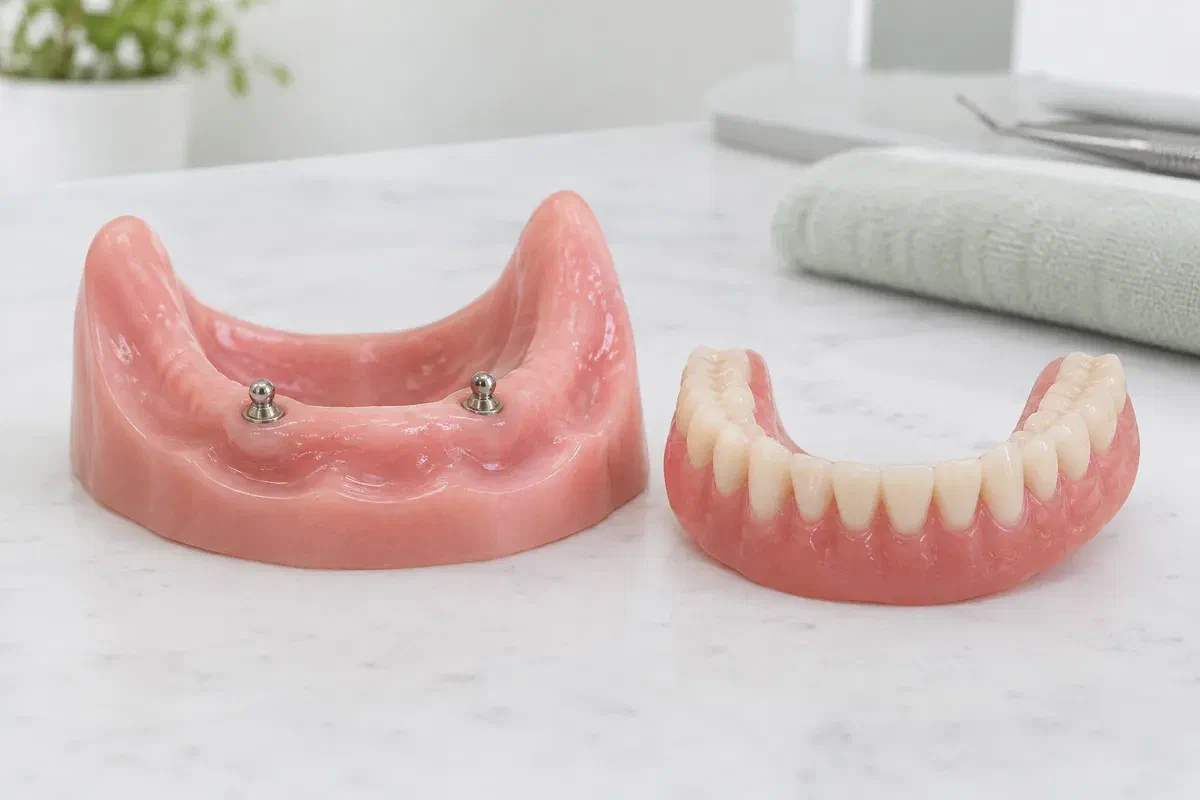
Denture instability has several possible causes. Sharing details lets the team look at the appliance, the supporting gums and whether attachments could genuinely help.
Describe when it lifts or rocks, such as at meals or during conversation, and whether relines have helped. Implant attachments are one option, though an improved conventional fit can sometimes be considered first.
Some people value removing their teeth for cleaning; others want fixed teeth. Tell us which you prefer at the outset. Removability is a fundamental design choice, and it also influences the surgery involved.
Arthritis, tremor, vision changes, medications or conditions such as diabetes can all affect care and planning. Mention them, along with any help you have. The plan has to be safe and manageable, not just appealing.
Implants are not the solution to every loose denture. If you already have implants beneath an appliance that has started to move, both the attachment components and the implants need assessment.
For suitable patients, implant attachments may help a removable denture stay steadier than gum support alone allows. Think about the activities where that would matter most. Ask what movement remains normal for the design and what improvement is realistic in your situation.
There is ongoing care to consider. Attachment inserts wear, the denture base and teeth need periodic review, and the tissue around each implant needs daily cleaning and regular professional checks. Some health conditions make that monitoring even more important, so ask how often you would be seen.
Patient information: Leeds Teaching Hospitals — removable implant overdentures
Assessment decides how many implants are appropriate and where they should go, taking your anatomy and medical history into account. Upper and lower jaws can differ. Ask why the suggested arrangement suits you.
Because the denture comes out, you can reach the attachments and its underside easily. Healthy tissue around implants depends on that daily cleaning. Ask for a demonstration of the tools and technique.
Ask to see the attachment system on a model and to try seating and releasing it. Learn which parts wear and how they are replaced. Understanding the design helps you compare the daily experience with other options.
Treatment involves several steps and may include more than one clinician, and sometimes your physician. Ask for the sequence, likely intervals and interim arrangements before you agree.
We review your medical history, medications and goals alongside your gums, ridges and current denture. Imaging may be arranged. Tell us about smoking, diabetes, bone medications, previous implant care and any handling difficulty.
If your health calls for it, the dentist may consult your physician. Implant suitability, attachments, appearance and maintenance are then discussed, along with whether your denture can be modified and what each stage will cost.
Where new implants are needed, healing is planned before attachments are relied upon. Your clinician may give health-specific instructions. Existing implants are assessed, and you will learn what to wear and avoid in the meantime.
The denture’s fit, hold, bite and appearance are confirmed. You practise seating and removal with guidance, then go through cleaning, overnight care and the early review appointments before leaving.
The routine depends on your attachment system, materials and health needs. Ask for written instructions and practise them before you go home.
Press the denture into position with your fingers as you practised. Never bite it into place. If it becomes difficult to remove or the connection feels unusual, especially after an adjustment, call the clinic.
Brush the denture teeth, underside and attachment areas with suitable products. Then gently clean around each implant in your mouth with the aids shown. If you have a condition that affects healing, ask whether extra care is advised.
Report movement, soreness, bleeding or damage rather than replacing parts yourself. Also let us know about new medications or health changes, since these can matter for implant care. Keep up your regular reviews.
Your health history and a model of the attachments together help explain what is possible. Ask the clinician to cover both.
Book a consultation on Bronte Street and we can look together at whether an implant-retained denture you remove yourself is a safe, sensible choice. Bring your current denture, a complete medication list, recent medical letters if you have them, and questions about hold, cleaning, handling and the treatment stages.
Has an implant denture you already wear started to rock or ache without warning? Explain what has happened when you call so we can arrange a suitable appointment.
