

Illustrative discussion of a removable implant-retained denture
Restorative Dentistry

Snap-In Dentures in Old Milton

Worn the same denture for years and wondering if implants could help it stay put? From Old Milton, talk with us about removable snap-in dentures: whether they suit you, how they handle, and the care they need over time.

For seasoned denture wearers

You already know dentures. This adds an anchor.

Plenty of people in Milton’s historic downtown have worn a denture for a decade or more and learned every trick to keep it steady. A snap-in denture changes one part of that experience. It still comes out at night, but it clips onto attachments linked to dental implants for extra hold.

Two neighbouring options are worth keeping separate in your mind. A traditional denture relies on the gums and suction, with no implants involved. A fixed implant bridge is fastened in place and is not removed at home. Comparing all three means looking at cleaning, cost, comfort and how much treatment comes first.

Our conversation begins with your history: what has worked, what has slipped, and what you would change tomorrow if you could. We examine your mouth, explain whether further implant assessment is worthwhile, and look at the appliance you rely on now. Its condition often shapes the next step.

Talk about adding implant attachments
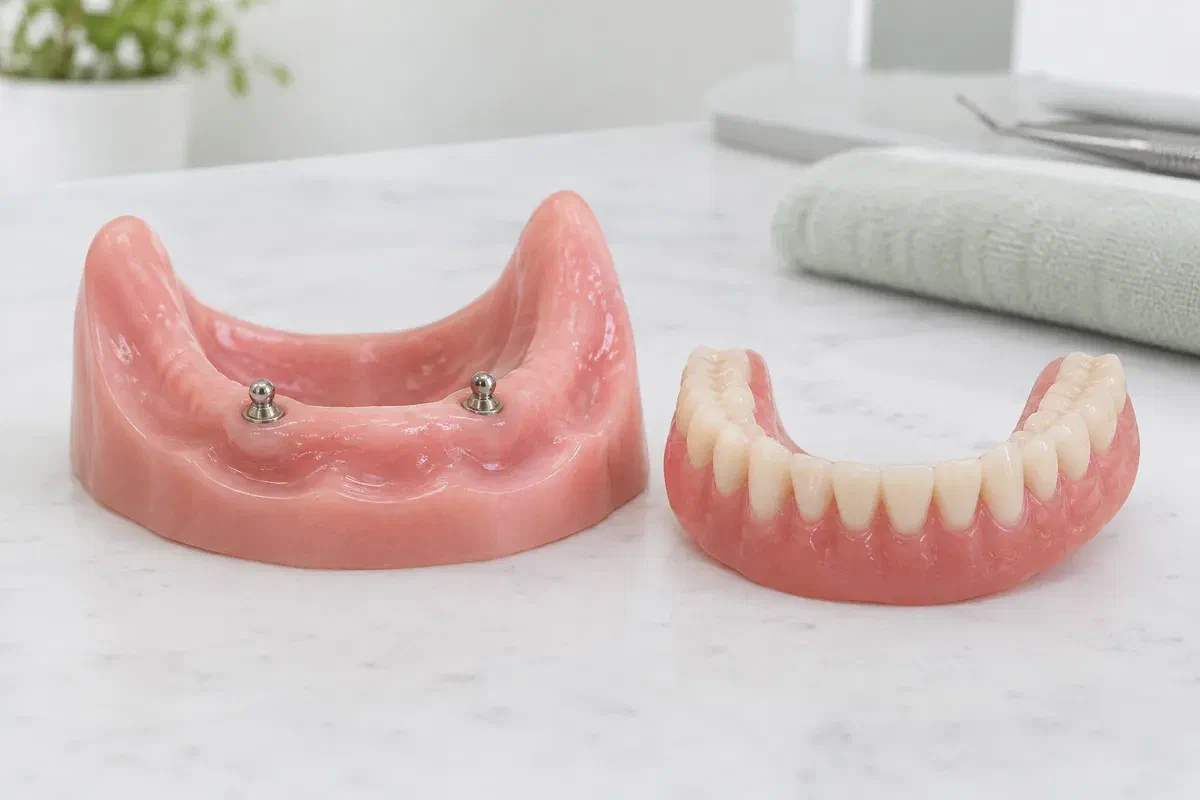
Illustrative lower-jaw model with attachment heads beside a removable overdenture
Familiar frustrations

Adhesive, sore spots, careful bites.

Years of wear can loosen a denture for many reasons. Tell us the full story so we can consider the appliance, the ridges supporting it, and whether attachments belong in the plan.

A denture that no longer stays

Perhaps you rely on more adhesive than before, or the lower plate creeps forward as you speak. Explain how long this has been building and what relines have done. Attachments might help, yet the existing fit has to be understood first.

Curiosity about implants, without fixed teeth

After years of taking teeth out each night, you may be comfortable keeping that habit. Or you may be curious about something permanent. Share your preference early, since whether the appliance comes out drives the design from the very start.

Handling that has become harder

Stiff fingers, weaker grip or less sharp eyesight can make a once easy routine awkward. Mention any help you get from a spouse or family member. Clipping in, releasing and cleaning all need to suit your hands, not just your smile.

Not every slipping denture points toward implants. And if you already have implants under an older appliance that has become loose, the attachment parts and the implants each need checking.

Realistic expectations

Steadier, possibly. Maintenance-free, no.

When the case is suitable, implant attachments can make a removable denture more secure than one resting on the ridges alone. Tie that hope to specific situations, like Sunday lunch or a long chat with neighbours on an Old Milton porch. Ask what degree of movement is still expected with the proposed design.

That security brings its own upkeep. Inserts in the attachments wear over time, the denture teeth and base still need reviewing, and the gum tissue around each implant needs daily cleaning and professional checks. Plan for those visits from the start rather than treating the fit as the end.

Patient information: Leeds Teaching Hospitals — removable implant overdentures

Implant layout decided by assessment

The number and placement of implants depends on your bone, your arch and the restoration. Upper and lower jaws are often planned differently. Ask the clinician why a given arrangement fits you instead of expecting a single standard count.

Getting at every surface

Lifting the denture out lets you reach its underside and the attachment points in your mouth. Ask for a hands-on demonstration of the brushes and motions involved. The benefit only counts if you can repeat the routine each day.

Knowing how it works before agreeing

Ask to handle a model and feel how the connection engages and lets go. Discuss which components are expected to wear and be replaced. That understanding helps you weigh the routine against your current denture and other choices.

How treatment usually unfolds

A staged plan, explained before it starts.

Expect several appointments, possibly with more than one clinician. Ask about the sequence, how long between stages, and which denture you will wear meanwhile.

  1. Take stock of your mouth and denture

    We look at the ridges, gums, your current appliance, your medical history and your goals. Imaging or implant planning may be suggested. Let us know about smoking, past implant work, and anything that makes handling your denture difficult.

  2. Choose the design

    Implant suitability, attachment type, the appearance of the teeth and long-term care are talked through. You will hear whether your existing denture might be adapted or replaced, and which surgical, restorative and review costs are included.

  3. Complete implant and healing stages

    If implants are placed, healing is planned before the attachments are relied upon. Any implants already present are assessed too. The clinician explains when connection can happen and how to manage with an interim denture.

  4. Fit, adjust and practise

    We check the fit, hold, bite and appearance, then you practise seating and removing the denture with guidance. Before you go, cleaning steps, overnight instructions and early follow-up appointments are confirmed.

New habits for an old routine

Mostly familiar, with a few new steps.

Care varies by attachment system and denture material. Ask for written instructions and practise them with us before heading home.

Let the attachments do the work

Line the denture up and press it into place as demonstrated. Avoid biting it down to force a connection that feels wrong. Call if removal becomes a struggle or the click feels different, especially right after an adjustment.

Two sets of surfaces to clean

Out of your mouth, clean the teeth, fitting surface and attachment housings with suitable products. In your mouth, clean around the implant connections with the brushes you were shown. Ask us before using a soak that might affect metal components.

Speak up when the grip fades

Worn inserts are one reason for looseness, but changes in the tissue or the denture can also play a part. Report movement, soreness, bleeding or damage instead of replacing pieces at home, and keep regular reviews of the implant sites.

Three paths for a full arch

Which routine would you choose to live with?

Compare how each suitable choice is cleaned, maintained and repaired. How the teeth look is just one piece.

Without implant surgery

Staying with a conventional denture

A refitted or new denture may be right for you. Ask what fit you can realistically expect given the ridges you have now. Upkeep continues, though the components and treatment stages are different from an implant-retained appliance.

With attachments, still removable

Moving to a snap-in overdenture

Implants add retention and the denture still lifts out. Attachment systems have their own demands. Compare stability, handling, cleaning and expected maintenance of the specific system rather than leaning on the popular name.

When teeth that stay in suit you

Choosing a fixed implant bridge

A fixed bridge is not removed during daily care and needs cleaning beneath it. Implant numbers, space and maintenance differ from a removable design. Ask whether it is appropriate and how the overall commitment compares.

Patient information: ITI — fixed and removable implant replacement considerations

Common questions in Old Milton

What experienced denture wearers ask us.

Holding a model in your hands can settle a lot of questions. Ask to see how the denture goes in, comes out and gets cleaned.

(905) 876-4488
I have worn dentures for twenty years. Is it too late for implants?
Long-term denture wear does not by itself rule implants out, but the ridges can change over time. Assessment, often with imaging, shows whether there is suitable support. Your general health and medications are also part of that decision.
Could my old denture be fitted with attachments?
Occasionally an existing appliance can be adapted, depending on its condition, fit, available room and the implant plan. Often a new denture works better. Bring yours so the clinician can examine it directly rather than guessing from its age.
Will I still need denture adhesive?
The attachments are meant to provide retention, so many people find adhesive becomes unnecessary. Follow the advice for your design, though, since some products may interfere with attachments. Ask before continuing any adhesive habit.
What happens if I lose or break an attachment insert?
Call the clinic and describe what happened. Do not try to fit a replacement yourself. The team will check the denture and the implant connection, then replace the part if that is the right fix.
Do medications affect whether implants are suitable?
Some medications and health conditions can influence healing and implant planning. Share a full list, including anything prescribed by other doctors. The dentist may need to coordinate with your physician before recommending treatment.
Should I still bring my denture to routine checkups?
Yes. Reviews look at both the appliance and the implant sites, so wear it to the appointment unless told otherwise. The team can check the inserts, the fit and your gums, and talk through any change you have noticed.
Visit us from Old Milton

Bring the denture you know best.

Arrange an appointment at our Bronte Street practice to explore a removable implant denture. Bring your current appliance and your questions about hold, cleaning, handling and the stages that lead to the new teeth.

If an existing implant denture suddenly feels loose or painful, tell us what has changed when you call to book.

Visit Milton Dental Clinic
Unit 1, 342 Bronte St. S, Milton, ON L9T 5B7
Get directions Clinic hours
Monday–Thursday
11am–7pm
Friday–Sunday
By appointment only

Areas we serve

  • Milton
  • Oakville
  • Mississauga
  • Georgetown
  • Halton Hills
  • Acton
  • Campbellville
  • Brampton
  • Burlington
  • Puslinch
  • Rockwood
  • Erin
  • Caledon
  • Etobicoke
  • Old Milton
  • Bronte Meadows
  • Timberlea
  • Dorset Park
  • Dempsey
  • Clarke
  • Beaty
  • Coates
  • Harrison
  • Scott
  • Willmott
  • Ford
  • Bowes
  • Cobden
  • Walker
  • Mountain View
  • Milton Heights
  • Hawthorne Village
  • Valley View
  • Fallingbrook
  • Nassagaweya
  • Trafalgar
  • Esquesing
  • Nelson
  • Brookville
  • Moffat
  • Glen Williams
  • Norval
  • Limehouse
  • Stewarttown
  • Ashgrove
  • Hornby
  • Silver Creek
  • Speyside
  • Scotch Block
  • North Oakville
  • River Oaks
  • Glen Abbey
  • West Oak Trails
  • Palermo
  • Bronte Creek
  • College Park
  • Joshua Creek
  • Uptown Core
  • Preserve
  • Iroquois Ridge
  • Lisgar
  • Meadowvale
  • Meadowvale Village
  • Churchill Meadows
  • Erin Mills
  • Central Erin Mills
  • Streetsville
  • East Credit
  • Creditview
  • Heartland
  • Sheridan
  • Mount Pleasant
  • Credit Valley
  • Huttonville
  • Churchville
  • Springbrook
  • Northwest Brampton
  • Bram West
  • Fletcher's Meadow
  • Fletcher's Creek South
  • Alton Village
  • Orchard
  • Millcroft
  • Headon Forest
  • Tansley
  • Brant Hills
  • Tyandaga
  • Kilbride
  • Lowville
  • Aberfoyle
  • Morriston
  • Arkell
  • Hillsburgh
  • Freelton
  • Carlisle
  • Waterdown
  • Flamborough
  • Mountsberg

How can we help?

Milton Dental Clinic

Have a question about your smile? Choose the option that works best for you.

For urgent dental concerns, please call.
Messages are reviewed during clinic hours.