

Illustrative consultation about an extraction site and future replacement planning
Restorative Dentistry

Socket Preservation in Brampton

Removing a tooth, caring for the socket, and choosing a replacement can stretch across several months. For busy households in Brampton, we help map out those stages before the extraction so each visit, and each decision, has a clear purpose.

Seeing the whole timeline

One tooth, several appointments, a plan that fits your calendar.

Between shifts, school runs, and looking after relatives, it is tempting to treat an extraction as a single event and sort out the rest later. In reality the space left behind keeps changing. The bone that held the roots heals and reshapes over time, and how it heals can affect the replacements available to you.

Socket preservation is a technique a clinician may use during removal: graft material goes into the socket, sometimes under a membrane, to help limit part of that reshaping when the treatment plan supports it. The method varies with the site. It won’t save the tooth, prevent every natural change, or confirm in advance that an implant will be possible.

Planning the stages together helps you protect time for each one. From Brampton, start with a conversation before the extraction is booked. We can explain why the tooth needs to come out, what condition the site seems to be in, and how a bridge, partial, or implant assessment might fit later in the year.

Map out the stages with us
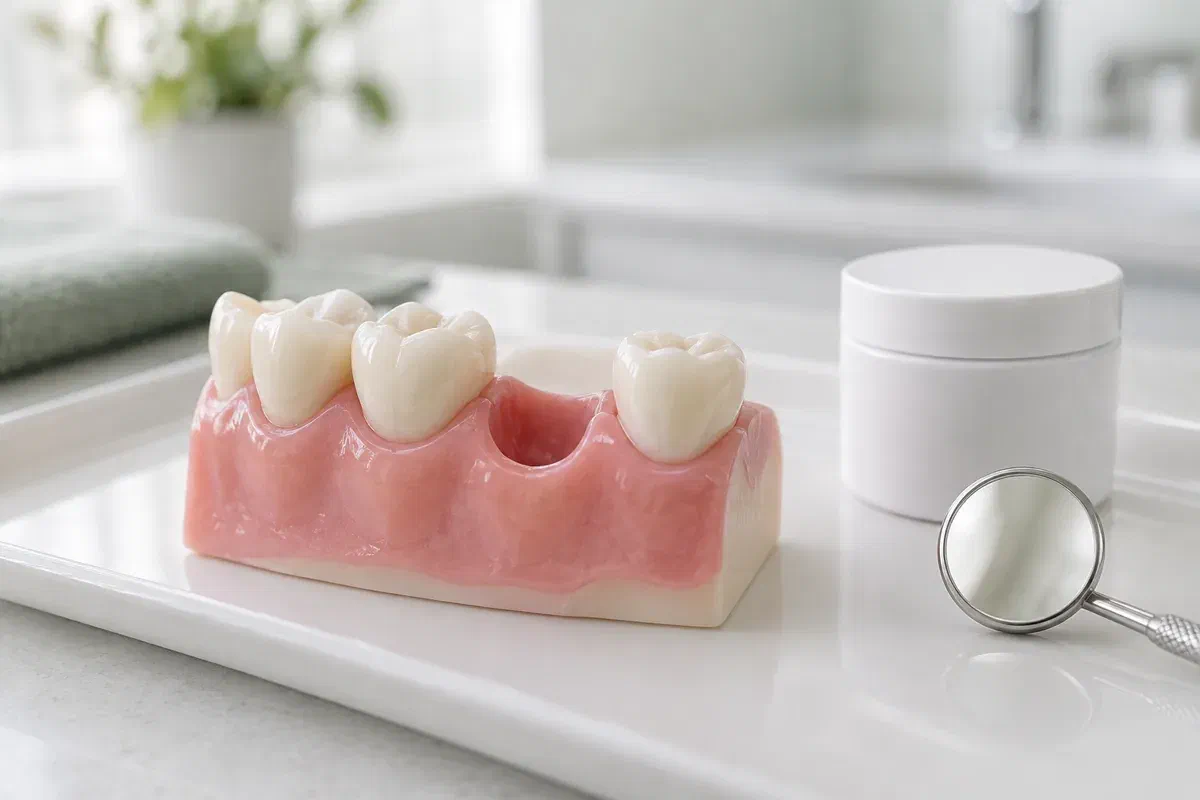
Illustrative dental teaching model showing an empty socket between neighbouring teeth
Questions that shape the schedule

Where is this tooth headed after it’s gone?

A final answer can wait. Telling the clinician what you are considering helps them judge whether socket care is worth adding and how many visits that might involve.

An implant could come later

Implants depend on enough bone in the right place for the new tooth. Mention it early if you are interested. Ask whether preserving the socket could help, and which further assessments would still be needed before implant treatment could be scheduled.

A bridge or partial seems more practical

Both rely on the healed gum and bone beneath them, and that contour can affect fit and appearance. Bring them up before removal if you can. The clinician can explain how the site might relate to each, and that agreeing to socket care isn’t a commitment to a particular replacement.

The tooth is infected or badly damaged

An abscess, bone loss, or a broken root can change both the plan and the timeline. Ask what the X-rays already show and what will only be clear once the tooth is out. Discuss how a change in approach would be handled before you consent.

Deciding to graft the socket is not the same as deciding to remove the tooth. If the situation allows, ask about reasonable ways to keep it before booking a permanent extraction.

What you gain, what it costs in time and effort

Worth discussing, not worth assuming.

Preservation aims to reduce part of the ridge shrinkage after extraction, so the site is better prepared for the replacement you have in mind. Ask how much difference the clinician expects for this particular tooth. The advice should reflect your tooth’s position and future plans, instead of being presented as something every extraction needs.

It also brings extra materials, fees, home care, and review appointments, which matter when time is tight. Healing differs between people, and more augmentation could still be needed later. Consider the potential benefit, the limits, and what healing without a graft would mean for your next steps.

Patient information: British Dental Journal — socket preservation

A link to the final replacement

Ask how this socket relates to the tooth or appliance you may eventually choose. Pictures of your own X-ray often make this easier to follow. Understand the reason for the step even if the replacement won’t happen for some time.

Materials agreed in advance

Grafts and membranes can be made from several sources. Mention preferences or concerns ahead of the appointment. Ask what is planned, why it suits the site, and whether choosing an alternative would change the treatment.

Reviews built into the plan

Ask when the site will be checked and what will show it is ready for the next stage. A comfortable gum doesn’t tell the whole story about healing beneath it. Booking reviews early makes them easier to keep.

The typical sequence

Plan it. Agree it. Do it. Check it.

The exact steps depend on the tooth and socket. Ask which appointments are firm and which might shift after removal.

  1. First visit: assessment

    The clinician examines the tooth, surrounding tissue, imaging, and medical history. You discuss why removal is advised and whether preservation suits you. Share smoking habits, medications, past healing problems, and early replacement ideas.

  2. Second conversation: the details

    Go over the graft sources, technique, costs, and alternatives. Find out if the site will be stitched or covered, and whether that means one more trip later. Sort out a stand-in for smiling and eating while the area heals.

  3. Treatment day: removal and site care

    If the plan proceeds and the site is suitable, the tooth is extracted and the socket is treated as agreed. Findings during removal may alter the approach. You receive comfort measures and instructions matched to the treatment done.

  4. Follow-up: healing and next steps

    Keep the review appointment and call with concerns between visits. More examination or imaging may come before replacement is confirmed. Ask whether the site needs further work and when to discuss the remaining choices.

Home care during healing

A few careful weeks protect the work done.

Keep the written instructions and our number where the whole household can find them. The technique, the materials, and any temporary tooth affect what you should do.

Leave the site alone

Follow the advice on rinsing, brushing near the area, eating, and physical activity. Don’t touch the socket or keep pulling your lip back to check. Ask before using any new rinse or product near the site.

Follow temporary tooth guidance

A removable replacement or the denture you already have might need adjusting, or a break from wear, while the socket heals. Bring it along to appointments and check when it can go back in. Fitting in place doesn’t mean the pressure is acceptable.

Call if something changes

Tell the team about pain that is increasing, unexpected bleeding, discharge, or worries about the stitches or cover. Give them a sense of the timing and do as they suggest. Don’t try to fix the wound or replace material yourself.

Patient information: Cambridge University Hospitals — graft materials and healing considerations

Approaches to compare

Pick the site plan that suits the end goal.

Each socket is different. Ask how this one’s condition and your preferred replacement shape what is recommended.

When grafting isn’t chosen

Healing naturally

The socket heals without a graft, and the ridge and options are reviewed afterwards. Ask what changes to expect and whether extra site work might be needed. This is a reasonable informed choice and doesn’t mean future treatment is ruled out.

When managing the fresh socket is suitable

Grafting during the extraction

Graft material, plus any indicated cover, is placed as agreed. Ask about the expected benefit, the limits, and the aftercare. Preservation doesn’t guarantee that no further grafting will be needed later.

When the findings point another way

Staging the work differently

Some sites need augmentation at a later stage or a different carefully assessed method. Immediate implant placement is its own suitability decision. Ask what that route would mean for your schedule and how the site is protected until the next step.

Planning questions from busy households

Fitting socket care into real life.

Ask about the extraction, the socket, and the timing. They connect, but each deserves its own answer.

(905) 876-4488
How many appointments does socket preservation usually involve?
It varies. There is typically a planning visit, the extraction with site care, and at least one review, with more if stitches need removing or the site needs extra work. Ask the clinician to outline the visits for your plan.
Can someone come with me on the day of the extraction?
Yes, and it can help, particularly if sedation is planned or you feel anxious. Ask whether you will need someone to drive you home, and plan for a quieter rest of the day.
Can I go back to the gym or heavy work straight away?
Follow the activity advice you are given, as it depends on the procedure and your health. Strenuous exertion may need to wait for a period. Ask the clinician what is sensible for your type of work or exercise.
Will preserving the socket keep my jawbone from changing?
Not entirely. The aim is to limit some change, not stop natural remodelling. The result depends on the site, technique, and your healing. Ask what benefit to expect and whether further treatment may still be needed.
If something unexpected is found during the extraction, what then?
The clinician may adjust whether preservation is still suitable or which technique is used. Discuss this possibility before the day and ask how decisions will be made. Any change should be explained, including its effect on aftercare and later plans.
Can I plan the appointments from Brampton around school and work?
Yes. Tell us your preferred times when booking. We are open Monday to Thursday, 11am to 7pm, and Friday to Sunday by appointment. If pain or swelling appears, call promptly rather than waiting for a convenient slot.
From Brampton to the planning chair

Start with one conversation, then plan the rest.

Book time at our Bronte Street practice ahead of a planned removal if you can. We will examine the tooth, explain the socket care choices, and help you see how the healing months lead into replacement.

If a tooth is painful or swelling is appearing, call for advice about prompt assessment rather than waiting until the schedule frees up.

Visit Milton Dental Clinic
Unit 1, 342 Bronte St. S, Milton, ON L9T 5B7
Get directions Clinic hours
Monday–Thursday
11am–7pm
Friday–Sunday
By appointment only

Areas we serve

  • Milton
  • Oakville
  • Mississauga
  • Georgetown
  • Halton Hills
  • Acton
  • Campbellville
  • Brampton
  • Burlington
  • Puslinch
  • Rockwood
  • Erin
  • Caledon
  • Etobicoke
  • Old Milton
  • Bronte Meadows
  • Timberlea
  • Dorset Park
  • Dempsey
  • Clarke
  • Beaty
  • Coates
  • Harrison
  • Scott
  • Willmott
  • Ford
  • Bowes
  • Cobden
  • Walker
  • Mountain View
  • Milton Heights
  • Hawthorne Village
  • Valley View
  • Fallingbrook
  • Nassagaweya
  • Trafalgar
  • Esquesing
  • Nelson
  • Brookville
  • Moffat
  • Glen Williams
  • Norval
  • Limehouse
  • Stewarttown
  • Ashgrove
  • Hornby
  • Silver Creek
  • Speyside
  • Scotch Block
  • North Oakville
  • River Oaks
  • Glen Abbey
  • West Oak Trails
  • Palermo
  • Bronte Creek
  • College Park
  • Joshua Creek
  • Uptown Core
  • Preserve
  • Iroquois Ridge
  • Lisgar
  • Meadowvale
  • Meadowvale Village
  • Churchill Meadows
  • Erin Mills
  • Central Erin Mills
  • Streetsville
  • East Credit
  • Creditview
  • Heartland
  • Sheridan
  • Mount Pleasant
  • Credit Valley
  • Huttonville
  • Churchville
  • Springbrook
  • Northwest Brampton
  • Bram West
  • Fletcher's Meadow
  • Fletcher's Creek South
  • Alton Village
  • Orchard
  • Millcroft
  • Headon Forest
  • Tansley
  • Brant Hills
  • Tyandaga
  • Kilbride
  • Lowville
  • Aberfoyle
  • Morriston
  • Arkell
  • Hillsburgh
  • Freelton
  • Carlisle
  • Waterdown
  • Flamborough
  • Mountsberg

How can we help?

Milton Dental Clinic

Have a question about your smile? Choose the option that works best for you.

For urgent dental concerns, please call.
Messages are reviewed during clinic hours.