

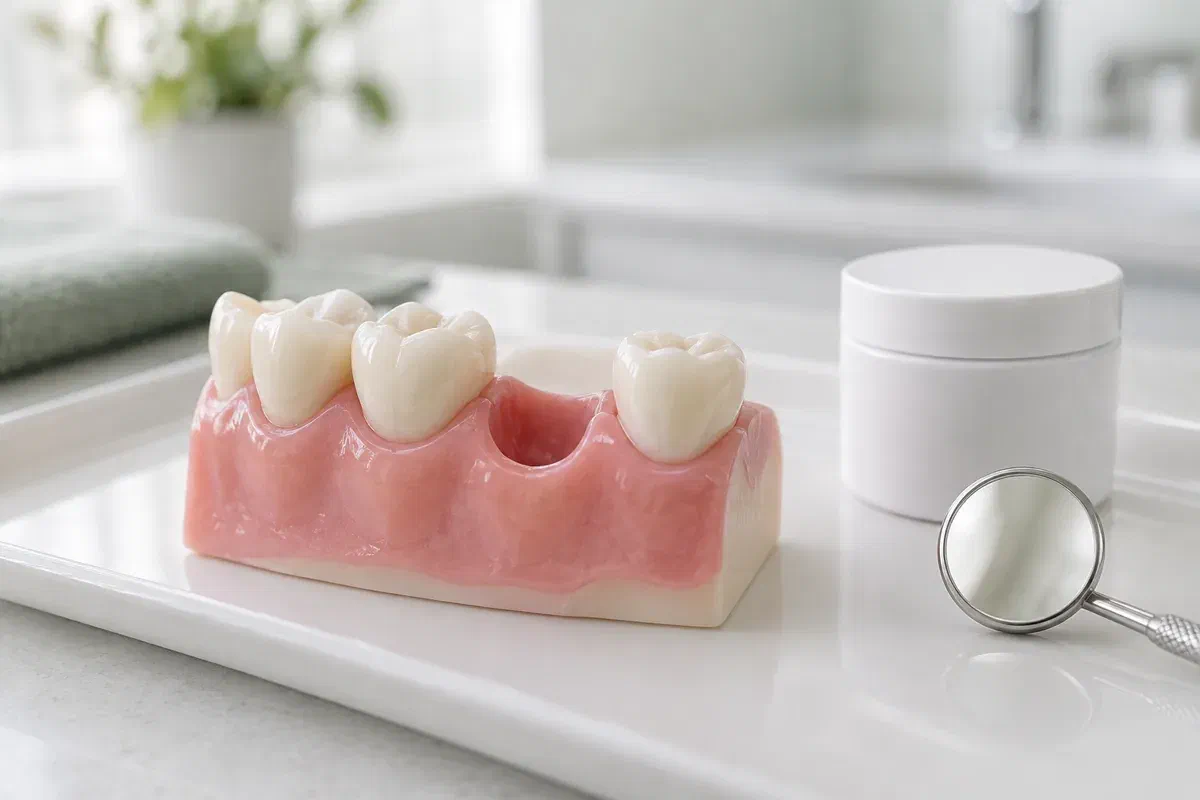
Illustrative consultation about an extraction site and future replacement planning
Restorative Dentistry

Socket Preservation in Burlington

The extraction date is on your calendar. Use the days before it well. From Burlington, ask us whether socket preservation is part of the plan, what would be placed in the site, and how the healing period leads into choosing a replacement tooth.

In the lead-up to an extraction

The days before removal are the best time to ask.

Once a date is set, most people focus on getting through the appointment. A short list of questions about the socket can be just as valuable. That socket is the pocket of jawbone holding the roots, and after they leave it heals and remodels, often losing some width and height. Preservation is something a clinician may do during removal to reduce part of that loss when it fits your plan.

The usual approach is to fill the socket with graft material, sometimes with a membrane or other covering on top. Your site and health history decide the details. None of this preserves the tooth, stops every natural change in the bone, or guarantees a future implant.

If you are travelling in from Burlington, a planning conversation ahead of the extraction is worth arranging. You can confirm why removal is recommended, what is known about the site, and how a bridge, partial denture, or implant assessment might follow, so the day itself holds fewer surprises.

Prepare your questions before the date
Illustrative dental teaching model showing an empty socket between neighbouring teeth
Things to mention before the appointment

Tell us where the gap might be heading.

A firm decision isn’t required. Knowing what you are considering lets the clinician say whether preservation is worth talking about for this tooth.

You are curious about implants

Implant planning looks at the bone volume and the ideal position of the new tooth. Say early if this is on your mind. Ask whether socket care could help in this area and what further tests would come before any implant decision.

You have a bridge or partial in mind

These options sit on or over the healed ridge, so its shape can matter. Raise them before removal when possible. The clinician can explain how the site may influence each choice, and why agreeing to one step doesn’t oblige you to take another.

There is infection or damage around the root

An abscess, receding bone, or a broken socket wall can change the recommendation. Ask which of these are visible already and which might only show up once the tooth is out. Any possible change of plan should be part of what you consent to.

The extraction and the socket care are two decisions. If there is time, ask whether keeping the tooth is still a reasonable option before going ahead with a removal that is permanent.

Purpose and trade-offs

What it can help with, and what it adds.

By filling the socket at the time of extraction, the clinician aims to reduce some of the shrinkage that normally follows, leaving a site that better suits the planned replacement. Ask what difference they expect in your case. The recommendation should be explained in relation to where the tooth is and what may replace it, not offered as a default.

On the other side of the scale are graft materials, added cost, more aftercare, and extra reviews. Healing is individual, and the area might still need augmentation later. Look at the likely gain, the limits, and what natural healing without a graft would mean for your options before you decide.

Patient information: British Dental Journal — socket preservation

One step in a longer plan

Ask how this socket connects to the replacement you may choose, whether that is soon or much later. A model or X-ray can show the area and its outline. Knowing the reason helps even if the next step is a long way off.

Products you know about

Graft and membrane materials vary in origin. If you have a preference or concern, share it before the appointment. Ask what will be used, why it suits the site, and how an alternative would affect the plan.

A review with a defined goal

Ask when healing will be checked and what will show the site is ready to move on. Surface comfort doesn’t answer every question about the bone below. A booked review gives a clear point to return to replacement choices.

What to expect along the way

From the planning chair to the review appointment.

The sequence varies with the tooth and the condition of its socket. Ask which steps are certain and which could be adjusted on the day.

  1. Planning visit

    The clinician checks the tooth, the gum and bone around it, your imaging, and your medical history. You discuss why it needs to come out and whether grafting is suitable. Mention smoking, any medications, past healing difficulties, and your replacement thoughts.

  2. Agreeing the details

    Review where the graft comes from, the likely technique, the cost, and alternatives. Ask whether stitches or a cover will be placed and if anything comes out later. Decide what you will use for appearance and chewing while the area heals.

  3. Extraction day

    If the plan goes ahead and the site is suitable, the tooth is removed and the socket is treated as agreed. What the clinician sees during removal may change the approach. You leave with comfort measures and instructions for the treatment that was carried out.

  4. Healing check

    Come to the follow-up and call between visits if something concerns you. Extra examination or imaging may be needed before replacement is confirmed. Ask whether the site needs further preparation and when to discuss next steps.

Once you’re home

Go by your own written instructions.

Back home in Burlington, put the aftercare sheet and our phone number somewhere easy to find. The technique, materials, and any temporary replacement all shape what you should do in the healing weeks.

Keep hands and tongue away

Follow the guidance on rinsing, brushing next to the site, eating, and exercise. Try not to check the area by pulling your lip back or touching it. Ask before starting any new rinse or cleaning product nearby.

Wear temporary teeth as advised

A flipper or existing denture may need adjusting or limited wear so it doesn’t press on the healing socket. Bring it to your visits and confirm when it can be used. Comfort when it goes in doesn’t mean the pressure is acceptable.

Call about unexpected changes

Contact the team about increasing pain, bleeding you didn’t expect, discharge, or concern about the stitches or cover. Say when it started and follow their advice. Leave the wound and the material for the clinician to deal with.

Patient information: Cambridge University Hospitals — graft materials and healing considerations

Possible approaches

The right choice depends on the socket in front of us.

No single plan fits every extraction. Ask how this socket’s condition and your preferred replacement guide the recommendation.

If preservation isn’t part of the plan

Healing without a graft

The socket can heal on its own, with the ridge and replacements assessed later. Ask about the changes to expect and whether extra site work could be needed. An informed choice to skip grafting is reasonable and doesn’t close the door on future care.

If treating the fresh site is appropriate

Preserving the socket at removal

Graft material, with any covering that is indicated, is placed as agreed. Ask about the intended benefit, the limits, and the aftercare involved. It cannot promise that further grafting won’t be required when the final replacement is planned.

If the findings suggest a different order

A staged or alternative approach

Some sites need augmentation later or another carefully assessed method. Placing an implant at once is a separate suitability question. Ask what the alternative involves and how the area will be cared for while the next stage is decided.

Before your extraction date

Questions people ask in the final week.

Write down questions about both the removal and the socket. They are linked, yet they are not the same procedure.

(905) 876-4488
Should I eat before an extraction with socket preservation?
Follow the specific instructions you are given, which depend on the type of anaesthesia and your health. If you haven’t received guidance, call to ask. Plan soft foods for afterwards and ask which ones are suitable.
Can I arrange time off work around the procedure?
Ask the clinician what recovery usually involves for your planned treatment, so you can decide whether to take time off. Healing varies, and the aftercare instructions will guide activity. Booking the extraction near the end of your week can help some people.
Will there be stitches, and do they need removing?
Some socket preservation techniques use stitches or a covering, and some stitches dissolve while others need removing. Ask which applies to your plan, and whether a separate visit is needed for that.
Does preservation keep the jawbone exactly as it is now?
No. It aims to limit some of the change, not prevent natural remodelling altogether. Results vary with the site, the technique, and how you heal. Ask what to expect in your case and whether more treatment might still be needed.
Is an implant placed at the same appointment as the graft?
Usually these are separate steps, though some plans combine them in selected cases after careful assessment. Ask exactly which stages your appointment includes and what your estimate covers.
Is it worth asking about the site if my tooth was removed months ago?
Yes. You can still discuss the healing area and your options, although the approach won’t be the same as preservation at extraction. Share when and how the tooth was removed. An examination shows whether monitoring or another strategy is appropriate.
Planning from Burlington

A conversation now makes the extraction clearer.

Book time at our Bronte Street practice before a planned removal where possible. We will look at the tooth, explain the socket care options, and show you how healing ties into the replacement choices that come next.

If pain or swelling is building, call for advice about being assessed rather than holding off while you think about replacements.

Visit Milton Dental Clinic
Unit 1, 342 Bronte St. S, Milton, ON L9T 5B7
Get directions Clinic hours
Monday–Thursday
11am–7pm
Friday–Sunday
By appointment only

Areas we serve

  • Milton
  • Oakville
  • Mississauga
  • Georgetown
  • Halton Hills
  • Acton
  • Campbellville
  • Brampton
  • Burlington
  • Puslinch
  • Rockwood
  • Erin
  • Caledon
  • Etobicoke
  • Old Milton
  • Bronte Meadows
  • Timberlea
  • Dorset Park
  • Dempsey
  • Clarke
  • Beaty
  • Coates
  • Harrison
  • Scott
  • Willmott
  • Ford
  • Bowes
  • Cobden
  • Walker
  • Mountain View
  • Milton Heights
  • Hawthorne Village
  • Valley View
  • Fallingbrook
  • Nassagaweya
  • Trafalgar
  • Esquesing
  • Nelson
  • Brookville
  • Moffat
  • Glen Williams
  • Norval
  • Limehouse
  • Stewarttown
  • Ashgrove
  • Hornby
  • Silver Creek
  • Speyside
  • Scotch Block
  • North Oakville
  • River Oaks
  • Glen Abbey
  • West Oak Trails
  • Palermo
  • Bronte Creek
  • College Park
  • Joshua Creek
  • Uptown Core
  • Preserve
  • Iroquois Ridge
  • Lisgar
  • Meadowvale
  • Meadowvale Village
  • Churchill Meadows
  • Erin Mills
  • Central Erin Mills
  • Streetsville
  • East Credit
  • Creditview
  • Heartland
  • Sheridan
  • Mount Pleasant
  • Credit Valley
  • Huttonville
  • Churchville
  • Springbrook
  • Northwest Brampton
  • Bram West
  • Fletcher's Meadow
  • Fletcher's Creek South
  • Alton Village
  • Orchard
  • Millcroft
  • Headon Forest
  • Tansley
  • Brant Hills
  • Tyandaga
  • Kilbride
  • Lowville
  • Aberfoyle
  • Morriston
  • Arkell
  • Hillsburgh
  • Freelton
  • Carlisle
  • Waterdown
  • Flamborough
  • Mountsberg

How can we help?

Milton Dental Clinic

Have a question about your smile? Choose the option that works best for you.

For urgent dental concerns, please call.
Messages are reviewed during clinic hours.