

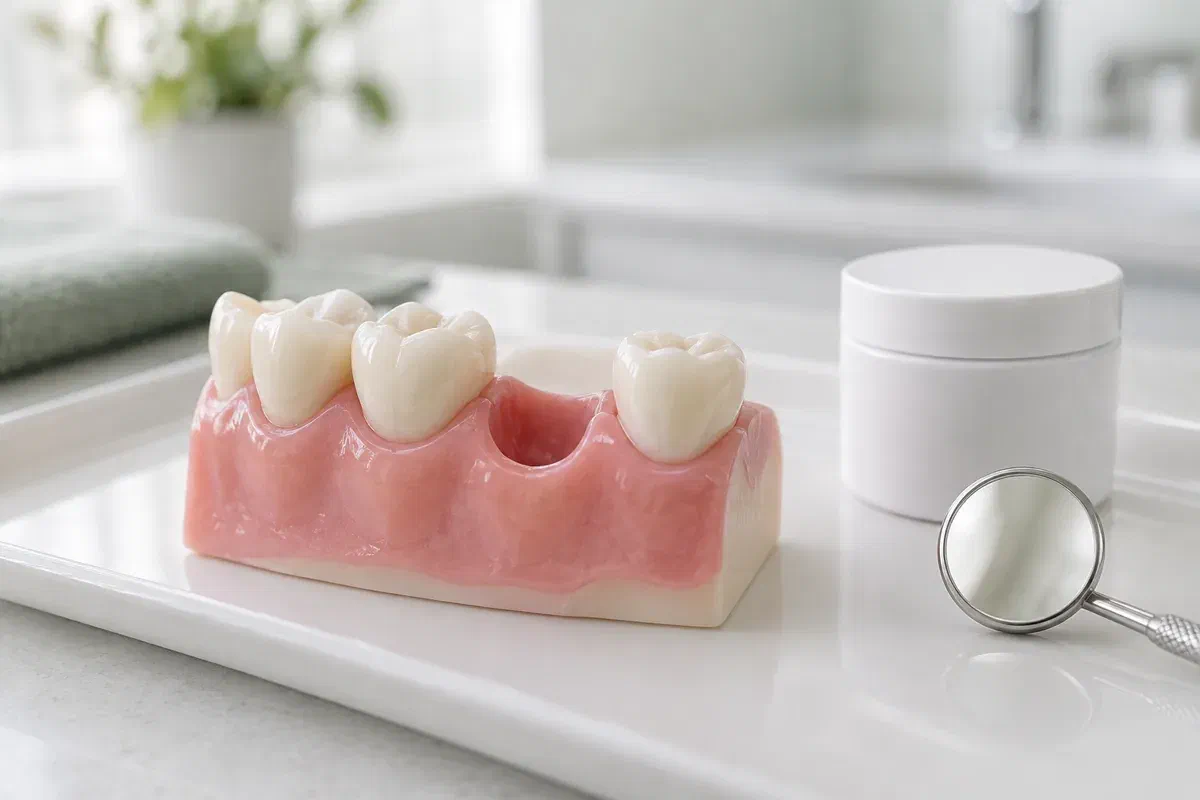
Illustrative consultation about an extraction site and future replacement planning
Restorative Dentistry

Socket Preservation in Puslinch

Lost a tooth before without anyone mentioning the socket, and now another one needs to come out? From Puslinch, ask us this time how socket preservation works, what it would involve, and how the healed site could shape your replacement options.

A second extraction, a different conversation

Last time the gap just happened. This time, plan it.

Many adults have an old gap from an emergency extraction years ago, and perhaps noticed that the gum there looks lower or narrower than its neighbours. When another tooth needs removal, it’s natural to wonder whether things could go differently. That’s the right instinct, and the question has a name: socket preservation.

When a tooth is extracted, the bony socket that held it heals and the ridge often loses some width and height. With preservation, the clinician places graft material in the fresh socket at removal, sometimes topped with a membrane, to limit part of that change when it suits the plan. It can’t keep the tooth, prevent every bit of remodelling, or promise you an implant later.

Coming in from Puslinch, bring both gaps into the conversation: the old one and the one ahead. We can explain why the current tooth needs to come out, what the site looks like, and whether a bridge, partial, or implant assessment could address one space or both.

Talk about this extraction in advance
Illustrative dental teaching model showing an empty socket between neighbouring teeth
Lessons from the first gap

What would you change about how the last one went?

You don’t need a full plan. Telling the clinician what bothered you about the previous gap, and what you’d like this time, helps them judge whether preservation is relevant.

This time you’re considering an implant

Implants rely on adequate bone in the right position for the new tooth. If that’s on your mind now, say so early. Ask whether socket care could help this site and what assessments would still come before implant treatment.

One appliance for two spaces

A partial denture or bridge might replace more than one missing tooth. Discuss this before removal, because the healed shape of both sites matters. Choosing socket care for this tooth doesn’t lock you into a particular appliance.

The tooth or bone is in poor shape

Infection, bone loss, or a broken socket wall can alter what is advisable. Ask what imaging shows and what can only be seen during removal. Possible changes should be covered when you give consent.

Even after one extraction, the next isn’t automatic. Where the situation allows, ask about reasonable options for saving this tooth before agreeing to an irreversible removal.

Doing it differently

Less guesswork about the ridge.

Placing a graft as the tooth comes out is intended to reduce some of the ridge change you may have seen at your old gap, so the new site is better suited to a replacement. Ask the clinician what difference they would expect here. Their advice should reflect this tooth’s position and your plans, not a rule that every extraction needs grafting.

It does mean materials, fees, aftercare, and review visits. Healing varies, and additional augmentation could still be needed. Compare the possible gain, the limits, and what healing without a graft would mean, ideally with your experience of the first gap in mind.

Patient information: British Dental Journal — socket preservation

Part of a bigger replacement plan

Ask how this socket fits with the old gap and the replacement you may choose for either. A model or X-ray can make both areas easier to compare.

Materials you understand

Grafts and membranes come from a number of sources. Raise any preference before the extraction. Ask what is proposed, why it suits the site, and whether a different option would change the plan.

A planned check of the healing

Ask when the site will be reviewed and what will show it’s ready for replacement planning. A gum that feels normal may not reflect healing underneath. A booked review gives you a natural time to decide.

The steps this time

Talk it through before anything is removed.

Each tooth and socket differs. Ask which steps are fixed and which might change during the extraction.

  1. Review both gaps

    The clinician examines the tooth, surrounding tissue, imaging, and your medical history, and may look at the old gap too. You discuss the reasons for extraction and whether grafting would help. Mention smoking, medicines, past healing problems, and your replacement ideas.

  2. Agree the approach

    Talk through graft sources, the likely technique, costs, and alternatives. Ask about stitches or a protective layer, and whether a return visit is needed for either. Plan how you will manage looks and eating during healing.

  3. Extraction with planned site care

    If you proceed and the socket is suitable, the tooth is removed and the site treated as agreed. Findings may lead to a change of approach. Your aftercare instructions will reflect the treatment given.

  4. Follow-up and replacement planning

    Come to the review and call about worries between visits. Further imaging may be needed before replacement is confirmed. Ask whether either site needs more preparation and when to revisit the options together.

Caring for the new socket

Different from last time, possibly.

A grafted socket can come with different advice from the simple extraction you remember. Keep your written instructions and our number nearby.

Treat the area gently

Follow the guidance on rinsing, brushing near the site, food, and activity. Resist touching it or pulling your lip back to inspect. Ask before using new rinses or cleaning aids there.

Check any appliance you wear

If you already wear a partial for the old gap, it may need adjusting or limited use to avoid pressing on the new socket. Bring it with you and confirm when it can be worn. Comfort on insertion doesn’t prove the pressure is safe.

Report anything unexpected

Let the team know about worsening pain, bleeding you weren’t told to expect, discharge, or concerns about stitches or covering. Note when it started and follow their advice. Don’t try to adjust the site yourself.

Patient information: Cambridge University Hospitals — graft materials and healing considerations

Approaches for this socket

Three ways forward from here.

The right approach depends on this socket and what you want for both gaps. Ask how the site’s condition and your replacement goals shape the advice.

Without grafting

Natural healing, like last time

The socket heals by itself, and the ridge is assessed later. Ask how much change to expect and whether extra site work might be needed before replacement. Chosen knowingly, this remains a reasonable option and doesn’t rule out future treatment.

Preservation at the extraction

Grafting the fresh socket

The agreed graft and any covering are placed during removal. Ask what improvement is realistic, what it won’t do, and what aftercare is involved. Further grafting may still be needed when the replacement is planned.

If the findings point elsewhere

Staged or alternative site work

Some sites benefit from ridge augmentation later, or another carefully assessed approach, which might also be considered for an older gap. Placing an implant immediately needs its own assessment. Ask what each stage involves and how the area is cared for in between.

Second-time questions

What’s different now?

Ask about this extraction, the socket, and how it relates to the gap you already have. They connect, but each deserves its own answer.

(905) 876-4488
Can my old gap be grafted now, years after the extraction?
Preservation is done at the time of removal, but healed sites can sometimes be assessed for ridge augmentation or other approaches. Ask whether that applies to your old gap and what it would involve.
Why didn’t anyone mention socket preservation at my first extraction?
It isn’t needed after every removal, and emergency extractions focus on immediate problems. It also depends on the site and plans at the time. You can raise it now for this tooth.
Could one replacement cover both gaps?
Sometimes, depending on where the gaps are. A partial denture or bridge may replace more than one tooth. Ask the clinician how the two sites relate and what would suit them.
Will grafting keep this ridge from looking like my old gap?
It aims to reduce some of the change, not stop natural remodelling. Results depend on the site, technique, and healing. Ask what difference is realistic for this tooth.
Is socket preservation part of implant surgery?
No. Grafting the socket is a separate procedure. In selected cases some stages are combined, but that needs its own assessment. Ask which steps your appointment and estimate cover.
Can my visits from Puslinch be arranged to limit trips?
Yes. Tell us your availability and we can try to group planning, treatment, and review where it makes sense. If pain or swelling develops, call promptly rather than waiting for a planned visit.
Puslinch planning visits

Bring the old gap into the conversation too.

Book a discussion at our Bronte Street practice ahead of the extraction where possible. We will review this tooth, look at your existing gap, explain socket care options, and help you plan replacement for one space or both.

If the tooth is painful or swelling is developing, call for advice about being seen sooner rather than waiting while you weigh replacements.

Visit Milton Dental Clinic
Unit 1, 342 Bronte St. S, Milton, ON L9T 5B7
Get directions Clinic hours
Monday–Thursday
11am–7pm
Friday–Sunday
By appointment only

Areas we serve

  • Milton
  • Oakville
  • Mississauga
  • Georgetown
  • Halton Hills
  • Acton
  • Campbellville
  • Brampton
  • Burlington
  • Puslinch
  • Rockwood
  • Erin
  • Caledon
  • Etobicoke
  • Old Milton
  • Bronte Meadows
  • Timberlea
  • Dorset Park
  • Dempsey
  • Clarke
  • Beaty
  • Coates
  • Harrison
  • Scott
  • Willmott
  • Ford
  • Bowes
  • Cobden
  • Walker
  • Mountain View
  • Milton Heights
  • Hawthorne Village
  • Valley View
  • Fallingbrook
  • Nassagaweya
  • Trafalgar
  • Esquesing
  • Nelson
  • Brookville
  • Moffat
  • Glen Williams
  • Norval
  • Limehouse
  • Stewarttown
  • Ashgrove
  • Hornby
  • Silver Creek
  • Speyside
  • Scotch Block
  • North Oakville
  • River Oaks
  • Glen Abbey
  • West Oak Trails
  • Palermo
  • Bronte Creek
  • College Park
  • Joshua Creek
  • Uptown Core
  • Preserve
  • Iroquois Ridge
  • Lisgar
  • Meadowvale
  • Meadowvale Village
  • Churchill Meadows
  • Erin Mills
  • Central Erin Mills
  • Streetsville
  • East Credit
  • Creditview
  • Heartland
  • Sheridan
  • Mount Pleasant
  • Credit Valley
  • Huttonville
  • Churchville
  • Springbrook
  • Northwest Brampton
  • Bram West
  • Fletcher's Meadow
  • Fletcher's Creek South
  • Alton Village
  • Orchard
  • Millcroft
  • Headon Forest
  • Tansley
  • Brant Hills
  • Tyandaga
  • Kilbride
  • Lowville
  • Aberfoyle
  • Morriston
  • Arkell
  • Hillsburgh
  • Freelton
  • Carlisle
  • Waterdown
  • Flamborough
  • Mountsberg

How can we help?

Milton Dental Clinic

Have a question about your smile? Choose the option that works best for you.

For urgent dental concerns, please call.
Messages are reviewed during clinic hours.