

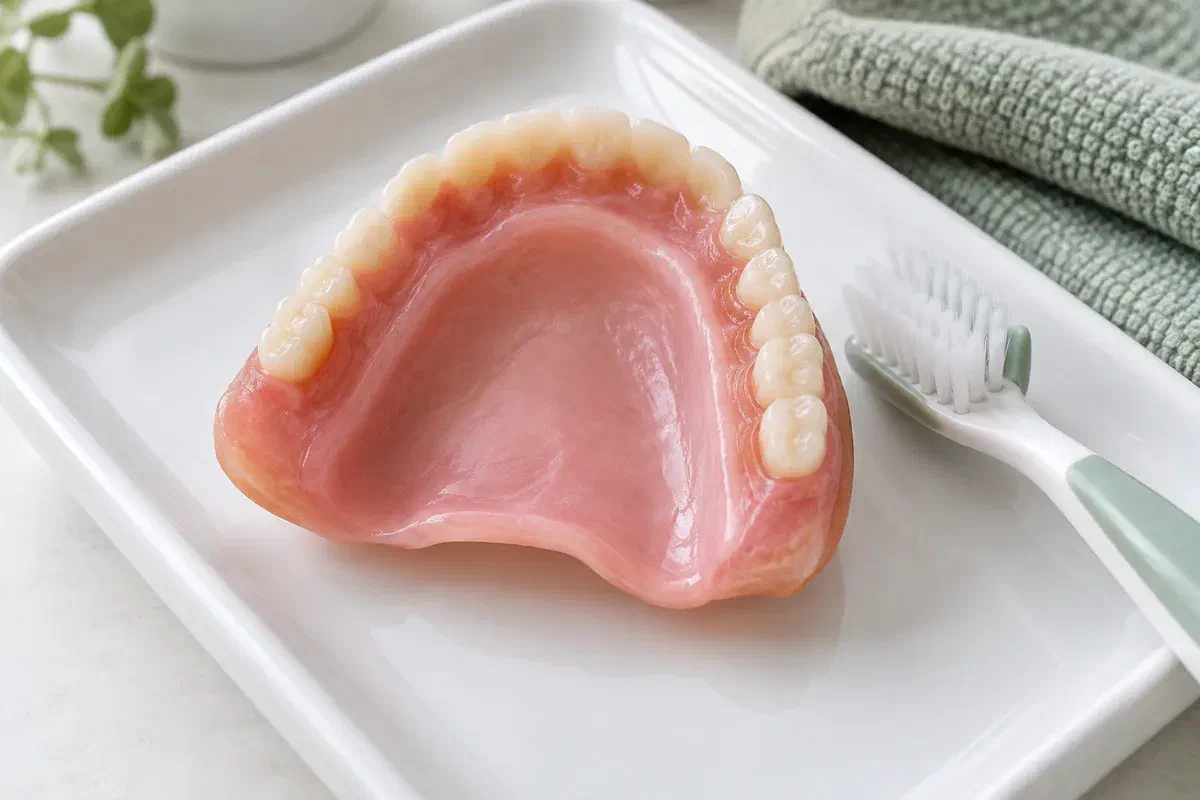
Illustrative discussion of the fitting surface of a removable denture
Restorative Dentistry

Soft Denture Relines in Halton Hills

After teeth are removed, the gums keep reshaping for months, and a denture that fit on day one may not fit later. For people across Halton Hills, we can discuss whether a temporary soft lining or tissue conditioner suits this healing stage.

Halton Hills · the healing months

Your mouth is changing. The denture is not.

Following extractions, the bone and gum where teeth used to be gradually remodel. An immediate or early denture is made to a shape that will not stay the same, so gaps and pressure points often appear as healing goes on. In selected cases a clinician may place a soft, resilient material on the tissue side of the appliance, sometimes called a tissue conditioner, to cushion contact while things settle.

Not every sore spot during healing is a fit problem, and a soft material is not the right answer to all of them. Slow healing, an infection, a sharp bony edge, an uneven bite or an edge that is overextended can all cause pain. That is why the healing site and the denture are examined together before any lining is chosen.

Bring the denture and any instructions you were given after the extractions. Tell us when they were done, which areas are tender and whether the appliance has loosened. We can explain whether a temporary soft lining is reasonable right now, how it fits into your longer-term denture plan, and when the fit should be reassessed.

Ask about relining during healing
Illustrative upper denture with a smooth pale pink lining on its fitting surface
During the healing phase

Gaps, rubbing and a denture that no longer grips

Healing tissues change week to week, so describe how the denture has felt since the extractions. Remove it and call if pain is sharp or getting worse, rather than persevering.

Tender areas over healing sites

Show where it hurts and whether the area looks red, raw or ulcerated, or has bled. Pain that is easing is different from pain that is worsening. The clinician checks healing and the denture surface above it before deciding on any lining.

Space opening under the denture

As the ridge shrinks, a denture can begin to rock, trap food or need more adhesive. That is expected to some degree. The question is how to support comfort for now, and when a more permanent reline or a new appliance should follow.

A conditioner that has changed

Short-term cushioning materials are designed to be changed or reviewed. If yours has hardened, torn, roughened or taken on a smell, bring it in. Mention how you have been cleaning it, since some routines speed up wear.

Healing that seems to stall, swelling, or a sore that is getting worse should be looked at promptly. Contact the clinic rather than adding material at home.

The role of a temporary lining

A short-term step inside a longer plan

When the denture and healing tissue are suitable, a resilient lining can soften how the appliance presses on tender areas and fill some of the space created by shrinkage. Ask which concern it is meant to address. A sensible aim might be more tolerable wear during healing, rather than a final fit that will not need further work.

Temporary materials are usually expected to be changed or replaced, and some cleaners are unsuitable for them. Ask how long this lining is intended to stay, how often it will be reviewed, and at what stage the clinician would consider a hard reline, a new denture or another step once the ridge has settled.

Patient information: ACP — assessment before relining or replacing dentures

Clarity on what the lining is for

Cushioning tender tissue and filling space during healing are different aims, and each influences the material chosen. Asking which applies lets you report changes accurately at each check.

Continued use of your current denture

A temporary lining may let you keep wearing an immediate denture while healing continues, provided the teeth and design remain appropriate. Ask what it cannot fix and what a definitive reline or replacement would add later.

Care suited to a temporary material

Find out which products are safe, how gently to clean, and how to store the denture. Temporary liners can be more delicate than permanent ones. If cleaning is awkward while your mouth heals, tell us and we can suggest simpler steps.

How healing-stage relining is planned

Check healing, line temporarily, reassess, decide.

Appointments during healing are often spaced to follow how the ridge changes. Ask how many reviews to expect and whether any step needs laboratory time.

  1. Review healing and denture fit

    The clinician looks at extraction sites, soreness, fit, the bite and the appliance. Share your extraction date and any post-operative instructions. Some healing problems need care before any lining is placed.

  2. Discuss a temporary lining and its limits

    We talk about whether a soft conditioner is suitable, how long it is meant to stay, care requirements, estimated costs and other options. We also outline what the longer-term plan may look like.

  3. Place the soft material

    The denture surface is readied and the temporary material is applied, usually during the visit. The clinician explains how it should feel and what to avoid while it sets and settles.

  4. Recheck as the ridge changes

    Fit, borders, bite and comfort are assessed, and further reviews are booked. Over time the clinician judges when a more permanent reline or a new denture is appropriate.

Caring for a temporary liner

Gentle cleaning protects healing gums and the material.

Temporary soft materials can be delicate. Keep the instructions you were given, along with any extraction aftercare advice.

Confirm products and rinse gently

Ask which cleansers are safe for the conditioner and how long the denture may soak. Avoid hot water and abrasive brushing. Rinse after meals as advised, especially while extraction sites are still closing.

Do not reshape the liner yourself

If the material tears, lifts or roughens, leave it as it is and call. Cutting, gluing or adding a pharmacy liner can create new pressure points on healing tissue.

Report how the healing feels

Mention new soreness, swelling, bleeding, odour or the liner becoming firm or separating. Keep each scheduled check even when things are improving, because the ridge continues to change for some time.

Patient information: Royal Cornwall Hospitals — care of dentures with a soft lining

Now, and later

What happens after the temporary stage?

Ask which option fits what the exam shows today, and what the plan is once healing has progressed. A soft lining is often one step, not the last.

When something other than fit is the issue

Treat a specific healing problem

A sharp bony edge, a slow-healing socket or an overextended border may need direct attention. Lining over it could delay the right care. Ask what the exam found and whether a targeted step should come first.

When the ridge is still settling

Temporary soft lining, then a firmer reline

A soft material may support comfort during healing, with a more durable reline once things stabilize. Soft and hard materials have different purposes. Ask about timing, care and how long each stage typically lasts.

When the immediate denture has served its role

A new denture once healing is complete

Some immediate dentures work well with relining; others are better replaced once the tissues have settled. Ask what a reline would leave unchanged and how a new denture would compare, including interim arrangements.

Questions after extractions in Halton Hills

Soft linings while your mouth heals

Keep the dates of your extractions and the name of any temporary material placed. Bring them to each review.

(905) 876-4488
Why does my new denture feel loose only weeks after extractions?
The ridge shrinks as healing progresses, so a denture made before or right after extractions often loosens. This is common. The clinician can assess whether a temporary lining, adjustment or another step is appropriate for now.
What is a tissue conditioner?
It is a soft, temporary material placed on the fitting surface of a denture to cushion and support irritated or healing tissue in selected situations. It is usually reviewed and changed or replaced. Ask how long yours is intended to stay.
How soon after extractions can a denture be relined?
It depends on healing and the plan. A temporary soft material may be considered earlier, while a more permanent reline is usually left until the ridge has settled. The clinician will explain the timing for your situation.
Can I sleep with the denture in while I am healing?
Follow the instructions you were given after the extractions, since advice can differ in the first days. After that, ask the clinician whether and when to remove the denture overnight and how to store it with the liner in place.
Will I eventually need a new denture instead of more relines?
Possibly. Once healing is complete, the clinician assesses whether the immediate denture can be relined successfully or whether a new one would serve you better. The decision depends on fit, the teeth and the design.
Is it normal for the temporary lining to wear quickly?
Yes, to a degree. A conditioner is not designed to last indefinitely and are often reviewed within a set period. Report hardening, tearing or odour. The clinician can decide whether to renew it or move to the next step.
Healing-stage denture reviews for Halton Hills

Support for now, a plan for later

We can review your healing, the fit of your denture and whether a temporary soft lining makes sense at our Bronte Street practice. You will leave knowing when the next check is and what the longer-term options are.

Tell us about swelling, increasing pain, bleeding or a sore that is not healing when you call, so we can plan a timely appointment.

Visit Milton Dental Clinic
Unit 1, 342 Bronte St. S, Milton, ON L9T 5B7
Get directions Clinic hours
Monday–Thursday
11am–7pm
Friday–Sunday
By appointment only

Areas we serve

  • Milton
  • Oakville
  • Mississauga
  • Georgetown
  • Halton Hills
  • Acton
  • Campbellville
  • Brampton
  • Burlington
  • Puslinch
  • Rockwood
  • Erin
  • Caledon
  • Etobicoke
  • Old Milton
  • Bronte Meadows
  • Timberlea
  • Dorset Park
  • Dempsey
  • Clarke
  • Beaty
  • Coates
  • Harrison
  • Scott
  • Willmott
  • Ford
  • Bowes
  • Cobden
  • Walker
  • Mountain View
  • Milton Heights
  • Hawthorne Village
  • Valley View
  • Fallingbrook
  • Nassagaweya
  • Trafalgar
  • Esquesing
  • Nelson
  • Brookville
  • Moffat
  • Glen Williams
  • Norval
  • Limehouse
  • Stewarttown
  • Ashgrove
  • Hornby
  • Silver Creek
  • Speyside
  • Scotch Block
  • North Oakville
  • River Oaks
  • Glen Abbey
  • West Oak Trails
  • Palermo
  • Bronte Creek
  • College Park
  • Joshua Creek
  • Uptown Core
  • Preserve
  • Iroquois Ridge
  • Lisgar
  • Meadowvale
  • Meadowvale Village
  • Churchill Meadows
  • Erin Mills
  • Central Erin Mills
  • Streetsville
  • East Credit
  • Creditview
  • Heartland
  • Sheridan
  • Mount Pleasant
  • Credit Valley
  • Huttonville
  • Churchville
  • Springbrook
  • Northwest Brampton
  • Bram West
  • Fletcher's Meadow
  • Fletcher's Creek South
  • Alton Village
  • Orchard
  • Millcroft
  • Headon Forest
  • Tansley
  • Brant Hills
  • Tyandaga
  • Kilbride
  • Lowville
  • Aberfoyle
  • Morriston
  • Arkell
  • Hillsburgh
  • Freelton
  • Carlisle
  • Waterdown
  • Flamborough
  • Mountsberg

How can we help?

Milton Dental Clinic

Have a question about your smile? Choose the option that works best for you.

For urgent dental concerns, please call.
Messages are reviewed during clinic hours.