

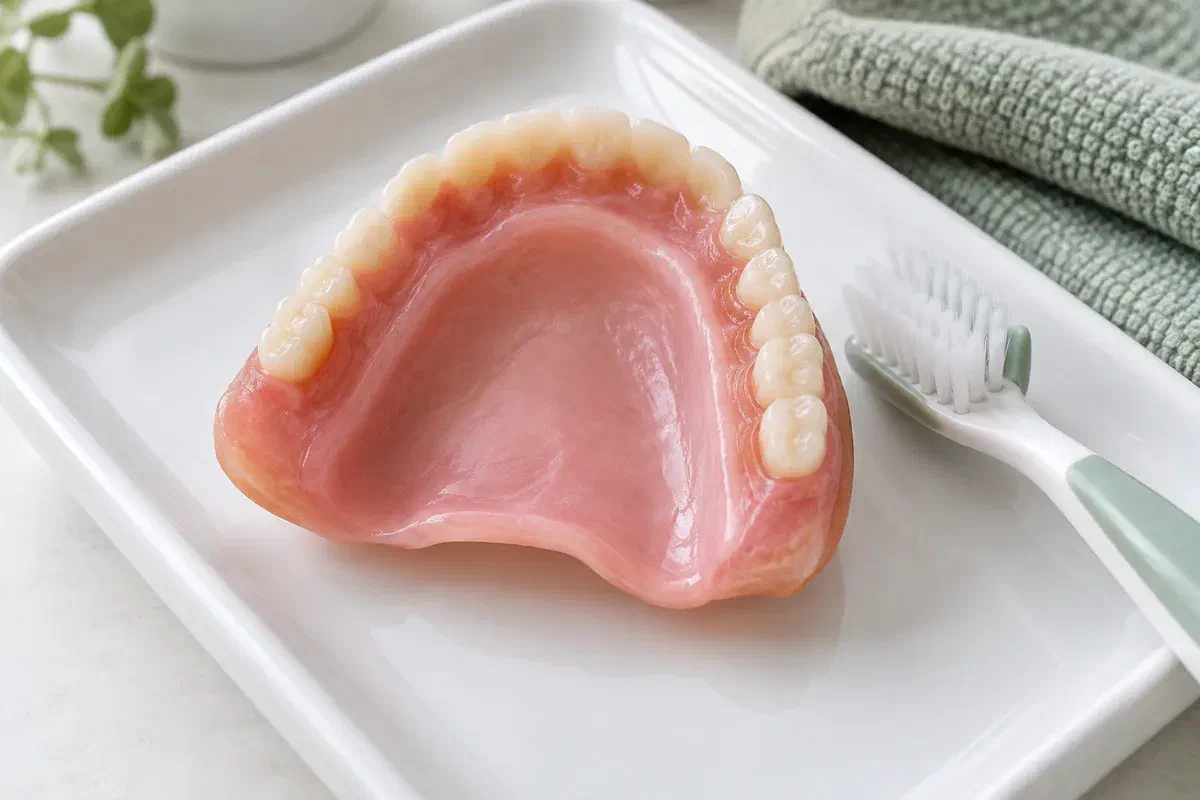
Illustrative discussion of the fitting surface of a removable denture
Restorative Dentistry

Soft Denture Relines in Old Milton

A denture you have relied on for years can start to feel less forgiving. For wearers in Old Milton, we can check whether a cushioning soft lining could extend its comfort, or whether the appliance has reached the point of needing more.

Old Milton · long-worn dentures

A familiar denture, a changing mouth

People who have worn the same denture for a long time often describe the same thing: nothing broke, yet it no longer sits the way it once did. The bone and gum beneath an appliance gradually remodel, while the acrylic stays the same shape. A soft reline adds a resilient layer to the tissue side of a suitable denture, which may cushion tender areas or support the gums for a short period.

Age of the denture alone does not decide the answer. Discomfort might come from a ridge that has shrunk, teeth that have flattened, a bite that has drifted, or a localized pressure point. A cushioning layer can help some of those and does nothing for others, so an examination of both the appliance and your mouth comes first.

Coming from Old Milton, Milton’s historic downtown, to our Bronte Street practice, bring the denture and any older ones you still keep. Tell us how many years you have worn it, what has been adjusted, and which liners or pads you have tried. We can then compare a soft lining with a firmer reline, targeted adjustment, or a replacement.

Have your denture reviewed
Illustrative upper denture with a smooth pale pink lining on its fitting surface
What has shifted over time

Small changes add up under an older appliance.

Think about how the denture behaves now compared with a year or two ago. Taking it out more often to rest your gums is worth mentioning, and it is not something to push through.

Gums that ache after meals

Point to the area that gets tender and say whether it hurts during chewing or later on. Any ulcer, redness or bleeding matters. The exam pairs what we see in your mouth with the part of the denture above it, instead of assuming cushioning is the fix.

A denture that has gradually loosened

Slipping when you speak, rocking on one side or relying on extra paste all suggest the fit has changed. Ridges under long-worn dentures commonly reshape. We assess support, adaptation and the way your teeth meet before recommending any type of reline.

An old liner past its best

A soft liner placed years ago may have stiffened, lifted, roughened or picked up a smell. Bring it in and explain how it is cleaned and stored overnight. Its condition, and the reason it was used originally, both deserve a fresh review.

Repeatedly adding material over a sore area can hide a problem that needs attention. Contact us if a mouth ulcer or unusual tissue change has not healed.

Where a softer surface fits in

Agree on one comfort target you can both judge.

Placed on an appropriate denture over suitable tissues, a resilient lining changes how pressure reaches sensitive spots. Ask which part of the discomfort it is meant to ease. A fair target is often wearing the appliance through regular meals and conversation with less irritation, rather than expecting every bit of movement to stop.

Soft liners are not maintenance-free. Their texture alters with use and some cleansers can damage them. Find out whether the proposed lining is intended for weeks, months or longer, how it will be checked, and which findings would lead the dentist to suggest a different route for an older appliance.

Patient information: ACP — assessment before relining or replacing dentures

A defined job for the material

Cushioning, temporary support for irritated tissue, or another particular need each call for different choices. Ask which one applies to you. A clear purpose gives you something concrete to describe when the follow-up visit comes around.

More life from a denture you like

When an older appliance still has serviceable teeth and a workable design, relining can let you keep wearing it. Ask the clinician to spell out what the reline keeps intact and what wear or design limits remain untouched.

Care steps that suit your hands

Find out which brush, cleaner and overnight storage the material needs. If gripping or rinsing the denture has become harder, show us so the routine can be simplified. The comfort gain only lasts if the care plan is one you can follow.

From first look to follow-up

Four stages, starting with your tissues

Visit length and sequence depend on the lining material and its intended role. It is reasonable to ask at the outset whether the denture will leave your hands for laboratory work.

  1. Examine gums, ridge and appliance

    We check sore spots, support, retention, the bite and the state of the denture itself. Share your daily wearing habits and cleaning products. Sometimes tissue treatment or a small adjustment is needed first.

  2. Decide on material, or on something else

    Together we consider whether a soft lining suits you and how long it is meant to stay. Limitations, care needs, estimated costs and reasonable alternatives are covered, along with what happens to any existing liner.

  3. Apply the new lining

    The fitting surface is prepared and the selected procedure is completed, either in the chair or with laboratory support. You are told beforehand how long the visit runs and whether the denture will be away for a time.

  4. Test comfort and plan the next check

    We review fit, borders, bite and comfort after relining and give you care instructions for that material. A return visit lets us see how your gums respond and whether the lining is achieving what it was chosen for.

Living with the new liner

Gentler habits keep the lining working.

Your long-standing cleaning routine may not suit the soft material. Keep the written advice for the specific liner placed.

Ask before using familiar cleansers

The soaking product you have used for years may not be safe for a soft lining, especially for long soaks. Check which ones are suitable and for how long. Skip hot water and anything abrasive when cleaning.

Avoid lifting or cutting the edges

Do not pick at the seam where the liner joins the denture. If an edge rises or turns rough, book a visit instead of trimming it, gluing it or layering a store-bought liner over it.

Keep track of how it feels

Note any persistent pressure, new sore patches, odour, separation or change in softness and tell us. Attend the planned review even when the denture feels good. Material and tissues both need monitoring.

Patient information: Royal Cornwall Hospitals — care of dentures with a soft lining

Reline, adjust or replace?

Is the problem in the surface, or the whole denture?

With an older appliance, ask which option responds to what the exam found and to the denture’s overall condition. Cushioning is only one possibility.

When a single cause is identified

Correct one specific problem

A pressure point, a bite interference or a tissue condition may be treated on its own. Relining first could leave that cause in place. Ask what was found and whether a limited fix is enough.

When the fit surface has worn out

Choose between soft and hard lining

Hard relines and resilient linings do different things and are not picked on taste alone. Discuss fit, how much cushioning you need, care demands and how long each material is expected to last.

When age and wear limit the appliance

Plan a new denture

Flattened teeth, many past repairs, a design that no longer suits, or a major bite change can tip the balance toward replacement. Ask what a reline would not change and how a new denture would address it, including care while it is made.

Questions from long-time denture wearers

What people ask before relining an older denture

If a previous office relined your denture, the material name and their instructions help us. Bring whatever paperwork you have.

(905) 876-4488
My denture is many years old. Is it worth relining at all?
Age alone does not settle it. If the teeth, design and bite remain reasonable, a reline may extend its use. If wear or design problems are significant, replacement may serve you better. An examination is the way to tell which applies.
Should I bring my previous dentures to the appointment?
Yes, if you still have them. Older appliances can show how your fit has changed and what has or has not worked before. Bring them along with the denture you wear now, and tell us which one feels most comfortable.
Will a soft reline restore teeth on my denture that have flattened?
No. Relining only affects the surface that rests on your gums. Flattened teeth and many bite problems are separate matters. The clinician considers whether the remaining appliance is suitable before suggesting a reline or another plan.
Could a softer lining make the denture feel bulkier?
A reline changes the fitting surface, and some people notice a different feel at first. Tell the clinician if anything seems thick, catches on your tongue or affects speech. Fit and borders are checked after placement, and adjustments can be discussed.
Is it safe to keep using the soaking tablets I have always used?
Check with us before you do. Some products or long soaks can affect a soft liner. Ask for instructions suited to the material placed. If the liner was done elsewhere and you are unsure what it is, ask that office before switching cleansers.
What if the lining begins to come away at one side?
Leave it in place and book a review. Avoid pulling at it or cutting it back. Let us know whether food is collecting there or the area feels sore, so the clinician can decide on repair, replacement or a different approach to the fit.
Denture comfort reviews near Old Milton

Before we change the lining, we look at why it hurts.

Book time at our Bronte Street practice for an assessment of fit, comfort and the tissues under your denture. We will explain whether a soft lining suits an older appliance and what other care it may need.

Let the team know about non-healing ulcers, bleeding, or being unable to wear the denture when you call, so the appointment can be planned accordingly.

Visit Milton Dental Clinic
Unit 1, 342 Bronte St. S, Milton, ON L9T 5B7
Get directions Clinic hours
Monday–Thursday
11am–7pm
Friday–Sunday
By appointment only

Areas we serve

  • Milton
  • Oakville
  • Mississauga
  • Georgetown
  • Halton Hills
  • Acton
  • Campbellville
  • Brampton
  • Burlington
  • Puslinch
  • Rockwood
  • Erin
  • Caledon
  • Etobicoke
  • Old Milton
  • Bronte Meadows
  • Timberlea
  • Dorset Park
  • Dempsey
  • Clarke
  • Beaty
  • Coates
  • Harrison
  • Scott
  • Willmott
  • Ford
  • Bowes
  • Cobden
  • Walker
  • Mountain View
  • Milton Heights
  • Hawthorne Village
  • Valley View
  • Fallingbrook
  • Nassagaweya
  • Trafalgar
  • Esquesing
  • Nelson
  • Brookville
  • Moffat
  • Glen Williams
  • Norval
  • Limehouse
  • Stewarttown
  • Ashgrove
  • Hornby
  • Silver Creek
  • Speyside
  • Scotch Block
  • North Oakville
  • River Oaks
  • Glen Abbey
  • West Oak Trails
  • Palermo
  • Bronte Creek
  • College Park
  • Joshua Creek
  • Uptown Core
  • Preserve
  • Iroquois Ridge
  • Lisgar
  • Meadowvale
  • Meadowvale Village
  • Churchill Meadows
  • Erin Mills
  • Central Erin Mills
  • Streetsville
  • East Credit
  • Creditview
  • Heartland
  • Sheridan
  • Mount Pleasant
  • Credit Valley
  • Huttonville
  • Churchville
  • Springbrook
  • Northwest Brampton
  • Bram West
  • Fletcher's Meadow
  • Fletcher's Creek South
  • Alton Village
  • Orchard
  • Millcroft
  • Headon Forest
  • Tansley
  • Brant Hills
  • Tyandaga
  • Kilbride
  • Lowville
  • Aberfoyle
  • Morriston
  • Arkell
  • Hillsburgh
  • Freelton
  • Carlisle
  • Waterdown
  • Flamborough
  • Mountsberg

How can we help?

Milton Dental Clinic

Have a question about your smile? Choose the option that works best for you.

For urgent dental concerns, please call.
Messages are reviewed during clinic hours.