

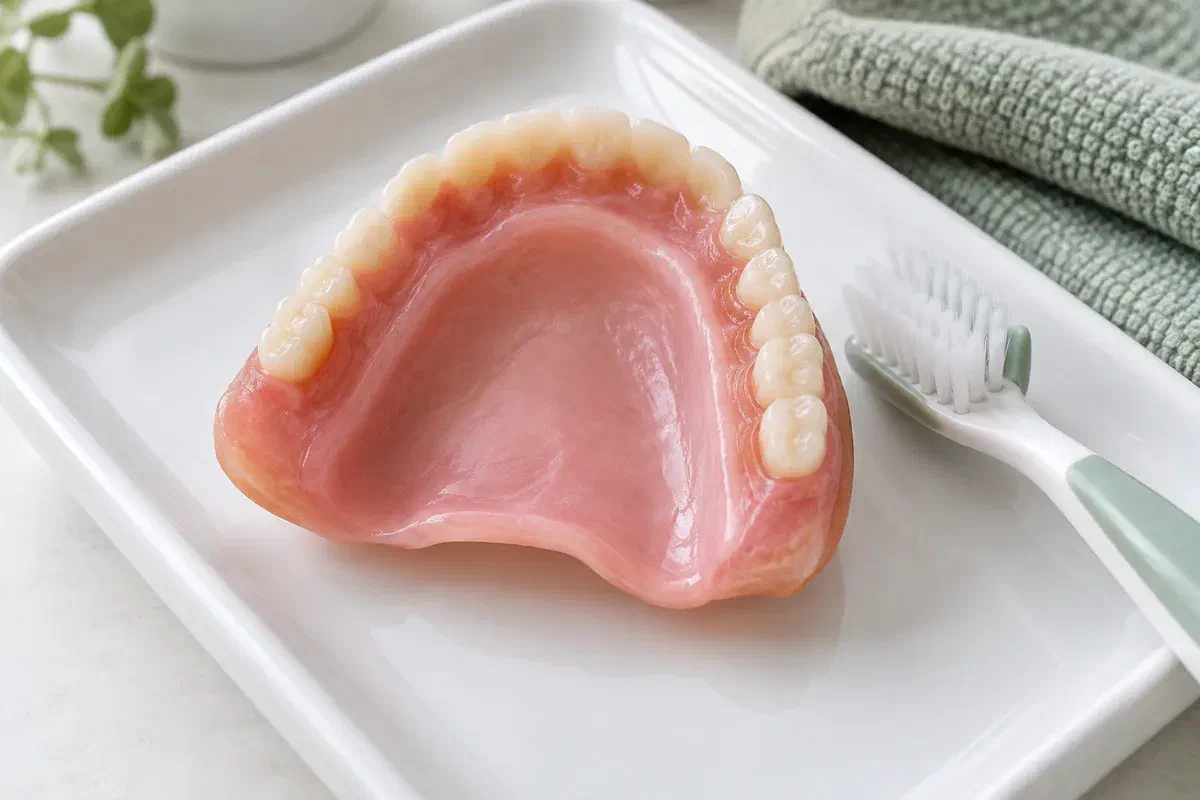
Illustrative discussion of the fitting surface of a removable denture
Restorative Dentistry

Soft Denture Relines in Puslinch

When the same patch of gum turns sore again and again, the cause deserves attention before any new material goes on. Wearers from Puslinch can have that recurring spot examined and learn whether a soft reline has any part to play.

Puslinch · recurring sore spots

It heals, then it comes back.

You leave the denture out for a day or two, the gum calms down, and within a week the same spot is raw again. That pattern tells a clinician something. A soft reline, which bonds a resilient material to the tissue side of a suitable denture, may cushion a tender area or briefly support irritated tissue. It is not designed to cover a cause that has never been identified.

Repeating soreness often has a mechanical source: an edge that is slightly too long, a high point inside the base, a bite that pushes the denture in one direction, or a ridge that no longer matches the acrylic. Sometimes the tissue itself needs attention. An exam of both the appliance and your mouth sorts out which of these applies.

Coming in from Puslinch, bring the denture and, if you can, a photo of the spot when it was at its worst. Tell us how long each episode lasts, what helps, and what adjustments or liners have been tried. We can then explain whether a soft lining is likely to help or whether adjusting the denture, a firm reline or a new appliance makes more sense.

Have the sore spot checked
Illustrative upper denture with a smooth pale pink lining on its fitting surface
Patterns that matter

How often, how long, and exactly where

Keep a rough record of when the soreness returns and how long the denture has been worn each day. You do not need to wear it through pain to prove the pattern.

The same tender patch each time

Point to the area and say whether it flares after meals, after long days or at random. Mention any ulcer, redness or bleeding. The clinician compares that tissue with the matching surface of the denture, since a small adjustment may solve what padding would hide.

Movement that rubs one area

A denture that shifts forward, tips or slides on one side can rub the same place repeatedly. Extra adhesive may be masking it. We review how the ridge supports the denture, how well it is adapted and how your teeth meet before choosing any reline.

A liner over the sore area that has worn

If a soft lining was placed for this spot before and has since hardened, thinned, lifted or begun to smell, bring it in. Describe how it is cleaned and stored. The liner and the reason for it both need fresh assessment.

A sore that keeps coming back, or one that never fully heals, should be examined by a clinician. Call the clinic if any ulcer or change in your mouth persists for more than a short time.

If cushioning is the right call

Pick a goal, then watch that spot.

For an appropriate denture and tissue condition, a resilient lining alters how the base meets a tender area. Ask which part of the recurring problem it is intended to address. A realistic goal might be fewer flare-ups during normal wear, not a promise that the spot will never be sore again.

Every soft material needs care and checking. It changes with use and some cleaners do not suit it. Ask whether this lining is short-term or meant to last, how the sore area and the material will be reviewed, and what would make the clinician switch to a different approach if the spot recurs.

Patient information: ACP — assessment before relining or replacing dentures

A purpose tied to the findings

Whether the aim is cushioning, short-term tissue recovery or something else determines the material and technique. Knowing the purpose helps you judge at your review whether the flare-ups have actually eased.

Keeping an otherwise suitable denture

When the teeth, design and overall condition remain sound, a reline may keep the denture in service. Ask what this preserves and which limitations stay. A lining renews the fitting surface, not the appliance as a whole.

Upkeep you can stay on top of

Find out which brush, cleanser and overnight storage method suit the material. If cleaning around the sore area is uncomfortable, say so and we can adapt the steps. The routine must be one you can keep consistently.

Getting to the bottom of it

Diagnosis comes before any change to the surface.

Sequence and visit length depend on what is found and the material chosen. Ask whether relining is done in the chair or at a laboratory.

  1. Map the sore spot

    The clinician examines the recurring area, the denture surface and borders above it, the ridge, the bite and how the appliance moves. Share your wearing habits and products. Often an adjustment or tissue treatment comes first.

  2. Explain the likely cause and choices

    We discuss what is probably driving the soreness and whether a soft lining is appropriate, temporary or ongoing. Limitations, care, estimated costs and other reasonable options are reviewed, including any existing liner.

  3. Line the denture if indicated

    If relining is chosen, the base is readied and the lining or impression step is completed, chairside or with laboratory help. We explain the visit and any time you will be without the appliance.

  4. Recheck the same spot

    Comfort, fit, borders and bite are reviewed, and you receive care instructions for the material. At the follow-up we look specifically at the area that kept recurring and whether the lining is helping.

Keeping the area settled

Gentle care helps both the lining and the gum.

Keep the instructions for the liner actually placed. Earlier advice for a plain acrylic denture may not apply.

Confirm suitable cleansers

Ask which soaking products are safe and for how long. Some cleansers and lengthy soaks can damage a soft material. Avoid hot water and abrasive pastes.

Avoid touching up the edges

Follow the cleaning method you were taught. Leave the seam between liner and base alone. If an edge loosens or roughens, book a visit instead of trimming, gluing or layering a home liner over it.

Note any return of soreness

If the old spot flares again, or new pressure, a smell, peeling or firming appears, let us know. Keep your review even if things feel fine, so the clinician can check the tissue and the material together.

Patient information: Royal Cornwall Hospitals — care of dentures with a soft lining

Ways to stop the cycle

Adjust, reline or replace: which addresses the cause?

Ask which option deals with the findings and the denture’s own limits. A softer surface is useful only when it targets the real problem.

When the cause is local

Adjust the denture or treat the tissue

An overextended border, a high point or a tissue condition may need direct treatment. Relining over it could keep the cycle going. Ask what was found and whether a targeted adjustment should be tried first.

When the whole fitting surface is off

A soft or a hard reline

Hard and resilient materials do different jobs and are not interchangeable by preference. Talk through the fit you can expect, the cushioning your gums need, the cleaning involved and the likely working life of each.

When design or wear is behind it

A new denture or full reassessment

Worn teeth, repeated repairs, a poor design or a significant bite problem may make replacement the better path. Ask which issues a reline leaves untouched and how a new appliance would differ, including interim care.

Questions about recurring denture sores

Why the same spot keeps hurting

Keep the liner material name and care sheet. If another office placed it, bring that information to your visit.

(905) 876-4488
Why does the same spot under my denture keep getting sore?
Common reasons include a high point inside the base, an edge that is slightly long, movement that rubs one area, or a mismatch with the ridge. The clinician examines both the denture and the tissue to find the source.
Should I leave the denture out until the sore heals?
Resting the tissue can help, but ask the clinician for advice suited to your situation. A sore that does not heal, or that keeps returning, should be examined rather than managed at home indefinitely.
Can I file down the rough spot on my denture myself?
No. Home adjustments can change the fit unpredictably or damage the lining. Bring the denture in and let the clinician identify and adjust the area properly.
Does a sore that will not heal need more than a denture adjustment?
It may. A sore or ulcer that persists should be examined, and the clinician may recommend further assessment. Do not keep covering it with new liners or pads.
Will a soft lining stop the sore spot returning?
Not always. It may help if cushioning addresses the cause, but if a high point, overextension or bite issue is responsible, those need correcting directly. Ask what the lining is expected to change for you.
Is a soft reline the answer if more adhesive no longer helps?
It may be part of the answer, but increasing adhesive usually means the fit should be assessed. Adhesive and relining do different jobs. The clinician will explain which approach suits what they find.
Recurring sore reviews for Puslinch

Break the pattern by finding its source.

At our Bronte Street practice we will examine the recurring sore, the fit and the tissues. We can then explain whether a soft lining, an adjustment or another step is most likely to stop the cycle.

When you call, tell us about any sore that has not healed, bleeding, or difficulty wearing the denture, so the team can arrange a timely visit.

Visit Milton Dental Clinic
Unit 1, 342 Bronte St. S, Milton, ON L9T 5B7
Get directions Clinic hours
Monday–Thursday
11am–7pm
Friday–Sunday
By appointment only

Areas we serve

  • Milton
  • Oakville
  • Mississauga
  • Georgetown
  • Halton Hills
  • Acton
  • Campbellville
  • Brampton
  • Burlington
  • Puslinch
  • Rockwood
  • Erin
  • Caledon
  • Etobicoke
  • Old Milton
  • Bronte Meadows
  • Timberlea
  • Dorset Park
  • Dempsey
  • Clarke
  • Beaty
  • Coates
  • Harrison
  • Scott
  • Willmott
  • Ford
  • Bowes
  • Cobden
  • Walker
  • Mountain View
  • Milton Heights
  • Hawthorne Village
  • Valley View
  • Fallingbrook
  • Nassagaweya
  • Trafalgar
  • Esquesing
  • Nelson
  • Brookville
  • Moffat
  • Glen Williams
  • Norval
  • Limehouse
  • Stewarttown
  • Ashgrove
  • Hornby
  • Silver Creek
  • Speyside
  • Scotch Block
  • North Oakville
  • River Oaks
  • Glen Abbey
  • West Oak Trails
  • Palermo
  • Bronte Creek
  • College Park
  • Joshua Creek
  • Uptown Core
  • Preserve
  • Iroquois Ridge
  • Lisgar
  • Meadowvale
  • Meadowvale Village
  • Churchill Meadows
  • Erin Mills
  • Central Erin Mills
  • Streetsville
  • East Credit
  • Creditview
  • Heartland
  • Sheridan
  • Mount Pleasant
  • Credit Valley
  • Huttonville
  • Churchville
  • Springbrook
  • Northwest Brampton
  • Bram West
  • Fletcher's Meadow
  • Fletcher's Creek South
  • Alton Village
  • Orchard
  • Millcroft
  • Headon Forest
  • Tansley
  • Brant Hills
  • Tyandaga
  • Kilbride
  • Lowville
  • Aberfoyle
  • Morriston
  • Arkell
  • Hillsburgh
  • Freelton
  • Carlisle
  • Waterdown
  • Flamborough
  • Mountsberg

How can we help?

Milton Dental Clinic

Have a question about your smile? Choose the option that works best for you.

For urgent dental concerns, please call.
Messages are reviewed during clinic hours.