
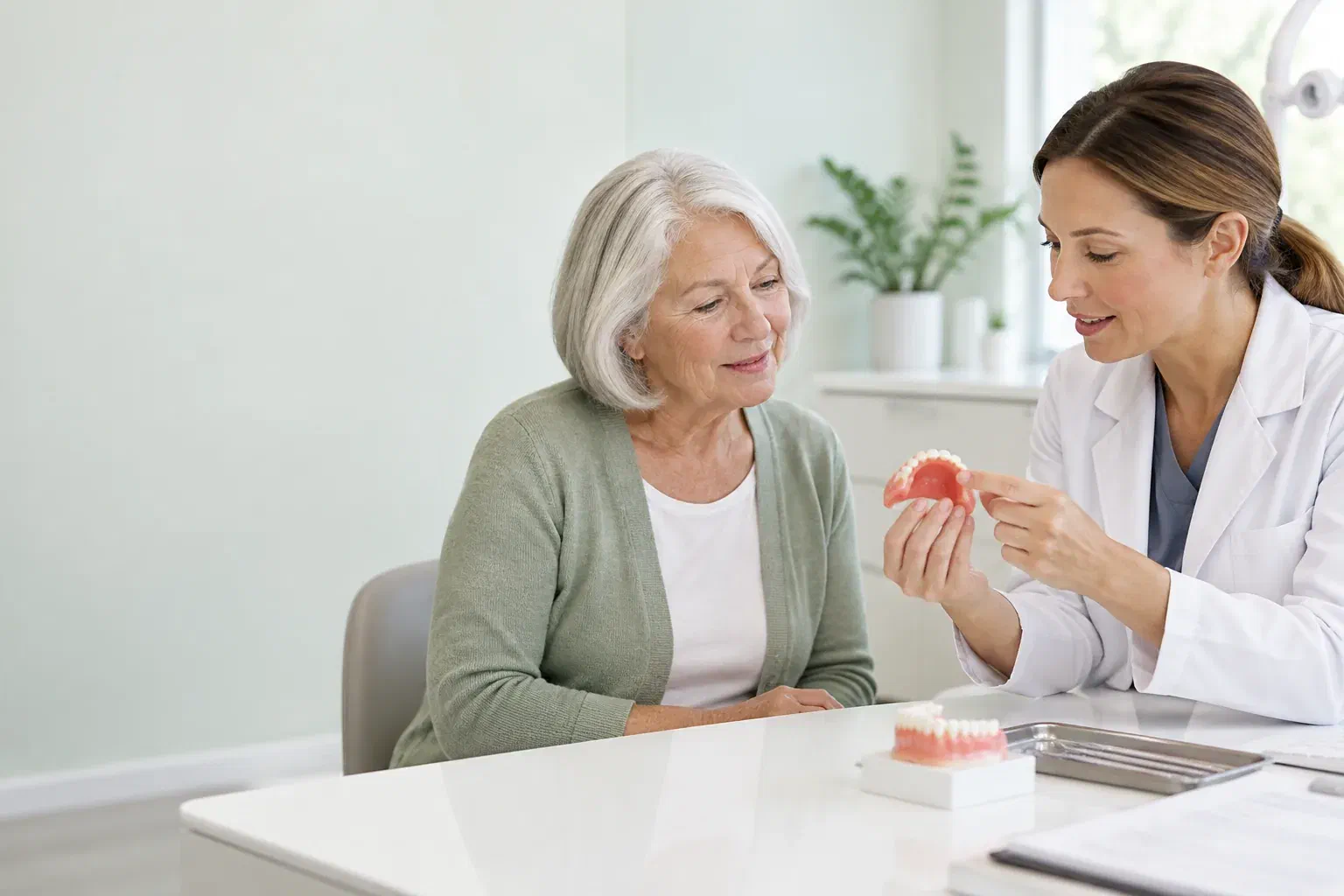
Illustrative discussion of the fitting surface of a removable denture
Restorative Dentistry

Soft Denture Relines in Rockwood

A home reline kit can look like an easy way to avoid a trip. Before you try one, denture wearers from Rockwood can find out what a clinical soft reline involves, why an exam comes first, and whether a lining suits their gums.

Rockwood · before you reach for a kit

Home kit or clinical reline?

Over-the-counter reline kits promise a softer, snugger denture in an evening. The trouble is that they are applied without anyone looking at why the denture hurts. A clinical soft reline also adds a resilient layer to the tissue side of the appliance, but only after the dentist has judged that the denture and the tissues are suitable for it, and with a material chosen for a specific purpose.

That judgement matters because denture discomfort rarely has a single cause. A pressure spot, a bite that drives the denture sideways, a border that digs in, a changing ridge or a tissue condition may each be involved. A home layer of uneven thickness can alter the bite, trap debris or worsen pressure in one place while easing it in another.

If you have already used a kit, that is fine to tell us. Bring the denture as it is, along with the packaging if you still have it, and describe where it hurt before and after. We can explain whether a professionally placed soft lining makes sense, what it should improve, and how it compares with adjustment, a hard reline or a new denture.

Get a professional opinion first
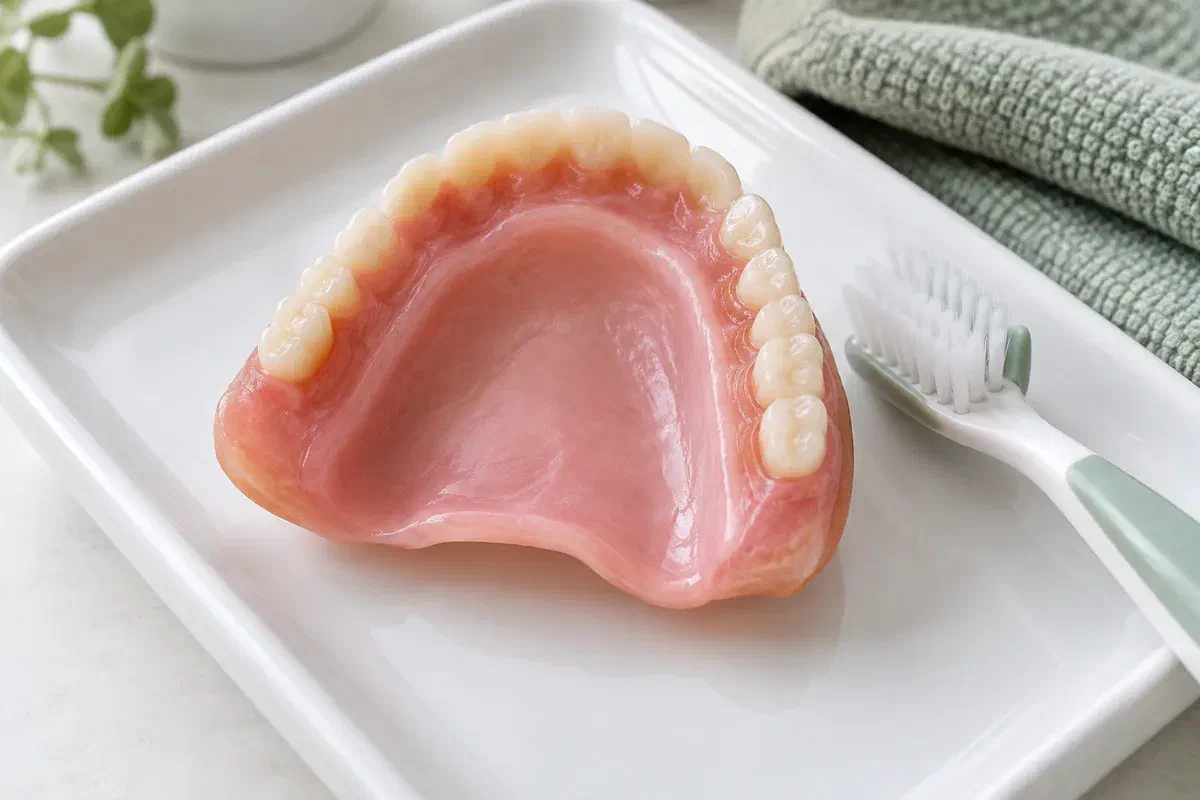
Illustrative upper denture with a smooth pale pink lining on its fitting surface
What is behind the discomfort

Three situations that tempt people toward a kit

Say what the denture is like on an ordinary day and what changes once it is out. Wearing it through pain, or padding it at home, can make the underlying problem harder to read.

A sore that pads have not fixed

Show us the spot that hurts and whether it is immediate or builds over hours. Mention ulcers, redness or bleeding. The clinician examines the tissue and the denture surface above it, rather than assuming more cushioning is needed.

A denture that has gone loose

Rocking, lifting or needing extra adhesive often signals that the ridge has changed underneath. A kit can disguise that without correcting it. We assess support, adaptation and the bite before deciding which reline, if any, is suitable.

A kit liner that has gone wrong

Home linings can harden, peel, roughen, discolour or hold odour. If yours has, bring the denture in and tell us what product was used and how it has been cleaned. It may need removing before anything else is done.

A spot that keeps hurting needs examination rather than another layer, whether from a kit or a clinic. Contact us if an ulcer or unexplained change in your mouth does not heal.

What a clinically placed lining offers

Chosen for a reason, checked over time

When the denture and tissues are suitable, a resilient lining placed by a clinician changes how the base meets tender areas, with thickness and borders controlled. Ask which part of your discomfort it is meant to address. A realistic aim is more comfortable everyday wear, not a guarantee that all pressure or movement disappears.

Professional linings still need upkeep. They change with use and some cleaners are unsuitable. Ask whether the material is intended as a short-term measure or a longer-lasting one, how it will be reviewed, and what findings would lead the clinician to suggest something other than a soft reline.

Patient information: ACP — assessment before relining or replacing dentures

A known material and purpose

Unlike a kit, you can find out exactly what was used and why: cushioning, temporary tissue support or another specific need. Keep that information. It makes later reviews, here or elsewhere, more straightforward.

A chance to keep a suitable denture

If the teeth, design and condition of the appliance remain appropriate, a reline may extend its use. Ask what it preserves and what stays the same. A lining refreshes the surface against your gums and nothing more.

Instructions that match the material

Ask which brush, cleaning product and storage method are right for the specific liner. Mention any difficulty handling the denture so the routine can be adapted. The benefit should be weighed against care you can keep up.

How a clinical reline differs

Four steps a kit skips

Appointment order and length vary with the material and its role. Ask whether your denture can be lined chairside or will need laboratory time.

  1. Examination of tissue and appliance

    The clinician looks at tender areas, the ridge, retention, borders, how your teeth meet and the denture’s condition. Tell us about any home liners or pads. Removing old material, adjusting or treating tissue may come first.

  2. A discussion of material and alternatives

    We cover whether a soft lining is appropriate, whether it is temporary or ongoing, its limitations, its care, estimated costs and other reasonable options before any decision is made.

  3. Controlled placement

    The base is cleaned and readied, then the lining or impression is completed with attention to thickness and borders. Some methods are done in the chair; others go to a laboratory. You know beforehand whether the denture will be away.

  4. Bite and comfort check, then review

    We check the fit, edges, bite and comfort and explain care for the material. A follow-up visit lets the clinician see how your tissues are responding and whether the lining is serving its purpose.

Caring for the new lining

No more home layers from here on.

Keep the instructions for the material used. Avoid adding any over-the-counter product to a clinically placed lining.

Use recommended cleansers only

Ask which products are suitable and how long soaking can last. Some cleaners and long soaks damage soft materials. Avoid hot water and abrasive powders or brushes.

Resist home repairs

If an edge lifts or roughens, leave it and call us. Picking, trimming, gluing or applying a kit liner on top can change the fit and the bite.

Keep us informed

Report pressure that lingers, new sores, odour, peeling or the material firming up. Attend your review even if comfort is good. The clinician monitors both the liner and your tissues.

Patient information: Royal Cornwall Hospitals — care of dentures with a soft lining

Professional options to compare

Pick the fix that matches the finding.

Ask which option suits what the exam reveals and the denture’s limitations. A soft lining is one tool among several.

When one cause is identified

Adjustment or tissue care

A pressure spot, bite interference or tissue condition may need direct treatment. Lining over it could leave the cause in place. Ask the clinician what the examination found and whether that smaller step is enough.

When the fitting surface needs renewal

A soft or a hard reline

These materials serve different purposes and are not chosen by preference alone. Discuss fit, cushioning, maintenance and the expected duration of the material that is being proposed.

When the appliance has wider limitations

A new denture

Worn teeth, multiple repairs, an unsuitable design or significant bite issues may favour replacement. Ask which problems relining would not touch and how a new denture would address them, including interim care.

Questions from Rockwood about reline kits

Kits, clinics and what to expect

If you used a kit, keep the product name. If another office lined your denture, bring their material details too.

(905) 876-4488
Are home denture reline kits safe to use?
They are applied without an examination, so the cause of soreness is not identified and the thickness is hard to control. That can change the fit or bite. Ask a clinician before using one, especially on a denture that has already been relined.
Can a home liner be removed so the denture can be relined properly?
Often, yes, but it depends on the product and how it has bonded. Bring the denture and the product name. The clinician will assess the base and explain what removal involves.
Why does my bite feel different after using a kit?
An uneven layer can lift the denture or tilt it, changing how the teeth meet. Stop adding material and arrange an assessment. The clinician can check the bite and the fitting surface.
Is a clinical soft lining thicker than a kit liner?
Thickness is chosen for the material and purpose and controlled during placement. Ask the clinician to explain how your lining will be shaped and what it should feel like.
What does denture adhesive do that a soft reline does not?
Adhesive helps with retention on a day-to-day basis, while a reline changes the fitting surface for a clinical reason. They are not substitutes. Rising adhesive use is a reason to have the fit assessed.
Does a soft reline also renew worn denture teeth?
No. Relining only addresses the side resting on your gums. If the teeth are worn or the bite has changed significantly, the clinician will explain whether the denture remains suitable or another plan is better.
Reline consultations for Rockwood

Skip the guesswork.

Visit our Bronte Street practice for an assessment of your denture’s fit, your comfort and the health of the tissues beneath it. We will tell you whether a professionally placed soft lining suits you, and what else the appliance may need.

When you call, mention a sore that will not heal, any bleeding, a home liner you have used or trouble wearing the denture, so the team can plan properly.

Visit Milton Dental Clinic
Unit 1, 342 Bronte St. S, Milton, ON L9T 5B7
Get directions Clinic hours
Monday–Thursday
11am–7pm
Friday–Sunday
By appointment only

Areas we serve

  • Milton
  • Oakville
  • Mississauga
  • Georgetown
  • Halton Hills
  • Acton
  • Campbellville
  • Brampton
  • Burlington
  • Puslinch
  • Rockwood
  • Erin
  • Caledon
  • Etobicoke
  • Old Milton
  • Bronte Meadows
  • Timberlea
  • Dorset Park
  • Dempsey
  • Clarke
  • Beaty
  • Coates
  • Harrison
  • Scott
  • Willmott
  • Ford
  • Bowes
  • Cobden
  • Walker
  • Mountain View
  • Milton Heights
  • Hawthorne Village
  • Valley View
  • Fallingbrook
  • Nassagaweya
  • Trafalgar
  • Esquesing
  • Nelson
  • Brookville
  • Moffat
  • Glen Williams
  • Norval
  • Limehouse
  • Stewarttown
  • Ashgrove
  • Hornby
  • Silver Creek
  • Speyside
  • Scotch Block
  • North Oakville
  • River Oaks
  • Glen Abbey
  • West Oak Trails
  • Palermo
  • Bronte Creek
  • College Park
  • Joshua Creek
  • Uptown Core
  • Preserve
  • Iroquois Ridge
  • Lisgar
  • Meadowvale
  • Meadowvale Village
  • Churchill Meadows
  • Erin Mills
  • Central Erin Mills
  • Streetsville
  • East Credit
  • Creditview
  • Heartland
  • Sheridan
  • Mount Pleasant
  • Credit Valley
  • Huttonville
  • Churchville
  • Springbrook
  • Northwest Brampton
  • Bram West
  • Fletcher's Meadow
  • Fletcher's Creek South
  • Alton Village
  • Orchard
  • Millcroft
  • Headon Forest
  • Tansley
  • Brant Hills
  • Tyandaga
  • Kilbride
  • Lowville
  • Aberfoyle
  • Morriston
  • Arkell
  • Hillsburgh
  • Freelton
  • Carlisle
  • Waterdown
  • Flamborough
  • Mountsberg

How can we help?

Milton Dental Clinic

Have a question about your smile? Choose the option that works best for you.

For urgent dental concerns, please call.
Messages are reviewed during clinic hours.