

Illustrative conversation about an interim tooth repair and the next appointment
Restorative Dentistry

Temporary Dental Restorations in Acton

A temporary that wobbles, cracks or pops out can be unsettling. From Acton, learn what to do in the moment, when to call before driving in, and how the tooth gets properly finished.

It came loose. Now what?

A wobbling temporary is a message, not a disaster

It might happen over a sandwich or while flossing at night: the provisional crown lifts, or a piece of temporary filling comes away. This is one of the more common reasons people call about an interim repair. Those repairs, whether a seal between visits, a crown over a shaped tooth or another short-term piece, are designed for a limited stage of care.

Because they are interim, they are not built to take the same punishment as a finished restoration. Still, while in place they protect the tooth, give it a usable surface and hold its position. When one fails early, the tooth underneath may need attention, and how urgent that is depends on the material, the tooth and the treatment stage.

Before driving in from Acton, call us. We can ask a few questions and advise whether you should come in that day, can wait for a booked slot, or need different care. If another clinic placed the temporary, tell us what you know about the treatment so we can assess the tooth and the intended next step.

Call about a loose temporary
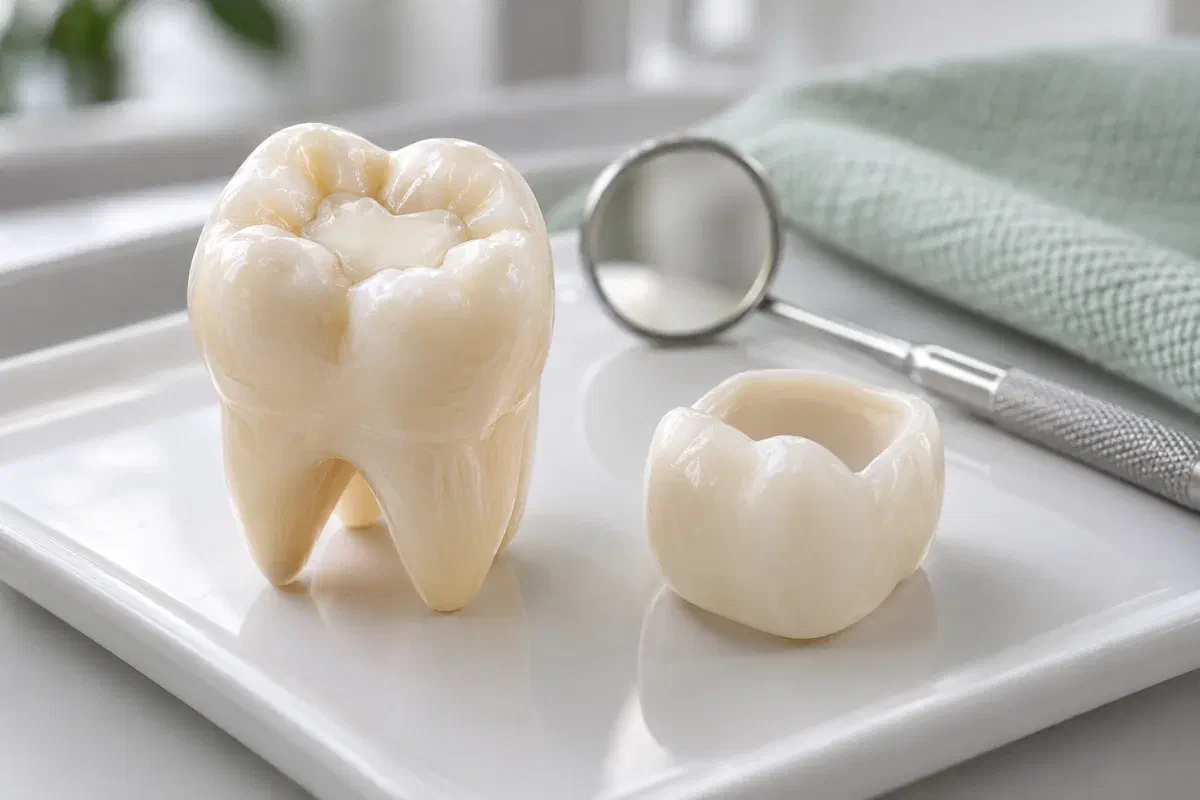
Illustrative molar model with a temporary filling beside a separate temporary crown
What may be underneath

The answer depends on the original reason

A lost temporary matters more or less depending on why it was there. Tell us what treatment you have had and what you were told.

An emergency patch

If the temporary covered a tooth seen urgently for pain or a fracture, losing it may expose a problem that has not been fully treated. Ask whether further diagnosis or a lasting restoration was planned. Pain fading earlier does not mean the tooth is sorted.

A provisional over a prepared tooth

When a crown or bridge is being made, the provisional protects the shaped tooth. If it comes off, keep it safe and call. Mention your fitting date and any upcoming travel or work commitments, since that may affect what we suggest.

A seal on a tooth mid root canal

A temporary filling between canal visits keeps the inside of the tooth closed. If it wears or falls out, the tooth may need to be resealed. Let us know whether the canal treatment is finished or still underway.

Losing a repair that felt permanent may mean it was interim all along. The clinic that placed it can confirm which it was.

Why the temporary was worth having

It carried the tooth this far

Planned interim restorations let treatment progress step by step while the tooth stays covered between visits. Yours may have been sealing an access opening, protecting a prepared surface or providing a provisional form for chewing and appearance. That role tells us how quickly it needs to be replaced if it fails.

How the temporary behaved can be useful information too. If it kept loosening, the bite, the shape or the cleaning method may need another look, and that may help guide the final restoration where relevant. A temporary is not always designed to reproduce every feature of the finished piece, though.

Patient information: Leeds Teaching Hospitals — temporary protection during crown treatment

Strength within a range

Interim materials handle careful use for a planned period, not hard or sticky foods or an open-ended delay. Ask what to avoid and how long the interval is meant to be. Respecting those boundaries makes an early failure less likely.

A visit with a purpose

At the appointment, ask whether the plan is to recement, replace, review or move on to the final restoration. Each serves a different goal and may take a different amount of time. You should leave able to say, in plain words, what remains to be done.

The right number to call

Keep the clinic’s phone number with your appointment card, especially if a specialist is also involved. Knowing exactly whom to ring when a temporary loosens saves time and helps keep the next stage on track.

When you come in with a loose temporary

Check, decide, secure, schedule

The approach depends on the tooth and how far treatment has progressed. Ask how today’s fix fits into the complete plan, including any further visits or estimates.

  1. Examine the tooth and the temporary

    The dentist looks at the exposed tooth, the loose piece if you have it, and any symptoms. Tell us when it came off and whether anything changed beforehand. This shows what needs protecting or investigating.

  2. Explain the options

    We explain whether the same temporary can be refitted or a new one is needed, what material will be used and what it can cope with. Ask what the interim repair is mainly for and what treatment is still outstanding.

  3. Secure the tooth

    The temporary is recemented, repaired or replaced, then the shape, contacts and bite are checked. If something feels high or an edge catches your tongue, mention it before you leave the chair.

  4. Set the next appointment

    We confirm when the final restoration or next stage will happen and give eating, cleaning and contact advice. If a laboratory or specialist is involved, we explain how the timing will be handled.

Helping it stay put

Habits that reduce the chance of another loss

Follow the specific advice for your restoration. Temporary fillings and provisional crowns are cared for differently.

Go easy at meals

Wait for numbness to fade, then chew on the other side when you can. Skip gum, toffee and hard foods that could pull or crack the temporary. If chewing normally is still awkward, let us know instead of trying it over and over.

Floss out sideways

Keep brushing as usual and use the technique shown for the temporary area. With many provisional crowns, pulling floss straight up can lift the crown, so slide it out instead. If floss snags or the crown moves, stop.

Get to the finish line

If you must change the date, call so the temporary’s limits are considered. Repeated recementing is not a substitute for completing treatment. If the interval stretches, ask whether a check is wise.

Patient information: CDA — stages of root canal care and restoration

After the repair is secured

Where the tooth goes from here

Depending on what the examination shows, the next step could be completing the tooth, continuing interim care or reassessing the plan.

When the final step is not yet ready

Continue with a refitted temporary

A recemented or new temporary may be enough until the planned next stage. Ask why and when it will be reviewed. If the same temporary keeps loosening, discuss whether the plan needs to change rather than simply refitting it again.

When the tooth can be completed

Move to the definitive restoration

If the tooth is ready, the final filling, crown, bridge or other agreed restoration may be placed sooner. Ask what confirms readiness and which checks come first. The choice depends on the remaining tooth and prior treatment.

When pain, a crack or a new finding appears

Reassess the tooth

Ongoing discomfort, a fracture or an unexpected finding may require more investigation before final restoration. The dentist will explain what has changed and what interim protection fits. Recementing a temporary does not address every underlying problem.

Loose temporary questions

Answers when something comes away

A loose repair can be stressful, and it is easy to forget instructions. Call and ask, and we will help you decide what to do next.

(905) 876-4488
Should I try to put my provisional crown back on myself?
Call the clinic first. In some cases the team may give you specific short-term advice, but you should not use household glue or force it into place. Keeping it clean and safe until you are seen is usually the priority.
Is it an emergency if a temporary filling falls out?
It depends. Many lost temporaries are not emergencies but still need prompt attention. Severe pain, swelling, fever or trouble swallowing are signs to seek urgent care. Otherwise, call for advice on timing.
Can I eat if my temporary has come out?
Chew on the other side and choose soft foods until the tooth has been seen. Keep the area clean with gentle brushing. Avoid very hot, cold or sweet foods if the exposed tooth is sensitive.
Why does my temporary crown keep coming loose?
Possible reasons include sticky foods, the bite, how much tooth is left or the cement used. The dentist can assess the cause and decide whether an adjustment, a new temporary or a change to the plan makes sense.
What should I do if I swallowed part of my temporary?
Small pieces of temporary material usually pass without harm, but call the clinic for advice. If you have trouble breathing, persistent coughing or chest discomfort, seek medical help right away.
Should I phone before heading in from Acton?
Yes. A quick call lets the team ask about symptoms and tell you whether to come in, wait for a booked appointment or seek different care, so the trip is worthwhile. Have the date of your last visit and any treatment details handy when you ring.
Support for Acton households

A loose temporary is fixable. Call us.

Our Bronte Street practice can secure or replace a temporary repair and plan the appointment that finishes your treatment. Share whatever details you have, and we will examine the tooth and explain where things stand.

Call promptly if a temporary is lost or the tooth becomes painful. Online booking is for non-urgent planning.

Visit Milton Dental Clinic
Unit 1, 342 Bronte St. S, Milton, ON L9T 5B7
Get directions Clinic hours
Monday–Thursday
11am–7pm
Friday–Sunday
By appointment only

Areas we serve

  • Milton
  • Oakville
  • Mississauga
  • Georgetown
  • Halton Hills
  • Acton
  • Campbellville
  • Brampton
  • Burlington
  • Puslinch
  • Rockwood
  • Erin
  • Caledon
  • Etobicoke
  • Old Milton
  • Bronte Meadows
  • Timberlea
  • Dorset Park
  • Dempsey
  • Clarke
  • Beaty
  • Coates
  • Harrison
  • Scott
  • Willmott
  • Ford
  • Bowes
  • Cobden
  • Walker
  • Mountain View
  • Milton Heights
  • Hawthorne Village
  • Valley View
  • Fallingbrook
  • Nassagaweya
  • Trafalgar
  • Esquesing
  • Nelson
  • Brookville
  • Moffat
  • Glen Williams
  • Norval
  • Limehouse
  • Stewarttown
  • Ashgrove
  • Hornby
  • Silver Creek
  • Speyside
  • Scotch Block
  • North Oakville
  • River Oaks
  • Glen Abbey
  • West Oak Trails
  • Palermo
  • Bronte Creek
  • College Park
  • Joshua Creek
  • Uptown Core
  • Preserve
  • Iroquois Ridge
  • Lisgar
  • Meadowvale
  • Meadowvale Village
  • Churchill Meadows
  • Erin Mills
  • Central Erin Mills
  • Streetsville
  • East Credit
  • Creditview
  • Heartland
  • Sheridan
  • Mount Pleasant
  • Credit Valley
  • Huttonville
  • Churchville
  • Springbrook
  • Northwest Brampton
  • Bram West
  • Fletcher's Meadow
  • Fletcher's Creek South
  • Alton Village
  • Orchard
  • Millcroft
  • Headon Forest
  • Tansley
  • Brant Hills
  • Tyandaga
  • Kilbride
  • Lowville
  • Aberfoyle
  • Morriston
  • Arkell
  • Hillsburgh
  • Freelton
  • Carlisle
  • Waterdown
  • Flamborough
  • Mountsberg

How can we help?

Milton Dental Clinic

Have a question about your smile? Choose the option that works best for you.

For urgent dental concerns, please call.
Messages are reviewed during clinic hours.