

Illustrative conversation about an interim tooth repair and the next appointment
Restorative Dentistry

Temporary Dental Restorations in Caledon

A provisional is also a trial run. From Bolton or elsewhere in Caledon, notice how it bites, cleans and looks, and share that with the dentist planning your final restoration.

Your observations count

Think of the provisional as a rehearsal

Most advice about temporaries is about protecting them. Less is said about what you can learn from one. A temporary restoration is an interim repair for one stage of care, such as a provisional crown over a prepared tooth, a filling closing a tooth between visits, or another short-term piece, and while you wear it you are gathering useful impressions.

Its first duty is still protection. It covers the tooth, gives you a working surface for careful chewing, and keeps the space stable while the next stage is made or arranged. It has limits on strength and lifespan, and those limits come down to the material chosen, the tooth involved and the reason the repair was needed.

Before you head back to Caledon, ask what was completed today and what remains, and which features of the provisional the dentist wants your opinion on. Jot down what you notice over the following days. If your temporary was placed at another clinic, bring the treatment details so we can assess it and the intended next step.

Share feedback on your provisional
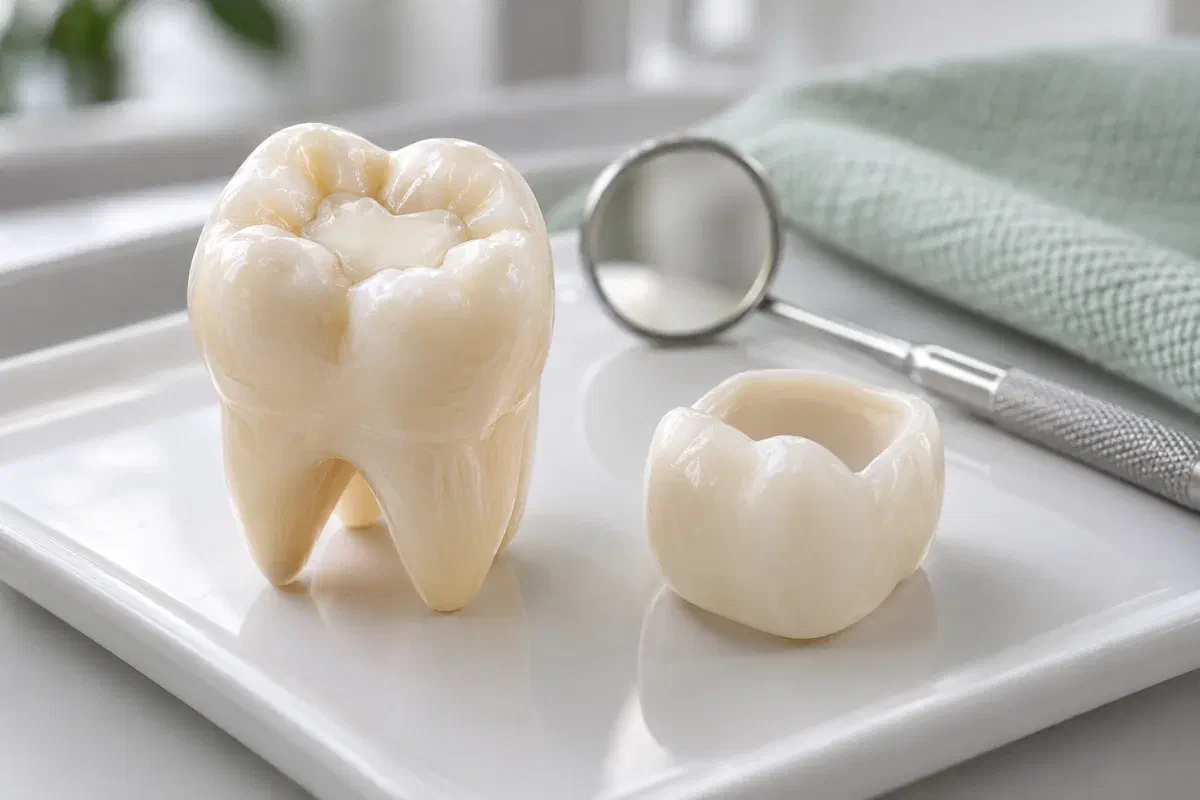
Illustrative molar model with a temporary filling beside a separate temporary crown
Know which kind you have

Feedback means more when you know the purpose

What to watch for depends on why the temporary was placed. Fill us in on the earlier visits and any instructions that came with the repair.

A quick fix after a dental emergency

If the temporary went in to settle pain or cover a fracture, its main role is short-term protection. Ask whether diagnosis or a final restoration was planned. Feeling better after that visit is encouraging, but it is not a sign the plan is finished.

A provisional crown or bridge

This kind covers prepared teeth while the final piece is made, and it is the one most likely to offer useful feedback about shape and bite. Confirm the fitting date and care advice. Mention any commitments that could get in the way of returning.

A seal during canal treatment

A temporary filling between root canal visits is mainly there to keep the tooth closed, not to preview the final result. Ask whether the canals are finished. That tells you what the next visit will do and whom to contact.

If you cannot tell whether a repair is temporary, ask the clinic that placed it. Look and feel are not reliable guides.

More than a cover

Protection today, information for tomorrow

With a planned provisional in place, treatment can be done in stages while the tooth stays covered. It might protect prepared surfaces, seal an access opening or serve as an interim form for function and appearance. The role it plays decides how much it can tell you about the final restoration.

Pay attention to the bite, whether your tongue keeps finding an edge, how easily you can clean around it and, for a visible tooth, how it looks to you. Bring those notes to the next appointment. They may help guide the definitive restoration where relevant, though a provisional is not always built to represent every detail of the finished piece.

Patient information: Leeds Teaching Hospitals — temporary protection during crown treatment

Useful within limits

Ask what to avoid while wearing it and how long it is planned to stay. A provisional chosen for a short interval may not handle a long delay. Knowing this helps you use it sensibly while you gather impressions.

A next visit you can prepare for

Find out whether the coming appointment reviews the provisional, continues treatment or places the final restoration. If shape or shade will be decided, come ready with your observations and questions.

A contact for changes

If the provisional loosens, chips or a symptom returns, know whom to call, especially when a specialist shares the care. Keep that number with your appointment details so a check can happen before the next stage is affected.

Building in your feedback

Four stages, with room for your input

Every tooth and stage is different. Ask how the provisional fits into the full plan, including separate visits or estimates.

  1. Establish why interim care is needed

    The dentist checks the tooth, your symptoms and any previous treatment. Mention an earlier temporary and how it behaved. This tells us what needs protection or further investigation before moving on.

  2. Agree what the provisional should do

    You will hear what it is made from, the kind of chewing it can take, where its weaknesses lie and roughly how many weeks it is meant for. Ask which features, such as shape or bite, you should pay attention to, and what treatment is still ahead.

  3. Fit and fine-tune

    The provisional crown, filling or other interim repair is placed, and we check its contours, its contacts with neighbouring teeth and how you bite. Tell us right away if it feels tall or an edge is uncomfortable.

  4. Plan the next step together

    We set a date for review or the final restoration and give food, cleaning and contact advice. If a laboratory or specialist is involved, we explain how their timing fits with yours, and how your feedback will be passed along.

Wearing it well

Notice, care and report

Use the care instructions given for your repair, since interim fillings and provisional crowns are not always handled alike.

Chew with awareness

Wait until numbness fades before eating, then follow the food advice. Avoid hard or sticky foods that could break or loosen it. Notice whether anything about chewing feels off, and report it instead of repeatedly testing the tooth.

Clean and observe

Brush and clean as usual, using the technique shown for the provisional. Note whether floss catches or food tends to pack in, since that can be useful feedback. If an edge moves, stop and call.

Return with your notes

Keep the scheduled appointment, and call if it has to change so the provisional’s limits can be weighed. Comfort is not a reason to leave it indefinitely. If the interval is going to stretch, ask whether the tooth should be checked sooner.

Patient information: CDA — stages of root canal care and restoration

Using what you have learned

The next step, shaped by the trial period

Your observations and the tooth’s condition both inform what comes next. The dentist may suggest completion, a further interval or reassessment.

When the provisional needs refining or more time

Adjust and continue

The provisional may be modified, renewed or simply kept until the next stage. Agree why and when it will be reviewed. Staying in the interim stage should be part of the plan, especially if changes are being tested.

When the tooth and design are settled

Proceed to the final restoration

A crown, bridge, filling or other agreed restoration can complete the stage. Ask what confirms readiness and what checks come first. The final design reflects remaining tooth structure, treatment already done and the feedback gathered.

When a symptom or finding raises questions

Look further

Sometimes the trial period turns up something else: soreness that lingers, a crack, or a finding on examination that nobody expected. That needs looking into before anything permanent is made, and you will hear what the concern is and how the tooth stays covered while it is sorted out. Remaking the provisional, by itself, does not fix a deeper problem.

Caledon questions about provisionals

Getting the most out of the trial stage

If your appointment was urgent or you felt overwhelmed, ask us to go over things again. We can help you understand the stage you are in.

(905) 876-4488
What should I pay attention to while wearing a provisional crown?
Notice how your teeth meet, whether the tongue or cheek catches an edge, how easy it is to clean and, for visible teeth, how it looks. Bring these observations to your next appointment. Small details, like a spot where food always collects, can be just as useful as bigger concerns.
Will the final crown feel exactly like my provisional?
Not necessarily. The final crown is made from different materials and to a more precise fit. Your feedback may help, but some differences in feel and appearance are normal. Many people find the final crown feels smoother and more settled once they have had a few days to get used to it.
Can I ask for changes to the final shape after wearing the provisional?
Yes, raise any preferences before the final restoration is made. The dentist will explain what is possible given your bite, the tooth and the materials involved.
My provisional feels bulky. Is that normal?
Some provisionals are slightly thicker for strength. If the bulk bothers your tongue, cheek or bite, mention it. Small adjustments are often possible, and the information is useful for planning.
Does grinding my teeth at night affect a provisional?
It can place extra force on interim materials. Tell your dentist if you grind or clench, since it may influence advice now and the design of the final restoration.
How can I keep notes on my provisional between visits from Caledon?
A few lines on your phone are enough: the date, what you noticed and when. Bring them to your appointment so nothing is forgotten on the day. If a question cannot wait until then, call rather than saving it for the next visit.
Provisional reviews for Caledon

Bring your observations. We will use them.

At our Bronte Street practice, we can check a provisional or temporary filling and plan the visit that completes your treatment. Tell us what you have noticed and share any earlier records, and we will examine the tooth and explain what comes next.

Call if a temporary comes off or the tooth becomes painful. Online requests are for non-urgent bookings.

Visit Milton Dental Clinic
Unit 1, 342 Bronte St. S, Milton, ON L9T 5B7
Get directions Clinic hours
Monday–Thursday
11am–7pm
Friday–Sunday
By appointment only

Areas we serve

  • Milton
  • Oakville
  • Mississauga
  • Georgetown
  • Halton Hills
  • Acton
  • Campbellville
  • Brampton
  • Burlington
  • Puslinch
  • Rockwood
  • Erin
  • Caledon
  • Etobicoke
  • Old Milton
  • Bronte Meadows
  • Timberlea
  • Dorset Park
  • Dempsey
  • Clarke
  • Beaty
  • Coates
  • Harrison
  • Scott
  • Willmott
  • Ford
  • Bowes
  • Cobden
  • Walker
  • Mountain View
  • Milton Heights
  • Hawthorne Village
  • Valley View
  • Fallingbrook
  • Nassagaweya
  • Trafalgar
  • Esquesing
  • Nelson
  • Brookville
  • Moffat
  • Glen Williams
  • Norval
  • Limehouse
  • Stewarttown
  • Ashgrove
  • Hornby
  • Silver Creek
  • Speyside
  • Scotch Block
  • North Oakville
  • River Oaks
  • Glen Abbey
  • West Oak Trails
  • Palermo
  • Bronte Creek
  • College Park
  • Joshua Creek
  • Uptown Core
  • Preserve
  • Iroquois Ridge
  • Lisgar
  • Meadowvale
  • Meadowvale Village
  • Churchill Meadows
  • Erin Mills
  • Central Erin Mills
  • Streetsville
  • East Credit
  • Creditview
  • Heartland
  • Sheridan
  • Mount Pleasant
  • Credit Valley
  • Huttonville
  • Churchville
  • Springbrook
  • Northwest Brampton
  • Bram West
  • Fletcher's Meadow
  • Fletcher's Creek South
  • Alton Village
  • Orchard
  • Millcroft
  • Headon Forest
  • Tansley
  • Brant Hills
  • Tyandaga
  • Kilbride
  • Lowville
  • Aberfoyle
  • Morriston
  • Arkell
  • Hillsburgh
  • Freelton
  • Carlisle
  • Waterdown
  • Flamborough
  • Mountsberg

How can we help?

Milton Dental Clinic

Have a question about your smile? Choose the option that works best for you.

For urgent dental concerns, please call.
Messages are reviewed during clinic hours.