

Illustrative conversation about an interim tooth repair and the next appointment
Restorative Dentistry

Temporary Dental Restorations in Etobicoke

Coming from Etobicoke for staged treatment means planning each trip well. Learn what a temporary repair protects, how few visits may be needed, and when to seek help nearer home.

Staged care from a distance

How many trips will this tooth need?

That is usually the first thing people ask when the journey is a long one, and a temporary restoration is often part of the answer. It is an interim repair that carries the tooth from one stage to the next: a filling sealing it between root canal visits, a provisional crown while the final one is made, or another short-term piece in a wider plan.

During that gap, the temporary protects the tooth, gives you something workable to chew on, and lets treatment be spread over well-spaced appointments rather than squeezed into one. It is not meant to be permanent. How long it can safely remain is set by the material, the specific tooth, and the reason the repair was placed.

Ask us to lay the plan out in full before you head home to Etobicoke: how many visits remain, what each one achieves, and how long each may take. We can also talk about what would warrant calling us versus finding urgent care closer to you. If someone else placed your temporary, bring the details so we can assess it and the intended next step.

Plan your staged treatment with us
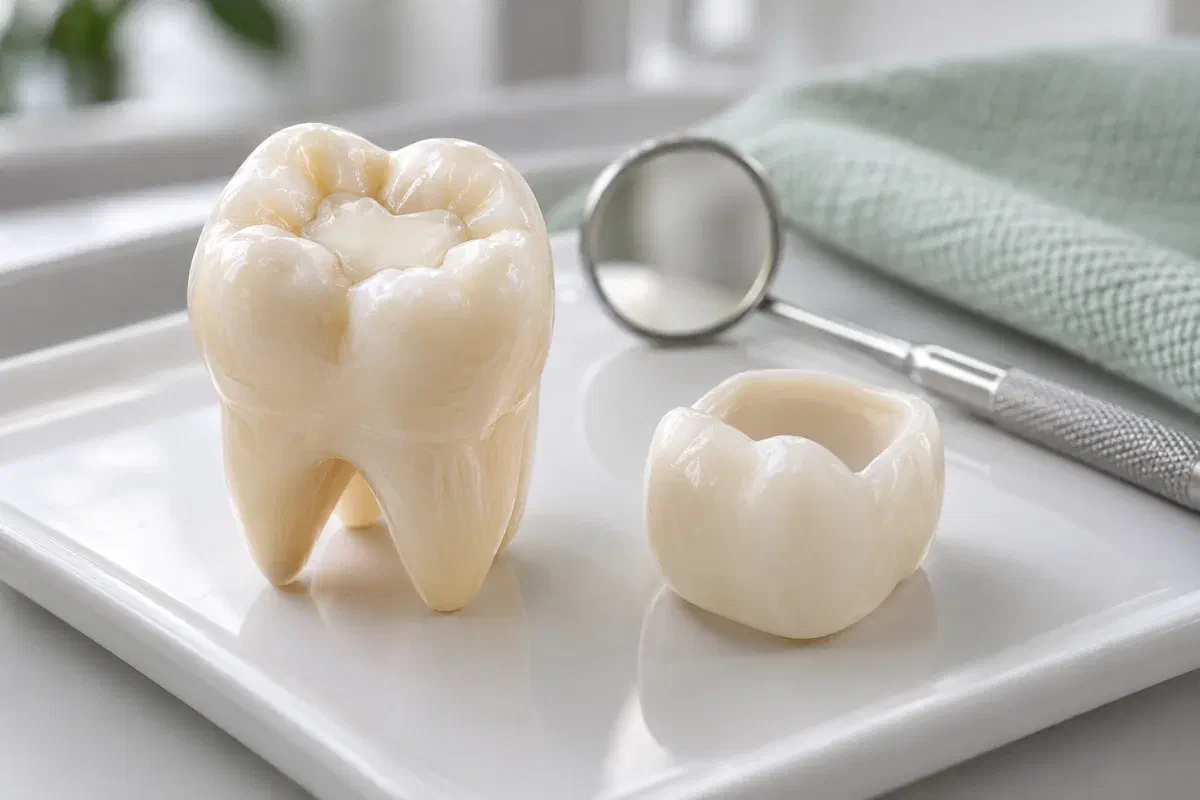
Illustrative molar model with a temporary filling beside a separate temporary crown
Know what you are carrying home

Three common reasons for an interim repair

Each reason leads to a different next appointment. Tell us what treatment you have had and what you understood about the temporary.

An urgent fix for pain or damage

If the temporary went in during an emergency visit, it may have been intended only to settle things down. Ask what it was for and whether further diagnosis or a final restoration is needed. Pain easing is good news, but it does not mean the tooth is complete.

A placeholder for a crown or bridge

Provisional crowns and bridges protect prepared teeth while laboratory work is underway. Confirm the fitting date before leaving, along with how to eat and clean. If travel, work or weather could make that date hard to reach, mention it so the plan allows for it.

A seal during root canal care

Treatment inside the tooth may involve more than one visit, with a temporary filling closing it between them. Find out whether the canals are finished or still in progress. That tells you who to call and what the next appointment involves.

Whether a repair is temporary cannot be judged from how it looks or feels. The treating clinic is the reliable source of that answer.

Why it suits a longer journey

Spacing the work out, safely

A planned temporary allows treatment to be divided into stages, with the tooth managed in between, which can make well-organised visits possible. Depending on the case, it may cover prepared surfaces, seal an access opening or act as an interim form for eating and appearance. Knowing its role helps you judge how carefully to treat it on the days between.

The weeks with a temporary can also inform the final result. Let the dentist know how your bite feels, whether cleaning is awkward and anything about appearance that matters to you. Those details may guide the definitive restoration where relevant, though a temporary is not always built to mimic everything the finished piece will do.

Patient information: Leeds Teaching Hospitals — temporary protection during crown treatment

Realistic expectations

Ask which foods or habits to avoid and how long the interval is meant to be. Interim materials can struggle if the gap stretches without a plan. Clear limits let you use the tooth sensibly while you wait for your next trip.

Purposeful appointments

Find out whether the next visit is a review, more treatment, or placement of the final restoration. Each takes a different amount of time, which matters when you are travelling. You should be able to describe what is left in your own words.

A plan for surprises

Know whom to call if the temporary loosens or a symptom returns, and keep that number with your appointment details. We can advise by phone whether a problem should be seen here, can wait, or needs prompt care closer to where you are.

An interim visit, start to finish

What we do before you head home

Procedures differ by tooth and stage. Ask to see the full plan, including the number of visits, any separate appointments and the estimates involved.

  1. Assess why a temporary is needed

    The dentist examines the tooth, asks about symptoms and reviews earlier treatment. Mention any previous temporary and whether it has changed. This shows what must be protected or investigated before treatment moves forward.

  2. Explain the repair and the timeline

    We describe the material or design, how to use it, its limits and how long it should last. Ask what its main purpose is, comfort, protection of prepared tooth or sealing an opening, and how many appointments are still ahead.

  3. Place it and check it carefully

    The temporary filling, crown or other interim piece is placed and its shape, contacts and bite are checked. Since a return trip is not trivial, take a moment to notice any high spot or rough edge and tell us before you leave.

  4. Book ahead and take the instructions home

    We set the date for review or the final restoration, ideally booking several steps at once. You will leave with eating, cleaning and contact advice. If a specialist or laboratory is involved, we explain how that timing will be coordinated.

On the days between trips

Give the temporary an easy few weeks

Follow the instructions for your specific restoration. A provisional crown and a temporary filling may come with different advice.

Spare it from hard work

Wait until numbness has worn off before eating, then follow the food guidance you were given. Avoid hard or sticky foods that could crack or lift it. If ordinary chewing is awkward, call and describe it rather than testing it again and again.

Keep it clean, gently

Brush as normal and use the method shown for the temporary area. Provisional crowns and bridges may need a gentler technique between teeth. If floss catches or an edge moves, stop and phone for advice.

Hold your place in the schedule

If you need to change the appointment, call so the temporary’s limits can be taken into account. Do not leave the temporary indefinitely because it feels fine. Ask whether a review is needed if the interval has to grow.

Patient information: CDA — stages of root canal care and restoration

What the next trip is for

One of three directions

The next step depends on the tooth’s current condition. It may be completion, another interval, or reassessment if something new has appeared.

When more time is part of the plan

Stay with the interim repair

The temporary may remain suitable, or it may need adjusting or replacing first. Confirm why it is staying and when it will next be checked. An extended interval should be agreed with the dentist, not left open because the tooth is quiet.

When the final repair is ready to go in

Complete the tooth

A filling, crown, bridge or other agreed restoration finishes the stage. Ask what confirms the tooth is ready and what checks come before placement. The choice depends on remaining structure and the treatment already completed.

When a symptom or finding raises a question

Reassess first

Continuing discomfort, a crack or an unexpected finding may need more investigation before the final restoration. The dentist will explain what has shifted and what interim protection makes sense. Swapping one temporary for another does not resolve every cause.

Planning from Etobicoke

Travel and timing, answered

If your visit felt rushed, ask us to go over the instructions again. We can help you understand the stage you are at and plan the trips ahead.

(905) 876-4488
Can several treatment steps be done in one longer appointment?
Sometimes. It depends on the tooth, the treatment and how you tolerate longer sessions. Laboratory work, for example, still needs time between visits. Ask whether your plan can be consolidated and what trade-offs that might involve.
When should I go to a closer clinic instead of travelling in?
If you have significant swelling, severe or worsening pain, fever or difficulty swallowing, seek prompt care nearby. For a loose temporary without those signs, call us first so we can advise on the safest option.
Is it safe to drive home right after a temporary is placed?
For most routine dental visits with local anaesthetic, people drive themselves. If sedation is involved or you feel unwell, arrange other transport. Ask the team if you are unsure before your appointment.
What should I keep with me in case my temporary crown comes off?
Keep the clinic phone number, your appointment details and a small clean container for the crown. If it comes off, store it safely and call for advice rather than attempting a home repair.
Does weather or a delayed trip change how long my temporary can last?
The material does not change because of a delay, but the longer interval might matter. If you cannot make the planned date, call and ask whether the tooth should be reviewed sooner or the schedule adjusted.
Can I eat on the drive home after a temporary filling?
It is best to wait until the numbness has worn off so you do not bite your cheek or tongue. When you do eat, choose softer food and chew on the other side if you were advised to.
Organised visits for Etobicoke

Fewer trips, each one with a clear purpose.

At our Bronte Street practice, we can review a temporary repair and plan the remaining appointments together, so you know what each trip achieves. Bring available records and we will assess the tooth and explain the next step.

If a temporary is lost or the tooth becomes painful, call before setting out. Online requests are for non-urgent planning.

Visit Milton Dental Clinic
Unit 1, 342 Bronte St. S, Milton, ON L9T 5B7
Get directions Clinic hours
Monday–Thursday
11am–7pm
Friday–Sunday
By appointment only

Areas we serve

  • Milton
  • Oakville
  • Mississauga
  • Georgetown
  • Halton Hills
  • Acton
  • Campbellville
  • Brampton
  • Burlington
  • Puslinch
  • Rockwood
  • Erin
  • Caledon
  • Etobicoke
  • Old Milton
  • Bronte Meadows
  • Timberlea
  • Dorset Park
  • Dempsey
  • Clarke
  • Beaty
  • Coates
  • Harrison
  • Scott
  • Willmott
  • Ford
  • Bowes
  • Cobden
  • Walker
  • Mountain View
  • Milton Heights
  • Hawthorne Village
  • Valley View
  • Fallingbrook
  • Nassagaweya
  • Trafalgar
  • Esquesing
  • Nelson
  • Brookville
  • Moffat
  • Glen Williams
  • Norval
  • Limehouse
  • Stewarttown
  • Ashgrove
  • Hornby
  • Silver Creek
  • Speyside
  • Scotch Block
  • North Oakville
  • River Oaks
  • Glen Abbey
  • West Oak Trails
  • Palermo
  • Bronte Creek
  • College Park
  • Joshua Creek
  • Uptown Core
  • Preserve
  • Iroquois Ridge
  • Lisgar
  • Meadowvale
  • Meadowvale Village
  • Churchill Meadows
  • Erin Mills
  • Central Erin Mills
  • Streetsville
  • East Credit
  • Creditview
  • Heartland
  • Sheridan
  • Mount Pleasant
  • Credit Valley
  • Huttonville
  • Churchville
  • Springbrook
  • Northwest Brampton
  • Bram West
  • Fletcher's Meadow
  • Fletcher's Creek South
  • Alton Village
  • Orchard
  • Millcroft
  • Headon Forest
  • Tansley
  • Brant Hills
  • Tyandaga
  • Kilbride
  • Lowville
  • Aberfoyle
  • Morriston
  • Arkell
  • Hillsburgh
  • Freelton
  • Carlisle
  • Waterdown
  • Flamborough
  • Mountsberg

How can we help?

Milton Dental Clinic

Have a question about your smile? Choose the option that works best for you.

For urgent dental concerns, please call.
Messages are reviewed during clinic hours.